In order to pass a resolution regarding North Korea’s noncompliance with the International Atomic Energy Agency, the IAEA General Assembly had to make a number of compromises to satisfy the differing interests of its member states.
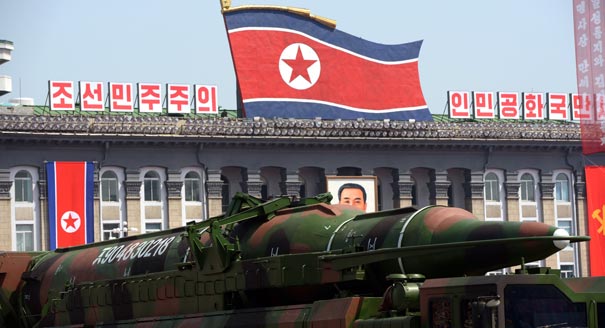
North Korea and Non-ComplianceThis morning at the 2011 IAEA General Conference in Vienna, the IAEA’s member states passed the resolution GC(55)/L.5, “Implementation of the NPT Safeguards Agreement between the Agency and the DPRK,” by consensus.
It was sponsored by 44 states. Yeoman’s work was done by Canada, and the original sponsoring group included Australia, Japan, ROK, U.K., and the U.S.
Readers might recall that a year ago, a similar resolution introduced under the same agenda item at GC/54 stirred up a hornet’s nest. That didn’t happen today, for a couple of reasons.
First, unlike last year there was no GC/55 resolution tabled on Israeli nuclear capabilities. Last year there was such a resolution, which prompted a food fight between the Arab NAM and Western states over INC, which spilled over into efforts by the U.S. and others in the advanced nuclear states/Western group to pass the DPRK resolution.
Second, this year China made sure that the language of Canada’s draft resolution on the DPRK was eviscerated to the point that there wasn’t really too much in the final document for oxygenated NAM states to object to.
The Canadian draft resolution contained language which a few states, and especially China, did firmly contest. China really took a red pencil to the draft. The result was a document which had no references in operative paragraphs to the issue which, in the view of Western states expressing their views in the plenary since Monday, had to a great extent justified the resolution in the first place, namely, the DPRK’s disclosure earlier this year that North Korea had built and apparently was operating a centrifuge uranium enrichment plant at Yongbyon. When all was said and done this morning, perhaps a quarter of the original Canadian draft resolution had been redacted, after Chinese negotiators in Vienna began getting instructions from their colleagues in Beijing who this week were holding talks with North Korean diplomats while the Vienna negotiations on the language of GC(55)/L.5 were underway.
I’m a little ahead of the IAEA public affairs staff at the moment, but the final version of the DPRK resolution should shortly be available here.
As usual for resolutions on touchy safeguards compliance issues like this, the final version of this resolution was a compromise. There were no references in operative paragraphs to the DPRK’s apparent enrichment plant and also no references to continued non-compliance by the DPRK. (That particular issue has to do with how NPT Article X is interpreted, and as it turns out, the IAEA Secretariat has a very different view of the matter than Pyongyang.)
The non-compliance and enrichment issues were instead relegated to the preamble. It recalled that the IAEA Board of Governors had previously found the DPRK in non-compliance, and it also “not[ed] serious concerns” about the DPRK’s “development of enrichment technology.” The preamble also “express[ed] concern regarding the DPRK’s claimed uranium enrichment program and light water reactor construction.”
I pointed out a week ago during the September BOG meeting that several member states had raised some issues with the IAEA Secretariat’s report to the board on the DPRK which was issued on September 2. But it turns out that these questions and objections in fact developed from some very strong opinions that had been expressed inside the boardroom way back in June, when a few states–led primarily by the ROK and supported by Japan–made clear that they wanted a report from the IAEA Secretariat on the nuclear program in the DPRK, regardless of the absence of any IAEA inspection activity in that country for about three years.
China and Russia object in BOG
Specifically, both China and Russia then voiced objections to the board asking Director General Yukiya Amano to prepare a lengthy report on the DPRK’s nuclear program for this month’s board meeting. Nonetheless, and encouraged by both the ROK and Japan, Amano did just that and he filed that DPRK report to the BOG on September 2.
The Chinese and Russian heartburn over the Amano report to the board rippled through at this week’s General Conference.
Accordingly, neither China nor Russia was very happy about certain bits in the draft DPRK resolution. To pass by consensus, the final compromise on this text had to satisfy them, of course, as it had to satisfy the ROK, which had sought firmer language and which was urged by the U.S. to support the final result.
The discontent of Russian and Chinese diplomats was considerable enough (the Russians were a little irritated that they were not credited in the resolution for launching any diplomatic initiatives in the DPRK’s direction) to warrant concern today that these two states might even try to get the GC, soon after the final text of the resolution was agreed upon, to switch the order of the agenda items, permitting the DPRK resolution to be tabled for approval in the plenary after the NAM group got a chance to raise the temperture by weighing in on other resolutions dear to their heart, such as the resolution on safeguards and another on the Middle East. But that didn’t happen. (When the resolution came to a head in the plenary on Thursday morning, the group of, let’s say, highly motivated NAM states–Algeria, Cuba, Egypt, Iran, Syria, Venezuela–was only warming up in that drafting working group.) So the DPRK resolution was approved in the plenary with only a murmur uttered by Cuba objecting to the slow process on disarmament and referring to the NAM’s quixotic goal of eliminating nuclear weapons by 2025. Some Western delegations breathed a sigh of relief that the Cuban intervention on the floor before the vote did not prompt leading statements by either Russia or China which might have triggered a feeding frenzy in the plenary.
So maybe the drafters of the DPRK resolution knew what they were doing when they decided to close on the final text in an informal group outside the Committee of the Whole. But when we consider the broader issue of NPT non-compliance, we’re looking at Iran down the road, and this modest DPRK resolution, following on the one on Syria in June, could be considered just a little curtain-raiser.
Hibbs is a Germany-based nonresident senior fellow in Carnegie’s Nuclear Policy Program. His areas of expertise are nuclear verification and safeguards, multilateral nuclear trade policy, international nuclear cooperation, and nonproliferation arrangements.
Carnegie does not take institutional positions on public policy issues; the views represented herein are those of the author(s) and do not necessarily reflect the views of Carnegie, its staff, or its trustees.
Tokyo would have to surmount a lot of obstacles—not least Western sanctions—if it wanted to return Russian oil imports to even modest pre-2022 volumes.
Troubled by the growing salience of nuclear debates in East Asia, Moscow has responded in its usual way: with condemnation and threats. But by exacerbating insecurity, Russia is forcing South Korea and Japan to consider radical security options.
For Putin, upgrading Russia’s nuclear forces was a secondary goal. The main aim was to gain an advantage over the West, including by strengthening the nuclear threat on all fronts. That made growth in missile arsenals and a new arms race inevitable.
The Kremlin will only be prepared to negotiate strategic arms limitations if it is confident it can secure significant concessions from the United States. Otherwise, meaningful dialogue is unlikely, and the international system of strategic stability will continue to teeter on the brink of total collapse.
The collapse of the Budapest summit is an inevitable result of the Russian system of artificially creating foreign policy crises in order to achieve a desired outcome.