

Article
Thomas de Waal
{
  "authors": [
    "Thomas de Waal"
  ],
  "type": "legacyinthemedia",
  "centerAffiliationAll": "dc",
  "centers": [
    "Carnegie Endowment for International Peace",
    "Carnegie Europe"
  ],
  "collections": [],
  "englishNewsletterAll": "ctw",
  "nonEnglishNewsletterAll": "",
  "primaryCenter": "Carnegie Europe",
  "programAffiliation": "russia",
  "programs": [
    "Russia and Eurasia"
  ],
  "projects": [],
  "regions": [
    "Caucasus",
    "Azerbaijan",
    "Armenia",
    "Georgia"
  ],
  "topics": [
    "Security"
  ]
}
Source: Getty
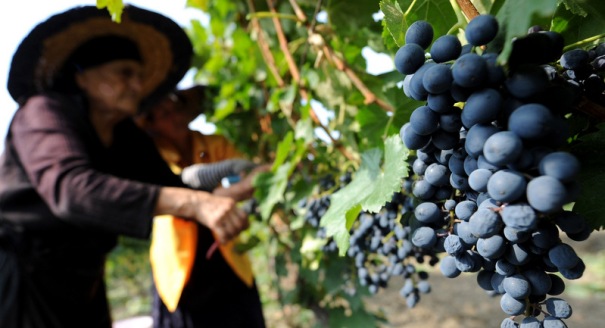
Ordinary Armenians, Azeris, Georgians, and Abkhaz are growing increasingly estranged from each other as nationalist narratives continue to overshadow local examples of peaceful co-existence.
Source: Eurasianet
Twenty years after the Soviet Union collapsed, the three conflicts in the South Caucasus over the territories of Abkhazia, South Ossetia and Nagorno Karabakh remain depressingly unresolved.
Two generational tendencies have been at work over this time: the passing of an older Soviet-era generation who lived in one state, for whom ethnic differences were unimportant and for whom Russian was a common language; and the emergence of a younger generation, which is more worldly and less encumbered by the baggage of conflict, but is also heavily influenced by the nationalist narratives of its society and lacks a common language with the other side.
I would argue that the negative tendencies outweigh the positives. In the Karabakh dispute, a national Azerbaijani narrative is taking shape in a new, wealthy, self-confident nation that is less inclined to make compromises with the Armenians. At the same time, Armenians present the de-facto secession of Nagorno Karabakh as a fact that has only to be ratified by history on the lines of Kosovo and South Sudan. Few points of convergence there.When it comes to Georgia, the war of 2008 has seemingly put Tbilisi and its two breakaway territories in two even more diverging realities.
The Georgian narrative now virtually omits mention of the Abkhaz as actors at all, ascribing almost the entire blame for the tragedy to Russian “occupation” of Abkhazia. In a speech in France on December 7, Georgian President Mikheil Saakashvili declared: “The term occupation means that occupation always ends with de-occupation.” He left unanswered the question of the will of the current residents of Abkhazia were that Russian de-occupation to take place.
Inside Abkhazia itself, the republic’s new de-facto leader, Alexander Ankvab, delivered an inauguration speech on September 26 entirely focused on the domestic priorities of his would-be state, in which he failed to mention the words “conflict” or “Georgia” once. Again, the fact of Georgia or his region’s missing Georgian population was entirely ignored.
Polls reflect this estrangement. In a survey by the Caucasus Research Resources Center, a statistically improbable zero percent of the Azerbaijani respondents said they approved of women marrying Armenians or doing business with them.
Of course, the South Caucasus is a small region where people still have much in common -- so, thankfully, there is still an alternative story to be told. In the Gali region of Abkhazia, ethnic Georgians and Abkhaz continue to trade and interact, including across an increasingly closed border. Many thousands of those Azerbaijanis who said they could not contemplate doing business with Armenians do precisely that every week inside Georgia, where they go to the Caucasus-wide used-car market in the city of Rustavi. A decade ago, many of them traded with Armenians at the wholesale market at Sadakhlo, also in Georgia.
(It is worth noting that more Armenians voiced positive attitudes when asked the same survey question by CRRC -- 34 percent said they approved of doing business with Azerbaijanis. This may be because the winning side is more inclined to feel generous toward the defeated.)
The inclusive narrative is still fairly common outside the political context of the conflict zone. In November, I visited the village of Khojorni in southern Georgia, which has a population of ethnic Armenians and Azeris living peacefully as neighbors. Naturally, I was curious to ask them the secret of their harmonious co-existence. The answers were sincere, but verged on the banal: “We have always got on,” “Big politics has nothing to do with us.”
Unfortunately, these contacts are essentially private activities outside the public sphere and the language of pragmatism you hear from these people is not reflected in any media.
Can internationals do anything to break this cycle of estrangement? Declarations on the conflicts signally lack a “third narrative” that envisions a different future for the region, nor is this usually the task of formal diplomacy. A declaration on the Karabakh conflict at the Organization for Security and Cooperation in Europe (OSCE) ministerial meeting in Vilnius on December 6, noted only, with a slight note of desperation, “the five Heads of Delegation agreed on the need to continue the negotiating process in the format of the OSCE Minsk Group and to improve the climate for making progress towards a peaceful settlement.”
But if the ambassador-level co-chairs mediating the Karabakh conflict are not in the business of issuing soaring rhetoric about the value of peace, more senior officials from their governments should attempt the task. And the mediators can do more to acknowledge and support those small constituencies that are expressing an alternative voice, like the villagers of Khojorni.
Informal contacts across conflict lines are slowly dwindling. If ordinary connections are to be maintained between increasingly estranged societies, people who engage in these activities need proactive support from outsiders.

Senior Fellow, Carnegie Europe
Thomas de Waal is a senior fellow at Carnegie Europe, specializing in Eastern Europe and the Caucasus.
Recent Work
Thomas de Waal
Thomas de Waal
Carnegie does not take institutional positions on public policy issues; the views represented herein are those of the author(s) and do not necessarily reflect the views of Carnegie, its staff, or its trustees.

With the growth in points of friction between the great powers, organizations like the SCO will continue to play a role in the strategic adaptation of the smaller powers caught between them.

Temur Umarov
Two divergent trends—Putin’s hardline vision of how to prosecute the war in Ukraine, and a growing desire for change in Russia—could tear the regime apart.

Tatiana Stanovaya

Andrey Melnichenko’s essay offers no answer to the fundamental question of how, under any kind of negotiated settlement, Europe can protect itself from the Russian ressentiment that is inevitable in all scenarios except for an outright victory for Putin.

Leonid Bershidsky
The recent damage inflicted by Ukrainian drones and missiles on Russia has made Belarus aware of its own vulnerabilities—and surprisingly amenable to Kyiv’s demands.

Artyom Shraibman
It is not a phenomenon unique to Russia that the public of a country at war (even the aggressor) enduring airstrikes will not overturn its government but rather show solidarity with it and blame its woes on the enemy.
Vladislav Gorin