

Research
- +5
Alper Coşkun, Fatih Ceylan, Tacan İldem, …
{
  "authors": [
    "Sinan Ülgen"
  ],
  "type": "legacyinthemedia",
  "centerAffiliationAll": "",
  "centers": [
    "Carnegie Endowment for International Peace",
    "Carnegie Europe",
    "Malcolm H. Kerr Carnegie Middle East Center"
  ],
  "collections": [
    "Arab Awakening"
  ],
  "englishNewsletterAll": "",
  "nonEnglishNewsletterAll": "",
  "primaryCenter": "Carnegie Europe",
  "programAffiliation": "",
  "programs": [],
  "projects": [],
  "regions": [
    "Levant",
    "Middle East",
    "Türkiye",
    "Syria"
  ],
  "topics": [
    "Political Reform",
    "Security"
  ]
}
Source: Getty
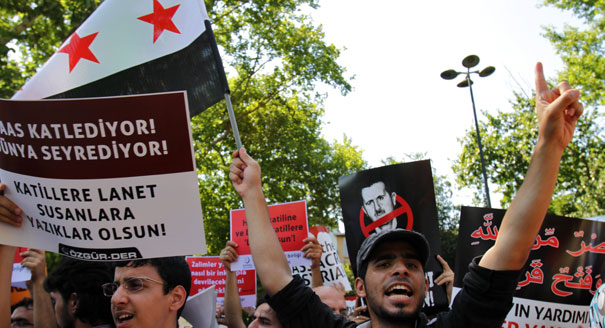
Ankara's policy of forcefully pushing the regime change agenda in Syria is under criticism domestically as some of the risks of a post-Assad world are becoming clearer.
Source: National Interest

With the support of Prime Minister Erdogan, Turkey’s foreign minister Davutoglu positioned Ankara in the vanguard of the community of nations seeking regime change in Syria. Thus Ankara gave support to the Syrian National Council and harbored the Free Syrian Army. Even when former UN secretary-general Annan’s plan for a political settlement was announced, the Turkish leadership made it clear that there could be no solution with Assad in power.
With this policy of direct confrontation, Ankara not only strove to obtain the moral high ground. It also sought to precipitate the fall of Assad while building a relationship with the future leadership of Syria by heavily investing in the Muslim Brotherhood-dominated Syrian National Council.Today, this policy of forcefully pushing the regime change agenda in Syria is under criticism domestically as some of the risks of a post-Assad world are becoming clearer.
The fear in Turkey is of Syria’s disintegration into ethnically and religiously purer ministates, with a Kurdish entity in the north, an Alawite entity in the west and a Sunni entity in the rest. The Kurdish opposition’s recent unilateral power grab in northeastern Syria rekindled Turkish concerns about the emergence of an independent Kurdish entity linking the north of Iraq to the north of Syria.
The right policy response to this threat would certainly have been for the Turkish body politic to finally and permanently address Turkey’s own Kurdish problem. But the Justice and Development Party (AKP) leadership’s prevailing populist tendencies seem to preclude this option despite a well-intentioned effort undertaken before the 2011 elections. The fact that even the highly popular AKP, facing no imminent threat to its rule, backed away from tackling this complex issue does not bode well for the prospects of a lasting settlement.
The failure to solve its own Kurdish problem therefore raises the stakes for Turkey should Syria implode along sectarian lines. As a result (and somewhat paradoxically because it has failed to do so sufficiently at home), Turkey will almost inevitably be pulled in to invest in the future stability and territorial integrity of Syria.
With its long-standing support to the Syrian National Council and the Free Syrian Army, Ankara hopes to have gained the leverage to influence the behavior of the future leadership in the post-Assad era. But now harder choices await Turkish policy makers.
To create the right conditions for the emergence of a political process of reconciliation and reconstruction in Syria, Turkey must shift its position. With Assad on his way out, Ankara should start the practice of conditionality. Its continued support to the Sunni opposition should be conditional on the Sunni leadership taking the lead on midwifing an inclusive, nonhegemonic, multipartite process of political dialogue on the future order in Syria. Also Ankara should seek to reengage with the Alawite minority and support efforts to nurture a new political leadership within this once-powerful minority.
The success of this engagement is critical for a country faced with allegations of exclusively supporting the Sunni camp in Syria alongside Saudi Arabia and Qatar. Only a Turkey that acts in harmony with its secular roots can play the crucial role of helping to build a better future for all Syrians and, by extension, ensuring its own safety and security in this volatile region.
This article was originally published in the National Interest.

Senior Fellow, Carnegie Europe
Sinan Ülgen is a senior fellow at Carnegie Europe in Brussels, where his research focuses on Turkish foreign policy, transatlantic relations, international trade, economic security, and digital policy.
Recent Work

Alper Coşkun, Fatih Ceylan, Tacan İldem, …
Carnegie does not take institutional positions on public policy issues; the views represented herein are those of the author(s) and do not necessarily reflect the views of Carnegie, its staff, or its trustees.

The greater threat to Zelensky comes not from Fedorov alone, but from the convergence between the former defense minister’s political campaign and the anti-corruption investigations moving ever closer to the presidential administration.

Balázs Jarábik
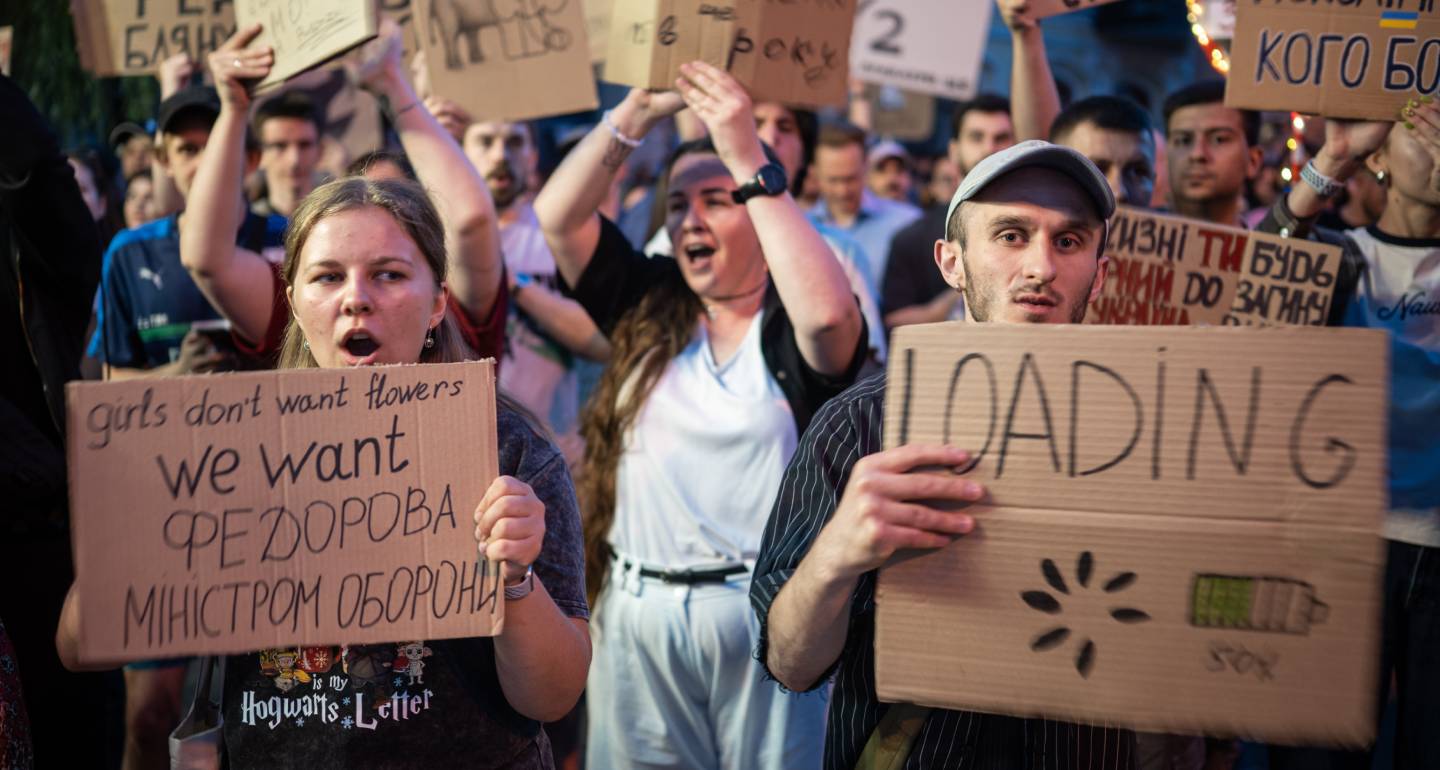
With his public call for new elections in Ukraine, ex-defense minister Mykhailo Fedorov has opened Pandora’s box.

Konstantin Skorkin

In the discussions made possible by the State Duma election campaign, one question is being asked more and more loudly. “What next?”

Andrey Pertsev

Two divergent trends—Putin’s hardline vision of how to prosecute the war in Ukraine, and a growing desire for change in Russia—could tear the regime apart.

Tatiana Stanovaya
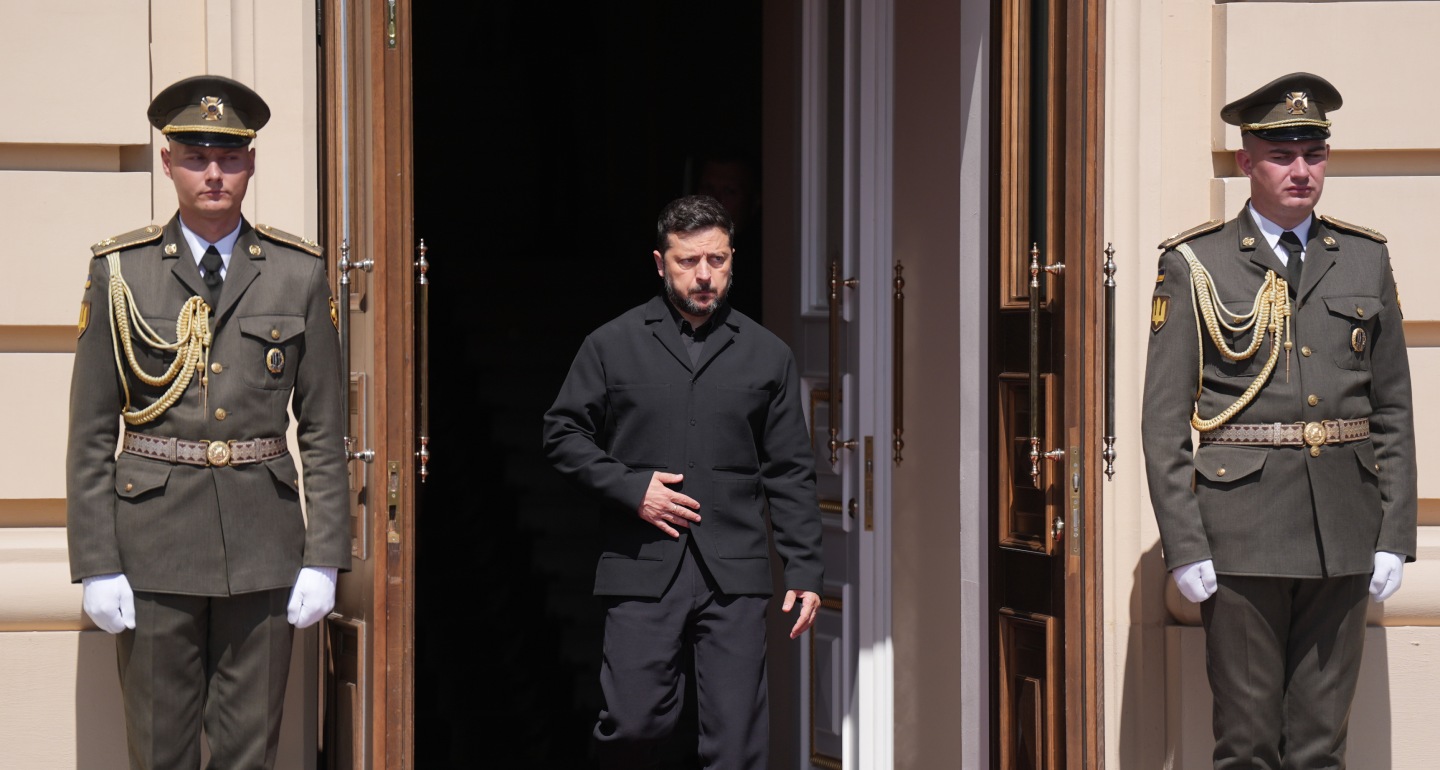
Ultimately, Zelensky sided neither with the reform camp nor with the military establishment as such, but with political control.
Balázs Jarábik