

Paper
James L. Schoff, Douglas E. Rake, Joshua Levy
{
  "authors": [
    "James L. Schoff"
  ],
  "type": "other",
  "centerAffiliationAll": "dc",
  "centers": [
    "Carnegie Endowment for International Peace"
  ],
  "collections": [],
  "englishNewsletterAll": "asia",
  "nonEnglishNewsletterAll": "",
  "primaryCenter": "Carnegie Endowment for International Peace",
  "programAffiliation": "AP",
  "programs": [
    "Asia"
  ],
  "projects": [],
  "regions": [
    "East Asia",
    "Japan"
  ],
  "topics": [
    "Nuclear Policy"
  ]
}
Source: Getty
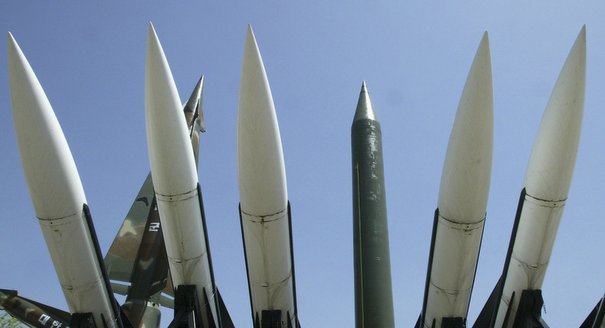
The U.S. nuclear umbrella is only one component of America’s security commitment to Japan. Forward defense deployments, cooperative missile defense development, stepped-up intelligence sharing, and diplomatic and political visits are all components of extended deterrence.
Source: Strategy in the Second Nuclear Age

The chapter looks beyond just the nuclear component of extended deterrence with regard to Japan. Indeed, U.S. reassurance of its nuclear umbrella over Japan is only one (albeit important) component of America’s security commitment to Japan. U.S. forward deployments in East Asia, missile defense development with Japan, stepped-up intelligence sharing with Japan, U.S. preemptive strike policies vis-à-vis North Korean missile launch pads, and diplomatic/political visits and signaling are all components of extended deterrence, among others.
A detailed understanding of how Japan can and might approach the nuclear question in response to current and future events is critical for the proper orientation of America’s security policies in East Asia and for a well-functioning U.S.-Japan alliance.
Strategy in the Second Nuclear Age is available for purchase through the Georgetown University Press.

Former Senior Fellow, Asia Program
James L. Schoff was a senior fellow in the Carnegie Asia Program. His research focuses on U.S.-Japan relations and regional engagement, Japanese technology innovation, and regional trade and security dynamics.
Recent Work
James L. Schoff, Douglas E. Rake, Joshua Levy
James L. Schoff
Carnegie does not take institutional positions on public policy issues; the views represented herein are those of the author(s) and do not necessarily reflect the views of Carnegie, its staff, or its trustees.

The truth is that Japan’s government is seeking a degree of reengagement but at a vastly reduced level than under Abe. Most significantly, Japan has shown no willingness to ease sanctions.

James D.J. Brown
Tokyo would have to surmount a lot of obstacles—not least Western sanctions—if it wanted to return Russian oil imports to even modest pre-2022 volumes.

Vladislav Pashchenko
Troubled by the growing salience of nuclear debates in East Asia, Moscow has responded in its usual way: with condemnation and threats. But by exacerbating insecurity, Russia is forcing South Korea and Japan to consider radical security options.
James D.J. Brown
For Putin, upgrading Russia’s nuclear forces was a secondary goal. The main aim was to gain an advantage over the West, including by strengthening the nuclear threat on all fronts. That made growth in missile arsenals and a new arms race inevitable.
Maxim Starchak
For a real example of political forces engaged in the militarization of society, the Russian leadership might consider looking closer to home.
James D.J. Brown