

Commentary
Nathan J. Brown
{
  "authors": [
    "Nathan J. Brown"
  ],
  "type": "legacyinthemedia",
  "centerAffiliationAll": "dc",
  "centers": [
    "Carnegie Endowment for International Peace",
    "Malcolm H. Kerr Carnegie Middle East Center",
    "Carnegie Russia Eurasia Center"
  ],
  "collections": [],
  "englishNewsletterAll": "menaTransitions",
  "nonEnglishNewsletterAll": "",
  "primaryCenter": "Carnegie Endowment for International Peace",
  "programAffiliation": "MEP",
  "programs": [
    "Middle East"
  ],
  "projects": [
    "Eurasia in Transition"
  ],
  "regions": [
    "Middle East",
    "Israel",
    "Palestine",
    "Levant"
  ],
  "topics": [
    "Security"
  ]
}
Source: Getty
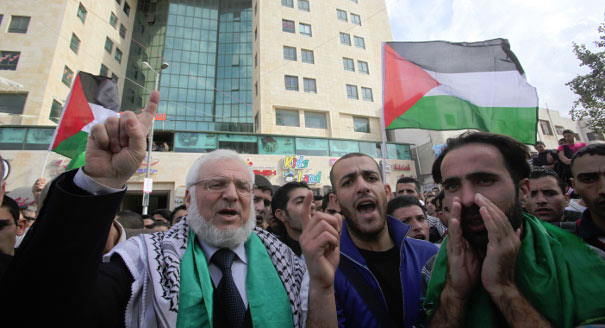
As the Obama administration moves into its second term, it makes more sense to deal with the Israeli-Palestinian conflict that really exists rather than to pretend that there still is a "peace process" that only needs one more round of quiet talks to succeed.
Source: CNN

Most experts agree that eventually the fighting will stop and leave the situation unchanged. The only question is the number of victims. If neither side has much to gain, why can't they stop themselves?
Each side suspects the other of playing domestic politics. Palestinians fear that the Israeli government is making war with an eye to upcoming elections. Israelis suspect that Hamas -- whose full name is the "Islamic Resistance Movement" -- is lobbing rockets because it is tired of its rivals' taunting that it is not living up to its middle name.
There is some truth to these charges, but the deeper motivations have to do less with pleasing the home crowd and more with frightening and deterring the other side.
Both sides would love to have their adversary disappear but know they cannot make that happen any time soon, so for now they each have more limited goals.
The Israelis know that they cannot dislodge Hamas from Gaza without unacceptable cost and endless occupation. But they want to punish the movement so severely that it will be deterred from future violence. Hamas knows that the damage it inflicts serves no strategic value, but it hopes that its rockets will cause dislocation and even panic in Israel and send an international message that Gaza cannot be ignored.
So the fighting likely will be contained in the end. In addition to civilian casualties on both sides (with the toll much heavier in Gaza, since Israel is the much stronger party), there will be substantial political damage, as well. The United States will be regarded in the Arab world as complicit in the Israeli offensive. And Egypt, which has a peace treaty with Israel but whose population sympathizes with Hamas, will feel badly embarrassed by its apparent powerlessness.
But the real blame on international actors -- including the United States and Egypt -- falls not on their actions during this crisis, but on their long inaction before.
The United States under both President George W. Bush and President Barack Obama supported a harsh blockade on Gaza and pretended that the Israeli-Palestinian issue could be dealt with as if Hamas does not exist and Gaza does not matter. Under ousted leader Hosni Mubarak, Egypt quietly supported that position. Under Muhammad Morsy, Egypt's new president from the Muslim Brotherhood, Egypt is no longer quiet or supportive, but it has only been able to wield rhetorical tools.
Egypt (which now tilts toward Hamas) and the United States (which supports Israel) can, if they cooperate, probably bring about a ceasefire. What they do afterward is the real question.
There is no clear path forward for international diplomacy, but it is quite obvious what does not work: Waiting for Hamas to go away. In a visit to Gaza last May, I saw how thoroughly Hamas has come to dominate politics and society in the tiny but crowded enclave. The movement runs ministries, polices the streets and manages the economy. Gaza residents see no alternative to Hamas, nor are they asked for one, with elections canceled and opposition closely monitored.
As the Obama administration moves into its second term, it makes more sense to deal with the Israeli-Palestinian conflict that really exists rather than to pretend that there still is a "peace process" that only needs one more round of quiet talks to succeed.
This article originally appeared in CNN.

Nonresident Senior Fellow, Middle East Program
Nathan J. Brown, a professor of political science and international affairs at George Washington University, is a distinguished scholar and author of nine books on Arab politics and governance, as well as editor of five books.
Recent Work
Nathan J. Brown
Nathan J. Brown
Carnegie does not take institutional positions on public policy issues; the views represented herein are those of the author(s) and do not necessarily reflect the views of Carnegie, its staff, or its trustees.

With the growth in points of friction between the great powers, organizations like the SCO will continue to play a role in the strategic adaptation of the smaller powers caught between them.

Temur Umarov

Two divergent trends—Putin’s hardline vision of how to prosecute the war in Ukraine, and a growing desire for change in Russia—could tear the regime apart.

Tatiana Stanovaya

Andrey Melnichenko’s essay offers no answer to the fundamental question of how, under any kind of negotiated settlement, Europe can protect itself from the Russian ressentiment that is inevitable in all scenarios except for an outright victory for Putin.

Leonid Bershidsky

The recent damage inflicted by Ukrainian drones and missiles on Russia has made Belarus aware of its own vulnerabilities—and surprisingly amenable to Kyiv’s demands.

Artyom Shraibman
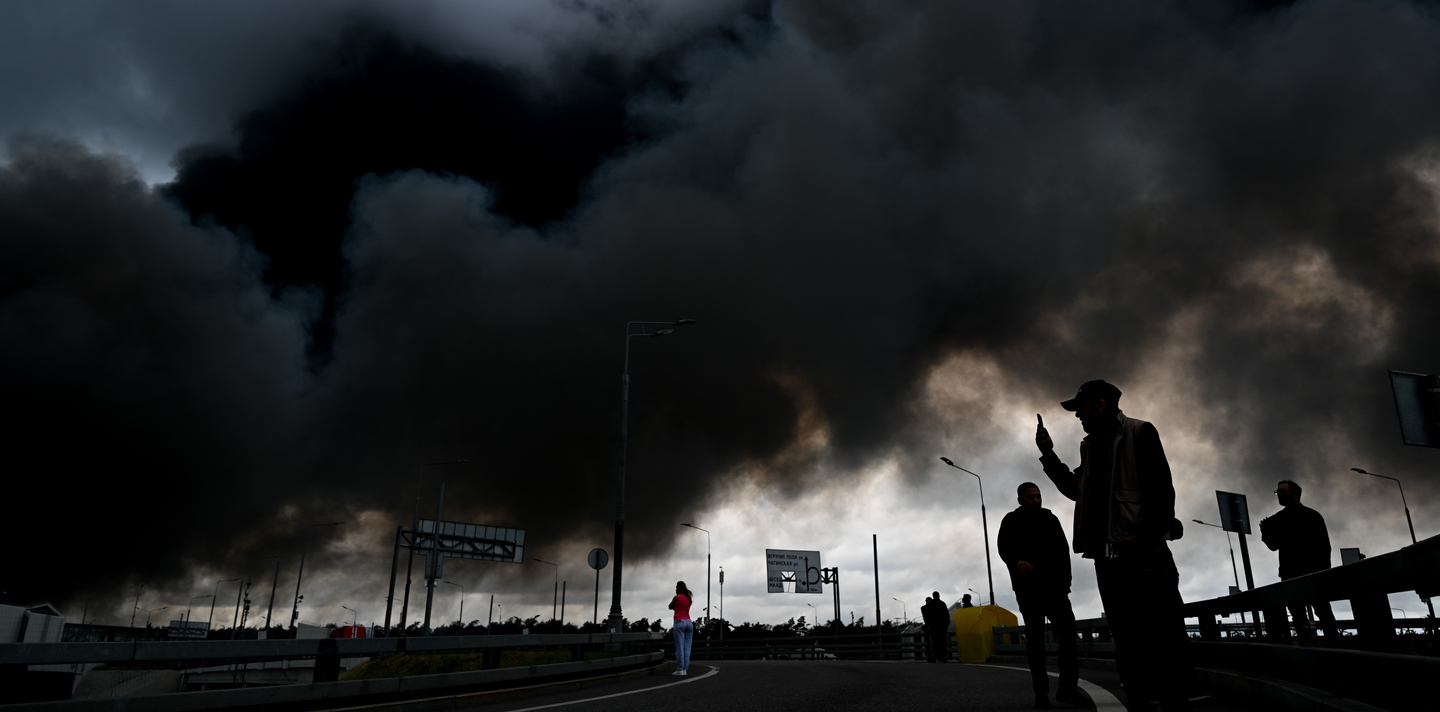
It is not a phenomenon unique to Russia that the public of a country at war (even the aggressor) enduring airstrikes will not overturn its government but rather show solidarity with it and blame its woes on the enemy.

Vladislav Gorin