

Q&A
Matt Ferchen
{
  "authors": [
    "Matt Ferchen"
  ],
  "type": "legacyinthemedia",
  "centerAffiliationAll": "",
  "centers": [
    "Carnegie Endowment for International Peace",
    "Carnegie China"
  ],
  "collections": [
    "China and the Developing World",
    "China’s Foreign Relations"
  ],
  "englishNewsletterAll": "",
  "nonEnglishNewsletterAll": "",
  "primaryCenter": "Carnegie China",
  "programAffiliation": "",
  "programs": [],
  "projects": [],
  "regions": [
    "North America",
    "South America",
    "East Asia",
    "China"
  ],
  "topics": [
    "Economy",
    "Foreign Policy"
  ]
}
Source: Getty
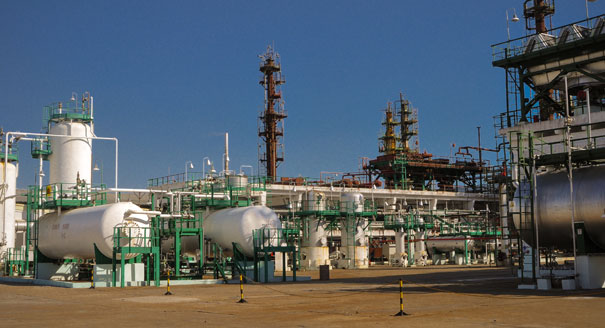
The direction of Sino-Venezuelan ties remains unknown following Chavez' death.
Source: NTC TV
Speaking to NTD TV, Carnegie-Tsinghua's Matt Ferchen explained that China-Venezuela relations are based “on a set of mutual interests around oil.” Now, because Sino-Venezuelan ties were really initiated by Chavez, and his control over Venezuela’s state oil company was so strong, the direction that the country and the country’s oil industry will take remains unknown.
Former Nonresident Scholar, Carnegie-Tsinghua Center for Global Policy
Ferchen specializes in China’s political-economic relations with emerging economies. At the Carnegie–Tsinghua Center for Global Policy, he ran a program on China’s economic and political relations with the developing world, including Latin America.
Recent Work
Matt Ferchen
Matt Ferchen, Anarkalee Perera
Carnegie does not take institutional positions on public policy issues; the views represented herein are those of the author(s) and do not necessarily reflect the views of Carnegie, its staff, or its trustees.

Without a ceasefire with Ukraine on attacking each other’s energy infrastructure—to which the Kremlin is unlikely to agree—the diesel agreement between Putin and Trump is largely for show, rather than representing a genuine increase in the volumes of Russian diesel on the global market.

Sergey Vakulenko

Russian strikes are weakening the economy sustaining Ukraine’s war effort. Closing the growing funding gap will require more European support and politically contentious reforms in Kyiv.

Balázs Jarábik

Despite a new textbook, an influx of Russian teachers and managers, and an end to the teaching of Ukrainian, the Kremlin is unlikely to have “reprogrammed” locals.

Konstantin Skorkin

For every ruble allocated to social policy, health, and education in 2027, double that amount is earmarked for the army, the police, and the security services.

Alexandra Prokopenko

Cargo traffic through Russia’s Northern Sea Route has increased because of the disruption caused by the conflict in the Middle East, the Ukraine war, and U.S.-China tensions.

Mikhail Korostikov