

Q&A
Matt Ferchen
{
  "authors": [
    "Matt Ferchen"
  ],
  "type": "legacyinthemedia",
  "centerAffiliationAll": "",
  "centers": [
    "Carnegie Endowment for International Peace",
    "Carnegie China"
  ],
  "collections": [
    "China and the Developing World",
    "China’s Foreign Relations"
  ],
  "englishNewsletterAll": "",
  "nonEnglishNewsletterAll": "",
  "primaryCenter": "Carnegie China",
  "programAffiliation": "",
  "programs": [],
  "projects": [],
  "regions": [
    "North America",
    "South America",
    "East Asia",
    "China"
  ],
  "topics": [
    "Economy"
  ]
}
Source: Getty
China’s business and trade links to Venezuela play a far more prominent role in shaping and defining the bilateral relationship than political or diplomatic ties.
Source: Voice of Russia
Speaking to Voice of Russia, Carnegie’s Matt Ferchen explained China’s interests in Venezuela and how Chinese-Venezuelan ties will be affected after the death of Hugo Chavez. While Chinese business and political leaders are certainly anxious about the political situation that may emerge and the direction that the new leadership might take the country, the level of Chinese investment in Venezuela means that China would be happy with any Venezuelan leader who continues to encourage China’s investment and is a reliable and predictable partner, Ferchen said.
Although China and Venezuela have close business and trade ties, foreign policy and political relations are marginal, Ferchen added. Venezuela hopes that closer political ties and ideological support from China would follow closer business ties were not met. Instead, asserted Ferchen, Chinese State Owned Enterprises and banks played a far bigger role in forging the bilateral relationship, often acting independently of the government and Ministry of Foreign Affairs.

Former Nonresident Scholar, Carnegie-Tsinghua Center for Global Policy
Ferchen specializes in China’s political-economic relations with emerging economies. At the Carnegie–Tsinghua Center for Global Policy, he ran a program on China’s economic and political relations with the developing world, including Latin America.
Recent Work
Matt Ferchen
Matt Ferchen, Anarkalee Perera
Carnegie does not take institutional positions on public policy issues; the views represented herein are those of the author(s) and do not necessarily reflect the views of Carnegie, its staff, or its trustees.

A much-discussed disagreement over internet restrictions in Russia was never an existential threat for Putin: It was about elite groups protecting their interests.

Alexandra Prokopenko

The demands of the Kremlin’s war in Ukraine, demographic problems, and public hostility toward Central Asians mean Russia does not have enough workers.

Salavat Abylkalikov

Minsk’s faith in the future of its larger neighbor’s economy is fading as Belarusian firms in Russia see record losses.

Olga Loiko
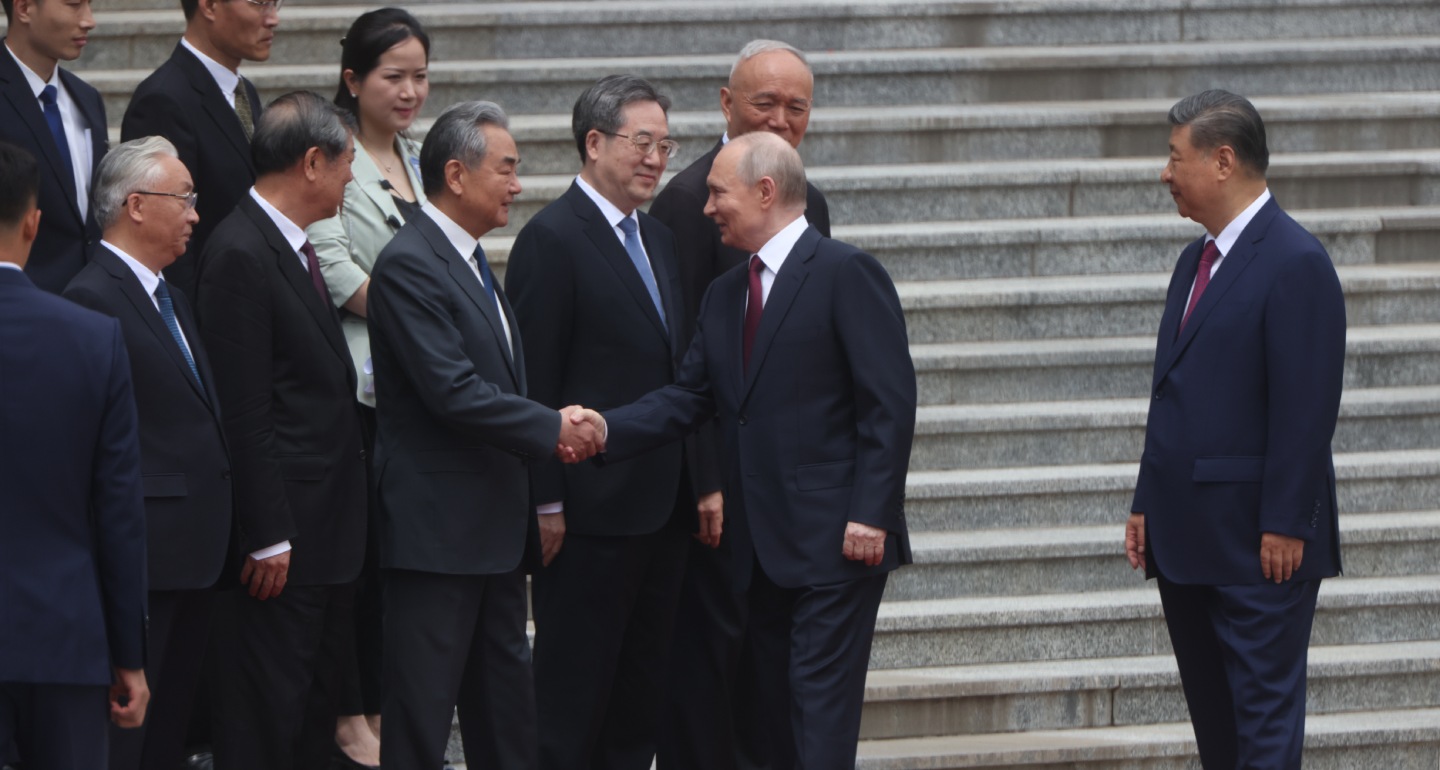
With no key agreement signed on the Power of Siberia 2 gas pipeline, there is a risk that the window of opportunity for Russia will close if Chinese power generation becomes so green that new gas sources are no longer of any interest to Beijing.

Alexander Gabuev

The cost of air defense has become an unregistered tax on revenue for businesses. While military rents are consolidated in the federal budget, the costs of defense are being spread across the balance sheets of companies and regional governments.
Alexandra Prokopenko