

Commentary
The European far right might fail to steer EU policy in the direction Russia wants, but they will create enough chaos inside Europe to benefit the Kremlin.
Dimitar Bechev
{
  "authors": [
    "Frederic Wehrey",
    "Anouar Boukhars"
  ],
  "type": "questionAnswer",
  "centerAffiliationAll": "dc",
  "centers": [
    "Carnegie Endowment for International Peace"
  ],
  "collections": [],
  "englishNewsletterAll": "menaTransitions",
  "nonEnglishNewsletterAll": "",
  "primaryCenter": "Carnegie Endowment for International Peace",
  "programAffiliation": "MEP",
  "programs": [
    "Middle East"
  ],
  "projects": [],
  "regions": [
    "North Africa",
    "Southern, Eastern, and Western Africa"
  ],
  "topics": [
    "Security",
    "Foreign Policy"
  ]
}
Source: Getty
Foreign assistance from the West must move beyond a narrow counterterrorism focus and governments in the region need to cooperate and demonstrate the resolve to tackle the root causes of the chaos.
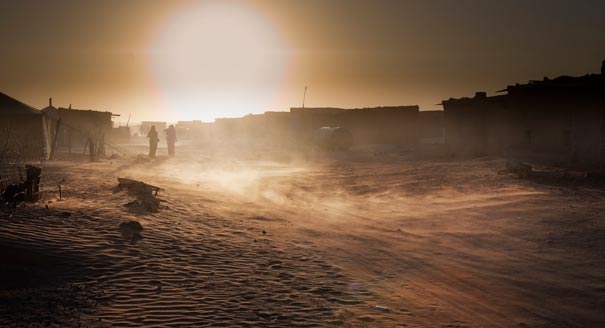
The Sahara encompasses a vast expanse of territory fraught with weak governance, pervasive corruption, porous borders, and transnational criminal networks. And radical groups, like al-Qaeda in the Islamic Maghreb (AQIM), are able to exploit the insecurity and pose a threat well beyond the region.
In a Q&A, Frederic Wehrey and Anouar Boukhars, co-editors of the new book Perilous Desert: Insecurity in the Sahara, discuss the sources of instability and what can be done to address the simmering conflicts. Foreign assistance from the West must move beyond a narrow counterterrorism focus and governments in the region need to cooperate and demonstrate the resolve to tackle the root causes of the chaos.
From the West’s perspective, this is the real threat from the region, especially since the Sahara is so connected to other parts of the world—to Europe and to Africa. The Las Vegas rules do not apply here: what happens here does not stay here.
BOUKHARS: There are internal problems and there are external problems. The internal problems are institutional incapability and pervasive corruption as well as the ethno-national and economic problems.
These internal problems are obviously interlocked with the external problems that are transnational by their very nature—transnational arms groups, transnational terrorist groups, and criminal syndicates.
WEHREY: The real root cause of instability is the weakness of the state and the weakness of institutions. These are governments that cannot provide for their people, governments that have limited control over their territory, and governments that are often rife with corruption. This is something our book really brings out.
There is a real lack of willpower in some of these Saharan states to take on the challenges. All the international effort and aid in the world does not really amount to much if there is no resolve by the states themselves.
Foreign aid needs to be linked to performance. The United States cannot keep dispensing large amounts of money and material to countries that do not demonstrate the willingness to take on these issues.
WEHREY: Much of the international and U.S. efforts need to move beyond a narrow security and counterterrorism focus. It’s clear from history that narrow support to these nations’ militaries and security forces does not address the root causes of turmoil.
The international community also needs to be careful when giving aid by ensuring that it is channeled to the appropriate relief agencies and NGOs at the grassroots level, and that it does not end up empowering and exacerbating corruption.
WEHREY: Much of this has to do with governance in the periphery. The fact is that these countries have neglected communities and groups in rural areas, and there has been institutionalized ethnic discrimination. This is a problem for the ethnic Tuareg and for Berbers in Libya, and it really provides an opening for al-Qaeda to exploit.
Again, it is about inclusive governance, it is about democracy, it is about infrastructure development in remote provinces, and I think fundamentally it is about real resolve to root out corruption.
BOUKHARS: Governments need to demonstrate the willingness to take on these problems—the economic problems, the corruption problems, and al-Qaeda in the Islamic Maghreb.
The problem is that most of these problems are transnational in nature. So cooperation within the region is needed and they need international assistance. But, the first thing that I keep insisting on is that these countries must demonstrate the willingness to tackle the issues.
BOUKHARS: This insecurity is not a problem that pertains to a single country. This is a regional problem and it is a transnational problem. Mali and Mauritania for instance cannot tackle their issues by themselves. There are things that they can do, but this is a regional problem.
Al-Qaeda in the Islamic Maghreb is a regional terrorist organization. To address the problem, the region needs the assistance of Algeria, which is a strong state, it needs the assistance of Morocco, and it needs Mauritania and Niger.
Countries need to coordinate their actions and they need to share intelligence. Without sharing intelligence and without coordinating their action, this problem of transnational terrorism and transnational crime will not be defeated.
Senior Fellow, Middle East Program
Frederic Wehrey is a senior fellow in the Middle East Program at the Carnegie Endowment for International Peace, where his research focuses on governance, conflict, and security in Libya, North Africa, and the Persian Gulf.
Former Nonresident Fellow, Middle East Program
Boukhars was a nonresident fellow in Carnegie’s Middle East Program. He is a professor of countering violent extremism and counter-terrorism at the Africa Center for Strategic Studies, National Defense University.
Carnegie does not take institutional positions on public policy issues; the views represented herein are those of the author(s) and do not necessarily reflect the views of Carnegie, its staff, or its trustees.

The European far right might fail to steer EU policy in the direction Russia wants, but they will create enough chaos inside Europe to benefit the Kremlin.

Dimitar Bechev

Minsk clearly expected the dialogue with Washington to yield more results, in particular the lifting of EU sanctions and permission to export potash.

Artyom Shraibman

With the growth in points of friction between the great powers, organizations like the SCO will continue to play a role in the strategic adaptation of the smaller powers caught between them.

Temur Umarov

When faced with fuel shortages in the past, Central Asian governments could always count on additional supplies from Moscow. That safety net no longer exists.

Galiya Ibragimova

Two divergent trends—Putin’s hardline vision of how to prosecute the war in Ukraine, and a growing desire for change in Russia—could tear the regime apart.

Tatiana Stanovaya