

Commentary
Yukon Huang, Isaac B. Kardon, Matt Sheehan
{
  "authors": [
    "Yukon Huang"
  ],
  "type": "legacyinthemedia",
  "centerAffiliationAll": "dc",
  "centers": [
    "Carnegie Endowment for International Peace",
    "Carnegie China"
  ],
  "collections": [],
  "englishNewsletterAll": "asia",
  "nonEnglishNewsletterAll": "",
  "primaryCenter": "Carnegie China",
  "programAffiliation": "AP",
  "programs": [
    "Asia"
  ],
  "projects": [],
  "regions": [
    "East Asia",
    "China"
  ],
  "topics": [
    "Economy"
  ]
}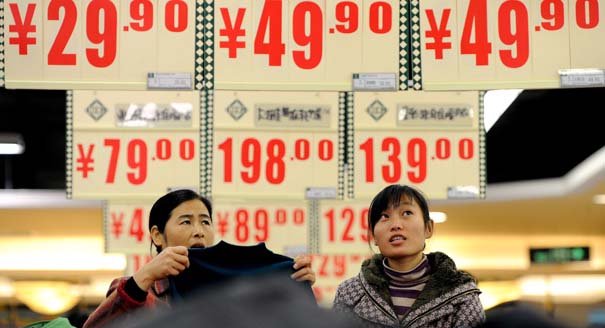
Source: Getty
China’s unbalanced economy is the result of a successful structural transition that has created sustained GDP, consumption, and wage growth.
Source: Financial Times
Markets are having a hard time interpreting China’s economic slowdown and evaluating policy options. At one extreme, some observers are talking about a potential dynastic collapse. But most have turned to the notion that economic growth needs to be more consumption driven since the almost universal view is that China’s growth is unbalanced, with consumption as a share of gross domestic product having declined steadily to below 35 per cent – the lowest level of any major economy – while its investment share rose to above 45 per cent, correspondingly the highest.
The reason for this imbalance is often attributed to low interest rates or an undervalued exchange rate. This has been the easy explanatory option since financial markets are comfortable with prices driving outcomes. But in his article in The New York Times last week, Paul Krugman is unique among prominent commentators in getting it right. He notes that China’s unbalanced growth is explained by the Nobel Prize-winning model by Arthur Lewis that shows how the transfer of surplus workers from the rural sector to the modern economy, complemented by rising investment, leads to rapid but unbalanced growth. The model also lays out the conditions when labour supplies tighten, growth slows and China’s economy eventually becomes more balanced – referred to as the “Lewis turning point” – and this as argued by Mr Krugman is causing China to “hit its Great Wall”.But then he gets it wrong by saying that this urbanisation cum industrialisation process in China “keeps wages low even as the economy gets richer” and that its economy needs to rebalance soon to avoid a nasty slump. Like many others Mr Krugman sees rebalancing as the solution if China wants to avoid a premature economic slowdown that has prevented the majority of aspiring developing countries from reaching high-income levels, most notably in Latin America, a phenomenon which has become known as the “middle-income trap”.
In fact only a handful of non-European economies managed to escape the middle-income trap over the past half century and most of them were in East Asia – Japan, South Korea, Taiwan and Singapore. Less well recognised is that these economies went through several decades of unbalanced growth with consumption as a share of GDP falling by 20-30 percentage points before they became more balanced – a path which China appears to be following. In fact, only unbalanced economies have been successful in moving to high-income status while “trapped” Latin American economies and lagging southeast Asian countries have balanced growth paths.
But why is successful growth so unbalanced? The explanation lies in the structural shifts as an economy moves from being dependent on agriculture to urban-based industries and services. China’s population has become more than 50 per cent urbanised compared with 20 per cent three decades ago. As millions of migrant workers moved annually from smallholder agriculture, where labour’s share of the value of production is about 90 per cent, to industry or services, where labour’s share of production is closer to 50 per cent (the rest going to other inputs), the effect in the national accounts is that labour’s share of GDP automatically declines and in turn consumption as a share of GDP falls.
Contrary to popular perceptions, however, which Mr Krugman also falls victim to, labour is not suffering in the urbanisation process and there is nothing perverse about this declining consumption share since migrants are earning and consuming multiples more than they used to, businesses are able to expand through increased labour absorption and rising profits, and the country benefits from higher productivity and double-digit growth rates.
Growth in consumption and wages has been much higher in the economies cited following unbalanced rather than balanced growth paths at comparable stages in their development process. Actual consumption expenditures in China specifically have been increasing steadily by 8 per cent a year, led by double-digit growth in real wages – the highest of any major developing or developed economy over the past decade and half. Thus the premise that more balanced growth means faster growth in wages or consumption is simply not true.
Motivated by the view that imbalance is bad and consumption is being repressed, many commentators then mistakenly recommend that China’s growth needs to be more consumption-driven. There is no such concept in economic theory as consumption-driven growth. Sustained growth can only come from increasing factors of production – labour or capital – and productivity. China’s labour force is now shrinking (although its quality can be improved) and its investment rates have reached their limits (although its composition must change). Thus the challenge for the country’s new leadership is pushing forward with reforms that would increase productivity.
The danger is that by artificially stimulating consumption and rebalancing prematurely, China risks losing the productivity gains that can come from a reform agenda driven by a more efficient urbanisation process and allowing the private sector to realise its full potential. South Korea, Japan and Taiwan began to rebalance at an income level between $12,000 and $15,000 (in adjusted purchasing power parity terms). China’s per capita income is now about $9,000. If Beijing implements the necessary reforms to realise these productivity gains then its economy will not hit the China Wall that Mr Krugman refers to until 2020. By that time, China would be the world’s largest economy and well on its way to escaping the middle-income trap.
If China gets it right, then rebalancing will eventually occur as a byproduct of a sustainable growth path but not as the intrinsic objective.

Senior Fellow, Asia Program
Huang is a senior fellow in the Carnegie Asia Program where his research focuses on China’s economy and its regional and global impact.
Recent Work


Yukon Huang, Isaac B. Kardon, Matt Sheehan
Yukon Huang, Genevieve Slosberg

The demands of the Kremlin’s war in Ukraine, demographic problems, and public hostility toward Central Asians mean Russia does not have enough workers.

Salavat Abylkalikov

Minsk’s faith in the future of its larger neighbor’s economy is fading as Belarusian firms in Russia see record losses.

Olga Loiko
With no key agreement signed on the Power of Siberia 2 gas pipeline, there is a risk that the window of opportunity for Russia will close if Chinese power generation becomes so green that new gas sources are no longer of any interest to Beijing.

Alexander Gabuev

The cost of air defense has become an unregistered tax on revenue for businesses. While military rents are consolidated in the federal budget, the costs of defense are being spread across the balance sheets of companies and regional governments.

Alexandra Prokopenko
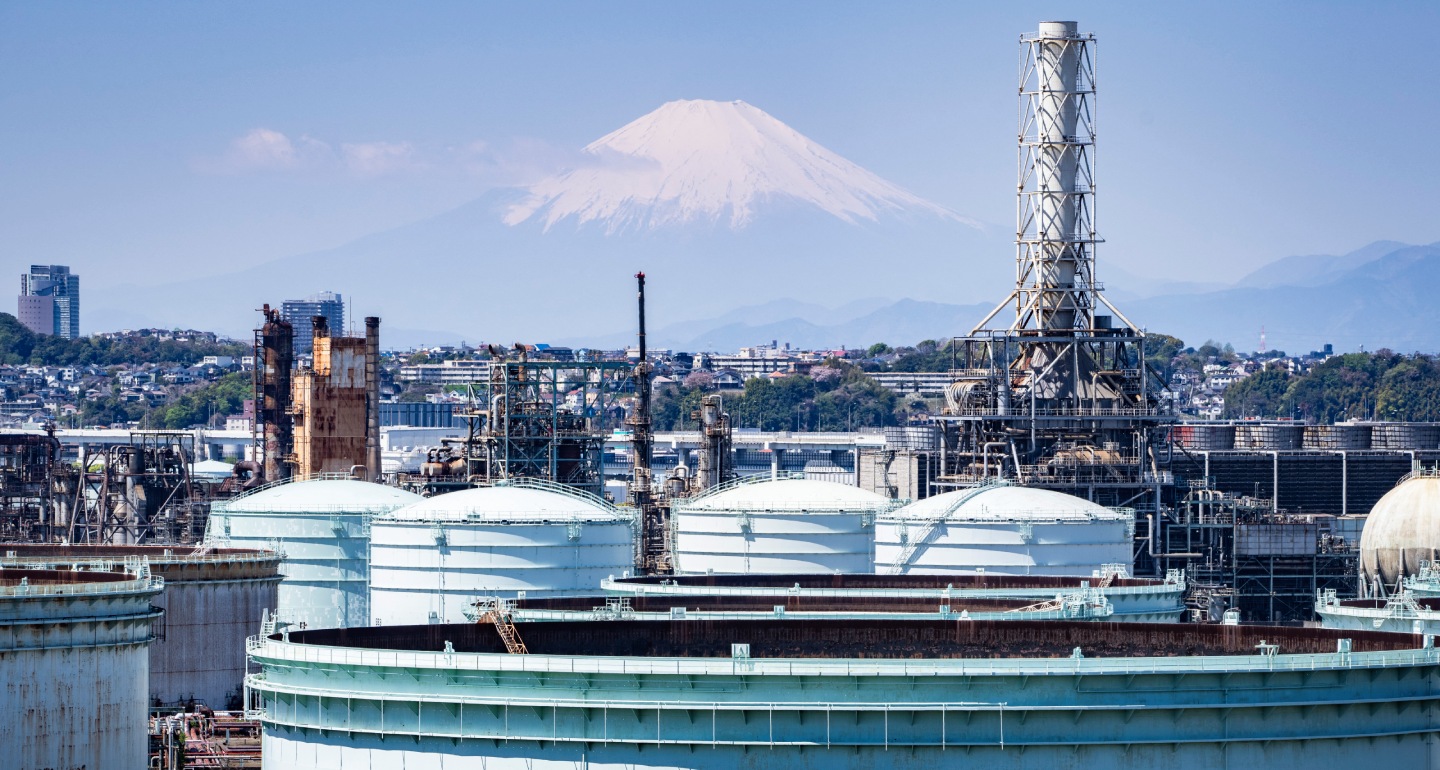
Tokyo would have to surmount a lot of obstacles—not least Western sanctions—if it wanted to return Russian oil imports to even modest pre-2022 volumes.

Vladislav Pashchenko