


Report
- +3
James M. Acton, Alexey Arbatov, Vladimir Dvorkin, …
{
  "authors": [
    "Petr Topychkanov"
  ],
  "type": "legacyinthemedia",
  "centerAffiliationAll": "",
  "centers": [
    "Carnegie Endowment for International Peace",
    "Malcolm H. Kerr Carnegie Middle East Center",
    "Carnegie Russia Eurasia Center"
  ],
  "collections": [],
  "englishNewsletterAll": "",
  "nonEnglishNewsletterAll": "",
  "primaryCenter": "Carnegie Russia Eurasia Center",
  "programAffiliation": "",
  "programs": [],
  "projects": [
    "Eurasia in Transition"
  ],
  "regions": [
    "Levant",
    "Middle East",
    "Syria",
    "Russia"
  ],
  "topics": [
    "Security",
    "Foreign Policy",
    "Global Governance"
  ]
}
Source: Getty
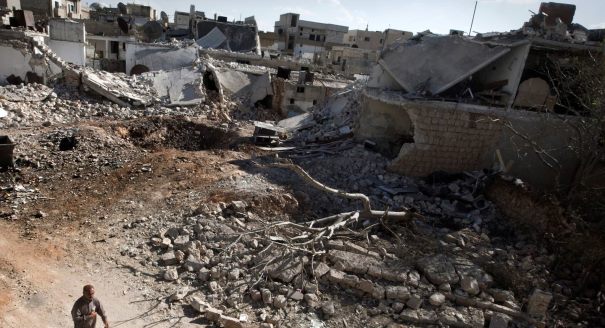
Although Putin’s statements have been seen as flexible rhetoric, Russia’s policy toward Syria has not changed.
Source: RFI's World News Explained
RFI spoke to Petr Topychkanov, an analyst at the Carnegie Moscow Center, who says Putin's comments are an about-turn from his previous rhetoric supporting Assad. However, despite Putin’s statements, which have been seen as pivoting and flexible rhetoric, Topychkanov maintained that Russia’s policy toward Syria has not changed.
Topychkanov said that the sticking point remains the evidence and confirmation of the use of chemical weapons by the Assad regime or possibly another party, information required by Russia prior to renewed engagement or an alternative course of action. Russia's influence, leadership, and continued support of Assad is a key determinate of the balance of power in the conflict, and as such will prove a major factor in its outcome. The primary juncture on the horizon remains the prospect of a unilateral strike, without UN approval, by the West against regime targets in Syria—this continues to be the main point of concern in relations between Putin's Russia and the West, Topychkanov concluded.
Former Fellow, Nonproliferation Program, Moscow Center
Topychkanov was a fellow in the Carnegie Moscow Center’s Nonproliferation Program.
Recent Work

James M. Acton, Alexey Arbatov, Vladimir Dvorkin, …
Petr Topychkanov
Carnegie does not take institutional positions on public policy issues; the views represented herein are those of the author(s) and do not necessarily reflect the views of Carnegie, its staff, or its trustees.

Depleted financial reserves and a shrinking tax base mean it is no longer possible to simultaneously deliver high defense spending, price stability, and economic growth.

Alexandra Prokopenko

Blurring the line between humans and animals is a long-standing tradition in social utopian prose. In his latest novel, Leonid Bershidsky reminds us that in social experiments, people are often treated no differently than animals.

Alexander Baunov
While France and Australia are seeking to establish the legal obligations of messaging apps like Telegram, Russia wants total subordination.

Maria Kolomychenko
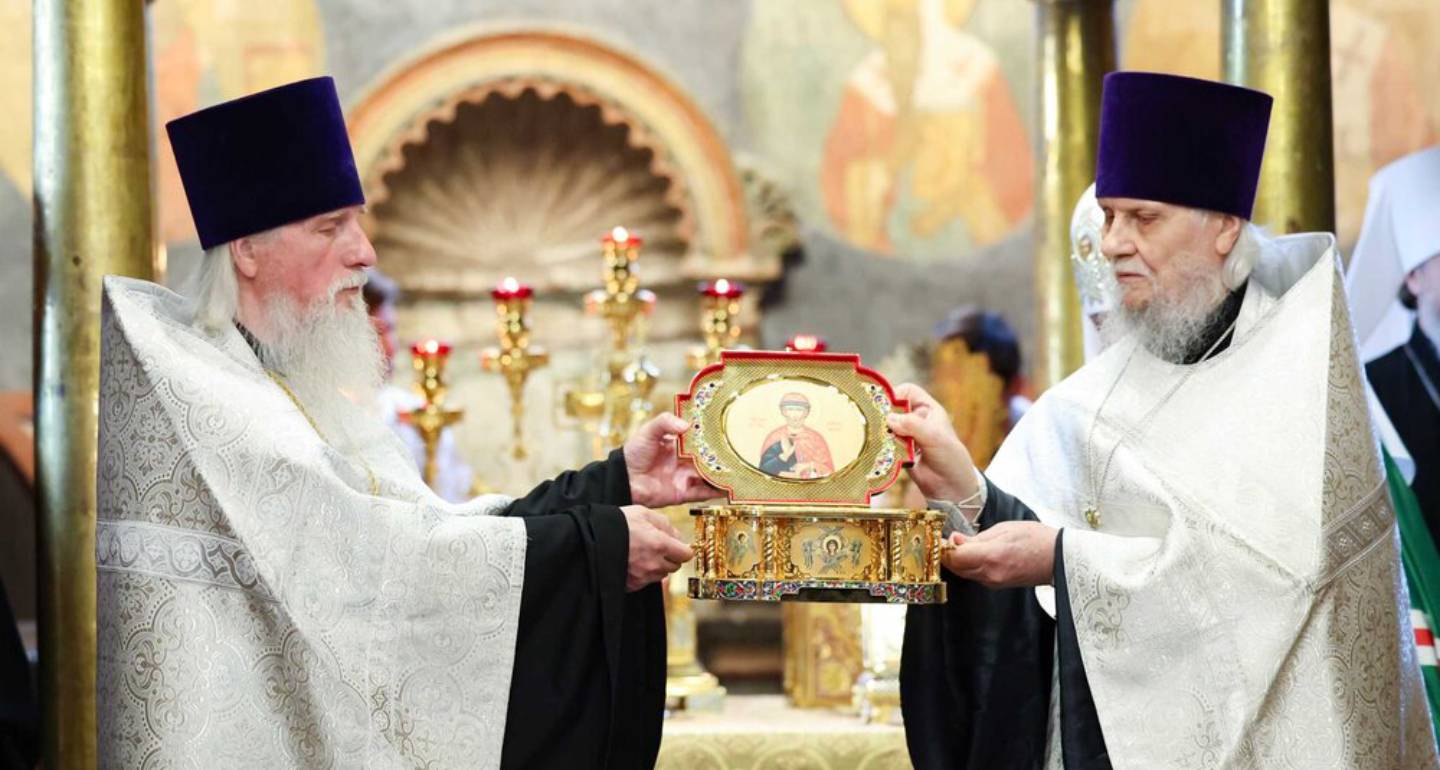
The recent uncovering of Dmitry Donskoy’s relics in the Cathedral of the Archangel is yet another attempt by the Russian Orthodox Church to help the state solve its problems. However, parroting the state’s version of Russian history leaves the Church with no message except “patriotism.”
Alexander Zanemonets

With the growth in points of friction between the great powers, organizations like the SCO will continue to play a role in the strategic adaptation of the smaller powers caught between them.

Temur Umarov