

Article
Wang Tao
{
  "authors": [
    "Wang Tao"
  ],
  "type": "legacyinthemedia",
  "centerAffiliationAll": "",
  "centers": [
    "Carnegie Endowment for International Peace",
    "Carnegie China"
  ],
  "collections": [
    "China and the Developing World"
  ],
  "englishNewsletterAll": "",
  "nonEnglishNewsletterAll": "",
  "primaryCenter": "Carnegie China",
  "programAffiliation": "",
  "programs": [],
  "projects": [],
  "regions": [
    "East Asia",
    "China"
  ],
  "topics": [
    "Economy",
    "Climate Change"
  ]
}
Source: Getty
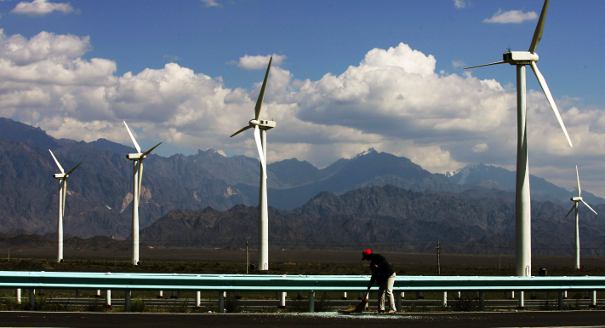
Chinese and international delegations will aim to strike a balance at the Warsaw Climate Change Conference to help developing countries adapt to climate change without being hampered by the temporary economic crisis in developed countries
Source: CCTV News
Carnegie–Tsinghua’s Wang Tao appeared on CCTV News' China 24 to discuss energy-related development aid. With an eye toward the November 2013 Warsaw Climate Change Conference, Wang suggested that while progress has been made, traditional donor countries are not meeting the expectations of developing countries.
Wang acknowledged that the slow improvements to aid from developed countries are a consequence of the massive financial crisis since 2008. This has led to a strong demand for aid from fast emerging economies like China and India. The Chinese and international delegations will aim to strike a balance at the Warsaw Climate Change Conference to help developing countries adapt to climate change without being hampered by the temporary economic crisis in developed countries.
Former Nonresident Scholar, Carnegie-Tsinghua Center for Global Policy
Wang Tao was a nonresident scholar in the Energy and Climate Program based at the Carnegie–Tsinghua Center for Global Policy.
Recent Work
Wang Tao
Wang Tao, Yang Yifang
Carnegie does not take institutional positions on public policy issues; the views represented herein are those of the author(s) and do not necessarily reflect the views of Carnegie, its staff, or its trustees.

Without a ceasefire with Ukraine on attacking each other’s energy infrastructure—to which the Kremlin is unlikely to agree—the diesel agreement between Putin and Trump is largely for show, rather than representing a genuine increase in the volumes of Russian diesel on the global market.

Sergey Vakulenko

Russian strikes are weakening the economy sustaining Ukraine’s war effort. Closing the growing funding gap will require more European support and politically contentious reforms in Kyiv.

Balázs Jarábik

For every ruble allocated to social policy, health, and education in 2027, double that amount is earmarked for the army, the police, and the security services.

Alexandra Prokopenko

Depleted financial reserves and a shrinking tax base mean it is no longer possible to simultaneously deliver high defense spending, price stability, and economic growth.
Alexandra Prokopenko

With the growth in points of friction between the great powers, organizations like the SCO will continue to play a role in the strategic adaptation of the smaller powers caught between them.

Temur Umarov