

Article
C. Raja Mohan, Darshana M. Baruah
{
  "authors": [
    "C. Raja Mohan"
  ],
  "type": "legacyinthemedia",
  "centerAffiliationAll": "dc",
  "centers": [
    "Carnegie Endowment for International Peace",
    "Carnegie India"
  ],
  "collections": [],
  "englishNewsletterAll": "ctw",
  "nonEnglishNewsletterAll": "",
  "primaryCenter": "Carnegie India",
  "programAffiliation": "SAP",
  "programs": [
    "South Asia"
  ],
  "projects": [],
  "regions": [
    "South Asia",
    "India",
    "Pakistan"
  ],
  "topics": [
    "Foreign Policy"
  ]
}
Source: Getty
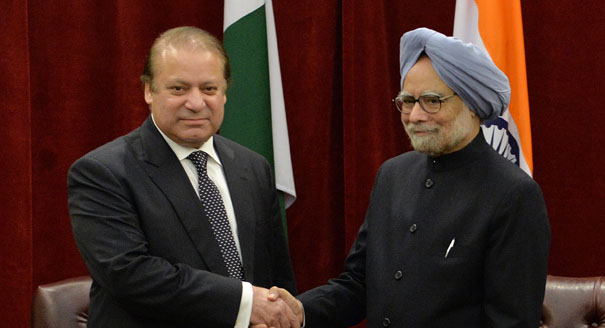
In recent years, sentiments for reviving cross-border connections with Pakistan have intensified on the Indian side of Punjab and have strong bipartisan support.
Source: Indian Express
Some Diplomatists in Delhi might have protocol and political reasons to frown at a "joint statement' issued by the chief ministers of east and west Punjab in Amritsar on Sunday calling for greater cross-border cooperation between the two provinces.
Pragmatists, however, would want to endorse the engagement between the two Punjabs as a potentially useful tool in the troubled diplomacy between India and Pakistan. With talks between Delhi and Islamabad stuck in a limbo, the positive tone of the joint statement between Prakash Singh Badal and Shahbaz Sharif is very welcome.
Badal's constructive approach to cross-border cooperation stands in contrast to the prevailing nihilism in Kolkata and Chennai. The Chief Minister of West Bengal Mamata Banerjee has refused to support carefully negotiated agreements with Bangladesh and undermined the prospects for a historic breakthrough in India's relations with an important neighbor. Competitive politics in Tamil Nadu have compelled Prime Minister Manmohan Singh to cancel plans to attend the Commonwealth Summit in Sri Lanka.In recent years, sentiments for reviving cross-border connections have intensified on the Indian side of Punjab and have strong bipartisan support. Capt Amrinder Singh, the Congress chief minister who preceded Badal, was the first to launch cross-border engagement a decade ago.
The current deputy chief minister, Sukhbir Singh Badal, traveled to Lahore last year and outlined an ambitious agenda for cooperation across the Radcliffe Line that divides the two provinces. The joint statement issued after Shahbaz Sharif's return visit reaffirmed the shared interests of the two provinces in "peace, harmony and economic growth".
There is an acute recognition that the two provinces can significantly improve their fortunes by ending the economic separation of the last many decades, forging strong commercial links, expanding connectivity, opening new trade routes, and promoting tourism. At the heart of this is the proposition that the two Punjabs can "leverage each other's potential".
Much of the agenda outlined by Badal and Sharif, however, can only be implemented by the central governments in Delhi and Islamabad. The two leaders therefore agreed to press their national capitals to facilitate deeper cooperation across the border in Punjab.
On its part, Delhi has largely been supportive. But signals from Shahbaz Sharif, younger brother of Prime Minister Nawaz, have been some what mixed.
In Amritsar, he was all for economic engagement transcending the Radcliffe Line. In Delhi, where he called on Prime Minister Manmohan Singh, Sharif seemed to suggest that Pakistan couldn't move on economic cooperation unless there is progress on other political issues like Kashmir and water disputes.
Delhi is aware that the Pak army continues to wield a veto over cooperation with India and the room for manoeuvre is limited for the civilian leaders. Yet India must encourage the leaders of the Punjab to intensify their engagement. In promoting such a dialogue, Delhi must also strive to improve coordination and consultation with the state leadership in Punjab.
This article was originally published in the Indian Express.
Former Nonresident Senior Fellow, Carnegie India
A leading analyst of India’s foreign policy, Mohan is also an expert on South Asian security, great-power relations in Asia, and arms control.
Recent Work

C. Raja Mohan, Darshana M. Baruah


Alexander Gabuev, Paul Haenle, C. Raja Mohan, …
Carnegie does not take institutional positions on public policy issues; the views represented herein are those of the author(s) and do not necessarily reflect the views of Carnegie, its staff, or its trustees.

With the growth in points of friction between the great powers, organizations like the SCO will continue to play a role in the strategic adaptation of the smaller powers caught between them.

Temur Umarov

When faced with fuel shortages in the past, Central Asian governments could always count on additional supplies from Moscow. That safety net no longer exists.

Galiya Ibragimova

Despite unhappiness on the ground, Moscow is determined to use both carrot and stick to ensure there is record support for United Russia in occupied Ukraine.

Konstantin Skorkin
The recent damage inflicted by Ukrainian drones and missiles on Russia has made Belarus aware of its own vulnerabilities—and surprisingly amenable to Kyiv’s demands.

Artyom Shraibman
Russia looks set to reap economic benefits from closer ties with Southeast Asian countries that are keen to find reliable energy suppliers and diversify trade ties.
Alexander Gabuev