

Commentary
Sergei Kiriyenko used Russia’s parliamentary vote to further hone his strategy of corporate mobilization that is designed to maximize votes for United Russia.
Andrey Pertsev
{
  "authors": [
    "Rajaie Batniji",
    "Lina Khatib",
    "Melani Cammett",
    "Jeffrey Sweet",
    "Sanjay Basu",
    "Amaney Jamal",
    "Paul Wise",
    "Rita Giacaman"
  ],
  "type": "other",
  "centerAffiliationAll": "",
  "centers": [
    "Carnegie Endowment for International Peace",
    "Malcolm H. Kerr Carnegie Middle East Center"
  ],
  "collections": [],
  "englishNewsletterAll": "",
  "nonEnglishNewsletterAll": "",
  "primaryCenter": "Malcolm H. Kerr Carnegie Middle East Center",
  "programAffiliation": "",
  "programs": [],
  "projects": [],
  "regions": [
    "Egypt",
    "Gulf",
    "Levant",
    "Maghreb",
    "Middle East",
    "North Africa"
  ],
  "topics": [
    "Political Reform",
    "Economy"
  ]
}
Source: Getty
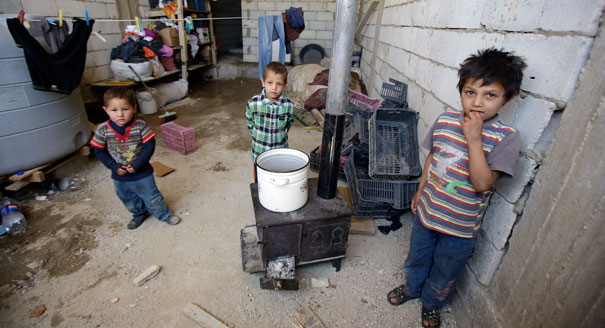
Health service delivery is high on the agenda in the Arab world. The international community must focus on increasing government efficacy and improving accountability, which can both lead to reform that will in turn expand and protect opportunities, health, and well-being in the Arab world.
Source: Lancet
Health service delivery is high on the agenda in the Arab world today, as the situation in Syria demonstrates. Part of a new series on health in the Arab world published by leading medical journal The Lancet, the paper “Governance and Health in the Arab World”—of which Carnegie Middle East Center director Lina Khatib is a co-author—suggests that there is a clear association between more effective government and average reductions in mortality in the region. The paper authors emphasize that the process of health policy reform is as important as the actual content, as for policy reform to be effective, governments need to be accountable in the delivery of services for all extant populations. The paper presents policy recommendations for health reform to international stakeholders, arguing for the inclusion of broader input from and engagement with citizens, civil society, and NGOs (as opposed to only engaging governments or entrenched elites). The paper concludes that the international community must focus on increasing government efficacy and improving accountability, which can both lead to reform that will in turn expand and protect opportunities, health, and well-being in the Arab world.
Rajaie Batniji
Former Director, Middle East Center
Khatib was director of the Carnegie Middle East Center in Beirut. Previously, she was the co-founding head of the Program on Arab Reform and Democracy at Stanford University’s Center on Democracy, Development, and the Rule of Law.
Melani Cammett
Jeffrey Sweet
Sanjay Basu
Amaney Jamal
, Dean of the Princeton School for Public and International Affairs and Professor of Politics and International Affairs, Princeton University
Paul Wise
Rita Giacaman
Carnegie does not take institutional positions on public policy issues; the views represented herein are those of the author(s) and do not necessarily reflect the views of Carnegie, its staff, or its trustees.

Sergei Kiriyenko used Russia’s parliamentary vote to further hone his strategy of corporate mobilization that is designed to maximize votes for United Russia.

Andrey Pertsev

The European far right might fail to steer EU policy in the direction Russia wants, but they will create enough chaos inside Europe to benefit the Kremlin.

Dimitar Bechev

If the Russian-speaking community in Latvia cannot articulate their interests without being seen as disloyal, they could end up embracing a pro-Kremlin agenda.

Sergejs Potapkins

Russia’s ruling party would have benefited from Putin appearing as its distant patron, but as an active frontman imposing his views on the public, he has done nothing but harm both the party’s election campaign and the ruling system overall.
Andrey Pertsev

Depleted financial reserves and a shrinking tax base mean it is no longer possible to simultaneously deliver high defense spending, price stability, and economic growth.

Alexandra Prokopenko