

In The Media
Mario Abou Zeid
{
  "authors": [
    "Mario Abou Zeid"
  ],
  "type": "legacyinthemedia",
  "centerAffiliationAll": "dc",
  "centers": [
    "Carnegie Endowment for International Peace",
    "Malcolm H. Kerr Carnegie Middle East Center"
  ],
  "collections": [],
  "englishNewsletterAll": "menaTransitions",
  "nonEnglishNewsletterAll": "",
  "primaryCenter": "Malcolm H. Kerr Carnegie Middle East Center",
  "programAffiliation": "MEP",
  "programs": [
    "Middle East"
  ],
  "projects": [],
  "regions": [
    "Gulf",
    "Syria",
    "Iraq",
    "Middle East"
  ],
  "topics": [
    "Political Reform",
    "Security"
  ]
}
Source: Getty
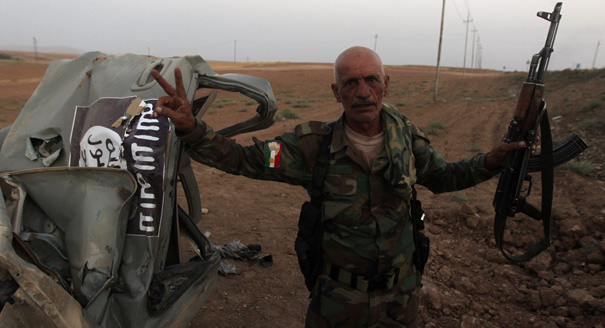
The Islamic State has ambitions in exporting its ideology outside the Middle East. What kind of threat does this pose to the global community?
Source: Press TV
As Muslims around the world were celebrating the Holy Month of Ramadan, the leader of the ISIL Takfiri terrorist group announced himself the ‘Caliph.’ The ISIL terrorist group, which currently controls parts of eastern Syria and Iraq’s northern and western regions, continues to commit acts of violence against the people of Iraq and Syria. According to reports, around 80 Kurds were massacred and hundreds of women kidnapped as slaves when the terrorist group swept into the northern Iraqi town of Kocho.
U.S. President Barack Obama has authorized military strikes on ISIL positions in Iraq. The United Nations has announced sanctions on individuals with links to the ISIL. The ISIL Takfiri militants took control of Iraq’s Mosul on June 10. They also took over the city of Tikrit but it was later liberated by the Iraqi army.
To discuss the global impact of ISIL and the threat it poses to countries outside the Middle East, Press TV’s Middle East Files spoke with Carnegie’s Mario Abou Zeid.
Former Research Analyst, Middle East Center
Abou Zeid was a research analyst at the Carnegie Middle East Center, where his work focuses on political developments in Lebanon, Syria, Iraq, and Iran.
Recent Work
Mario Abou Zeid
Mario Abou Zeid
Carnegie does not take institutional positions on public policy issues; the views represented herein are those of the author(s) and do not necessarily reflect the views of Carnegie, its staff, or its trustees.

Sergei Kiriyenko used Russia’s parliamentary vote to further hone his strategy of corporate mobilization that is designed to maximize votes for United Russia.

Andrey Pertsev

The European far right might fail to steer EU policy in the direction Russia wants, but they will create enough chaos inside Europe to benefit the Kremlin.

Dimitar Bechev

If the Russian-speaking community in Latvia cannot articulate their interests without being seen as disloyal, they could end up embracing a pro-Kremlin agenda.

Sergejs Potapkins

Russia’s ruling party would have benefited from Putin appearing as its distant patron, but as an active frontman imposing his views on the public, he has done nothing but harm both the party’s election campaign and the ruling system overall.
Andrey Pertsev

In the tenth year of his presidency, President Mirziyoyev’s system is becoming even more personalized than that of his predecessor Karimov.

Galiya Ibragimova