

Article
C. Raja Mohan, Darshana M. Baruah
{
  "authors": [
    "C. Raja Mohan"
  ],
  "type": "legacyinthemedia",
  "centerAffiliationAll": "dc",
  "centers": [
    "Carnegie Endowment for International Peace",
    "Carnegie India"
  ],
  "collections": [],
  "englishNewsletterAll": "ctw",
  "nonEnglishNewsletterAll": "",
  "primaryCenter": "Carnegie India",
  "programAffiliation": "SAP",
  "programs": [
    "South Asia"
  ],
  "projects": [],
  "regions": [
    "South Asia",
    "India"
  ],
  "topics": [
    "Foreign Policy"
  ]
}
Source: Getty
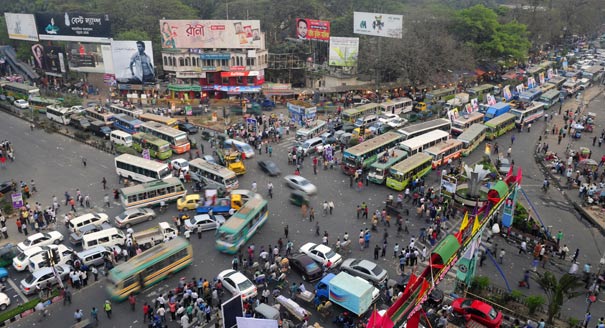
Constructing a border of cooperation with Bangladesh should liberate India from one of the major geopolitical constraints imposed on it by the Partition of Bengal.
Source: Indian Express
In telling the BJP workers in Assam that India will go ahead with the ratification of the land boundary agreement with Bangladesh, Prime Minister Narendra Modi has put the imperatives of national interest above the regional populism of his own party.
The land boundary agreement signed in Dhaka by Prime Minister Manmohan Singh in September 2011 involves rationalisation of the messy boundary that India inherited from the partition of the Subcontinent. Since it involves the ‘exchange’ of territories, the agreement required an amendment to the Constitution.
The 119th amendment bill was placed in the Rajya Sabha late last year amidst vociferous opposition from the Trinamool Congress of Bengal and the Asom Gana Parishad in Assam. While the national leadership of the BJP did not oppose the tabling of the bill, it signaled ambivalence given the opposition from the party unit in Assam.Much of the debate in Bengal and Assam about the agreement has been ill-informed. The agreement deals with tiny enclaves owned by one country but left inside the territory of the other at the time of Partition. This led to the tragedy of many people being left state-less and unable to access the benefits of development from either state. These enclaves have also become major sources of criminal activity.
Delhi and Dhaka rightly decided to exchange these enclaves after a survey of opinion in these enclaves–India would ‘cede’ 111 enclaves amounting to about 17,160 acres and ‘gain’ 57 enclaves spread over 7110 acres from the other.
The loss and gain of territory here is entirely notional for neither side was in control of these enclaves that they owned in theory since 1947. The overwhelming sentiment among people trapped in these enclaves is to stay put where they are rather than move to the other country.
While the Congress government in Assam supported the agreement, the Trinamool, AGP and the BJP played political football by raising concerns about ‘loss’ of territory.
Modi affirmed that the territorial swap with Bangladesh is in the interests of the nation. He also promised the people of Assam that Delhi will address their concerns on illegal immigration from Bangladesh. By framing an argument that limits the tension between ‘national’ and ‘regional’ interests, Modi has set the stage for the parliament’s approval of the 119th Constitution Amendment Bill.
The standing committee on external affairs had recently cleared the bill and the government is expected to seek approval of the two houses. India’s ratification of this agreement will mark a comprehensive territorial settlement of its longest land border. At 4060 km, India’s boundary with Bangladesh is longer than those with China and Pakistan.
Having a settled boundary will now allow Delhi and Dhaka to consider effective management the border–through more intensive cooperation on countering terrorism and extremism, facilitating trade across this long frontier, building trans-border industrial corridors and preventing illegal movement of people.
Constructing a border of cooperation with Bangladesh should liberate India from one of major geopolitical constraints imposed on it by the Partition of Bengal. When he travels to Dhaka in the near future, Modi is in a position to unveil a genuine strategic partnership with Bangladesh.
This article was originally published in the Indian Express.
Former Nonresident Senior Fellow, Carnegie India
A leading analyst of India’s foreign policy, Mohan is also an expert on South Asian security, great-power relations in Asia, and arms control.
Recent Work

C. Raja Mohan, Darshana M. Baruah


Alexander Gabuev, Paul Haenle, C. Raja Mohan, …
Carnegie does not take institutional positions on public policy issues; the views represented herein are those of the author(s) and do not necessarily reflect the views of Carnegie, its staff, or its trustees.

With the growth in points of friction between the great powers, organizations like the SCO will continue to play a role in the strategic adaptation of the smaller powers caught between them.

Temur Umarov

When faced with fuel shortages in the past, Central Asian governments could always count on additional supplies from Moscow. That safety net no longer exists.

Galiya Ibragimova

Despite unhappiness on the ground, Moscow is determined to use both carrot and stick to ensure there is record support for United Russia in occupied Ukraine.

Konstantin Skorkin
The recent damage inflicted by Ukrainian drones and missiles on Russia has made Belarus aware of its own vulnerabilities—and surprisingly amenable to Kyiv’s demands.

Artyom Shraibman
Russia looks set to reap economic benefits from closer ties with Southeast Asian countries that are keen to find reliable energy suppliers and diversify trade ties.
Alexander Gabuev