

Commentary
Alexey Malashenko
{
  "authors": [
    "Alexey Malashenko"
  ],
  "type": "commentary",
  "centerAffiliationAll": "",
  "centers": [
    "Carnegie Endowment for International Peace",
    "Carnegie Russia Eurasia Center"
  ],
  "collections": [],
  "englishNewsletterAll": "",
  "nonEnglishNewsletterAll": "",
  "primaryCenter": "Carnegie Russia Eurasia Center",
  "programAffiliation": "",
  "programs": [],
  "projects": [],
  "regions": [
    "Caucasus",
    "Russia"
  ],
  "topics": [
    "Security",
    "Religion",
    "Economy"
  ]
}
Source: Getty
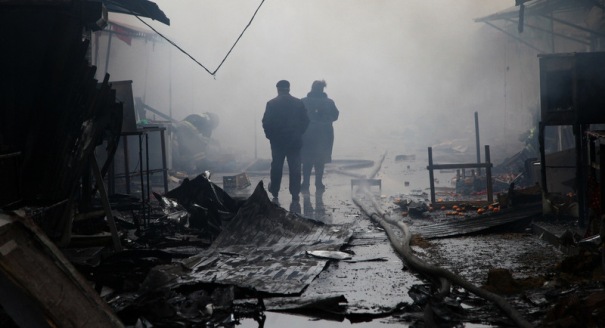
The terrorist attack that shook Grozny during the night of December 4 has put in question the authorities’ ability to control the situation in the North Caucasus, even in the seemingly stable Chechen Republic.
The terrorist attack that shook Grozny during the night of December 4 has put in question the authorities’ ability to control the situation in the North Caucasus, even in the seemingly stable Chechen Republic.
According to official reports, a group of 10 to 12 militants found their way into Grozny that night. Other sources cite a much larger figure. The journalist Milana Mazayeva writes that there were about a hundred militants; a traffic policeman confirms her report. The Caucasus Emirate, on the other hand, claimed there were 400 fighters—a number that appears wildly exaggerated. What we do know is that the operation was conducted by a sizeable unit which was likely backed up by other militants. The attackers were armed with grenade launchers and other weapons. They acted brazenly and put up a fierce resistance. Four hundred Russian government troops and heavy military equipment were deployed to eliminate the threat, but the battle still dragged on for several hours. In the end, the assault claimed the lives of 14 police and army troops; 28 were wounded. The Chechen Press House and School No. 20 were heavily damaged; the Berkat market was set ablaze.
It appears that the Caucasus Emirate got a new lease on life. The organization is now headed by Aliaskhab Kebekov, who has not yet asserted his claim to absolute power. For his part, Aslan Byutukayev looks more charismatic and decisive. In any event, the present-day “emirate” followers tend to act more decisively and conduct the riskiest of operations. For all we know, they may have been inspired to take such steps by the successes of the Islamic State (IS) in the Middle East.
The Emirate’s Chechen-language statement blames the Grozny attack on the disrespect of Muslims by the authorities who have “dared to touch (search) girls wearing hijabs.” While the “women’s question” has always been a touchy subject for the region’s followers of Islam, this pretext for such a disturbance is questionable. Instead, the attack is more akin to a demonstration of force and an effort to punish the Chechen leader Ramzan Kadyrov for his overconfidence in believing that he is the only authority in the republic.
Evidently, Kadyrov grasped this motive too. Following the attack, he stated that “the militants’ attempt to create an appearance of strength has failed.” He also said that “Chechnya no longer has illegal armed bands capable of this. It is possible that these people might have come from another region.”
These statements invite a number of questions. After all, both Kadyrov and the National Anti-terrorism Committee (NAC) claim that the Grozny attackers aimed to carry out other “large-scale attacks.” According to Kadyrov, they were preparing a series of terrorist acts for December 12, Russia’s Constitution Day. The 24 homemade explosive devices discovered in the Press House corroborate this account; the group’s firepower was far from depleted.
Incidentally, the authorities identified one of the dead fighters as Anzor Taramov, whom they alleged to have killed in 2011. The NAC also confirmed that all of the killed militants were Chechen.
Kadyrov accepted the challenge. He stated that fighters’ families will now bear responsibility for their relatives’ acts: they will be expelled from Chechnya, and their homes will be razed to the ground. Such decisions are made out of desperation.
It remains to be seen whether the December battle on the streets of the Chechen capital will become an isolated incident or whether it will set off a new round of destabilization in the region, primarily in Dagestan, Ingushetia, and Kabardino-Balkaria. It is also unclear how the Grozny events will be interpreted in Russia’s other Muslim regions, such as Tatarstan.
Finally, are the acts perpetrated by the Chechen extremist opposition linked to the events in the Middle East? Has the Islamic State extended its reach to the North Caucasus? After all, its “caliph,” Abu Bakr al-Baghdadi threatened to start a war in this Russian region and to punish Vladimir Putin for his support of the Syrian president, Bashar al-Assad. At any rate, the “IS factor” must be taken into account. It is impossible to discount the fighters who return home from Syria and Iraq and, as heroes in the eyes of some Muslim youths, fuel the growth of Islamic radicalism. Outside of the North Caucasus, some Central Asians have already taken an oath of allegiance to Islamic State via Skype. Against the backdrop of the events in the Middle East, the Grozny attack does not look so extraordinary.
Former Scholar in Residence, Religion, Society, and Security Program
Malashenko is a former chair of the Carnegie Moscow Center’s Religion, Society, and Security Program.
Recent Work
Alexey Malashenko
Alexey Malashenko

Two divergent trends—Putin’s hardline vision of how to prosecute the war in Ukraine, and a growing desire for change in Russia—could tear the regime apart.

Tatiana Stanovaya
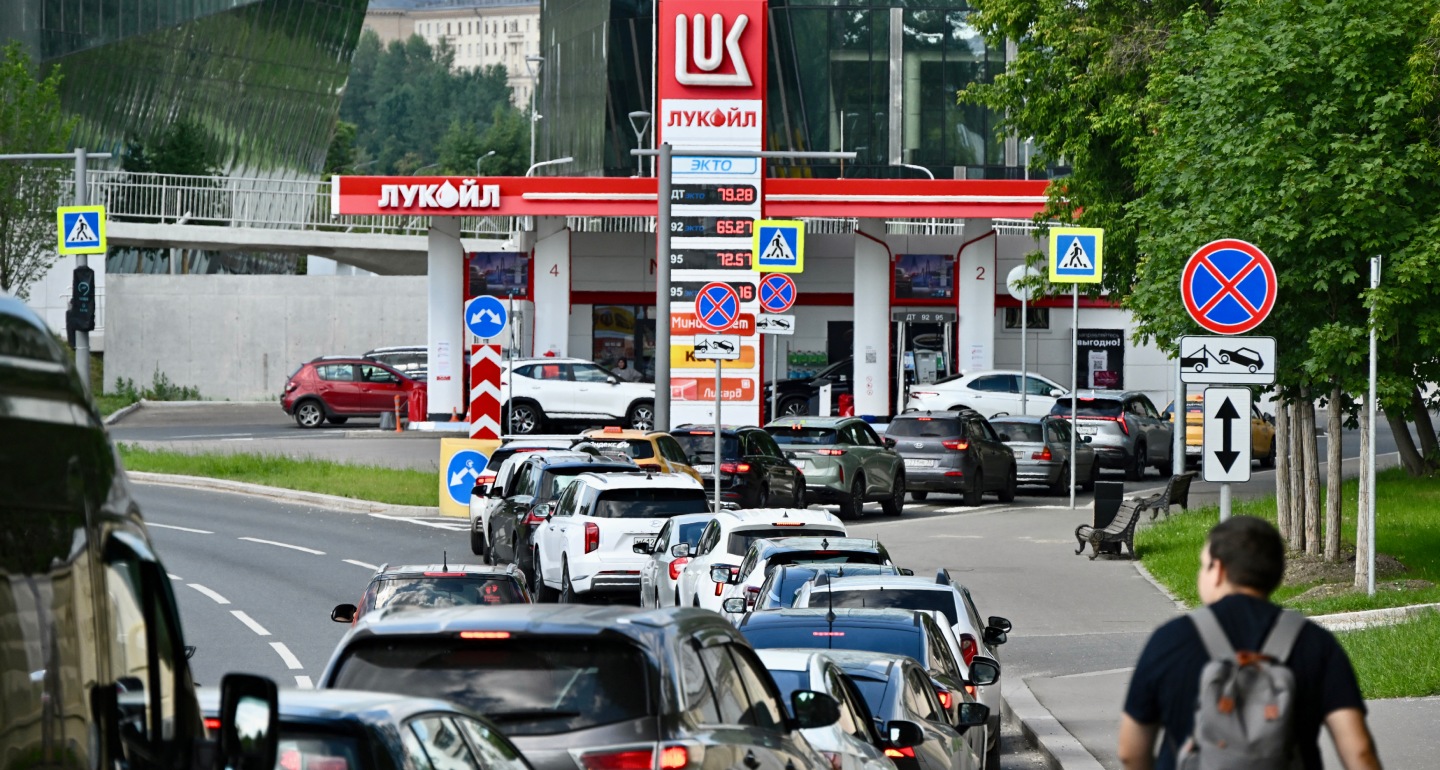
Official discussions about mini oil refineries are unlikely to come to anything—but the mere fact they’re happening reveals the regime is failing to deliver a functioning economy.

Sergey Vakulenko
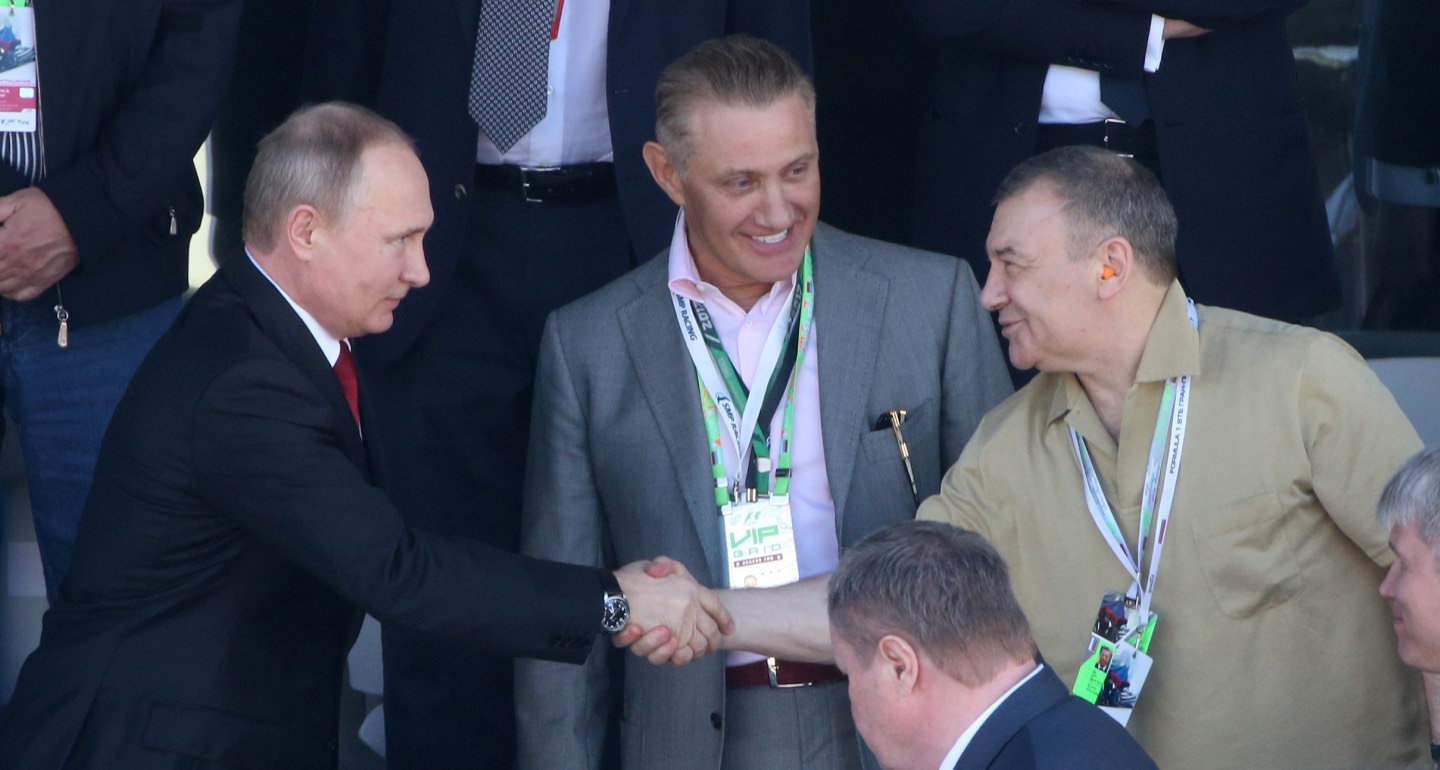
The security forces are targeting Arkady and Boris Rotenberg’s patronage network—and in Putin’s Russia, it’s extremely hard to stop a purge once it’s under way.
Mikhail Komin

Andrey Melnichenko’s essay offers no answer to the fundamental question of how, under any kind of negotiated settlement, Europe can protect itself from the Russian ressentiment that is inevitable in all scenarios except for an outright victory for Putin.

Leonid Bershidsky

Despite unhappiness on the ground, Moscow is determined to use both carrot and stick to ensure there is record support for United Russia in occupied Ukraine.

Konstantin Skorkin