

Commentary
Joseph Bahout
{
  "authors": [
    "Joseph Bahout"
  ],
  "type": "legacyinthemedia",
  "centerAffiliationAll": "dc",
  "centers": [
    "Carnegie Endowment for International Peace",
    "Malcolm H. Kerr Carnegie Middle East Center"
  ],
  "collections": [
    "Arab Awakening"
  ],
  "englishNewsletterAll": "menaTransitions",
  "nonEnglishNewsletterAll": "",
  "primaryCenter": "Carnegie Endowment for International Peace",
  "programAffiliation": "MEP",
  "programs": [
    "Middle East"
  ],
  "projects": [],
  "regions": [
    "Middle East",
    "Saudi Arabia",
    "Western Europe",
    "France",
    "Gulf"
  ],
  "topics": [
    "Political Reform",
    "Foreign Policy"
  ]
}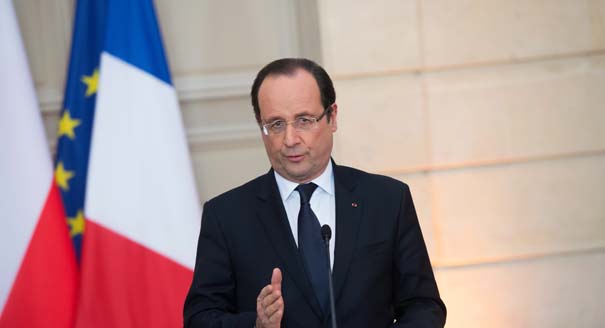
Source: Getty
France and Saudi Arabia have agreements on a number of issues, such as Iran’s nuclear program, but France has several concerns about the way Saudi Arabia is positioning itself toward the Arab Spring.
Source: Radio France International
Speaking on Radio France International, Carnegie’s Joseph Bahout explained that historically, France’s relationship with Saudi Arabia has been strong on economic grounds. France and Saudi Arabia have agreements on a number of issues, such as Iran’s nuclear program and the departure of Syrian President Bashar al-Assad from power, Bahout said. However, France has several concerns about the way Saudi Arabia is positioning itself toward the Arab Spring in general, he argued, and with Islamist movements in particular.
This interview originally aired on Radio France International.
Former Nonresident Fellow, Middle East Program
Joseph Bahout was a nonresident fellow in Carnegie’s Middle East Program. His research focuses on political developments in Lebanon and Syria, regional spillover from the Syrian crisis, and identity politics across the region.
Recent Work
Joseph Bahout
Joseph Bahout
Carnegie does not take institutional positions on public policy issues; the views represented herein are those of the author(s) and do not necessarily reflect the views of Carnegie, its staff, or its trustees.

Without a ceasefire with Ukraine on attacking each other’s energy infrastructure—to which the Kremlin is unlikely to agree—the diesel agreement between Putin and Trump is largely for show, rather than representing a genuine increase in the volumes of Russian diesel on the global market.

Sergey Vakulenko

Ex-president Gurbanguly Berdimuhamedov remains interested in politics, but his son Serdar, Turkmenistan’s current president, is becoming increasingly independent and willing to break with his father’s legacy. If their covert rivalry goes too far, both risk losing power.

Galiya Ibragimova

Despite a new textbook, an influx of Russian teachers and managers, and an end to the teaching of Ukrainian, the Kremlin is unlikely to have “reprogrammed” locals.

Konstantin Skorkin

Cargo traffic through Russia’s Northern Sea Route has increased because of the disruption caused by the conflict in the Middle East, the Ukraine war, and U.S.-China tensions.

Mikhail Korostikov

Sergei Kiriyenko used Russia’s parliamentary vote to further hone his strategy of corporate mobilization that is designed to maximize votes for United Russia.

Andrey Pertsev