

Article
C. Raja Mohan, Darshana M. Baruah
{
  "authors": [
    "C. Raja Mohan"
  ],
  "type": "legacyinthemedia",
  "centerAffiliationAll": "dc",
  "centers": [
    "Carnegie Endowment for International Peace",
    "Carnegie India",
    "Malcolm H. Kerr Carnegie Middle East Center"
  ],
  "collections": [],
  "englishNewsletterAll": "ctw",
  "nonEnglishNewsletterAll": "",
  "primaryCenter": "Carnegie India",
  "programAffiliation": "SAP",
  "programs": [
    "South Asia"
  ],
  "projects": [],
  "regions": [
    "South Asia",
    "India",
    "North America",
    "United States",
    "Middle East",
    "Iran"
  ],
  "topics": [
    "Foreign Policy",
    "Political Reform"
  ]
}
Source: Getty
As Tehran and Washington inch towards a nuclear deal, there will be room for expansive engagement between India and Iran.
Source: Indian Express
As the NDA government devotes some attention to high-level political engagement with the Middle East, Iran offers one of the greatest strategic possibilities. But in realising that opportunity, New Delhi will have to negotiate a number of obstacles. The recent visits to Tehran by Transport Minister Nitin Gadkari and Foreign Secretary S. Jaishankar are part of that effort. External Affairs Minister Sushma Swaraj is likely to follow soon.
As Tehran and Washington inch towards a nuclear deal, which will begin to ease nearly four decades of hostility between them, there will be much room for expansive engagement between India and Iran. Although the prospect of a nuclear reconciliation appears so close and tantalising, we are not there yet. That casts a shadow over Delhi’s diplomacy towards Tehran.
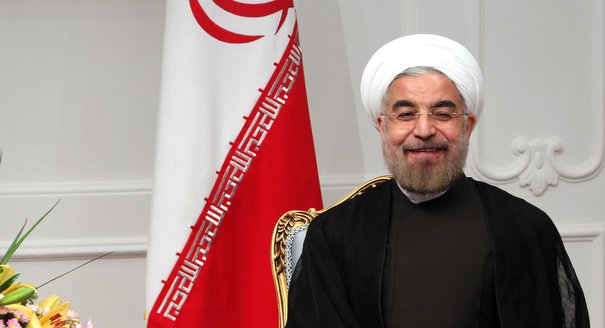
As Iranian President Hassan Rouhani noted, a nuclear deal is within reach before the agreed deadline of June 30. But he added a caveat: If the US and its Western partners put “new issues” on the table, the negotiation could get complicated. Even if an agreement is finalised, it will be a while before it is implemented. Given the complexity of the deal and the entrenched mutual suspicions, the interpretation of the agreement’s terms is likely to become a bone of contention.Meanwhile, here is the diplomatic problem for India: Tehran wants Delhi to demonstrate the commitment to move forward right away. Delhi, which does not want to break the sanctions regime, tends to be cautious. The trick is to focus on making quick advances in those areas that are not targets of international sanctions and keep a practical roadmap ready for rapid movement on key areas like energy cooperation, as sanctions begin to be lifted.
Stabilising Afghanistan has long been a shared objective of India and Iran. It has become even more salient after the US ended its combat role at the end of last year. While a small number of American troops remain for purposes of training, Kabul is finding it increasingly hard to cope with the vigorous military offensive by the Taliban.
In the late 1990s, when the Taliban, backed by Pakistan, raced to power in Afghanistan, Delhi and Tehran, along with Russia and some Central Asian states, helped sustain the political opposition to its rule.
It is by no means clear that Delhi and Tehran can simply return to that kind of cooperation. For, much has changed in and around Afghanistan since. For example, some recent Western media reports say Iran might be helping the Taliban. While such an alliance seems improbable, the storyline is that Shia Iran might be warming up to the Taliban to counter the Islamic State, which represents a more virulent form of Sunni extremism.
Whether the eventual positions of India and Iran converge fully or not, Delhi and Tehran could gain much by sustained political consultations and intelligence exchanges on the rapidly evolving situation in Afghanistan.
The sharpening political rivalry between Tehran and Riyadh, the unmitigated tensions between Iran and Israel and the deepening sectarian schisms are breaking up the old order in the Middle East. The rise of Iranian power and its Arab neighbours’ fear have begun to generate strange alignments, for example, between sections of the Gulf monarchies and Israel.
Until now, India’s engagement with Iran has been constrained by the prolonged hostility between Washington and Tehran. Delhi’s future constraints are likely to emerge from the shifting sands of regional politics.
The Narendra Modi government is determined to develop a special relationship with Israel that can contribute significantly to the transformation of India’s defence sector. Most of India’s current economic, energy and human resource equities are in the Arab Gulf; securing these will remain the highest priority. And Iran is critical for stabilising India’s northwestern marches, providing access to Central Asia and in meeting India’s future energy needs. The pursuit of these separate but significant interests in the Middle East is bound to produce multiple contradictions. Managing them will be a great challenge for Indian diplomacy.
This article was originally published in the Indian Express.
Former Nonresident Senior Fellow, Carnegie India
A leading analyst of India’s foreign policy, Mohan is also an expert on South Asian security, great-power relations in Asia, and arms control.
Recent Work

C. Raja Mohan, Darshana M. Baruah


Alexander Gabuev, Paul Haenle, C. Raja Mohan, …
Carnegie does not take institutional positions on public policy issues; the views represented herein are those of the author(s) and do not necessarily reflect the views of Carnegie, its staff, or its trustees.

Ex-president Gurbanguly Berdimuhamedov remains interested in politics, but his son Serdar, Turkmenistan’s current president, is becoming increasingly independent and willing to break with his father’s legacy. If their covert rivalry goes too far, both risk losing power.

Galiya Ibragimova

Despite a new textbook, an influx of Russian teachers and managers, and an end to the teaching of Ukrainian, the Kremlin is unlikely to have “reprogrammed” locals.

Konstantin Skorkin

Cargo traffic through Russia’s Northern Sea Route has increased because of the disruption caused by the conflict in the Middle East, the Ukraine war, and U.S.-China tensions.

Mikhail Korostikov

Sergei Kiriyenko used Russia’s parliamentary vote to further hone his strategy of corporate mobilization that is designed to maximize votes for United Russia.

Andrey Pertsev

Trump has promised Belarus a massive potash deal. But Minsk is seeking something greater: restored Western transit and greater room for maneuver from Russia.

Balázs Jarábik