

Paper
James M. Acton, Ankit Panda
{
  "authors": [
    "James M. Acton"
  ],
  "type": "legacyinthemedia",
  "centerAffiliationAll": "dc",
  "centers": [
    "Carnegie Endowment for International Peace"
  ],
  "collections": [],
  "englishNewsletterAll": "ctw",
  "nonEnglishNewsletterAll": "",
  "primaryCenter": "Carnegie Endowment for International Peace",
  "programAffiliation": "NPP",
  "programs": [
    "Nuclear Policy"
  ],
  "projects": [],
  "regions": [
    "East Asia",
    "Japan"
  ],
  "topics": [
    "Nuclear Policy",
    "Nuclear Energy"
  ]
}
Source: Getty
Japan’s government should take steps to create flexibility for future management of nuclear waste.
Source: Kyodo News
The Ministry of Economy, Trade and Industry has designated October as "Month for Dialogue with the Public on Final Disposal of High-level Radioactive Wastes," with the aim of identifying a site where such wastes can be buried. Before deciding on a location, however, the Japanese public should first consider whether the country's basic strategy for managing nuclear waste is the right one.
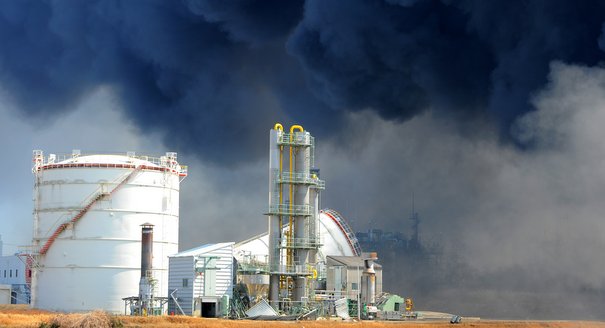
Under its current strategy, Japan seeks to reprocess spent fuel, that is, extract plutonium for the purpose of making more fuel. Japan Nuclear Fuel Ltd. plans to open an industrial-scale plutonium-separation facility, Rokkasho Reprocessing Plant, in March 2016, although significant delays seem likely. However, because of the challenges in restarting nuclear reactors after the March 2011 accident at Fukushima Daiichi Nuclear Power Station, Japan may be unable to use all the plutonium it plans produce. As a result, there is a serious risk that it will breach a long-standing pledge not to stockpile excess plutonium.This risk should prompt Japan to consider its approach to fuel management. Indeed, Japan's pursuit of reprocessing technology is relatively unusual. Most countries with nuclear power program -- including the United States -- do not reprocess spent fuel but simply store it, ahead of its eventual burial.
To be sure, in the short term, Japan has little choice but to continue with its existing policy -- as experience shows. In 2012, the administration of Prime Minister Yoshihiko Noda actually tried to abandon reprocessing, but encountered tremendous domestic opposition that force it to back down. However, what Japan can and should do is create a flexible system that will enable future generations to choose whether to continue with reprocessing or bury spent fuel directly.
The plutonium balance is not the only reason for adopting a flexible approach. Rokkasho Reprocessing Plant is not designed to handle plutonium-based fuels, and so Japan intends to build a second reprocessing plant for that purpose. Because such a facility would be very costly and difficult to site, it would be wrong to give future generations no choice but to build it. As a result, today's government should take three steps to create flexibility for the future.
First, the geological repository that Japan is currently trying to develop should be designed and licensed to accommodate spent fuel as well as the high-level wastes from reprocessing.
Second, Japanese utilities are required to set aside money to fund both reprocessing and the eventual burial of high-level waste; legally, these funds cannot be used for any other purpose. The Diet should change the law so that these funds can be used for the direct disposal of spent fuel as well.
Finally, Japan needs more interim storage space where spent fuel can be safely kept prior to its eventual disposal. (In fact, because of the possibility that reprocessing might be further delayed, the government has already called on the utilities to find such space). As a first step, Tokyo Electric Power Co. and the Japan Atomic Power Co. should sell space at their newly completed storage facility in Mutsu City. As these utilities are likely to find it very difficult to restart their reactors, they now have less urgent spent-fuel management challenges than other utilities.

Jessica T. Mathews Chair, Co-director, Nuclear Policy Program
Acton holds the Jessica T. Mathews Chair and is co-director of the Nuclear Policy Program at the Carnegie Endowment for International Peace.
Recent Work

James M. Acton, Ankit Panda
James M. Acton
Carnegie does not take institutional positions on public policy issues; the views represented herein are those of the author(s) and do not necessarily reflect the views of Carnegie, its staff, or its trustees.
The truth is that Japan’s government is seeking a degree of reengagement but at a vastly reduced level than under Abe. Most significantly, Japan has shown no willingness to ease sanctions.

James D.J. Brown
Tokyo would have to surmount a lot of obstacles—not least Western sanctions—if it wanted to return Russian oil imports to even modest pre-2022 volumes.

Vladislav Pashchenko
Troubled by the growing salience of nuclear debates in East Asia, Moscow has responded in its usual way: with condemnation and threats. But by exacerbating insecurity, Russia is forcing South Korea and Japan to consider radical security options.
James D.J. Brown
For Putin, upgrading Russia’s nuclear forces was a secondary goal. The main aim was to gain an advantage over the West, including by strengthening the nuclear threat on all fronts. That made growth in missile arsenals and a new arms race inevitable.
Maxim Starchak
For a real example of political forces engaged in the militarization of society, the Russian leadership might consider looking closer to home.
James D.J. Brown