

Commentary
Official discussions about mini oil refineries are unlikely to come to anything—but the mere fact they’re happening reveals the regime is failing to deliver a functioning economy.
Sergey Vakulenko
{
  "authors": [
    "Itamar Rabinovich"
  ],
  "type": "other",
  "centerAffiliationAll": "dc",
  "centers": [
    "Carnegie Endowment for International Peace"
  ],
  "collections": [],
  "englishNewsletterAll": "ctw",
  "nonEnglishNewsletterAll": "",
  "primaryCenter": "Carnegie Endowment for International Peace",
  "programAffiliation": "russia",
  "programs": [
    "Russia and Eurasia"
  ],
  "projects": [
    "Task Force on U.S. Policy Toward Russia, Ukraine, and Eurasia"
  ],
  "regions": [
    "North America",
    "United States",
    "Middle East",
    "Iran",
    "Israel",
    "Syria",
    "Russia"
  ],
  "topics": [
    "Security",
    "Foreign Policy"
  ]
}
Source: Getty
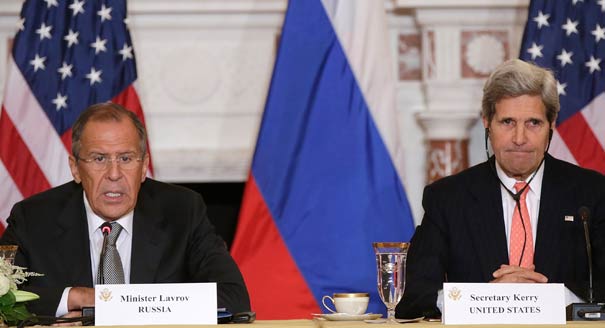
The Russian-U.S. relationship in the Middle East over the coming years will likely be defined by rivalry and competition rather than by cooperation.
This publication is from the Task Force on U.S. Policy Toward Russia, Ukraine, and Eurasia project.
The United States’ relationship with Russia in the Middle East during the past few years has been conducted in the context of unprecedented turmoil. The Middle East had been proverbially unstable in earlier decades—wars, revolutions, civil wars, coups d’état, regional and international rivalries—but patterns and structures were still discernible. There was a system of states, there was a system of inter-Arab relations, there was an Arab-Israeli conflict, and, of course, there was the Soviet-U.S. Cold War.These familiar patterns have now been disrupted and altered by several developments:
The themes and issues reviewed above provided the context in which a new Russian-U.S. rivalry developed in the Middle East. When Vladimir Putin began in the early years of this century to pursue a new, assertive foreign policy, seeking to position Russia as a competitor if not a peer of the United States, the Middle East was an early arena for his conduct. The East—a large and diverse region, rich with conflict and putting pressure in multiple ways on Washington’s position—provided an attractive setting for an ambitious power with limited resources. Russia chose to seek a role in all Middle East issues, willing to pursue complex policies and interact with everyone, impervious to real and apparent contradictions in its own conduct.
Thus Russia became part of the P5+1 negotiations with Iran on the nuclear deal, but it had all along pursued a milder line than the United States and France toward Iran. Russia’s (and China’s) participation in the negotiations helped Iran get a better deal. When U.S. relations with Egypt and Saudi Arabia were strained by the Arab Spring and its sequels, Russia was quick to offer diplomatic alternatives and arms deals. Russia conducts a regular dialogue with Israel and has exploited Netanyahu’s quest to reduce his dependence on Washington, but it is also a steady supporter of the Palestinian cause and wasted no time in inviting Hamas’s leader, Ismail Haniyeh, to Moscow when he won the Palestinian elections in 2006. Russia uses the threat of providing Iran and Syria with game-changing weapon systems in its dealings with both Washington and Jerusalem.
A new phase in Russia’s policy and rivalry with the United States in the Middle East was inaugurated by the outbreak of the Syrian revolt and civil war in March 2011. Since the inception of the crisis, Moscow has placed itself at Bashar al-Assad’s side as his most important international supporter. Until October 2015, this support manifested itself primarily through the prevention (with Chinese help) of a UN Security Council resolution that would have sanctioned international military intervention, as well as the enervation of all efforts to reach a political solution predicated on Assad’s departure from power. Russia’s policy was driven by a simple calculus: Assad’s regime was the last remaining Russian asset in the Middle East, and Moscow attaches great strategic importance to the Russian naval base in Tartus and the airfield it acquired on the Syrian coast near Latakia.
The prospect of Syria falling into Washington’s direct or indirect sphere of influence was abhorrent to Moscow. In the summer of 2013, Russia helped defuse the chemical weapons crisis in Syria by offering the elimination of Syria’s chemical weapons arsenal as an alternative to a major U.S. air raid against a Syrian ruler who had crossed a so-called redline drawn by Obama one year earlier. Putin helped Obama out of a tree he had not wanted to climb but also saved himself the embarrassment of Russian helplessness in the face of a U.S. raid on Russia’s long-standing ally. Furthermore, Putin enhanced his profile as a broker in Middle East diplomacy.
The Assad regime’s survival in part of Syria was made possible by a division of labor between Tehran and Moscow—Iranian military and economic support and Russian diplomatic aid. In regional terms, this meant that Russia had been allied with the Shia axis on the defining issue of Middle East politics while cultivating Sunni countries such as Saudi Arabia and Egypt. In October 2015, Russia’s role in the Syrian crisis and its position in the Middle East more broadly were transformed by the decision to intervene militarily in the conflict. Russia sent squadrons of fighter jets to Syria as well as auxiliary units and started a ferocious, sometimes indiscriminate, bombing campaign against rebel strongholds. Moscow’s decision was prompted by the opposition’s success in penetrating the Assad regime’s heartland, but Putin may well have been motivated also by his perception that Obama’s reticence and the United States’ absence enabled him to become the arbiter of the Syrian crisis. While claiming that it focused its attacks on the self-proclaimed Islamic State and jihadi targets, the Russian air force bombed mostly moderate Islamist groups and groups supported by the United States and its Middle Eastern allies. There were some initial setbacks, most notably the destruction of a Russian passenger plane over the Sinai and the shooting down of a Russian jet by the Turkish air force over the Syria-Turkey border. But on the whole, Putin has done well so far—Assad expanded his area of control, most importantly in the area around Aleppo, and Russia brokered, together with the United States as a peer, a cessation of hostilities. It should be noted that (reportedly) the Russians gave the United States an hour’s notice before launching their air campaign and demanded that the United States clear Syria’s air space (according to the same reports, the United States declined).
A renewed diplomatic effort to promote a political solution failed, primarily because Assad is emboldened and in no mood to offer concessions. But Russia did collaborate with the United States in arranging the cessation of hostilities. In mid-March 2016, Putin pulled off yet another surprise by announcing a partial withdrawal of his forces from Syria and a de facto end to the military campaign. According to Putin, the partial withdrawal was undertaken because the objective of the campaign has been accomplished. Several explanations have been offered in the West for this Russian move. Some of them are far-fetched. The most reasonable explanation is that the mission has indeed been accomplished in that Assad’s regime has been saved and, to some extent, consolidated. Since some Russian military presence is to remain in Syria and Russia’s military infrastructure remains intact, military activity can be resumed at any point. For the present, Putin is suspending a costly and risky campaign, keeping his options open and, most importantly, remaining the key external player in Syria and the unmistakable diplomatic winner.
Needless to say, numerous imponderables present a daunting challenge to any attempt to forecast political developments in the Middle East. It is, for one thing, difficult to envision the Russian-U.S. relationship in the Middle East a year prior to the inauguration of a new U.S. administration. The future course of the Syrian crisis, the price of oil, the future of the Israeli-Palestinian conflict, and the prospect of regime change in a major Arab country are other cases in point. With these caveats in mind, we will now try to project the course of Russian-U.S. relations in the Middle East over the next five years.
We assume that the relationship will be defined by rivalry and competition rather than by cooperation. There is ample talk of Barack Obama’s potential quest to define and upgrade his foreign policy legacy in the coming months. As we saw, he is aware of the criticisms of his Syrian policy, but it is difficult to envision him effecting a major change in the policy he is ardently defending. It is, however, quite likely that a new administration will change the basic premises of Washington’s current policy in the region, adopt a more activist policy toward the Syrian crisis, and challenge Russia’s current role and policy in the region. The Syrian crisis is likely to remain the defining issue of Middle East politics and the focal point of Washington’s relationship with Moscow for some time. The current cessation of hostilities is not a long-term arrangement. Ideally, it should lead to a negotiated settlement, but the prospects of reconciling the interests of multiple domestic, regional, and international actors are dim.
Russia is less committed to Assad and his clan than its partner Iran is, but Moscow is determined to maintain its primacy in the Syrian arena, protect its naval base, and prevent U.S. hegemony or ascendancy by one or more of the latter’s regional allies. Russia is still supportive of Assad, but there are indications that Moscow is unhappy with Assad’s refusal to take a more flexible position in order to facilitate a diplomatic accommodation. The suspension of Russia’s military campaign could breathe new life into the peace negotiations that UN Special Envoy for Syria Staffan de Mistura is trying to conduct, but it would take a long time to reestablish a unified state, if it ever does. If that ambitious goal cannot be accomplished, Russia will continue to support the regime’s control over part of Syria. If the tide of the war turns, plan B would be to support a rump Alawite state that would include the Syrian coast (and the Russian naval and air bases). Needless to say, the vigor of Washington’s position will have a major impact on the prospect of these scenarios.
If the cessation of hostilities holds and an accommodation of sorts crystalizes, the issue of taking on the Islamic State in eastern Syria and western Iraq will become a major issue on the agenda. Moscow will have to decide whether it wants to join the United States in an all-out offensive against the Islamic State. At this point, Russia and the United States are operating at cross purposes in northern and eastern Syria, cultivating different local allies. The Arab press has published several unconfirmed reports of both parties constructing local airports in the northeast.
The centrality of the Syrian crisis and Russia’s role in it will continue to affect Moscow’s relationship with several regional actors:
Iran: Russia and Iran are likely to continue to pursue divergent but overall compatible policies in Syria. Russia is not as concerned with Iran’s disruptive role in the region as Washington’s Sunni allies are. Nor is Russia concerned with radical Shia projection into its own Muslim regions—Moscow’s preoccupation is with the projection of the jihadi challenge into these areas. Since the Syrian and Iraqi arenas are intimately connected and since Iran is invested in both—and given the multiplicity of actors in both arenas and the prospect of a change in U.S. policy toward both or either Russia and Iran—this area could easily see new and fierce bilateral and multilateral conflicts.
Israel: Jerusalem is worried about Russia’s military presence in Syria. The freedom of action that Israel’s air force had over Syria and Lebanon has already been affected. Israel is worried by the prospect of a victory in the Syrian civil war by the Moscow-Tehran-Assad-Hezbollah axis. Russia maintains its dialogue with Israel and continues to exploit the tension between Netanyahu and Obama. If tension continues between Netanyahu and the next administration, Moscow’s prospects of expanding this wedge will improve. It is important to pay attention to the Israeli right wing’s drift away from an intimate partnership with Washington to a foreign policy that seeks to diversify Israel’s foreign orientation by cultivating relations with Russia, China, and India, among others. Putin has been exploiting this shift, the real benefits of which for Israel have yet to be seen.
Turkey: One of the unexpected by-products of the Syrian crisis was the light it shed on the severity of the domestic challenges to the coherence of the Turkish state. Less than a decade ago, Erdogan was seeking a hegemonic role in the Middle East and the Arab world. Presently, he is facing policy failures and severe threats. Turkey has a lot at stake in Syria and Iraq, first and foremost (but not only) the prospect of Kurdish independence or high-grade autonomy and their projection into Turkey. Russia’s military role in Syria is a strategic threat to Turkey and a potential Russian role in advancing Kurdish aspirations would exacerbate this threat dramatically. These developments should in principle help mend Turkey’s relations with the United States. Dealing with Erdogan’s idiosyncratic style is not easy, but herein lies a challenge and an opportunity for Washington.
The Kurds: The Kurds have been a stateless actor in the Middle East for a century now, but their role has been dramatically enhanced in recent years. The Kurds in northern Iraq enjoy virtual independence without sovereignty and Syria’s Kurds are one of the few beneficiaries of the Syrian civil war. At least some of the Syrian Kurds are U.S. allies in the war against the Islamic State. As the Russian-U.S. competition in the Iraqi-Syrian space is likely to intensify in the next few years, the Kurds’ attractiveness as a local ally is likely to increase.
Saudi Arabia: Saudi Arabia’s unhappiness with the policies of the Obama administration has been mentioned above. The Saudis must have resented Obama’s reference to their rivalry with Iran in his recent Atlantic profile. In their view of the world, the role of the superpower patron and ally is not to tell them to patch up with their bitter rival, but to support them. In the coming years, the Saudi-Iranian and Sunni-Shia rivalries are likely to remain major issues, if not the major issues, in regional politics. As long as the United States seems to hope for a reorientation of Iranian politics and policies and does not join an all-out campaign against Iran’s regional ambitions, Saudi Arabia and the other conservative Sunni states will continue to resent U.S. policies. And in typical fashion, Russia will seek to exploit these tensions while pursuing its own cooperation with Iran.
Itamar Rabinovich served as Israel’s ambassador to the United States and as chief negotiator with Syria from 1992 to 1996. He holds distinguished positions on the boards of several international foundations and on the faculty of leading academic institutions, serving as professor emeritus of Middle Eastern history at Tel Aviv University and distinguished global professor at NYU.
Itamar Rabinovich
Itamar Rabinovich served as Israel’s ambassador to the United States and as chief negotiator with Syria from 1992 to 1996. He holds distinguished positions on the boards of several international foundations and on the faculty of leading academic institutions, serving as professor emeritus of Middle Eastern history at Tel Aviv University and distinguished global professor at NYU.
Carnegie does not take institutional positions on public policy issues; the views represented herein are those of the author(s) and do not necessarily reflect the views of Carnegie, its staff, or its trustees.
Official discussions about mini oil refineries are unlikely to come to anything—but the mere fact they’re happening reveals the regime is failing to deliver a functioning economy.

Sergey Vakulenko
The security forces are targeting Arkady and Boris Rotenberg’s patronage network—and in Putin’s Russia, it’s extremely hard to stop a purge once it’s under way.

Mikhail Komin

Andrey Melnichenko’s essay offers no answer to the fundamental question of how, under any kind of negotiated settlement, Europe can protect itself from the Russian ressentiment that is inevitable in all scenarios except for an outright victory for Putin.

Leonid Bershidsky

Despite unhappiness on the ground, Moscow is determined to use both carrot and stick to ensure there is record support for United Russia in occupied Ukraine.

Konstantin Skorkin
Medvedev’s defeat in the battle for the position of speaker appears to signal that the long process of his marginalization in Russian politics has passed the point of no return.

Andrey Pertsev