

Research
- +8
William J. Burns, Michael Chertoff, Catherine Ashton, …
{
  "authors": [
    "William J. Burns"
  ],
  "type": "legacyinthemedia",
  "centerAffiliationAll": "",
  "centers": [
    "Carnegie Endowment for International Peace",
    "Carnegie China"
  ],
  "collections": [],
  "englishNewsletterAll": "",
  "nonEnglishNewsletterAll": "",
  "primaryCenter": "Carnegie Endowment for International Peace",
  "programAffiliation": "",
  "programs": [],
  "projects": [],
  "regions": [
    "United States"
  ],
  "topics": [
    "Political Reform",
    "Economy",
    "Climate Change",
    "Foreign Policy"
  ]
}
Source: Getty
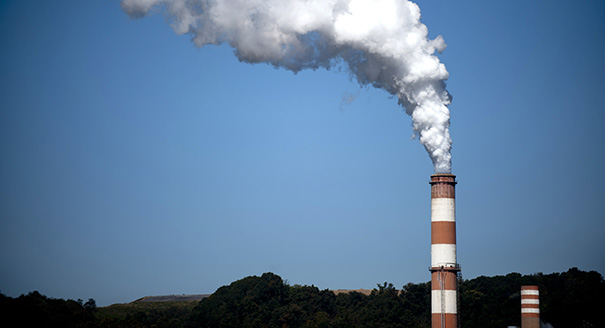
Even though the Clean Power Plan’s opponents will present the battle against climate change as one we cannot afford to fight, in reality it is one we cannot afford to lose.
Source: Hill
With the EU’s ratification, the Paris Climate Agreement is set to enter into force. This is a historic turning point in the fight against one of the most consequential global threats of our time. Here at home, we face another turning point with the United States Court of Appeals for the D.C. Circuit’s hearing of a case that will determine the future of the Obama Administration’s Clean Power Plan.
The Paris Agreement created a framework in which all nations knew that their efforts would be matched by others. This unprecedented global commitment only happened because the United States showed that it was willing to take the first step – and convinced China to come along. Well in advance of the Paris meetings, the two countries jointly announced transformative climate goals. China – which currently pumps out a quarter of the world’s greenhouse gas emissions – agreed to halt its emissions growth by 2030, including by generating hundreds of gigawatts of solar and wind power. The United States pledged to promote renewable energy, to modernize the electric grid, to promote energy efficiency and fuel economy, and to make other changes that will help usher in the clean-energy future. A centerpiece of the United States’ commitments was the Clean Power Plan, which will reduce emissions from power plants by nearly a third below 2005 levels by 2030.Research released this summer suggests China may meet its goals well ahead of schedule. The United States is off to a strong start as well, and the Clean Power Plan promises to accelerate further the transition to cleaner energy generation. Unfortunately, as soon as the EPA released the Clean Power Plan in August 2015, opponents filed suit, arguing that the Obama Administration’s authority under the Clean Air Act did not extend to regulating carbon emissions from power plants – or at least not in the way that the Clean Power Plan did. The D.C. Circuit – often called the “second highest court in the land” – is considering the merits of their arguments.
The stakes could hardly be higher. By taking the first step, the United States was able to generate a planet’s worth of ambitious commitments – such as India’s goal to generate 40% of its energy from non-fossil-fuel sources, Mexico’s commitment to cut carbon emissions in half by 2050, and comparable commitments from the European Union and Brazil. We need to keep moving forward to ensure countries meet their commitments and sustain momentum for further global action on climate change.
If the present opportunity is missed, we – and future generations – will look back with regret as the effects of climate change take a greater and greater toll. It has become impossible to ignore the effect of climate change on the environment – rising sea levels threaten coastal communities and island nations; storms of unprecedented frequency and severity cause billions in losses; droughts turn once-fertile regions into deserts; and irreplaceable habitats and species are lost. It is equally impossible to ignore the effect of climate change on global order. The Department of Defense has concluded that climate change “poses immediate risks to U.S. national security.” In addition to the danger it poses to our coastlines, cities, and environment, the report argues that climate change is a “threat multiplier” that makes nearly all other global challenges – from poverty to pandemics – more severe and intractable.
Even though the Clean Power Plan’s opponents will present the battle against climate change as one we cannot afford to fight, in reality it is one we cannot afford to lose. That’s why all eyes were on the United States when it took the first step, and led the world in making a historic commitment to change. The world will be watching again.
Former Carnegie President (2015-2021)
A former career diplomat, William J. Burns served as director of the CIA, deputy secretary of State, and ambassador to Russia and Jordan. Burns was also president of the Carnegie Endowment for International Peace from 2015 to 2021.
Recent Work
William J. Burns, Michael Chertoff, Catherine Ashton, …
William J. Burns
Carnegie does not take institutional positions on public policy issues; the views represented herein are those of the author(s) and do not necessarily reflect the views of Carnegie, its staff, or its trustees.

Without a ceasefire with Ukraine on attacking each other’s energy infrastructure—to which the Kremlin is unlikely to agree—the diesel agreement between Putin and Trump is largely for show, rather than representing a genuine increase in the volumes of Russian diesel on the global market.

Sergey Vakulenko

Russian strikes are weakening the economy sustaining Ukraine’s war effort. Closing the growing funding gap will require more European support and politically contentious reforms in Kyiv.

Balázs Jarábik

Ex-president Gurbanguly Berdimuhamedov remains interested in politics, but his son Serdar, Turkmenistan’s current president, is becoming increasingly independent and willing to break with his father’s legacy. If their covert rivalry goes too far, both risk losing power.

Galiya Ibragimova

Despite a new textbook, an influx of Russian teachers and managers, and an end to the teaching of Ukrainian, the Kremlin is unlikely to have “reprogrammed” locals.

Konstantin Skorkin

For every ruble allocated to social policy, health, and education in 2027, double that amount is earmarked for the army, the police, and the security services.

Alexandra Prokopenko