

Q&A
- +1
Amr Hamzawy, Andrew Leber, Eric Lob, …
{
  "authors": [
    "Marwan Muasher"
  ],
  "type": "legacyinthemedia",
  "centerAffiliationAll": "dc",
  "centers": [
    "Carnegie Endowment for International Peace",
    "Malcolm H. Kerr Carnegie Middle East Center"
  ],
  "collections": [
    "Arab Awakening"
  ],
  "englishNewsletterAll": "menaTransitions",
  "nonEnglishNewsletterAll": "",
  "primaryCenter": "Malcolm H. Kerr Carnegie Middle East Center",
  "programAffiliation": "MEP",
  "programs": [
    "Middle East"
  ],
  "projects": [],
  "regions": [
    "Middle East",
    "North Africa",
    "Egypt",
    "Maghreb",
    "Levant",
    "Gulf"
  ],
  "topics": [
    "Political Reform",
    "Economy"
  ]
}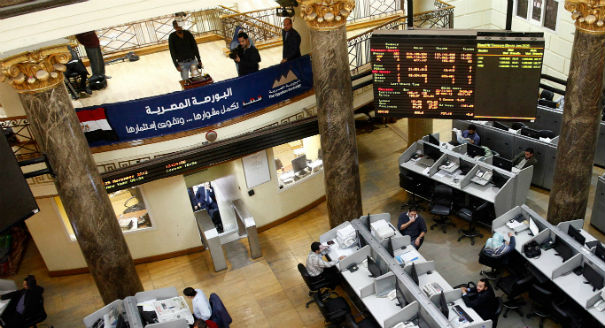
Source: Getty
Without real progress on fundamental political and economic reforms, further regional turmoil in the Middle East and North Africa is inevitable.
Source: Project Syndicate
If Middle Eastern countries do not start making real progress on fundamental political and economic reforms, further regional turmoil is inevitable. With the rentier systems that governments have maintained for decades now at a breaking point, policymakers must begin the difficult, but not impossible, process of establishing new social contracts.
That contract in Arab countries started to erode at the turn of the century, when governments with inflated budgets and bloated bureaucracies could no longer provide an adequate supply of basic services such as health care and education, create a sufficient number of jobs, or sustain food and fuel subsidies. But, despite diminished state benefits, most leaders have continued to insist that their countries’ people uphold their end of the contract by not participating meaningfully in public life.
Arab governments were able to sustain inefficient economies for decades because they were propped up by oil revenues. In recent decades, most Arab countries have benefited in some way from the Middle East’s abundant oil and gas reserves. Hydrocarbon-producing countries used their profits to buy their citizens’ loyalty and establish what were effectively welfare states; and non-oil producers enjoyed the benefits of aid, capital inflows, and remittances sent back by their nationals working in resource-rich countries.
Because the governments of oil-producing countries used revenues to provide for most of their people’s needs – including jobs, services, and favors – these governments fostered a culture of dependency, rather than encouraging self-reliance and entrepreneurship to expand the private sector. What’s more, because they did not need to tax their citizens to generate revenues, people had little recourse to challenge authoritarianism. The political culture reflected a simple principle: “no taxation, no representation.”
Now that oil prices are declining and will likely continue to remain low for several years, if not permanently, the Middle East’s rentier systems face a significant challenge. Saudi Arabia, for example, is raising taxes, cutting domestic subsidies, and shifting its foreign-aid paradigm away from grants and toward investments. The kingdom has long provided financial support to Egypt, Jordan, and other countries in the region, so this shift will put pressure on those governments to pursue private-sector growth to improve their own countries’ economic performance.
But, while the Arab world’s governments have reached the limits of their ability to employ more people, raise public debt, and attract outside grants, members of these countries’ political and economic elite, whom the current rentier system privileges, will likely resist efforts at substantive reform. And we should expect to see further opposition from state bureaucracies, which lack any vision for a transition to an inclusive and sustainable economic model.
Still, Middle Eastern countries cannot hope to develop prosperous economies without such a transition. After relying on resource rents for decades, these governments must switch not only to new growth models, but also to more representative governance. When Arab societies are asked to accept reduced subsidies, fewer government jobs, and less from the state in general, they will demand a larger share in the decision-making process.
As it stands, the Arab world is stuck between an unsustainable economic and political status quo and the inclusive, merit-based economic system that less myopic people in the region know must replace it. Too many Arab governments have put themselves in this untenable situation, having given little consideration to building the governance institutions their states need.
The first wave of Arab uprisings, which began in December 2010 and led to the 2011 Arab Spring, was a response to the breakdown of the old social contracts. In today’s perfect storm of declining oil prices and closed political systems, a new wave of protest could well emerge, particularly where governments have not recognized that the end of rentierism marks the end of the old social contract.
For these governments, economic reform is now a matter of survival. In a more open system, Arab governments will need to privatize many state-controlled companies, and make it far easier for entrepreneurs to register start-ups and launch new businesses. And, ultimately, Arab states’ economic reforms will succeed only if citizens gain a more powerful voice in governance.
Tunisia is the one country where a new social contract has begun to replace rentierism. The rest of the Arab world faces two alternatives. Its leaders can begin fighting the cancer of an unsustainable status quo, with all the pain and uncertainty that such a struggle entails; or they can wait for the cancer to become a terminal condition, and be devoured by it.

Vice President for Studies
Marwan Muasher is vice president for studies at Carnegie, where he oversees research in Washington and Beirut on the Middle East. Muasher served as foreign minister (2002–2004) and deputy prime minister (2004–2005) of Jordan, and his career has spanned the areas of diplomacy, development, civil society, and communications.
Recent Work



Amr Hamzawy, Andrew Leber, Eric Lob, …
Marwan Muasher
Carnegie does not take institutional positions on public policy issues; the views represented herein are those of the author(s) and do not necessarily reflect the views of Carnegie, its staff, or its trustees.

Putin’s conservative staffing policies and search for ever greater control have cemented parliament’s transformation into a bureaucratic appendage of the executive branch.

Andrey Pertsev

Russian strikes are weakening the economy sustaining Ukraine’s war effort. Closing the growing funding gap will require more European support and politically contentious reforms in Kyiv.

Balázs Jarábik

Ex-president Gurbanguly Berdimuhamedov remains interested in politics, but his son Serdar, Turkmenistan’s current president, is becoming increasingly independent and willing to break with his father’s legacy. If their covert rivalry goes too far, both risk losing power.

Galiya Ibragimova

For every ruble allocated to social policy, health, and education in 2027, double that amount is earmarked for the army, the police, and the security services.

Alexandra Prokopenko

Sergei Kiriyenko used Russia’s parliamentary vote to further hone his strategy of corporate mobilization that is designed to maximize votes for United Russia.
Andrey Pertsev