

Article
- +1
Rudra Chaudhuri, Tejas Bharadwaj, Konark Bhandari, …
{
  "authors": [
    "Rudra Chaudhuri"
  ],
  "type": "other",
  "centerAffiliationAll": "",
  "centers": [
    "Carnegie Endowment for International Peace",
    "Carnegie India"
  ],
  "collections": [],
  "englishNewsletterAll": "",
  "nonEnglishNewsletterAll": "",
  "primaryCenter": "Carnegie India",
  "programAffiliation": "",
  "programs": [],
  "projects": [
    "Security Studies"
  ],
  "regions": [
    "United States",
    "India",
    "North America",
    "South Asia",
    "Western Europe",
    "United Kingdom"
  ],
  "topics": [
    "Domestic Politics",
    "Foreign Policy"
  ]
}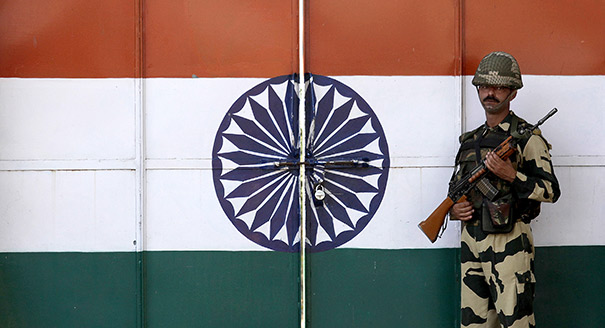
Source: Getty
The period known as the “Emergency” in India—June 1975 to March 1977—is widely recognized as one of the darkest episodes in the nation’s 70-year history.
Source: Diplomacy & Statecraft
The period known as the “Emergency” in India—June 1975 to March 1977—is widely recognised as one of the darkest episodes in the nation’s 70-year history. Fundamental rights were suspended, whilst the courts had little or no authority. The security services received emergency powers to make arrests without explanation. Although the political, social, and economic history of the Emergency remains well known, there is nothing on the international history of this period. This analysis provides the first contribution to its diplomatic history. Examining the role played by the United States and Britain, in particular, finds basis largely on declassified papers available in the Indian, American, and British national archives as well as a survey of over 300 newspaper articles on and around the Indian Emergency.
This article was originally published in Diplomacy & Statecraft.

Former Director, Carnegie India
Rudra Chaudhuri was the director of Carnegie India. His research focuses on the diplomatic history of South Asia, contemporary security issues, and the important role of emerging technologies and digital public infrastructure in diplomacy, statecraft, and development. He and his team at Carnegie India chair and convene the Global Technology Summit, co-hosted with the Ministry of External Affairs, Government of India.
Recent Work


Rudra Chaudhuri, Tejas Bharadwaj, Konark Bhandari, …
Rudra Chaudhuri
Carnegie does not take institutional positions on public policy issues; the views represented herein are those of the author(s) and do not necessarily reflect the views of Carnegie, its staff, or its trustees.
Russia spent years building a “sovereign internet,” concentrating web infrastructure exclusively within Russian territory. Ukrainian drone attacks have shown how vulnerable that approach has left the Russian internet.

Maria Kolomychenko

Putin’s conservative staffing policies and search for ever greater control have cemented parliament’s transformation into a bureaucratic appendage of the executive branch.

Andrey Pertsev

Without a ceasefire with Ukraine on attacking each other’s energy infrastructure—to which the Kremlin is unlikely to agree—the diesel agreement between Putin and Trump is largely for show, rather than representing a genuine increase in the volumes of Russian diesel on the global market.

Sergey Vakulenko

Ex-president Gurbanguly Berdimuhamedov remains interested in politics, but his son Serdar, Turkmenistan’s current president, is becoming increasingly independent and willing to break with his father’s legacy. If their covert rivalry goes too far, both risk losing power.

Galiya Ibragimova

Despite a new textbook, an influx of Russian teachers and managers, and an end to the teaching of Ukrainian, the Kremlin is unlikely to have “reprogrammed” locals.

Konstantin Skorkin