

Article
C. Raja Mohan, Darshana M. Baruah
{
  "authors": [
    "C. Raja Mohan"
  ],
  "type": "legacyinthemedia",
  "centerAffiliationAll": "",
  "centers": [
    "Carnegie Endowment for International Peace",
    "Carnegie India"
  ],
  "collections": [],
  "englishNewsletterAll": "",
  "nonEnglishNewsletterAll": "",
  "primaryCenter": "Carnegie India",
  "programAffiliation": "",
  "programs": [],
  "projects": [],
  "regions": [
    "United States",
    "India",
    "Russia",
    "China"
  ],
  "topics": [
    "Foreign Policy"
  ]
}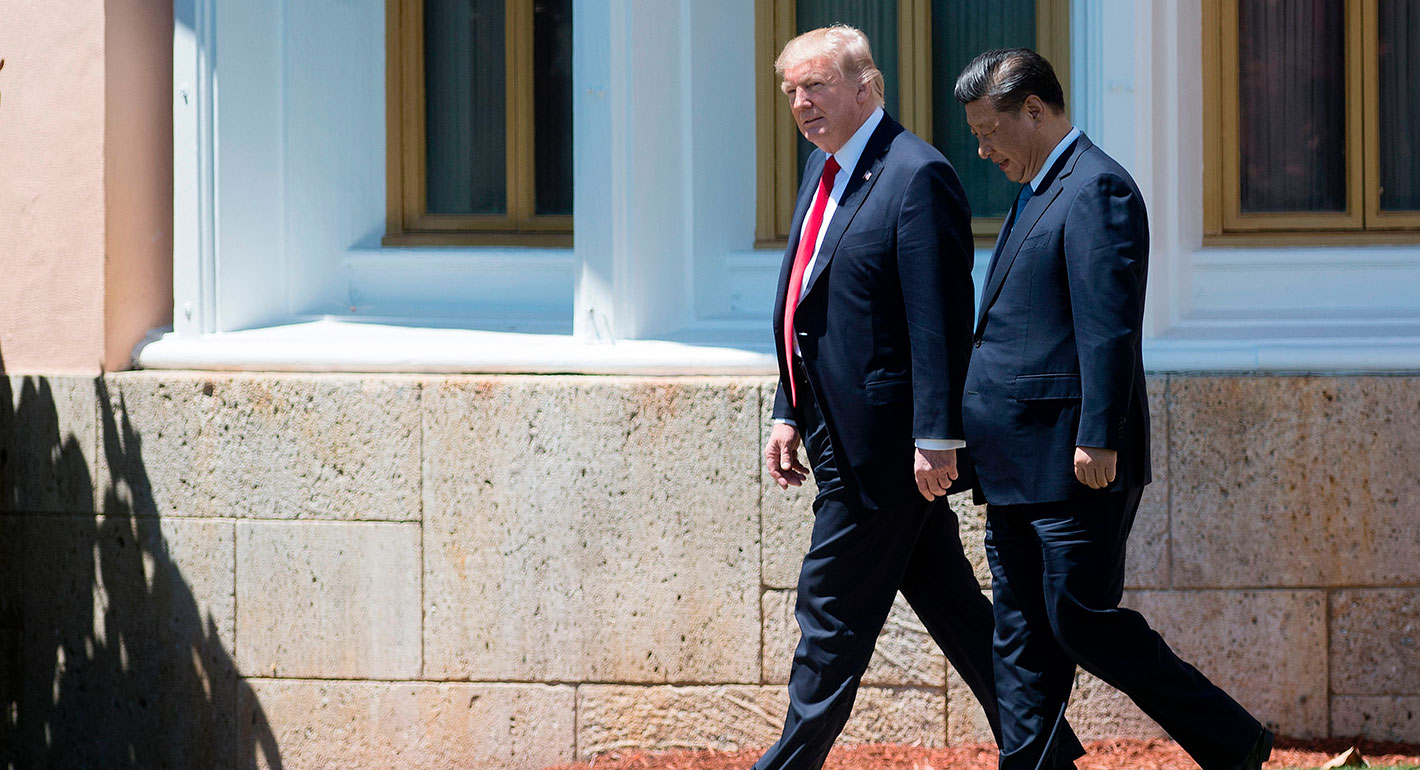
Source: Getty
The rejigging of the political relations between the United States, China, and Russia might present New Delhi with fleeting strategic opportunities that need to be seized quickly.
Source: Indian Express
An India preoccupied with a bitter election may have little time for the unfolding movement in the world’s two most important strategic relationships. The first is between the world’s leading economic powers — the United States and China — that contribute nearly 40 per cent of global GDP. The second is between the world’s top military powers— the US and Russia.
If last week saw the collapse of US talks on trade with China, Washington’s focus this week is on resuming a productive engagement with Russia. As great power relations enter a period of flux, the first task of the next government in Delhi will be to cope with the volatility in the relations between America, China and Russia. A couple of summit meetings in June — the Shanghai Cooperation Organisation in Bishkek Kyrgyzstan and the G-20 in Osaka, Japan — offer an early opportunity for the Indian leadership to assess, first hand, the nature of the new great power dynamic.
The deep economic interdependence between the US and China, according to the prevailing conventional wisdom, puts a limit on the conflict between Washington and Beijing. Equally powerful has been the proposition that the congealed anti-Russian mood in Washington and Moscow’s anti-Western truculence together prevent even a minimal understanding between the two powers.
US President Donald Trump is testing both the theses.
As US-China trade talks teetered on the brink, Trump raised tariffs on $200 billion worth of Chinese exports. Trump has also threatened to impose new tariffs on all imports from China, worth $540 billion in 2018, if a deal is not done in the next few weeks. Trump’s confident escalation on trade appears to be driven by two factors. One is the belief that the US can better absorb the pain from the trade war than China. The other is the asymmetric nature of the interdependence between the two nations. China imports a lot less ($121 billion in 2018) than it exports. That significantly presents China a smaller target on which to impose retaliatory tariffs.
For the US, the problem is no longer just about a massive trade deficit with China. There is a growing sense in Washington that the threat from Beijing is “systemic” and America must respond appropriately. Washington is accusing China of stealing intellectual property from the US. It is lobbying friends and allies against letting Huawei develop the 5G telecom networks. Washington is pushing back against China’s assertive policies in the South China Sea and renewing a measure of strategic support to Taiwan.
In a major speech two weeks ago, Kiron Skinner, the chief of policy planning in the US State Department, insisted that the threat from China was civilisational. “In China we have an economic competitor, we have an ideological competitor, one that really does seek a kind of global reach that many of us didn’t expect a couple of decades ago. And I think it’s also really striking that it’s the first time that we’ll have a great power competitor that is not Caucasian.”
Although, her racial metaphor got rebuke from across the US, Skinner’s idea that China is different and not amenable to mutual accommodation appears to have deep roots in the Trump Administration. In pitching China as an implacable adversary, Skinner also said something about Russia that Delhi must take note of.
The Cold War contestation with the Soviet Union, according to Skinner, “was a fight within the Western family. Karl Marx was a German Jew who developed a philosophy that was within the larger body of political thought”. While there was room for at least limited cooperation with the Soviet Union, Skinner said, “that’s not really possible with China. This is a fight with a really different civilisation and a different ideology, and the United States hasn’t had that before.”
There has been persistent view within the Trump Administration that Russia is very much part of the West and must be treated differently than Beijing. The biggest champion of a positive relationship with Russia is none other than Trump. But the president’s views have had little resonance with the so-called deep state in Washington. And the allegations of Russian intervention in favour of Trump during the 2016 Presidential elections had put Trump in an awkward position.
With the official investigation deciding not to charge Trump campaign of any collusion with Russia, Trump has been liberated to renew his outreach to President Vladimir Putin. After a long call with Putin a few days ago, Trump has sent his Secretary of State Mike Pompeo to Russia for first substantive consultations this week. The talks are expected to cover a range of issues — from Venezuela to Syria and arms control to North Korea.
If breaking with China is hard for America, making up with Russia might be harder. Any Russian deal — small or big — will meet fierce political resistance in Washington. Few in Moscow are ready to believe that Trump has the political space to move forward with Russia. But then, Trump could well surprise the world on Russia much in the manner that he has on China and on so many other issues.
Whichever way the great power dynamic moves, there will be consequences — some bad and others good — for India. Whether Trump cuts a deal or escalates the economic war with China, Delhi can’t continue with its trade policy lassitude. On the other hand, the rejigging of the political relations between America, China and Russia might present Delhi with fleeting strategic opportunities that need to be seized quickly.
This article was originally published in the Indian Express.
Former Nonresident Senior Fellow, Carnegie India
A leading analyst of India’s foreign policy, Mohan is also an expert on South Asian security, great-power relations in Asia, and arms control.
Recent Work

C. Raja Mohan, Darshana M. Baruah


Alexander Gabuev, Paul Haenle, C. Raja Mohan, …
Carnegie does not take institutional positions on public policy issues; the views represented herein are those of the author(s) and do not necessarily reflect the views of Carnegie, its staff, or its trustees.

Japan’s long-term security policy is driven by concerns about China, and there is little appetite for (or interest in) pursuing a confrontation with Moscow.

James D.J. Brown

The truth of the strategic situation is that Europe and Russia are extremely unlikely to be able to “turn the page” on their confrontation within the next two decades.

Arkady Moshes
Russia spent years building a “sovereign internet,” concentrating web infrastructure exclusively within Russian territory. Ukrainian drone attacks have shown how vulnerable that approach has left the Russian internet.

Maria Kolomychenko

Putin’s conservative staffing policies and search for ever greater control have cemented parliament’s transformation into a bureaucratic appendage of the executive branch.

Andrey Pertsev

Russia’s AI-driven propaganda campaigns operate in a fragmented, chaotic, and often illogical manner. That’s not necessarily a problem for the Kremlin, though: It’s much easier to mimic genuine public debate that way.

Ilya Klishin