

Paper
- +3
Rajesh Bansal, Anirudh Burman, Rudra Chaudhuri, …
{
  "authors": [
    "Srinath Raghavan"
  ],
  "type": "legacyinthemedia",
  "centerAffiliationAll": "",
  "centers": [
    "Carnegie Endowment for International Peace",
    "Carnegie India"
  ],
  "collections": [],
  "englishNewsletterAll": "",
  "nonEnglishNewsletterAll": "",
  "primaryCenter": "Carnegie India",
  "programAffiliation": "",
  "programs": [],
  "projects": [],
  "regions": [
    "India",
    "United Kingdom"
  ],
  "topics": [
    "Economy",
    "Foreign Policy"
  ]
}
Source: Getty
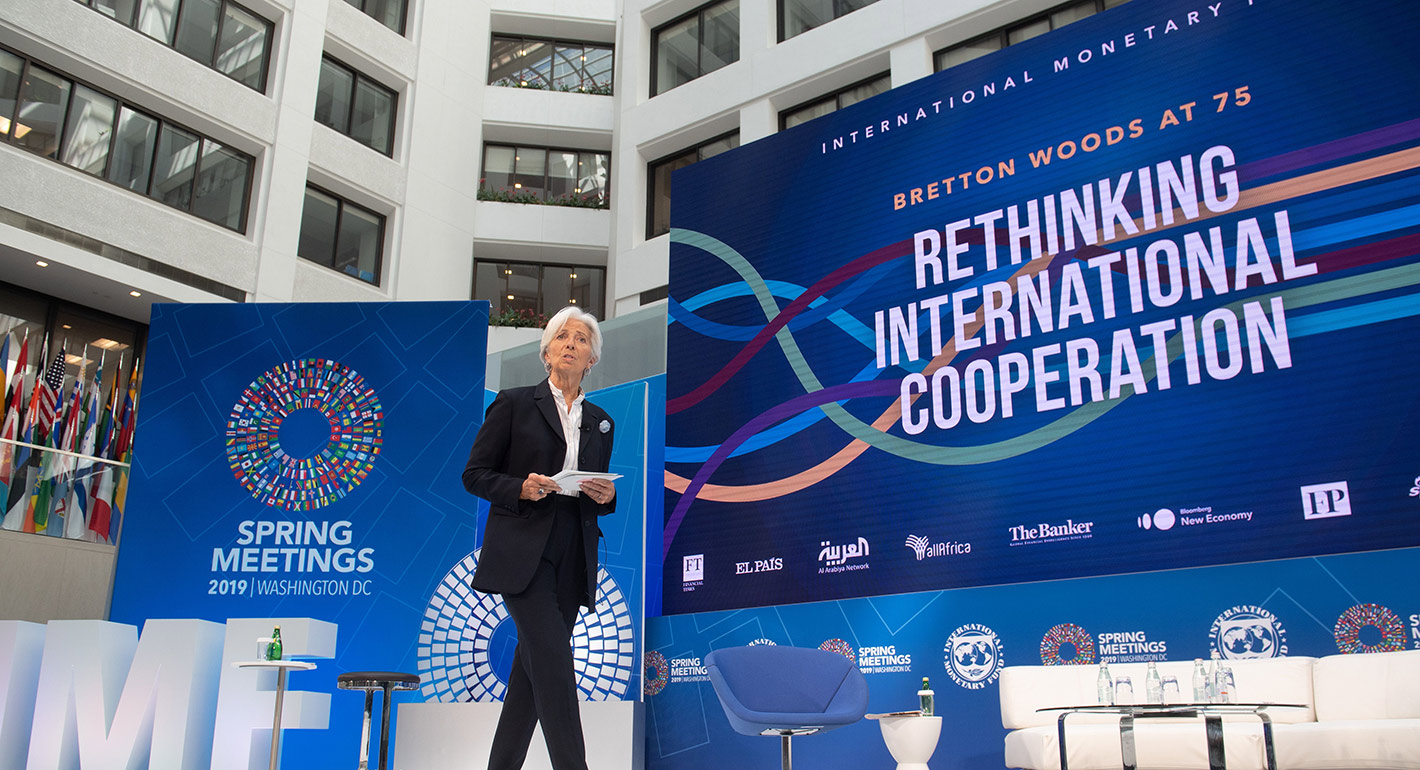
This week marks the seventy-fifth anniversary of the United Nations Monetary Conference held at Bretton Woods, New Hampshire.
Source: Print
This week marks the 75th anniversary of the United Nations Monetary Conference held at Bretton Woods, New Hampshire. The conference, which led to the creation of the International Monetary Fund (IMF) and the International Bank for Development and Reconstruction (World Bank), has passed over into popular history and mythology as a founding moment of the “Liberal International Order”. This order, in turn, is widely held to be in crisis, owing to the rise of authoritarian populism that disavows the older ideals of a liberal world economy and global cooperation.

Nonresident Senior Fellow
Srinath Raghavan is a nonresident senior fellow at Carnegie India. His primary research focus is on the contemporary and historical aspects of India’s foreign and security policies.
Recent Work

Rajesh Bansal, Anirudh Burman, Rudra Chaudhuri, …
Srinath Raghavan
Carnegie does not take institutional positions on public policy issues; the views represented herein are those of the author(s) and do not necessarily reflect the views of Carnegie, its staff, or its trustees.

Depleted financial reserves and a shrinking tax base mean it is no longer possible to simultaneously deliver high defense spending, price stability, and economic growth.

Alexandra Prokopenko

With the growth in points of friction between the great powers, organizations like the SCO will continue to play a role in the strategic adaptation of the smaller powers caught between them.

Temur Umarov

When faced with fuel shortages in the past, Central Asian governments could always count on additional supplies from Moscow. That safety net no longer exists.

Galiya Ibragimova

Despite unhappiness on the ground, Moscow is determined to use both carrot and stick to ensure there is record support for United Russia in occupied Ukraine.

Konstantin Skorkin
The recent damage inflicted by Ukrainian drones and missiles on Russia has made Belarus aware of its own vulnerabilities—and surprisingly amenable to Kyiv’s demands.

Artyom Shraibman