

Q&A
- +1
Amr Hamzawy, Andrew Leber, Eric Lob, …
{
  "authors": [
    "Marwan Muasher"
  ],
  "type": "commentary",
  "centerAffiliationAll": "dc",
  "centers": [
    "Carnegie Endowment for International Peace",
    "Malcolm H. Kerr Carnegie Middle East Center"
  ],
  "collections": [
    "Arab Awakening",
    "Arab Spring 2.0",
    "Decoding Lebanon"
  ],
  "englishNewsletterAll": "menaTransitions",
  "nonEnglishNewsletterAll": "",
  "primaryCenter": "Carnegie Endowment for International Peace",
  "programAffiliation": "MEP",
  "programs": [
    "Middle East"
  ],
  "projects": [],
  "regions": [
    "Middle East",
    "North Africa",
    "Sudan",
    "Algeria",
    "Iraq",
    "Lebanon",
    "Levant"
  ],
  "topics": [
    "Political Reform"
  ]
}
Source: Getty
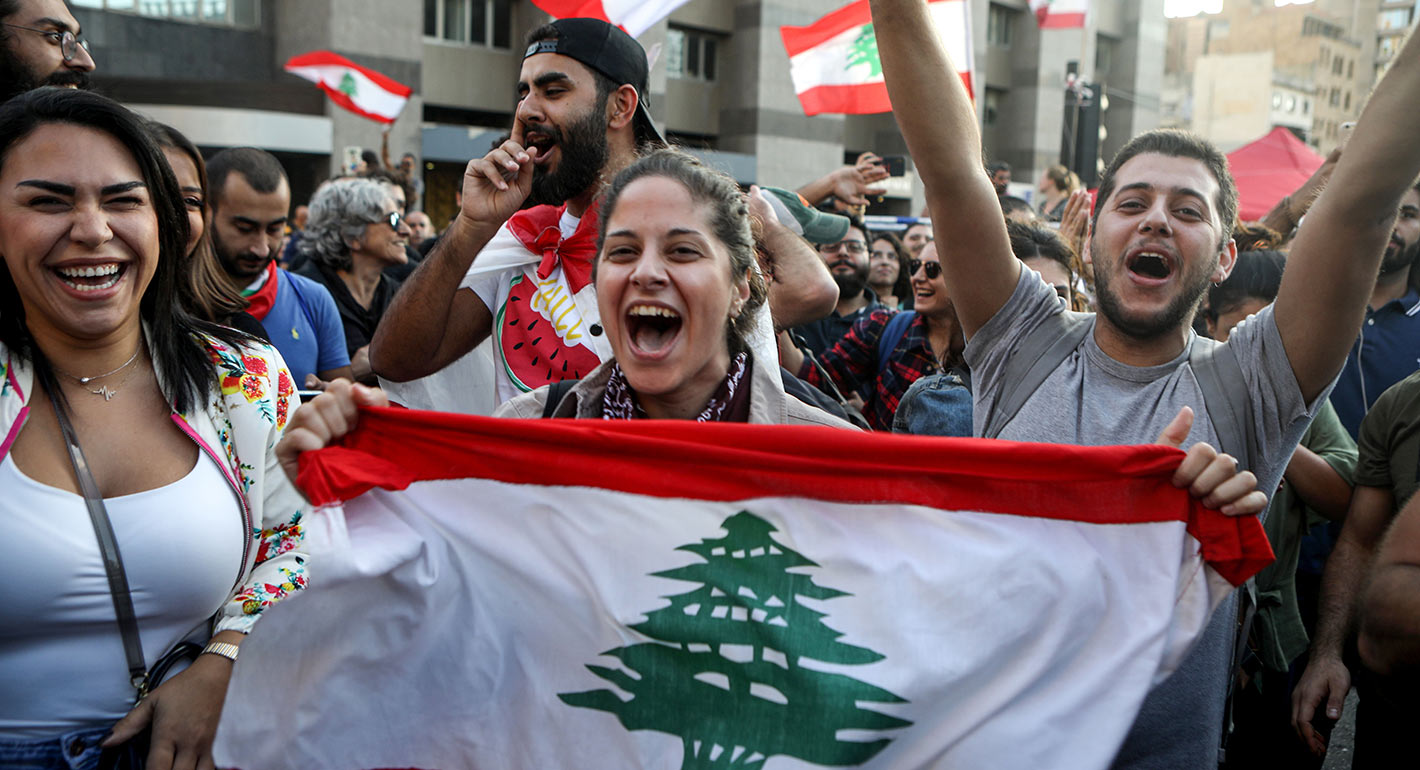
Nearly a decade after the Arab Spring fizzled, a new wave of protest has swept over the Middle East and North Africa. What is different this time, and will the protesters get what they want?
Nearly a decade after the Arab Spring fizzled, a new wave of protest has swept over the Middle East and North Africa. What is different this time, and will the protesters be more likely to get what they want?
Many believe the Arab Spring that began with the self-immolation of a Tunisian fruit vendor in 2010 ended in failure. Since 2013, with the exception of Tunisia, autocrats have kept or regained control across the Arab world. The resurgent antidemocratic regimes then tarnished the protesters by claiming that it was a Western conspiracy that led people to the streets in Tripoli, Manama, Tahrir Square in Cairo, and all across the region. But the continued absence of political and economic opportunity in the Middle East did not abate. Now, national protests happening in Algeria, Lebanon, and Sudan herald a new season of civil unrest and calls for democracy in the Middle East.
The first Arab Spring ended in 2013 for two reasons: either because Arab governments quashed the protests with force, money, or both; or because the Arab public saw what happened in Libya, Syria, and Yemen and did not want their own situation to deteriorate into civil war. But the problems that created the protests did not disappear, only the protesters themselves. And when oil prices declined in 2014, many governments in the Arab world lost an effective tool to mollify their citizens’ economic grievances. Despite nearly being toppled, most of them still have not internalized that the rentier system that keeps them in power, backed by high oil prices and patronage underpinnings, is no longer viable.
Arab governments who clung to power may have thought they weathered the storm and were safe. But today’s protests show that they didn’t make good use of their reprieve. There were no political reforms to make systems more inclusive, and no economic reforms to address corruption, improve governance, and create jobs. The problems continued, and they have now led a wiser group of protesters back to the streets.
The new wave—an Arab Spring 2.0—is focused on the same issues. But protesters have learned from their mistakes, and are seeking new goals and using new means to achieve real, lasting, regional changes. But what is different this time? And will those differences change the outcome?
First, the primary characteristic common to all these protests is the trust gap. In previous protests, including the Arab Spring, people pushed the regime in power to make structural changes to satisfy their demands. Failing that, protesters often turned to opposition leaders to see if they were able to achieve results. But in this wave, the lack of trust in all political leaders has reached the point of no return. People across the Arab world see that neither their governments nor their opposition forces have delivered on promised political and economic reforms. They further believe that neither group can deliver, and are therefore seeking to essentially start over from scratch with entirely new politicians and political parties. This has been particularly clear in the reaction to the Lebanese government’s suggested reform plan to placate the protesters. The response has been, “We might like the message, but we don’t trust the messenger.”
Second, the protests are peaceful, despite the strength of the regimes they face, and those regimes’ willingness to swiftly deploy violence against protesters. In Algeria and Sudan in particular, the military has used brutal and repressive tactics for decades, but the protesters so far have refused to adopt violence in any way. Through their pacifism, the protesters have been able to achieve and maintain broad internal and external support, and the military in both countries was finally forced to listen.
Third, the protesters are rejecting sectarian divisions in politics that virtually guarantee antidemocratic rule. In Lebanon, deeply entrenched sectarian political systems, where religious or ethnic identity is the basis of politics, create divisive and bitter conditions that erode the national cohesion necessary for democratic reforms. Unpredictably, Lebanese protesters have adopted not only a peaceful, nonviolent strategy but also a decidedly nonsectarian message for the first time.
The challenge in the Arab world today is that the old Arab order, based on oil-backed patronage and brute force, is over. But a new Arab order, based on good governance, merit, and productivity, is having trouble in its creation. The old Arab order relied on an argument to reformers. They would say, “If you throw us out, either the military or the Islamists will rule you.” Today’s protesters reject this as a false choice. Yet Arab governments’ long suppression of the development of inclusive, democratic, and effective institutions has left a vacuum of leadership among regime and opposition forces alike. That vacuum is acutely felt today.
This new Arab Spring has so far hit twelve of twenty-two countries. But with no trusted institution in the region who could carry out people’s rightful demands for more effective management of their countries, the endgame is unclear. It could yet result in civil war and bloodshed, or further weakened oppressive regimes once again clinging to power. But more mature protests may yield better outcomes, even if the road to effective state building is long and difficult.

Vice President for Studies
Marwan Muasher is vice president for studies at Carnegie, where he oversees research in Washington and Beirut on the Middle East. Muasher served as foreign minister (2002–2004) and deputy prime minister (2004–2005) of Jordan, and his career has spanned the areas of diplomacy, development, civil society, and communications.
Recent Work



Amr Hamzawy, Andrew Leber, Eric Lob, …
Marwan Muasher
Carnegie does not take institutional positions on public policy issues; the views represented herein are those of the author(s) and do not necessarily reflect the views of Carnegie, its staff, or its trustees.

In the tenth year of his presidency, President Mirziyoyev’s system is becoming even more personalized than that of his predecessor Karimov.

Galiya Ibragimova
The greater threat to Zelensky comes not from Fedorov alone, but from the convergence between the former defense minister’s political campaign and the anti-corruption investigations moving ever closer to the presidential administration.

Balázs Jarábik
With his public call for new elections in Ukraine, ex-defense minister Mykhailo Fedorov has opened Pandora’s box.

Konstantin Skorkin
In the discussions made possible by the State Duma election campaign, one question is being asked more and more loudly. “What next?”

Andrey Pertsev

Two divergent trends—Putin’s hardline vision of how to prosecute the war in Ukraine, and a growing desire for change in Russia—could tear the regime apart.

Tatiana Stanovaya