

Research
- +11
Frances Z. Brown, Nate Reynolds, Priyal Singh, …
{
  "authors": [
    "Frances Z. Brown"
  ],
  "type": "legacyinthemedia",
  "centerAffiliationAll": "dc",
  "centers": [
    "Carnegie Endowment for International Peace",
    "Malcolm H. Kerr Carnegie Middle East Center"
  ],
  "collections": [],
  "englishNewsletterAll": "democracy",
  "nonEnglishNewsletterAll": "",
  "primaryCenter": "Carnegie Endowment for International Peace",
  "programAffiliation": "DCG",
  "programs": [
    "Democracy, Conflict, and Governance",
    "Middle East"
  ],
  "projects": [],
  "regions": [
    "North America",
    "United States",
    "Middle East",
    "Syria",
    "Levant",
    "Türkiye"
  ],
  "topics": [
    "Political Reform",
    "Security",
    "Military",
    "Foreign Policy",
    "Global Governance"
  ]
}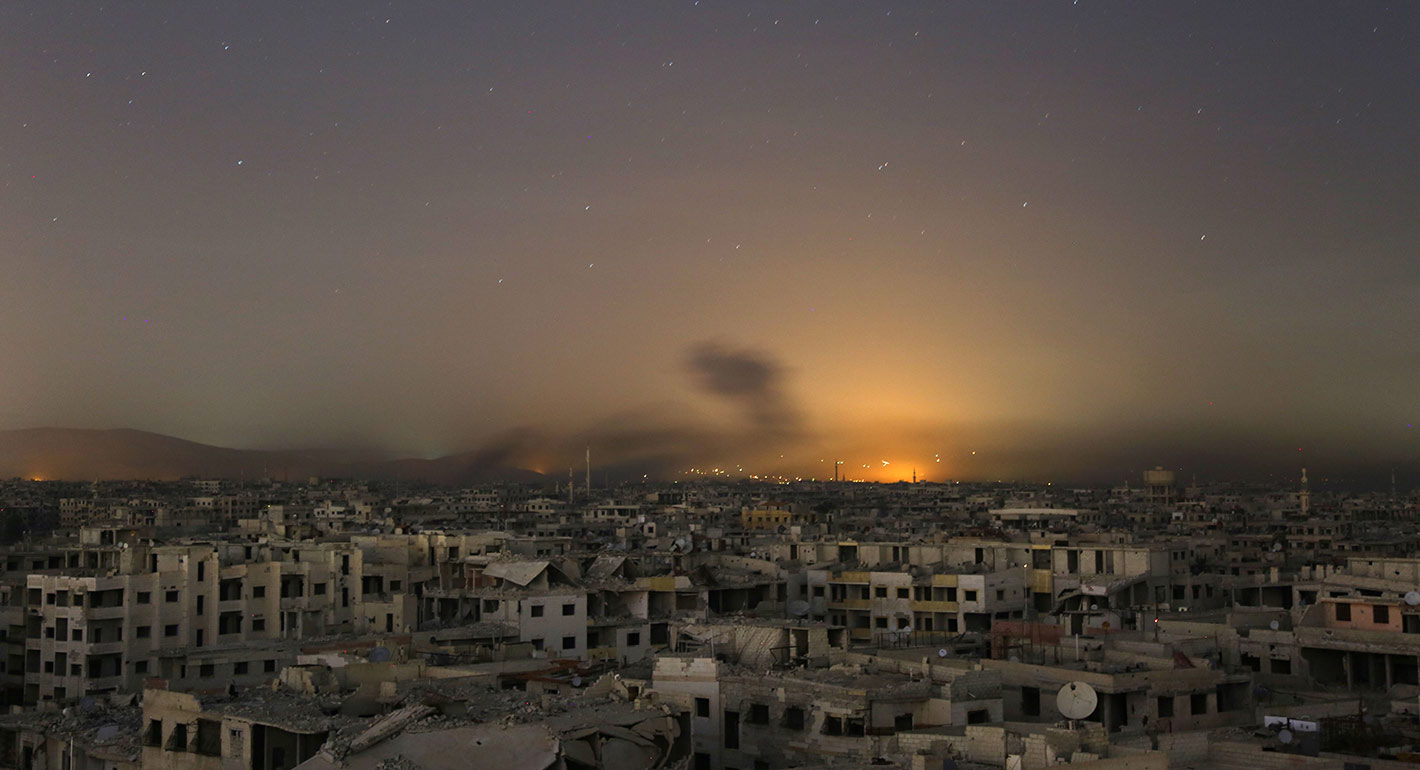
Source: Getty
Facing a world in which the White House’s words have lost their weight, Americans will need to reckon with the consequences.
Source: Los Angeles Times
Over the course of 36 hours, President Trump managed to change U.S. policy on Syria three times.
First, he announced a U.S. troop withdrawal from Syria on Sunday night after a phone call with Turkish President Recep Tayyip Erdogan, a move that would pave the way for a Turkish assault on Kurdish forces in Syria. He then seemingly reversed himself on Monday morning, threatening to “totally destroy and obliterate” the Turkish economy if Turkey did anything that he considers “to be off limits”— presumably, that includes any Turkish military operation that would harm the Syrian Democratic Forces, led by the U.S.’s Kurdish partners. On Tuesday morning, Trump said that Erdogan will visit the White House in November — a huge honor for the foreign leader.
The fallout from this latest disorder may eventually settle, or simply be sidelined by the next round of drama. Indeed, a very similar phone call between Trump and Erdogan in December 2018 resulted in a similar announcement of a troop pullout that had limited actual impact.
But for U.S. foreign policy interests, the implications of this stark example of national security decision-making in the Trump era won’t fade. It further confirms how his approach presents real risks to U.S. interests. Even after the president’s attention has long been diverted elsewhere, adversaries will have internalized some important lessons they can use to their advantage.
First, any astute foreign leader now knows that Trump is prone to abruptly changing major policy positions because of a chummy personal phone call. As Richard Fontaine notes, this is a pattern that has emerged on issues including a Chinese telecommunications business (U.S. sanctions on the Chinese company were removed after a call to Trump from the Chinese president), military exercises with South Korea (suspended after the North Korean leader made a personal request) and considering outlandishly inappropriate requests from Russian President Vladimir Putin.
These exchanges usually occur with strongmen leaders who understand Trump’s eagerness to be praised and cajoled. The message is clear: If you want something from the U.S. government, don’t go through normal diplomatic and military channels. Get the president on the phone and flatter him.
Second, when the U.S. government is so obviously not aligned internally on policy, it has much less ability to manage downstream risks stemming from policy choices. In the hours after the White House statement on troop withdrawal from Syria, the Defense Department and State Department were left scrambling to explain what, if anything, had changed in the U.S. approach. They certainly weren’t able to describe how they would be mitigating the attendant challenges.
Of course, Syria policy has always been a long list of bad options — and among them, a president can select what he prefers. But in making completely unpredictable decisions that blindsided leaders in his own administration, Trump made it impossible for those officials to manage the risks stemming from his choice.
Sadly, the consequent risks are dizzying. For one, the Syrian Democratic Forces have been detaining at least 10,000 Islamic State fighters. In any Turkish incursion, the Kurds would likely redeploy their troops toward the Syria-Turkey border, potentially leaving these detainees unguarded. Meanwhile, the SDF is also overseeing the overflowing al-Hol camp, which holds some 70,000 family members of Islamic State fighters; this could potentially become a fertile extremist recruiting ground. And more broadly, a Turkish military operation would further expand a conflict that already has had catastrophic human consequences, producing still more civilians displaced and killed.
Third, the erratic Syria decision further undermines the U.S. relationship with partners and allies. The consequences for the SDF, who fought capably against Islamic State and suffered an estimated 11,000 dead, could be catastrophic. Beyond that, the effect will be felt in the U.S. presence in other parts of the world.
In recent years, the U.S. military has increasingly favored addressing conflicts by working “by, with and through” local partners, rather than deploying American boots on the ground. A wholesale betrayal of the Kurds could have a chilling effect on other partners elsewhere. The policy whiplash will also further strain our already-tense relationship with European allies, who were also not consulted. The fact is that the U.S. still needs European partners to manage a range of challenges, from Iran to China to Russia.
In most administrations, a key question is who speaks for the president. In the Trump administration, the president famously speaks for himself — and when he does, it’s often to reverse course. Facing a world in which the White House’s words have lost their weight, Americans will need to reckon with the consequences.

Vice President for Studies
Dr. Frances Z. Brown is a vice president for studies at the Carnegie Endowment for International Peace. Brown served on the White House National Security Council (NSC) staff over the past three presidential administrations. Her research focuses on U.S. foreign policy, Africa, the Middle East, and governance.
Recent Work
Frances Z. Brown, Nate Reynolds, Priyal Singh, …
Saskia Brechenmacher, Frances Z. Brown
Carnegie does not take institutional positions on public policy issues; the views represented herein are those of the author(s) and do not necessarily reflect the views of Carnegie, its staff, or its trustees.

Putin’s conservative staffing policies and search for ever greater control have cemented parliament’s transformation into a bureaucratic appendage of the executive branch.

Andrey Pertsev

Russia’s AI-driven propaganda campaigns operate in a fragmented, chaotic, and often illogical manner. That’s not necessarily a problem for the Kremlin, though: It’s much easier to mimic genuine public debate that way.

Ilya Klishin

Without a ceasefire with Ukraine on attacking each other’s energy infrastructure—to which the Kremlin is unlikely to agree—the diesel agreement between Putin and Trump is largely for show, rather than representing a genuine increase in the volumes of Russian diesel on the global market.

Sergey Vakulenko

Russian strikes are weakening the economy sustaining Ukraine’s war effort. Closing the growing funding gap will require more European support and politically contentious reforms in Kyiv.

Balázs Jarábik

Ex-president Gurbanguly Berdimuhamedov remains interested in politics, but his son Serdar, Turkmenistan’s current president, is becoming increasingly independent and willing to break with his father’s legacy. If their covert rivalry goes too far, both risk losing power.

Galiya Ibragimova