

Commentary
Harith Hasan, Alfadhel Ahmad
{
  "authors": [
    "Harith Hasan"
  ],
  "type": "legacyinthemedia",
  "centerAffiliationAll": "dc",
  "centers": [
    "Carnegie Endowment for International Peace",
    "Malcolm H. Kerr Carnegie Middle East Center"
  ],
  "collections": [],
  "englishNewsletterAll": "menaTransitions",
  "nonEnglishNewsletterAll": "",
  "primaryCenter": "Malcolm H. Kerr Carnegie Middle East Center",
  "programAffiliation": "MEP",
  "programs": [
    "Middle East"
  ],
  "projects": [
    "X-Border Local Research Network"
  ],
  "regions": [
    "Gulf",
    "Levant",
    "Saudi Arabia",
    "Iraq",
    "Middle East"
  ],
  "topics": [
    "Political Reform"
  ]
}
Source: Getty
Border crossings and cross-border connections have become essential components in the growing regional contest for influence in Iraq.
Source: Peripheral Vision
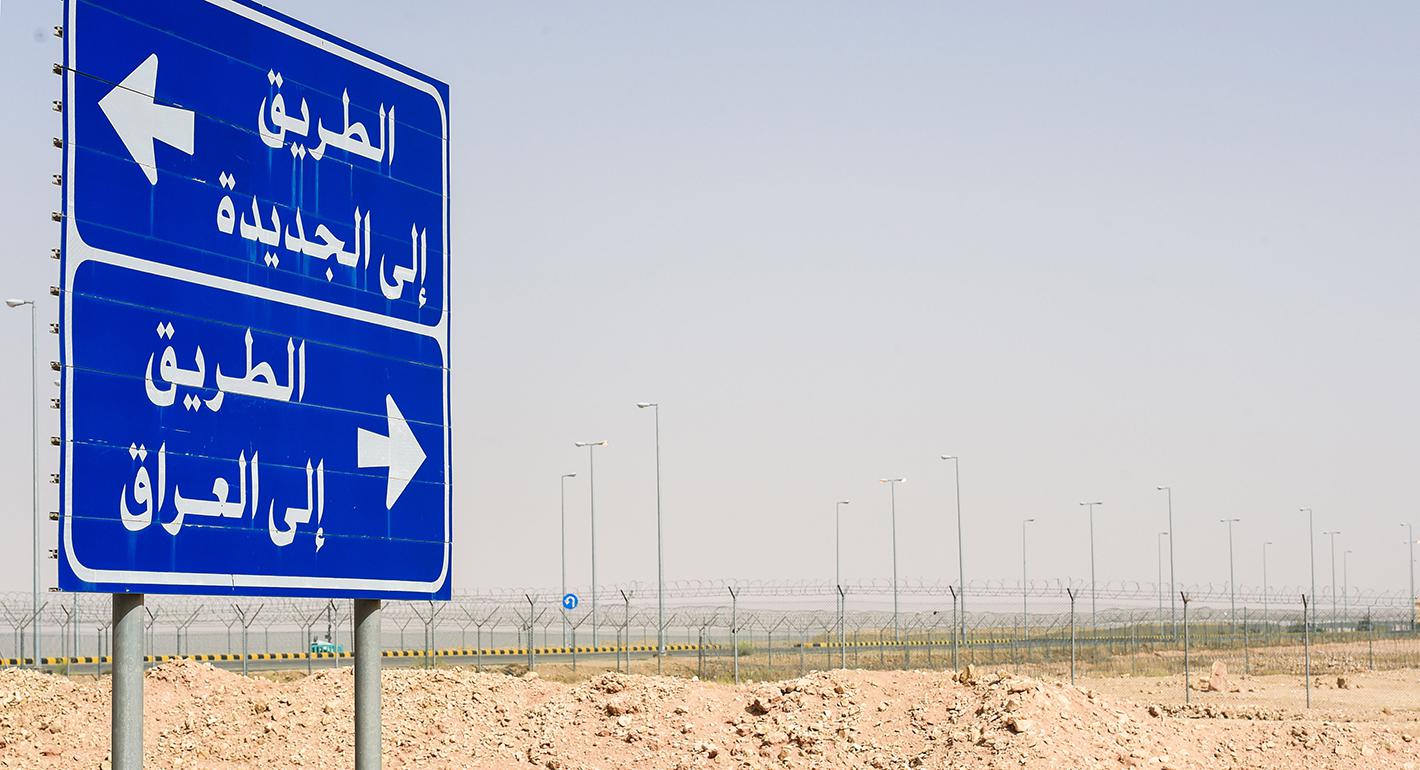
In November 2020, the Arar border crossing between Iraq and Saudi Arabia was reopened after being closed for three decades following the Iraqi invasion of Kuwait. The reopening signalled that the Saudis, encouraged by Iraqi Prime Minister Mustafa al-Khadhimi’s opening to the Arab world, sought to reengage with Iraq. Khadhimi enjoys a personal friendship with Saudi Crown Prince Mohammed bin Salman and visited Riyadh with much fanfare in March 2021. The two countries intend to expand their cooperation, including Saudi investment in Iraq.
However, in a sign that Iraq’s border policies are intimately tied to rivalries among the country’s neighbours, the reengagement with Saudi Arabia has faced opposition at home—primarily by groups and paramilitaries allied with Iran. This competition has helped to undermine Iraq’s ability to benefit from joint projects, with damaging consequences for the population.
“We cannot trust Saudi Arabia easily,” stated Qais al-Khazaali, the leader of the Iranian-allied Asaib Ahl al-Haq party and paramilitary group, who insisted that the Saudis had to apologize for allegedly sending jihadis to Iraq after the U.S. invasion in 2003. Several Shia groups also criticized a proposed Saudi project to invest in ranching and livestock in the Iraqi borderland region of Muthanna Governorate. They view the project as a threat to Iraq’s groundwater and say it could be an attempt to take over Iraqi territory under the pretext of investment. Iraqi authorities as well as advocates for openness highlight the advantages of the move, especially for the population of southern Iraq. Muthanna is Iraq’s poorest governorate and could benefit from revived trade with and investment by Saudi Arabia. The Agriculture Ministry has reported that Iraqi farmers have begun to export their vegetables to the Saudi market through the Arar crossing. If this continues, it will help local producers and transporters.

Border crossings and cross-border connections have become essential components in the growing regional contest for influence in Iraq. This rivalry, primarily between Iran, Saudi Arabia, and Turkey, has been driven chiefly by commercial and geopolitical motivations. Commercially, after years of war and instability, Iraq was unable to build a strong industrial sector or fully revive its agricultural sector, making the country dependent on imports. This created an incentive for other countries to compete over the Iraqi market and its approximately forty million consumers.
Geopolitically, Iraq has become a place through which the same three neighbours—Iran, Saudi Arabia and Turkey—have tried to maximize their regional influence. Iraq’s internal divisions and weak state institutions have facilitated such ambitions. Opening border crossings, increasing trade, and expanding land and air connections are instruments of leverage in this rivalry.
For example, Iran has pushed to open more border crossings with Iraq and connect the two countries through new railway lines. Currently, there are six formal and five informal border crossings (opened by militias and smugglers) along the 1,458-kilometer Iraq-Iran border. Last year, the Iranian government demanded the opening of four additional border crossings with the Kurdistan Region, as part of its ambition to increase the value of its annual exports to Iraq from $13 billion to $20 billion. The request has not yet been approved by the Iraqi authorities. At the same time, the Iranian and Iraqi governments agreed to construct the Shalmja railway to accelerate the movement of goods and people between the two countries, through the southern Iraqi city of Basra. The railway will eventually facilitate the transfer of goods from China to the Mediterranean, according to Iranian First Vice President Es’haq Jahangiri.
Indeed, linking Iraq to China’s Belt and Road Initiative and turning it into a node connecting Asia, Europe, and the Mediterranean have become important goals for Iran’s Iraqi allies and part of their political narrative to counter U.S. influence or growing Saudi interest in Iraq. The recent $400 billion deal between China and Iran has led some of these groups to reinforce their message over the advantages of connecting Iraq to the East rather than the West.
Turkey and Iran, the second and third major exporters to Iraq after China, have an interest in sustaining their share in the Iraqi market. Baghdad’s recent ban on imports of goods, including eggs and poultry, harmed Turkish and Iranian producers, leading Ankara and Tehran to pressure the Iraqi government to ease the measure. Iraqi officials have said that the ban helped to rejuvenate Iraq’s struggling egg industry. However, they also admitted that foreign producers are circumventing restrictions illegally. In Turkey’s case, the Iraqi side of the main border crossing is controlled by the Kurdistan Regional Government, which often refrains from implementing Baghdad’s decisions.
Turkey is also seeking a direct connection with Baghdad-controlled areas of Iraq, without passing through the Kurdistan Region. In 2017, the Turks and the Iraqi government revived the idea when they both opposed the Kurdistan independence referendum. Among the issues discussed was a proposal to open a new border gate at Ovakoy to facilitate bilateral trade. However, the plan was put on hold because of Kurdish opposition, although Turkey is still exploring ways to expand its economic and geopolitical influence in northern Iraq. One proposal is the construction of a railway connecting Mosul to Intab in southern Turkey.
Most of these projects have faced difficulties that were exacerbated by the coronavirus pandemic. In addition, competition between the three neighbouring countries, which has also polarized Iraqi domestic politics, means that opening new border crossings and establishing road and railway connections is increasingly a political decision. Rampant corruption, the dysfunctional nature of the state, and the influence of nonstate actors will continue to raise doubts about Iraq’s ability to take advantage of such opportunities.
Border areas would benefit economically from the opening of new border crossings and expanded links with neighbouring countries, which would decrease the pressures on Iraq’s urban centres that every year absorb tens of thousands of migrants from peripheral regions. At the same time, if the cross-border trade perpetuates Iraq’s import-oriented economy, the expansion of border crossings will only prolong the deprivation that local farmers and producers are facing.
This article was originally published in Peripheral Vision.

Associate researcher at the Arab Center for Research and Policy Studies.
Harith Hasan is an associate researcher at the Arab Center for Research and Policy Studies.
Recent Work
Harith Hasan, Alfadhel Ahmad
Harith Hasan
Carnegie does not take institutional positions on public policy issues; the views represented herein are those of the author(s) and do not necessarily reflect the views of Carnegie, its staff, or its trustees.

Putin’s conservative staffing policies and search for ever greater control have cemented parliament’s transformation into a bureaucratic appendage of the executive branch.

Andrey Pertsev

Ex-president Gurbanguly Berdimuhamedov remains interested in politics, but his son Serdar, Turkmenistan’s current president, is becoming increasingly independent and willing to break with his father’s legacy. If their covert rivalry goes too far, both risk losing power.

Galiya Ibragimova

Sergei Kiriyenko used Russia’s parliamentary vote to further hone his strategy of corporate mobilization that is designed to maximize votes for United Russia.
Andrey Pertsev

The European far right might fail to steer EU policy in the direction Russia wants, but they will create enough chaos inside Europe to benefit the Kremlin.

Dimitar Bechev

If the Russian-speaking community in Latvia cannot articulate their interests without being seen as disloyal, they could end up embracing a pro-Kremlin agenda.

Sergejs Potapkins