

Commentary
Rahul Bhatia
{
  "authors": [
    "Rahul Bhatia"
  ],
  "type": "commentary",
  "centerAffiliationAll": "dc",
  "centers": [
    "Carnegie Endowment for International Peace",
    "Carnegie India"
  ],
  "collections": [],
  "englishNewsletterAll": "ctw",
  "nonEnglishNewsletterAll": "",
  "primaryCenter": "Carnegie India",
  "programAffiliation": "SAP",
  "programs": [
    "South Asia"
  ],
  "projects": [
    "Security Studies"
  ],
  "regions": [
    "South Asia",
    "India"
  ],
  "topics": [
    "Foreign Policy",
    "Security",
    "Military"
  ]
}
Source: Getty
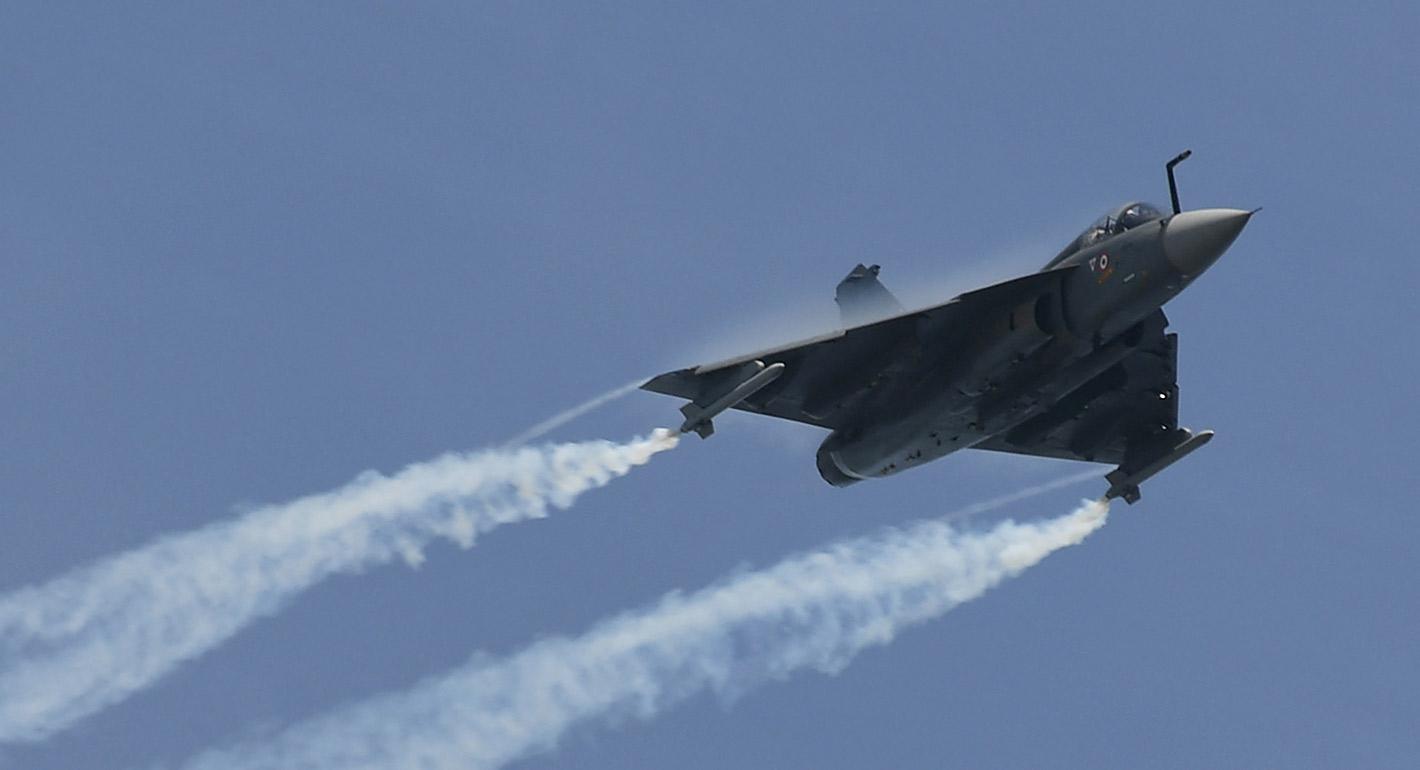
To get its air force up to speed, India needs to enhance its capacity to develop and produce fighter aircraft.
In 2021, the Indian Air Force (IAF) lost five MiG-21 fighter aircraft to crashes, killing three Indian pilots. While incidents like these have spotlighted concerns about the aircrafts’ serviceability, the larger question is why a fighter jet inducted in 1963 still serves. The MiG-21 jets were initially supposed to be retired by the mid-1990s, but India’s inability to procure replacements has required that they remain in service. As recently as October last year, the air force chief claimed that the IAF would retire its remaining four squadrons of the MiG-21 in the next three to four years. However, it is unclear what will replace them, forcing a fighter plane that has outlived its utility to remain in service even longer.
In many ways, the IAF’s struggle to phase out its MiG-21s is emblematic of the hamstrung modernization process of its fighter fleet. It currently operates around thirty-one fighter squadrons against a sanctioned strength of forty-two and has been understrength for the past few years. Delayed procurement processes, a mismatch in the defense industry’s vision of fighter aircraft and the air force’s requirements, and a questionable capacity to develop and manufacture homegrown equipment have left the air force shorthanded.
The IAF has historically been the best-equipped air force in the region, but its advantages have withered in recent years. Further, as India’s security requirements evolve, the IAF will presumably see greater commitments along the border with China and in the Indo-Pacific region—both prospects that would stretch the IAF thin. The air force can only phase out older aircraft such as the MiG-21 if it can make up the gap in its fighter squadrons and ensure that its combat capability isn’t compromised. So, acquiring new aircraft is key.
The Indian government initiated the process of procuring 126 medium, multirole combat aircraft (MMRCA) to address the IAF’s projected requirement for fighter aircraft in the early 2000s. After eight years and lengthy negotiations, the process was abandoned. As a stopgap and to meet immediate requirements, thirty-six Dassault Rafales were bought off-the-shelf. Though highly capable fighters, the Rafales only partially address the IAF’s needs. There is another proposed deal to acquire 114 aircraft that the Indian government may look to fast-track, given that many of the aircraft in contention have already undergone trials. But progress has been slow thus far. Further, with India’s collaborative efforts to develop a fifth-generation stealth aircraft with Russia and a jet engine with the United States also falling through, the emphasis is now on indigenous production.
At the heart of the pivot is a desire to build a completely indigenous fighter. While the much-vaunted, homegrown, single-engine light fighter known as Tejas doesn’t quite fit the bill—with around 50 percent of its components being imported—it is the culmination of India’s prolonged attempt at developing a modern fighter. More importantly, it represents a significant step forward in defense indigenization and self-reliance. Thus, India’s decision to acquire 123 Tejas aircraft is also highly symbolic.
The Tejas, which took more than three decades to develop, is an upgrade to the MiG-21 but comes with its own problems. While India’s government and defense production industry have been keen to offer it as a mainstay, the IAF has felt that the aircraft lacked the level of performance required to survive a contested airspace in the event of a war. In 2017, the IAF even highlighted these concerns to the government. However, the Tejas is considerably less expensive than international competitors. Not to mention, it gives a fillip to the domestic aviation industry.
There are, however, concerns over whether the manufacturer of the aircraft, India’s state-owned Hindustan Aeronautics Limited (HAL), can fulfill its orders in time. Despite the production capacity of the Tejas being expanded from eight to sixteen aircraft a year in 2021, HAL is yet to achieve its optimum production level. Production of the fighter jet has been beset with delays, and HAL has a significant backlog to clear. As of now, even with the decision to outsource some of the aircraft’s components to the private sector, it seems unlikely that HAL will be able to deliver all 123 aircraft it is contracted to produce by 2030.
To keep alive the dream of inducting a completely indigenous fighter jet, India will need to boost its research, design, and production capabilities to satisfy the IAF’s requirements. The Tejas Mark II is a step in the right direction, particularly since the air force has been involved in the project from the beginning. Most importantly, for indigenization to work, India’s defense manufacturing industry, government, and air force will need to apply the lessons they have learned from prior attempts at aircraft development in future ventures.
Former Research Analyst Carnegie India
Rahul Bhatia was a research analyst with the Security Studies Program at Carnegie India. His research focuses on India’s borders and India’s foreign and defense policies.
Recent Work
Rahul Bhatia

Rahul Bhatia, Konark Bhandari
Carnegie does not take institutional positions on public policy issues; the views represented herein are those of the author(s) and do not necessarily reflect the views of Carnegie, its staff, or its trustees.

With the growth in points of friction between the great powers, organizations like the SCO will continue to play a role in the strategic adaptation of the smaller powers caught between them.

Temur Umarov

When faced with fuel shortages in the past, Central Asian governments could always count on additional supplies from Moscow. That safety net no longer exists.

Galiya Ibragimova

Two divergent trends—Putin’s hardline vision of how to prosecute the war in Ukraine, and a growing desire for change in Russia—could tear the regime apart.

Tatiana Stanovaya
Andrey Melnichenko’s essay offers no answer to the fundamental question of how, under any kind of negotiated settlement, Europe can protect itself from the Russian ressentiment that is inevitable in all scenarios except for an outright victory for Putin.

Leonid Bershidsky

Despite unhappiness on the ground, Moscow is determined to use both carrot and stick to ensure there is record support for United Russia in occupied Ukraine.

Konstantin Skorkin