

Commentary
Matthew Duss, Zaha Hassan
{
  "authors": [
    "Matthew Duss"
  ],
  "type": "commentary",
  "centerAffiliationAll": "dc",
  "centers": [
    "Carnegie Endowment for International Peace"
  ],
  "collections": [
    "Renewing American Statecraft"
  ],
  "englishNewsletterAll": "americanStatecraft",
  "nonEnglishNewsletterAll": "",
  "primaryCenter": "Carnegie Endowment for International Peace",
  "programAffiliation": "ASP",
  "programs": [
    "American Statecraft"
  ],
  "projects": [],
  "regions": [
    "North America",
    "United States",
    "Middle East",
    "Iraq",
    "South Asia",
    "Afghanistan"
  ],
  "topics": [
    "Security",
    "Foreign Policy"
  ]
}
Source: Getty
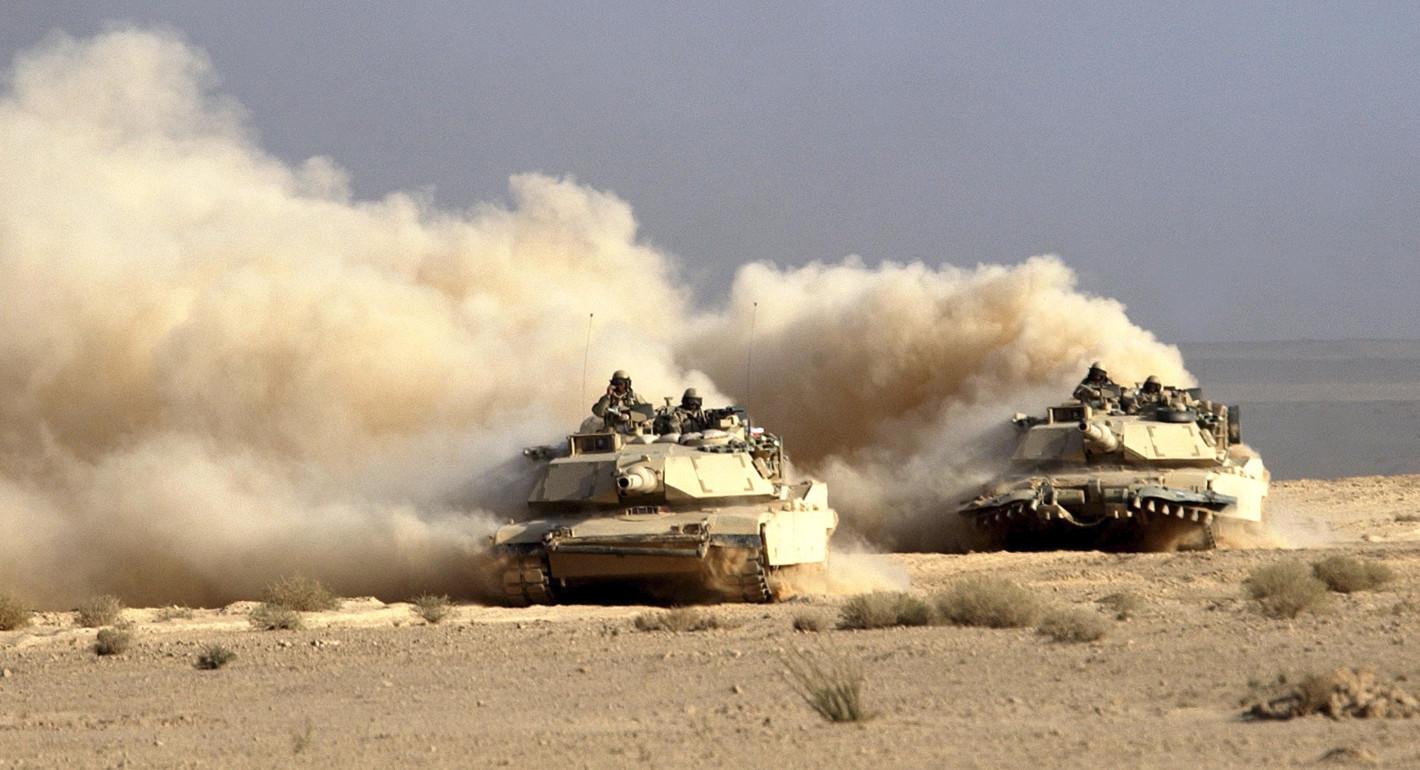
Biden has signaled he would sign the repeal of the Iraq AUMFs. The war on terror should be next.
Last week, the U.S. Senate took an important if symbolic step toward reclaiming congressional authority over war by advancing the repeal of the 1991 and 2002 authorizations for the use of military force (AUMF) against Iraq. If and when passed by the House and signed by President Joe Biden, which he has said he will do, this would formally end the two U.S. wars in Iraq.
The 2002 AUMF has been cited as authorizing not only the Iraq war but also military interventions addressing its multiple negative consequences, such as the war against the Islamic State in Iraq and Syria. Former president Donald Trump also cited the 2002 AUMF as authorization for the U.S. assassination of Iranian General Qassem Soleimani in 2020.
A larger and far more consequential challenge remains: repealing the 2001 AUMF. Passed in the wake of 9/11, it authorized the entire global war on terror against an ever-growing list of enemies on an ever-shifting set of battlefields. Unfortunately, Biden has shown no support for this effort, and his recent speeches have downplayed that still ongoing war.
“War in Afghanistan was never meant to be a multi-generational undertaking . . . it’s time to end the forever war,” Biden said in his April 2021 speech announcing the decision to withdraw from Afghanistan. Months later, speaking at the United Nations General Assembly just weeks after the withdrawal, Biden declared, “I stand here today, for the first time in twenty years, with the United States not at war.” In this year’s State of the Union address, the word “terrorism” was mentioned only once, tucked amid a longer list of threats.
While Biden’s reference to ending the “forever war” was meant to signal the keeping of a campaign pledge, it was never meant to refer to just Afghanistan—but also to include the multiple and constantly shifting battlefields of the global war on terror, which continues. Biden’s UN declaration was untrue: the United States is still very much at war, with thousands of combat troops deployed in various countries, including Syria, Iraq, and increasingly in African nations such as Somalia, Kenya, and Niger. The omission of terrorism from the State of the Union was quite striking, given how terrorism fears dominated U.S. foreign policymaking for the two decades following the 9/11 attacks.
Measuring the exact number of forces deployed overseas for counterterrorism purposes is impossible, and it’s part of the problem that AUMF repeal might help to fix by imposing greater transparency on the Defense Department. But a great many troops—probably thousands—are engaged directly or in support of these efforts.
Congress has a key role to play in winding down the forever war for real, and previous legislation offers a potential path forward. In July 2021, Senators Bernie Sanders of Vermont, Chris Murphy of Connecticut, and Mike Lee of Utah introduced the National Security Powers Act, an expansive effort to reassert Congress’s Article I authorities over war. While the Senate did not act on the bill, it contains an ambitious set of ideas that should be taken up in the future.
But for this legislation to move forward, either in whole or in part, it will require support and engagement from the administration. Unfortunately, we haven’t seen that yet.
This piece is part of the Renewing American Statecraft series.
Correction: This commentary originally stated that the Senate repealed the Iraq AUMFs. It voted to advance the measure.

Former Visiting Scholar, American Statecraft Program
Matthew Duss is the executive vice president at the Center for International Policy. He served as a foreign-policy advisor to U.S. Sen. Bernie Sanders from 2017 to 2022.
Recent Work
Matthew Duss, Zaha Hassan

Matthew Duss, Gilles Yabi
Carnegie does not take institutional positions on public policy issues; the views represented herein are those of the author(s) and do not necessarily reflect the views of Carnegie, its staff, or its trustees.

With the growth in points of friction between the great powers, organizations like the SCO will continue to play a role in the strategic adaptation of the smaller powers caught between them.

Temur Umarov

When faced with fuel shortages in the past, Central Asian governments could always count on additional supplies from Moscow. That safety net no longer exists.

Galiya Ibragimova

Two divergent trends—Putin’s hardline vision of how to prosecute the war in Ukraine, and a growing desire for change in Russia—could tear the regime apart.

Tatiana Stanovaya

Andrey Melnichenko’s essay offers no answer to the fundamental question of how, under any kind of negotiated settlement, Europe can protect itself from the Russian ressentiment that is inevitable in all scenarios except for an outright victory for Putin.

Leonid Bershidsky

Despite unhappiness on the ground, Moscow is determined to use both carrot and stick to ensure there is record support for United Russia in occupied Ukraine.

Konstantin Skorkin