• Research
  • Politika
  • About
Carnegie Russia Eurasia center logoCarnegie lettermark logo
  • Donate
Turkey's Perspectives on Nuclear Weapons and Disarmament
Report

Turkey's Perspectives on Nuclear Weapons and Disarmament

Global nuclear disarmament could increase Turkey’s regional and international influence. If Iran achieves its nuclear ambitions and America’s influence is perceived as declining, however, Turkey’s inclination to favor a disarmament agreement may change.

Link Copied
By Henri J. Barkey
Published on Sep 22, 2009

Additional Links

Click here to read the full report

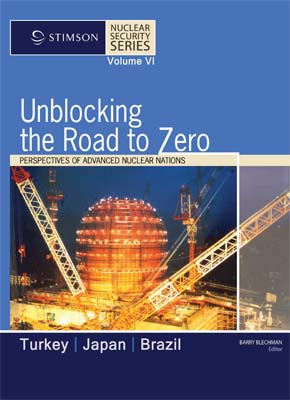
Source: Stimson Center's Nuclear Security Studies

Turkey's Perspectives on Nuclear Weapons and Disar
In principle, Turkey would welcome the global elimination of nuclear weapons. For the
current government, the possession of nuclear weapons by other states is a factor that, indirectly at least, reduces Turkey’s regional (if not global) aspirations and power. However, in the medium term, it remains deeply ambivalent on the future of nuclear weapons and its own plans regarding nuclear energy and weapons development.
 
Turkey lacks a coherently articulated national policy vis-à-vis nuclear weapons. This is partly due to the fact that as a member of NATO it is a direct beneficiary of the US nuclear umbrella and because the United States maintains a number of nuclear weapons at the Incirlik Air Force base in southern Turkey. The absence of such a policy is also the result of the unclear demarcation of lines of authority between civilian and military leaders on issues of national defense. While this may not have been a problem in the past, civil-military relations have been strained under the current ruling government, led by the Justice and Development Party (AKP). Until recently, when it came to setting national priorities, the military establishment’s role could best be described as primus inter pares. The AKP’s preoccupation with expanding Turkey’s role in the region and its push to reform Turkish state structures, including the military’s prerogatives, are radically challenging the military’s control of the national security agenda.
 
This report is part of larger series produced by the Stimson Center.
 

About the Author

Henri J. Barkey

Former Visiting Scholar, Middle East Program

Barkey served as a member of the U.S. State Department Policy Planning Staff, working primarily on issues related to the Middle East, the Eastern Mediterranean, and intelligence from 1998 to 2000.

    Recent Work

  • Article
    Winners and Losers in Turkey’s Election

      Henri J. Barkey

  • Article
    The Road to Turkey’s June Elections: Crises, Strategies, and Outcomes

      Henri J. Barkey

Henri J. Barkey
Former Visiting Scholar, Middle East Program
Henri J. Barkey
TürkiyePolitical ReformForeign PolicyNuclear PolicyNuclear Energy

Carnegie does not take institutional positions on public policy issues; the views represented herein are those of the author(s) and do not necessarily reflect the views of Carnegie, its staff, or its trustees.

More Work from Carnegie Russia Eurasia Center

  • Commentary
    Carnegie Politika
    What the Russian Energy Sector Stands to Gain From War in the Middle East

    The future trajectory of the U.S.-Iran war remains uncertain, but its impact on global energy trade flows and ties will be far-reaching. Moscow is likely to become a key beneficiary of these changes; the crisis in the Gulf also strengthens Russia’s hand in its relationships with China and India, where advantages might prove more durable.

      • Sergey Vakulenko

      Sergey Vakulenko

  • Commentary
    Carnegie Politika
    Beyond Oil: Hormuz Closure Puts Russia in the Lead in the Fertilizer Market

    The Kremlin expects to not only profit from rising fertilizer prices but also exact revenge for the collapse of the 2023 grain deal.

      Alexandra Prokopenko

  • Commentary
    Carnegie Politika
    Tokayev’s New Constitution Is a Bet on Stability—At Freedom’s Expense

    Kazakhstan’s new constitution is an embodiment of the ruling elite’s fears and a self-serving attempt to preserve the status quo while they still can.

      Serik Beysembaev

  • Commentary
    Carnegie Politika
    Why Has Kazakhstan Started Deporting Political Activists?

    The current U.S. indifference to human rights means Astana no longer has any incentive to refuse extradition requests from its authoritarian neighbors—including Russia.

      Temur Umarov

  • Commentary
    Carnegie Politika
    Why Are China and Russia Not Rushing to Help Iran?

    Most of Moscow’s military resources are tied up in Ukraine, while Beijing’s foreign policy prioritizes economic ties and avoids direct conflict.   

      • Alexander Gabuev

      Alexander Gabuev, Temur Umarov

Get more news and analysis from
Carnegie Russia Eurasia Center
Carnegie Russia Eurasia logo, white
  • Research
  • Politika
  • About
  • Experts
  • Events
  • Contact
  • Privacy
Get more news and analysis from
Carnegie Russia Eurasia Center
© 2026 Carnegie Endowment for International Peace. All rights reserved.