• Research
  • Politika
  • About
Carnegie Russia Eurasia center logoCarnegie lettermark logo
  • Donate
REQUIRED IMAGE
Report
Malcolm H. Kerr Carnegie Middle East Center

Coping With Data Limitations When Measuring Industry Oligopoly Power in a Developing Country

Researchers' enthusiasm for estimating industry oligopoly power in developing countries is often hampered by a lack of available data. Using firm optimizing behavior can help solve this problem.

Link Copied
By Lahcen Achy, Azzeddine Azzam, Khalid Sekkat
Published on Dec 16, 2009

Additional Links

Full Text

Source: Regional and Sectoral Economic Studies

Researchers' enthusiasm for estimating industry oligopoly power in developing countries is often hampered by a lack of available data. Even when available, data are often incomplete, inconsistent, too aggregated, and almost always collected by government agencies for purposes different from those of the researcher.
 
As a consequence, a researcher addressing the issue of oligopoly power has four options:
 
  1. Ignore the issue
     
  2. Conduct a descriptive industry study
     
  3. Develop an elaborate structural econometric oligopoly model and strip it to suit available data
     
  4. Estimate ad hoc regressions using available data
     
  5. Address the issue by generating theoretical predictions from a stylized theoretical model of oligopoly.
None of the options deliver estimates based on explicit theoretical restrictions implied by optimizing behavior of imperfectly competitive firms. 
 
An alternative option, which this paper suggests, is to use the theoretical restrictions implied by firm optimizing behavior to specify and make inference about market power in a conjectural elasticity (CE) model when data availability is a problem. The novel feature of the model is that it is empirically implemented with observations on only two variables likely to be found in most industry statistics collected for tax purposes by governments in developing countries: Sales revenue and payroll (the wage bill).

About the Authors

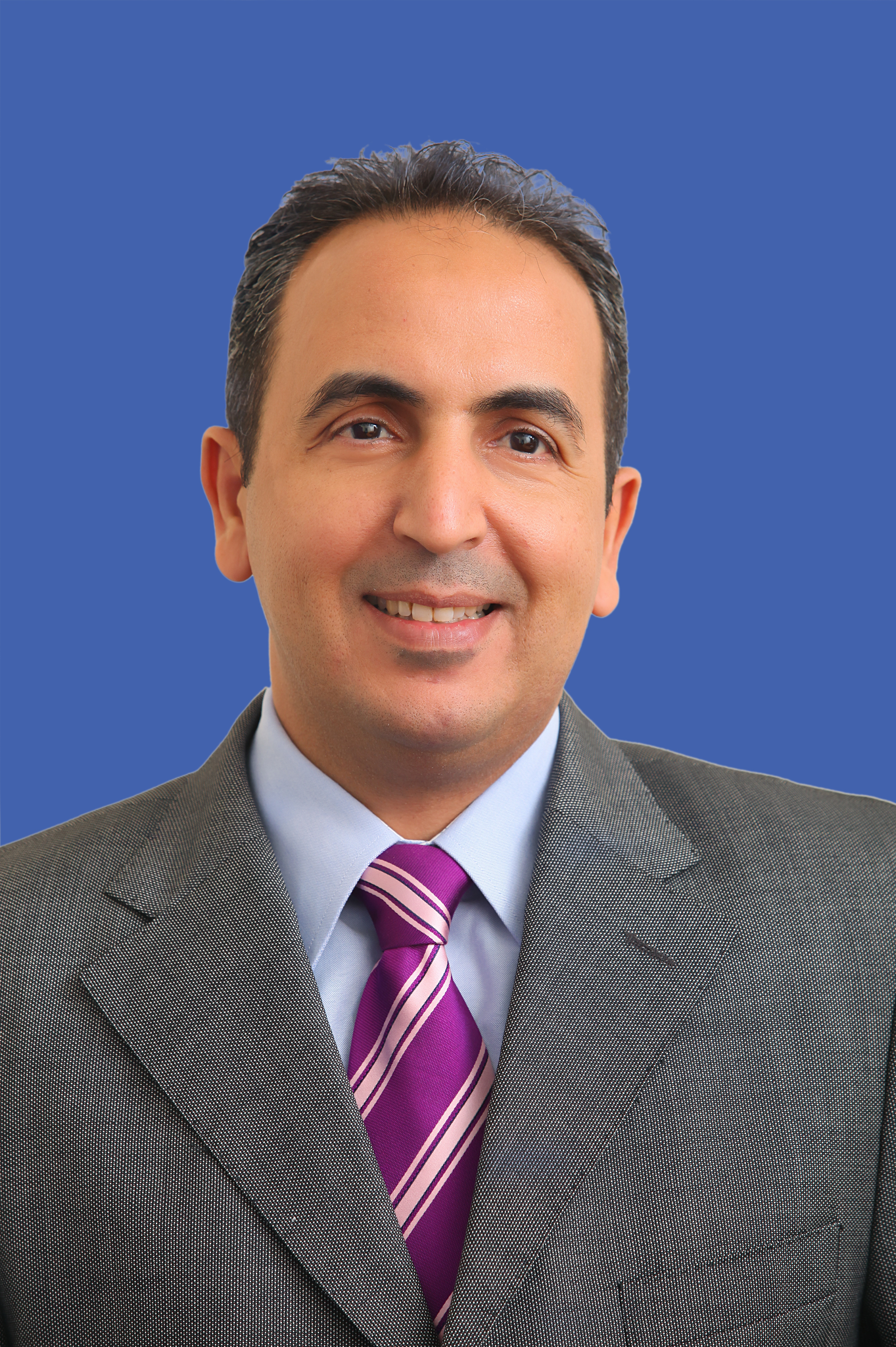
Lahcen Achy

Former Nonresident Senior Associate, Middle East Center

Achy is an economist with expertise in development, institutional economics, trade, and labor and a focus on the Middle East and North Africa.

Azzeddine Azzam

Khalid Sekkat

Authors

Lahcen Achy
Former Nonresident Senior Associate, Middle East Center
Lahcen Achy
Azzeddine Azzam
Khalid Sekkat
EgyptGulfLevantMaghrebEconomy

Carnegie does not take institutional positions on public policy issues; the views represented herein are those of the author(s) and do not necessarily reflect the views of Carnegie, its staff, or its trustees.

More Work from Carnegie Russia Eurasia Center

  • Commentary
    Carnegie Politika
    Does Russia Have Enough Soldiers to Keep Waging War Against Ukraine?

    The Russian army is not currently struggling to recruit new contract soldiers, though the number of people willing to go to war for money is dwindling.

      Dmitry Kuznets

  • Commentary
    Carnegie Politika
    Including Russia on the EU Financial Blacklist Will Hurt Ordinary People, Not the Kremlin

    The paradox of the European Commission’s decision is that the main victims will not be those it formally targets. Major Russian businesses associated with the Putin regime have long adapted to sanctions with the help of complex schemes involving third countries, offshore companies, and nonpublic entities.

      Alexandra Prokopenko

  • Commentary
    Carnegie Politika
    Why Didn’t the Ukraine War Turn Russia’s Ruling Class Against Putin?

    A new book by Alexandra Prokopenko looks at why the Russian ruling class became the regime’s willing servants—and how they might fare in a post-Putin world.

      Vladislav Gorin

  • Commentary
    Carnegie Politika
    Collateral Damage: The Frozen Foreign Assets of Middle-Class Russians

    The volume of frozen private assets might seem insignificant compared with Russia’s sovereign reserves, but these are the savings of millions of people who believed that foreign securities were a safe investment and in the institution of private property.

      Yulia Starostina

  • Commentary
    Carnegie Politika
    The Kremlin Has Weaponized Western Financial Checks to Punish Russian Dissidents

    International compliance and anti-money laundering standards are currently formulated in such a way that the Western financial system does not differentiate between Russian political prisoners and ISIS militants.

      Alexandra Prokopenko

Get more news and analysis from
Carnegie Russia Eurasia Center
Carnegie Russia Eurasia logo, white
  • Research
  • Politika
  • About
  • Experts
  • Events
  • Contact
  • Privacy
Get more news and analysis from
Carnegie Russia Eurasia Center
© 2026 Carnegie Endowment for International Peace. All rights reserved.