

In The Media
Mario Abou Zeid
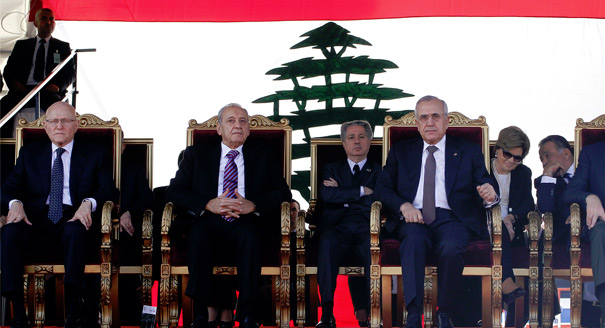
Source: Getty
Hopes are high that Lebanon’s new cabinet can restore stability. But simmering tensions stemming from Hezbollah and its role in the Syrian conflict threaten to derail progress.
More than ten months after the resignation of the Lebanese cabinet in March 2013, a new government was formed under the leadership of Prime Minister Tammam Salam on Saturday, February 15. Deemed a “cabinet of national interest,” it was forged during a period of heightened tensions in Lebanon triggered by political divisions over the country’s stance toward the ongoing civil war in neighboring Syria and a national debate over whether the state should legitimize Hezbollah’s weapons arsenal.
The new government brings with it hopes for restoring stability, reinstating the country’s stalled national dialogue, passing a new electoral law, and preparing for presidential elections within its constitutional mandate of three months. However, these high expectations are bound by simmering political tensions that could derail progress. Tensions stemming from the ongoing Syrian conflict and Hezbollah’s continued military participation in it could lead to the government’s failure.
The new cabinet signals the return to power of the previously ousted March 14 coalition—an alliance of Lebanese parties in opposition to the Syrian regime of Bashar al-Assad—and, more importantly, of former prime minister Saad Hariri’s Future Movement, the main representative of the Sunni community. These parties join the Shia, pro-Assad Hezbollah and its allies from the March 8 coalition in a power-sharing arrangement. The cabinet’s 24 ministers are distributed among three blocs: eight ministers from the March 14 coalition, eight from the March 8 alliance, and another eight who presumably answer to the president, the prime minister, and Druze leader Walid Jumblatt.This arrangement means that competing Sunni and Shia representatives will now have to confront each other within the confines of a single government. Until now, their conflicts have played out primarily on the street. Being forced to work together in the cabinet could help reduce tensions.
Regional and international progress on bringing an end to the Syrian conflict—and its repercussions on the domestic scene—may have convinced the party to participate in the power-sharing arrangement. But the decision likely has more to do with Hezbollah’s desire to protect its interests than any fundamental change of course.
A simmering conflict over the cabinet’s yet-to-be-developed ministerial declaration, a policy statement that sets the general guidelines of the government, sheds some light on Hezbollah’s deeper-seated motives. For the past ten months, all factions have been contesting their preset criteria for this general statement. Two main competing propositions are on the table.
The first proposal, by the March 14 camp, is centered on the Baabda Declaration. This document, approved in 2012 by representatives of both the March 8 and March 14 alliances, dissociates Lebanon from surrounding regional conflicts—especially the Syrian conflict—to consolidate internal stability and avoid sectarian clashes. The March 14 coalition sees in the Baabda Declaration an implicit agreement that Hezbollah will cease its military participation in Syria and withdraw any troops it has in the country.
The second proposition, advanced by the March 8 camp, preserves the “army, people, resistance” formula put forward by Hezbollah to legitimize its arsenal and allow the party to keep and develop its weaponry. Hezbollah categorically refuses to abandon the reference to this formula, arguing that arms maintain Hezbollah’s influence in Lebanon, give it a sense of security vis-à-vis Israel, and sustain the longevity of its strategic alliance with the Syrian regime. The March 8 coalition will contest any measure in the ministerial declaration that is likely to undermine the legitimacy of Hezbollah’s military power.
Participation in the government thus gives Hezbollah the chance to defend its broader interests. Being part of the decisionmaking process allows it to preempt any possible debate over defense strategy and weapons held by nonstate actors. It also allows Hezbollah to direct and manage the power of the Lebanese Armed Forces, which is expected to increase following Saudi Arabia’s decision in December 2013 to afford the Lebanese army a $3 billion grant.
In addition, having key governmental positions when a possible future settlement over Syria is taking place will allow Hezbollah to negotiate with whatever regime rules in Damascus. In particular, the party will be concerned with securing its military supply lines, which bring arms from Hezbollah’s benefactors in Iran through Syria. This prospect has pushed it to compromise over some cabinet portfolios in return for allocating leadership of the Ministry of Foreign Affairs and Emigrants—essential for voicing Hezbollah’s interests internationally—to its March 8 ally, the Free Patriotic Movement.
Of course, compromise does not guard against contestation, and Hezbollah has proven in the past that it can effectively derail government activities if it does not get its way. Three years ago, when a national unity government was formed, Hezbollah had de facto majority support in the cabinet. In January 2011, a crisis emerged over the expectation that the Special Tribunal for Lebanon, which was investigating the February 2005 assassination of former Lebanese prime minister Rafik Hariri, would indict top members of Hezbollah’s military and security apparatus in the killing. In response, Hezbollah orchestrated the resignation of more than one-third of the cabinet, causing its collapse.
The new cabinet’s precarious power-sharing arrangement makes it as vulnerable to this tactic as the 2011 government was. Not only is finding common ground between the various blocs going to be problematic, any cabinet move interpreted by Hezbollah as a challenge to its status and actions may well lead the party to conclude that collapsing the government is preferable to being backed into a corner, prompting it to repeat its 2011 withdrawal. For Hezbollah, a vacuum of power in Beirut or the paralysis of Lebanese state institutions would allow it to achieve its strategic goals without being held accountable.
Even Hezbollah’s seeming compromises could be used as strategic tools. While the party accepted the decision to grant the March 14 coalition the ministerial portfolios of justice, the interior, and telecommunications—all of which have key roles in security and intelligence—it is not offering its adversaries any gifts. Hezbollah’s apparent concessions are a tactical move that will force Sunni leaders to confront radical Sunni groups that are carrying out bombings and causing major instability in Hezbollah strongholds. If the Sunni leadership is unable to overcome these radicals, Hezbollah can use this failure as a pretext for accusing the March 14 coalition of backstabbing the party and as a potential justification for any further internal confrontation.
If the new government forces Hezbollah’s hand, all bets may be off. If the cabinet focuses the spotlight on the party’s role in Syria, puts Hezbollah under additional pressure domestically and internationally, or, more importantly, questions the legitimacy of its weapons, a move that Hezbollah would regard as an existential threat—the party will still strive to overthrow it. So while the new Lebanese cabinet is a step in the right direction, its success, and its longevity, are far from assured.

Former Research Analyst, Middle East Center
Abou Zeid was a research analyst at the Carnegie Middle East Center, where his work focuses on political developments in Lebanon, Syria, Iraq, and Iran.
Recent Work
Mario Abou Zeid
Mario Abou Zeid
Carnegie does not take institutional positions on public policy issues; the views represented herein are those of the author(s) and do not necessarily reflect the views of Carnegie, its staff, or its trustees.
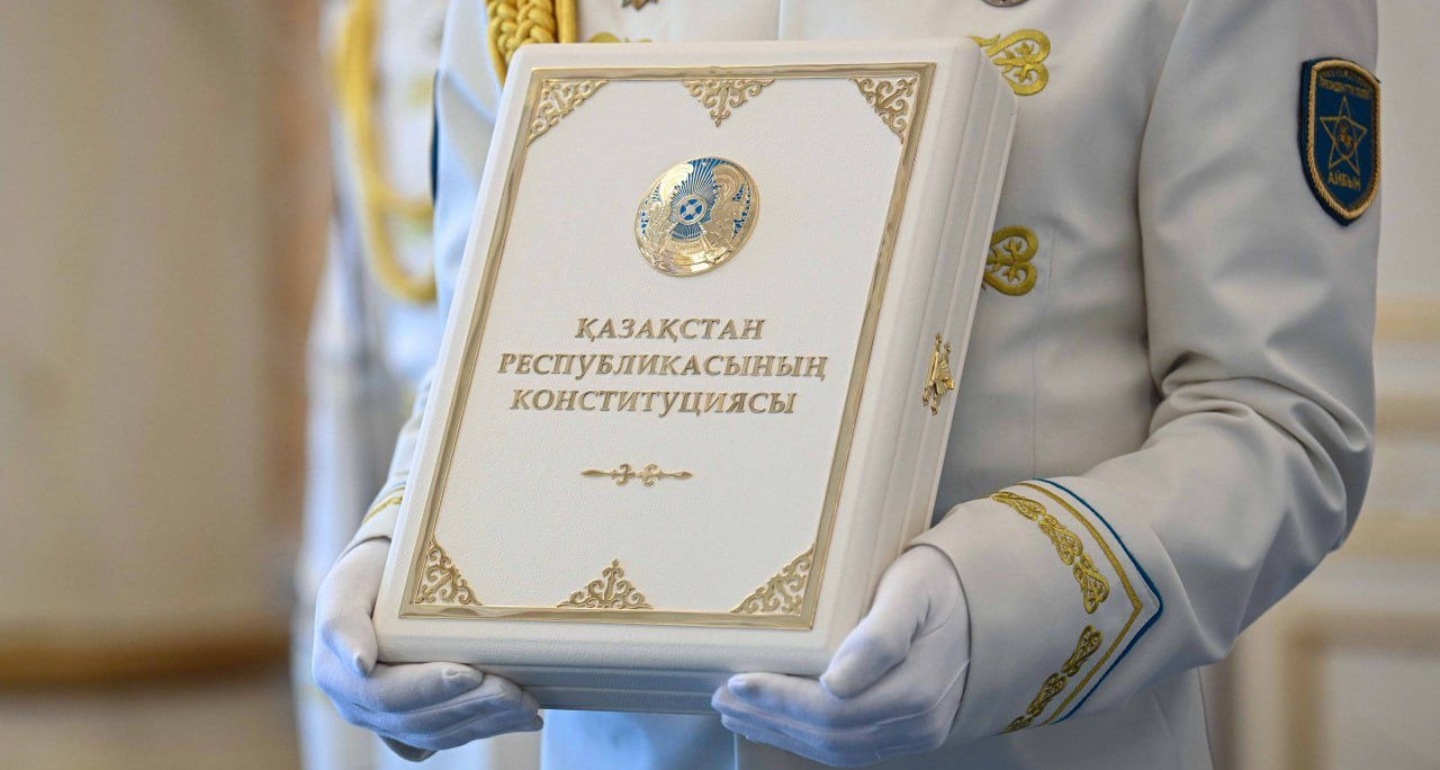
Tokayev’s predecessor, Nursultan Nazarbayev, outlined arrangements for a power transition too soon and in too much detail, ultimately losing control over the process. Tokayev is determined not to meet the same fate.

Temur Umarov
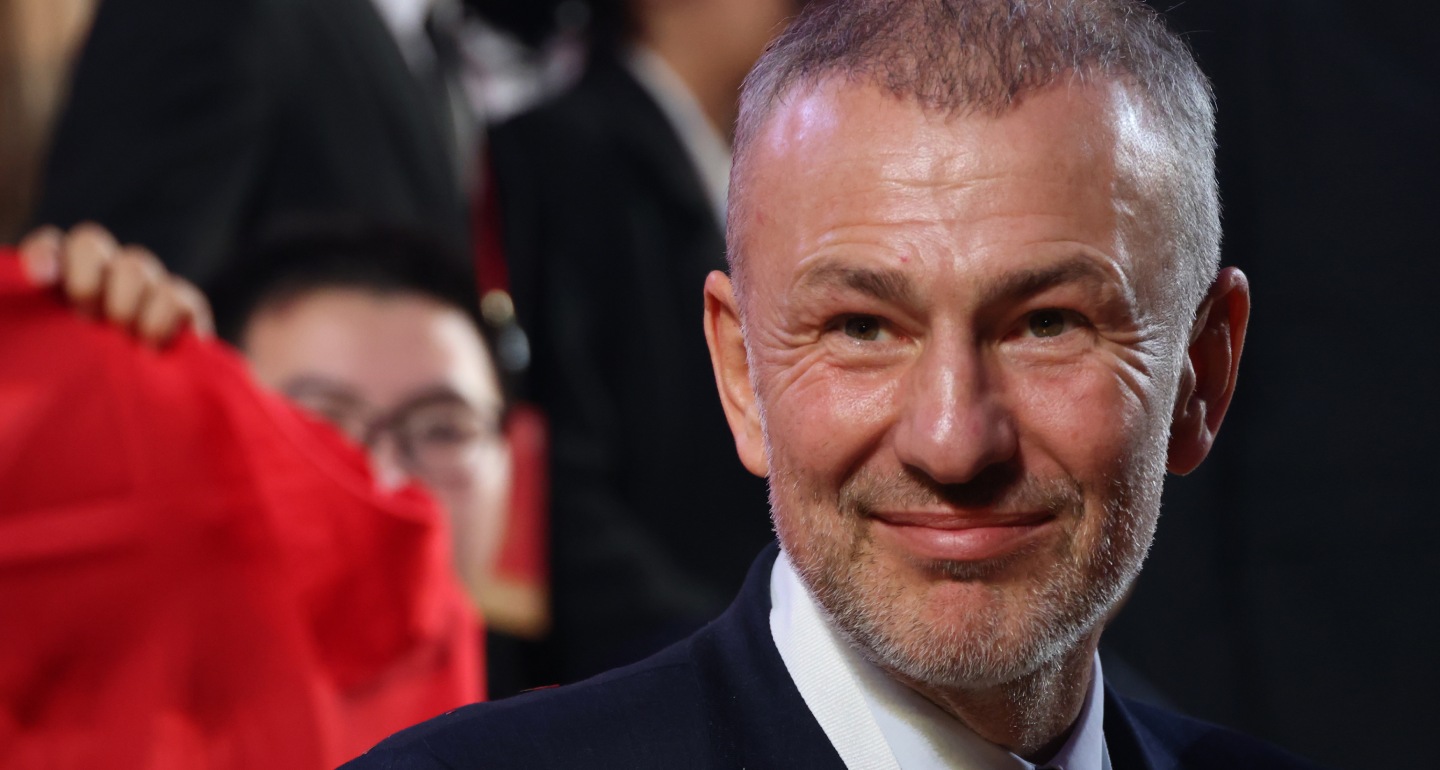
Andrey Melnichenko’s essay offers no answer to the fundamental question of how, under any kind of negotiated settlement, Europe can protect itself from the Russian ressentiment that is inevitable in all scenarios except for an outright victory for Putin.

Leonid Bershidsky

Despite unhappiness on the ground, Moscow is determined to use both carrot and stick to ensure there is record support for United Russia in occupied Ukraine.

Konstantin Skorkin

Whether PAS can refocus on the unfinished business of state-building may ultimately prove more consequential for Moldova’s European future than the pace of its accession negotiations.

Balázs Jarábik
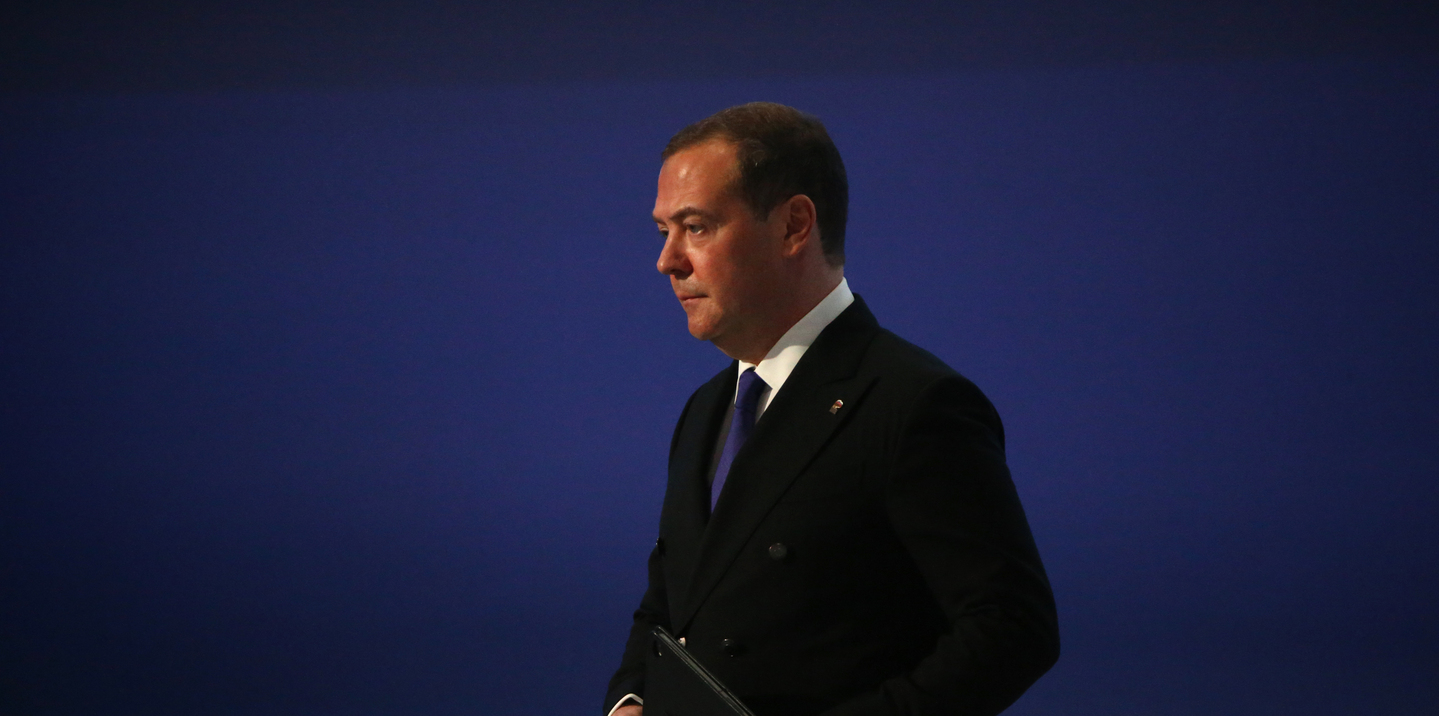
Medvedev’s defeat in the battle for the position of speaker appears to signal that the long process of his marginalization in Russian politics has passed the point of no return.

Andrey Pertsev