

Report
Mr. Husain Haqqani, Ashley J. Tellis
{
  "authors": [
    "Husain Haqqani"
  ],
  "type": "legacyinthemedia",
  "centerAffiliationAll": "dc",
  "centers": [
    "Carnegie Endowment for International Peace"
  ],
  "collections": [],
  "englishNewsletterAll": "ctw",
  "nonEnglishNewsletterAll": "",
  "primaryCenter": "Carnegie Endowment for International Peace",
  "programAffiliation": "russia",
  "programs": [
    "Russia and Eurasia"
  ],
  "projects": [],
  "regions": [
    "South Asia",
    "Afghanistan",
    "Pakistan"
  ],
  "topics": [
    "Political Reform",
    "Democracy",
    "Foreign Policy"
  ]
}
REQUIRED IMAGE
Source: Carnegie
Originally appeared in the Asian
Wall Street Journal, November 7, 2002
Pakistan's military ruler, Gen. Pervez Musharraf, has learnt that there's only
one thing worse than fixing an election: fixing one without getting the desired
results. Pakistan's Oct. 10 election has resulted in a hung parliament, something
Gen. Musharraf sought through re-writing the constitution and election laws.
But unanticipated was the manner in which voters also enhanced the leverage
of Pakistan's anti-Western Islamic parties that had, until recently, been dismissed
by Gen. Musharraf as representing a minuscule minority. Mainstream secular parties
opposed to military rule also gained significant clout in the new national assembly,
making it difficult for the president to secure approval of his constitutional
amendments.
Gen. Musharraf has delayed convening parliament, originally scheduled for Nov. 1, to buy time to cobble together a pro-military coalition. When parliament chooses a new prime minister, a close race is expected between Gen. Musharraf's candidate and an Islamic cleric backed by mainstream secular parties hoping to embarrass the military ruler. But a victory for the opposition candidate would result in a difficult coalition between the Islamists and Westernized social democrats, who do not see eye-to-eye on most social issues. Instead of trying to force his own choice on a reluctant parliament, Gen. Musharraf could withdraw his plans to institutionalize the military's role in governing Pakistan, which are at the heart of his constitutional package. Opposition to these amendments is the main reason for the prospective coalition between secular democrats and Islamists.
Gen. Musharraf would also have to compromise with exiled former Prime Minister Benazir Bhutto, whose Pakistan People's Party is the second-largest group in parliament. The PPP has long been considered an adversary by the military, which executed Ms. Bhutto's father, Zulfikar, after toppling his elected government in 1977. Ms. Bhutto and her husband have faced charges of corruption for the last six years after her government was dismissed on the basis of those allegations. Prosecution in the corruption cases has been painfully slow and so far there has been no final conviction. Ms. Bhutto was convicted under a decree issued by Gen. Musharraf for failing to appear in a special court, which is not the same as being convicted for graft or bribery. Election results show that the allegations have not discredited Ms. Bhutto and her party in the eyes of Pakistani voters.
Gen. Musharraf's attempts to eliminate corruption through special courts and military-backed prosecutions are seen by Pakistani politicians as politically motivated persecution. Pakistan needs to deal with the problem of political corruption, but the military's desire to act as the country's anti-corruption authority is obviously not working. Instead of insisting on that role, Gen. Musharraf could leave the issue of corruption to the regular courts and the court of public opinion, as is the practice in all democracies.
Once the constitutional package and the military-inspired corruption prosecutions are withdrawn, the conservatives currently considered Gen. Musharraf's political pawns would be free to negotiate a coalition arrangement with the opposition parties. A coalition between secular parties of the center-right and the center-left would then become possible, denying the Islamists an influence disproportionate to their electoral strength.
Islamists, who gained a significant number of seats in parliament with only 11% of the popular vote, will certainly form the government in the two provinces bordering Afghanistan. Their opposition to the presence of U.S. forces conducting the war against al Qaeda could complicate Pakistan's role as an indispensable U.S. ally in the region. But Pakistani political parties, including the Islamists, are willing to maintain the alliance with the U.S. if Washington supports normal democratic politics instead of putting all its weight behind Gen. Musharraf.
This may not be a bad deal. A democratic regime, however flawed, is more likely to provide long-term stability to Pakistan. U.S. support for military rulers in the past has contributed to anti-Americanism in Pakistan. Military rulers, including Gen. Musharraf, have used Islamic extremism as a strategic tool in pursuing Pakistan's traditional rivalry with India. With 29% of the national budget allocated for defense, the military inhibits Pakistan's economic development. Its repeated interventions have undermined the evolution of democratic institutions, such as strong political parties.
Instead of appearing to support the military's political role, the U.S. should firmly assert that a return to democracy in Pakistan is critical to the long-term health of the new U.S.-Pakistan partnership. It is hard to overestimate the powerful influence that the United States has in Pakistan today. That influence means unequivocal statements from the U.S. government will have real impact on the Pakistani political elite and the military. Additionally, the U.S. can add tangible incentives to the mix. The administration could suspend or delay disbursements for Pakistan's law-enforcement machinery under the new U.S. aid package until there are clear signs that the Pakistani intelligence services are reducing interference. Given the circumstances, it may not be easy for Gen. Musharraf to secure a civilian government that simply acts as a front for the military's decisions. But his efforts to maintain the military's control over his country should not be condoned. It is time Pakistan's civilian politicians, and the people, were given a chance to work things out themselves.
Reprinted from The Asian Wall Street Journal © 2002 Dow Jones & Company, Inc. All rights reserved.
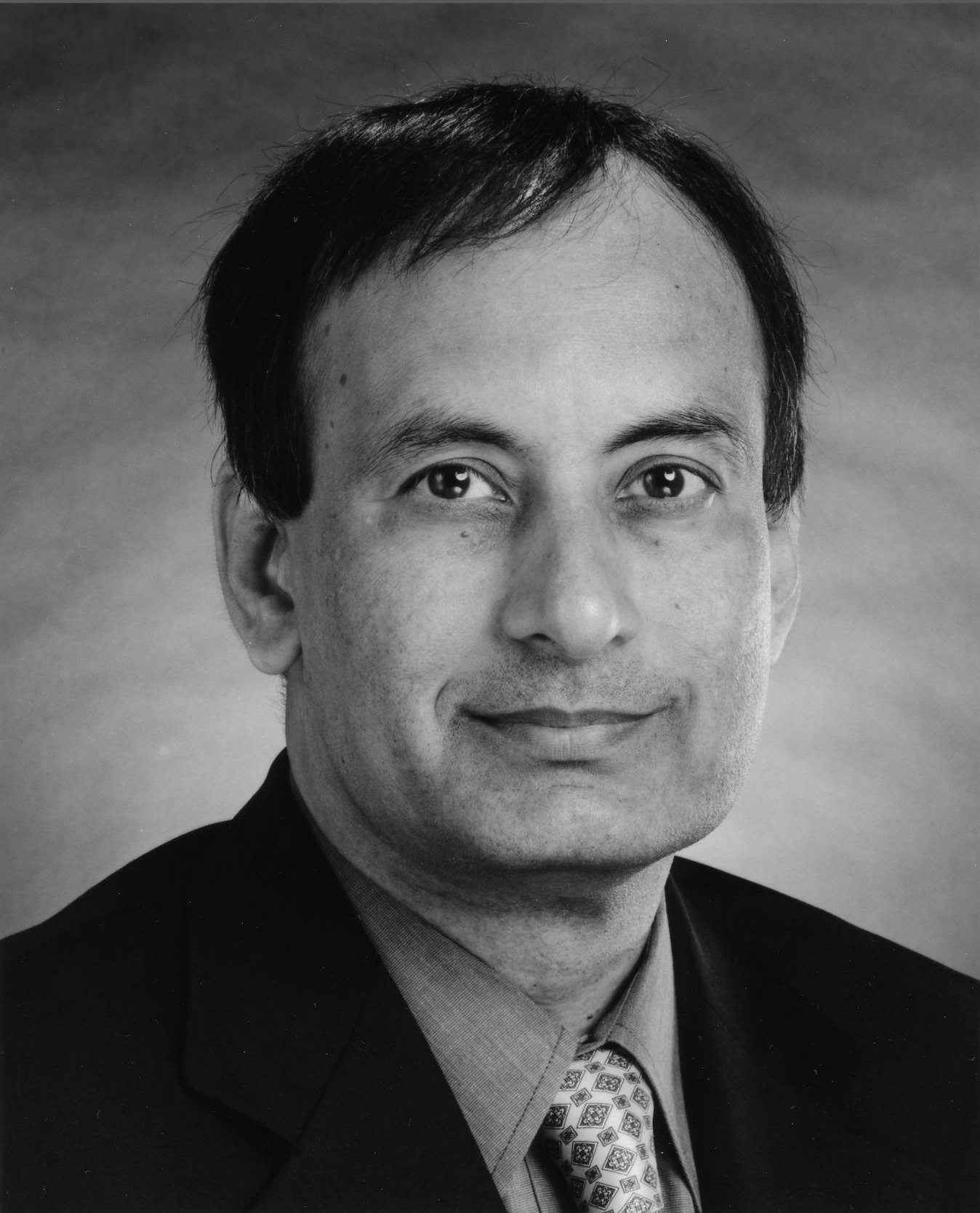
Former Visiting Scholar
Recent Work
Mr. Husain Haqqani, Ashley J. Tellis
Mr. Husain Haqqani
Carnegie does not take institutional positions on public policy issues; the views represented herein are those of the author(s) and do not necessarily reflect the views of Carnegie, its staff, or its trustees.

But their "principal to principal" model will only be as effective as the political strength of each leader back home.

Damien Ma

U.S. unpredictability has allowed China to capitalize on its positioning as the “responsible great power”. Paradoxically, the more China wins the perception game, the more likely expectations will rise for Beijing to deliver not just words but to demonstrate with its deeds.

Chong Ja Ian

Hanoi and Beijing have long treated each other as distant cousins rather than comrades in arms. That might be changing as both sides draw closer to hedge against uncertainty and America’s erratic behavior.

Nguyễn Khắc Giang

Across Asia, China is better positioned to withstand energy shocks from the fallout of the Iran war. Its abundant coal capacity can ensure stability in the near term. Yet at the same time, the country’s energy transition away from coal will make it even less vulnerable during the next shock.
Damien Ma

Malaysia’s chairmanship sought to fend off short-term challenges while laying the groundwork for minimizing ASEAN’s longer-term exposure to external stresses.

Elina Noor