

Report
Mr. Husain Haqqani, Ashley J. Tellis
{
  "authors": [
    "Husain Haqqani"
  ],
  "type": "legacyinthemedia",
  "centerAffiliationAll": "dc",
  "centers": [
    "Carnegie Endowment for International Peace"
  ],
  "collections": [],
  "englishNewsletterAll": "ctw",
  "nonEnglishNewsletterAll": "",
  "primaryCenter": "Carnegie Endowment for International Peace",
  "programAffiliation": "russia",
  "programs": [
    "Russia and Eurasia"
  ],
  "projects": [],
  "regions": [
    "South Asia",
    "Pakistan"
  ],
  "topics": [
    "Political Reform",
    "Democracy",
    "Foreign Policy"
  ]
}
REQUIRED IMAGE
Source: Carnegie
Originally appeared in the Gulf News,
Indian Express, and Nation
(Pakistan), July 4, 2003
Pakistani President General Pervez Musharraf's Camp David meeting with U.S. President George W. Bush has yielded the promise of a $3 billion aid package for Pakistan for the next five years. But the promise of U.S. aid is not enough to help Pakistan out of its political and identity crises. To turn Pakistan's fortunes around, Musharraf and his fellow generals need to re-assess many of the key assumptions that have driven the policies of successive Pakistani rulers.
Had U.S. aid been the solitary key to a nation's success, Egypt and Turkey would have been models for emulation. Both nations, along with Israel, have been among the largest recipients of U.S. aid over the years. Pakistan, too, has regularly featured among the top ten U.S. aid recipients, despite intermittent interruptions to the flow of aid.
The question is not how much foriegn aid a nation receives but what it does with it. Pakistan has received aid packages similar to the one promised at Camp David over the last 50 years. Between 1951 and 1981, the U.S. provided $5 billion in direct economic assistance to Pakistan.
General Zia-ul-Haq negotiated $3.2 billion in aid for 1981-85 and another $4 billion for the subsequent six years, in return for Pakistan's involvement in the anti-Soviet war in Afghan-istan.
The U.S. has also supported Pakistan's borrowing from international financial institutions – the IMF and the World Bank. Their support for Pakistan averages $2 billion per year. Constant conflict, internal and regional, and the absence of rule of law have often mitigated the benefits of these concessional flows of resources into Pakistan.
At Camp David, Bush praised Musharraf for being a key ally in the global war against terrorism but there was no concern over stifling democracy and allowing Pakistan's Islamist extremists a free hand. Such unconditional U.S. support encouraged previous Pakistani military rulers to pursue disastrous regional adventures, such as support for anti-India militancy, and has done little to move the country towards democracy.
If the U.S. really wants to help Pakistan, backing for Musharraf must be tempered with clear indications that Washington is uneasy with his domestic and regional policies.
Bush's handling of Mush-arraf could be a test of the promise he made just before the war in Iraq about bringing democracy to the Muslim world.
Last week, Musharraf declared his intention to indefinitely remain at the helm of Pakistan's affairs because in his view: "Pakistan is not ready for democracy." This contradicts Bush's stated interest in the spread of democratic values. In February, Bush had described as "presumptuous and insulting" any suggestion that democracy is unsuited to the Muslim world or it may not appeal to certain peoples for cultural reasons.
So far the U.S. seems content to allow Musharraf to run the country's affairs. Musharraf refuses to restore the country's constitution, offers only limited powers to the parliament elected last October and has calibrated co-operation in the war against terrorism to extract maximum benefit from Washington.
He has gone on record that he sees U.S. aid as "reward" for Pakistan's support in the war on terrorism. Pakistan's support in tracking down Al Qaida members has undoubtedly been valuable to the U.S. But the country's intelligence services seem to be doling out Al Qaida figures one at a time as if to keep the U.S. indefinitely dependent on their support.
A major Al Qaida personality has been arrested and handed over to the U.S. before every important meeting between Pakistani and American officials.
This has led cynics to ask whether the timing of these arrests is a coincidence or the result of a deliberate effort to establish Pakistan's usefulness to the United States for a long time to come. Musharraf cited the corruption and incompetence of civilian leaders as reason for his military coup in 1999.
As criticism and sanctions gave way to praise for Musharraf's support, his rhetoric about a phased transition to democracy has been substituted by comments about his being indispensable for Pakistan.
Pakistan became a nuclear power soon after India in 1998. Musharraf suppressed secular political parties, leading to the rise of Islamists who now wield considerable political weight.
This enables him to claim that the only alternative to his military regime is an Islamist one. Since the U.S. does not want Pakistan's nuclear weapons to fall under the control of Islamists, the military's domination of politics is allowed to persist.
Lack of criticism by the U.S. has encouraged Musharraf to follow a two-track approach in relations with India. As a result, Pakistan failed to evolve a viable political system and India-Pakistan relations deteriorated.
This time, the U.S. should not allow a repetition of that pattern. Military
rule or Islamist domination is not Pakistan's only choice. Pakistan can, and
should, be a constitutional democracy like its neighbours in South Asia, and
the U.S. should make clear its preference for that outcome.
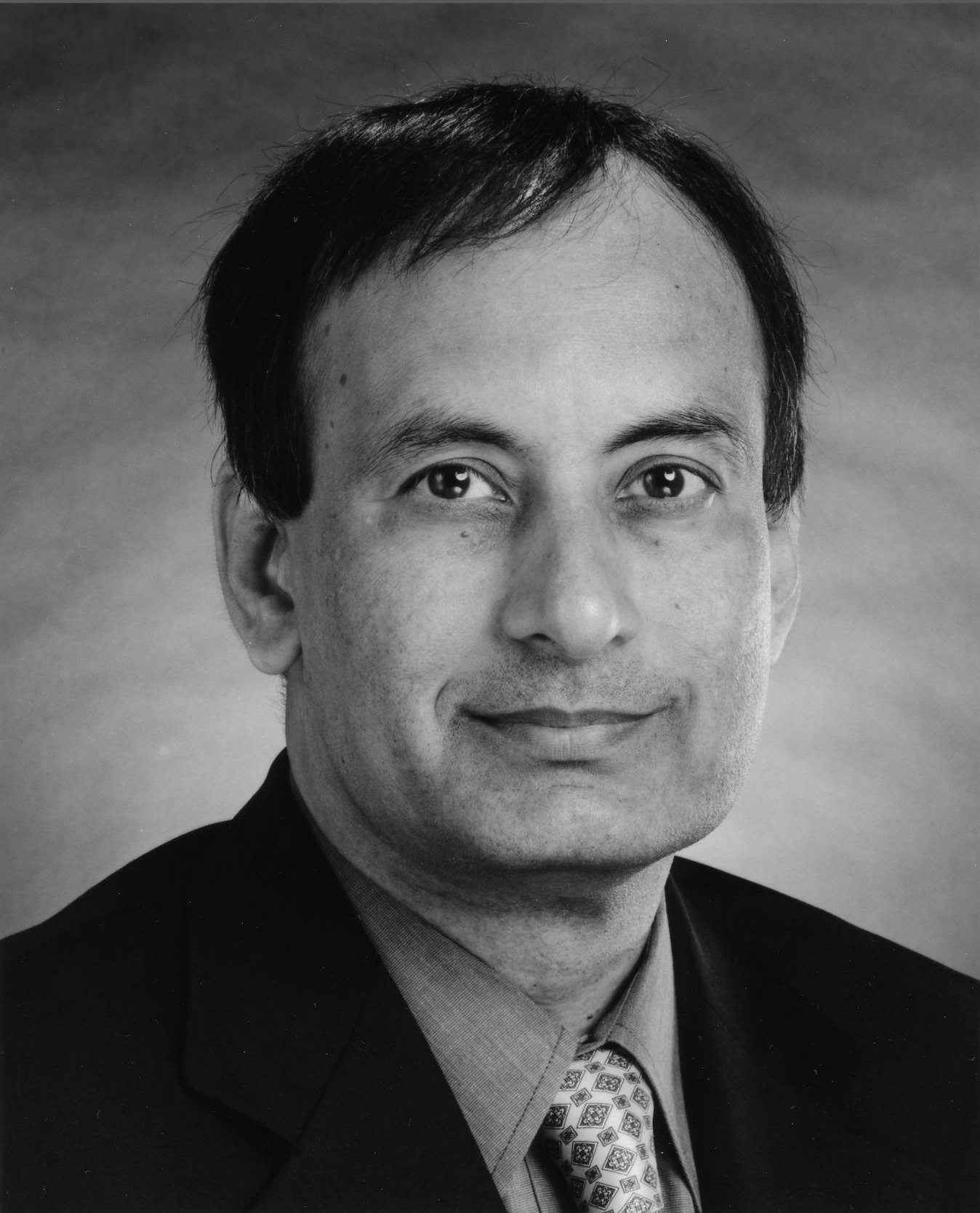
Former Visiting Scholar
Recent Work
Mr. Husain Haqqani, Ashley J. Tellis
Mr. Husain Haqqani
Carnegie does not take institutional positions on public policy issues; the views represented herein are those of the author(s) and do not necessarily reflect the views of Carnegie, its staff, or its trustees.

But their "principal to principal" model will only be as effective as the political strength of each leader back home.

Damien Ma

U.S. unpredictability has allowed China to capitalize on its positioning as the “responsible great power”. Paradoxically, the more China wins the perception game, the more likely expectations will rise for Beijing to deliver not just words but to demonstrate with its deeds.

Chong Ja Ian

Hanoi and Beijing have long treated each other as distant cousins rather than comrades in arms. That might be changing as both sides draw closer to hedge against uncertainty and America’s erratic behavior.

Nguyễn Khắc Giang

Across Asia, China is better positioned to withstand energy shocks from the fallout of the Iran war. Its abundant coal capacity can ensure stability in the near term. Yet at the same time, the country’s energy transition away from coal will make it even less vulnerable during the next shock.
Damien Ma

Malaysia’s chairmanship sought to fend off short-term challenges while laying the groundwork for minimizing ASEAN’s longer-term exposure to external stresses.

Elina Noor