

Malaysia’s chairmanship sought to fend off short-term challenges while laying the groundwork for minimizing ASEAN’s longer-term exposure to external stresses.
Elina Noor
{
"authors": [
"Dmitri Trenin",
"Sam Greene"
],
"type": "other",
"centerAffiliationAll": "dc",
"centers": [
"Carnegie Endowment for International Peace",
"Carnegie Europe",
"Carnegie Russia Eurasia Center"
],
"collections": [
"Transatlantic Cooperation"
],
"englishNewsletterAll": "",
"nonEnglishNewsletterAll": "",
"primaryCenter": "Carnegie Russia Eurasia Center",
"programAffiliation": "russia",
"programs": [
"Russia and Eurasia"
],
"projects": [],
"regions": [
"North America",
"United States",
"Caucasus",
"Russia",
"Western Europe",
"Europe"
],
"topics": [
"Political Reform",
"Foreign Policy"
]
}Source: Getty
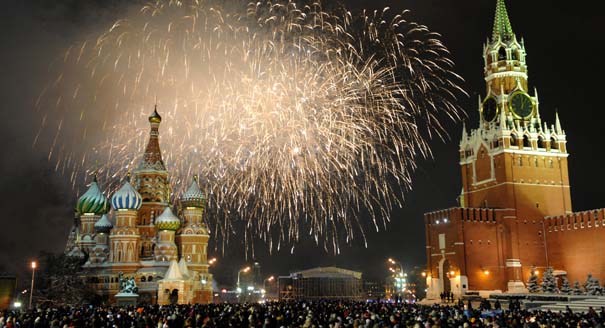
Russian policy makers need to open space for public debate and engage in substantive discussions on critical global issues, and Western governments and institutions need to open the door to independent Russian voices.
The Kremlin was able to consolidate its domestic authority and assert itself globally during Russia’s economic boom, but economic, security, and governance crises have shaken Moscow’s confidence. If it is to overcome its current challenges, Moscow must begin thinking strategically. To do this, policy makers need to open space for public debate and engage in substantive discussions on critical global issues—and Western governments and institutions need to open the door to independent Russian voices—contends a new paper by Sam Greene and Dmitri Trenin.
Key Conclusions:
While these challenges must be addressed by the Russian people and their leaders, the West can help:
The authors conclude:
“If the West seeks to exploit Russia’s absence for its own competitive advantage, a future democratic Russia will rightly feel it has been mistreated, and Russia’s nationalists and isolationists will once again win the day. Eventually, Russia’s interests will have to be taken into account, and there is no reason that moment has to wait until the Kremlin learns to express them clearly and constructively.”
Former Director, Carnegie Moscow Center
Trenin was director of the Carnegie Moscow Center from 2008 to early 2022.
Former Deputy Director for Operations, Moscow Center
Sam Greene was a deputy director for operations at the Moscow Center. He joined the Moscow Center in 2005. Previously, he was senior media program advisor for the New Eurasia Foundation, and a London and Moscow correspondent for FT Business.
Carnegie does not take institutional positions on public policy issues; the views represented herein are those of the author(s) and do not necessarily reflect the views of Carnegie, its staff, or its trustees.
Malaysia’s chairmanship sought to fend off short-term challenges while laying the groundwork for minimizing ASEAN’s longer-term exposure to external stresses.
Elina Noor
For Malaysia, the conjunction that works is “and” not “or” when it comes to the United States and China.
Elina Noor
In July 2025, Vietnam and China held their first joint army drill, a modest but symbolic move reflecting Hanoi’s strategic hedging amid U.S.–China rivalry.
Nguyễn Khắc Giang
Regulation, not embargo, allows Beijing to shape how other countries and firms adapt to its terms.
Alvin Camba
The Thai-Cambodian conflict highlights the limits to China's peacemaker ambition and the significance of this role on Southeast Asia’s balance of power.
Pongphisoot (Paul) Busbarat







