

Commentary
Dmitri Trenin
{
  "authors": [
    "Dmitri Trenin"
  ],
  "type": "legacyinthemedia",
  "centerAffiliationAll": "",
  "centers": [
    "Carnegie Endowment for International Peace",
    "Malcolm H. Kerr Carnegie Middle East Center",
    "Carnegie Russia Eurasia Center"
  ],
  "collections": [],
  "englishNewsletterAll": "",
  "nonEnglishNewsletterAll": "",
  "primaryCenter": "Carnegie Russia Eurasia Center",
  "programAffiliation": "",
  "programs": [],
  "projects": [
    "Eurasia in Transition"
  ],
  "regions": [
    "Levant",
    "North America",
    "United States",
    "Russia",
    "Western Europe",
    "Syria"
  ],
  "topics": [
    "Political Reform",
    "Foreign Policy"
  ]
}
Source: Getty
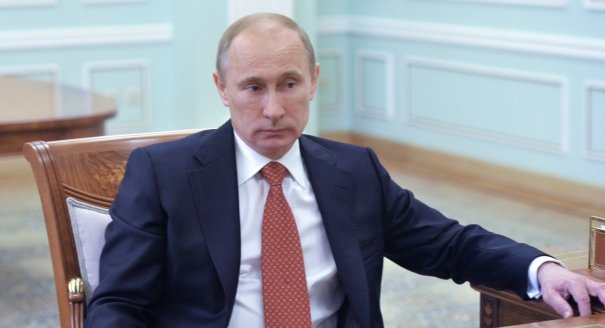
U.S. reactions to President Vladimir Putin’s op-ed article in the New York Times, from outrage to ridicule, show just how badly much of the Western policy elite are misinterpreting Russia.
Source: Bloomberg
U.S. reactions to President Vladimir Putin’s op-ed article in the New York Times this week, from outrage to ridicule, show just how badly much of the Western policy elite are misinterpreting Russia.
This is largely the product of dashed and unrealistic expectations that many in the West held after the collapse of communism. They thought Russia would reform itself and become a junior partner to the U.S. in global affairs. Instead, the country was re-established as an authoritarian and fiercely independent state. Putin has been demonized as the symbol of this disappointment, leaving Western elites dangerously ill-equipped to read him.
Putin decided to weigh in to the U.S. debate on Syria and its foreign policy in general not only to describe Russia’s position but also to exploit an opening: President Barack Obama is evidently reluctant to use force in Syria, the U.S. Congress is split on the issue, and most Americans are opposed to further military action in the Middle East, period. Putin has decided that U.S. foreign policy is too important to be left to the American people and its leaders alone, so he has turned to them to present his case.Putin’s primary goal isn’t a deal with the U.S. on Syria, but on the international security system as a whole. His central thesis is that a stable world order should be based on the institutions of the United Nations, and in particular consensus among the five permanent members of the UN Security Council: China, France, Russia, the U.K. and the U.S. In this vision, nothing serious could be done in the field of international security, especially the use of force, without Russia’s approval or acquiescence. For Putin, this amounts to an essential equality among the major powers, which he sees as a foundation of global stability.
At a minimum, Putin seeks to prevent the Obama administration from striking Syria. He is convinced, and wants to convince Americans, that nothing good will come of it, pointing to the incontrovertible reality that the U.S. would de facto be making a common front in Syria with its designated terrorist enemies, the al-Nusra Front and the Islamic State of Iraq and the Levant. As a pragmatist, however, Putin recognizes that something more substantial is needed to stave off the U.S. attack -- hence his chemical weapons initiative, which has led to a reprieve.
Next, Putin wants to convince Americans that using force at will doesn’t serve U.S. national interests. The chaos and uncertain futures of post-U.S. intervention Iraq and Afghanistan are Putin’s exhibits A and B in making this case. Interventionism, he argues, also undermines American priorities such as nuclear nonproliferation and is bad for the public image of the U.S. around the world. These are substantive arguments also made by many Americans. Putin’s real concern, though, lies elsewhere. Making military intervention routine, in his view, creates a dangerous inertia in U.S. foreign policy. At some point, he must fear, the U.S. propensity to use force as a problem-solver might lead to a collision with China or Russia.
Putin’s end goal is to put the U.S. back into the UN Security Council box. In his view, the U.S. has come to soar above this international system and doesn’t consider itself bound by institutions such as the UN. For Putin, whose idea of international stability is a concert of several major powers, this is inherently destabilizing. He targets American exceptionalism as the ideological underpinning of this special role the U.S. has carved out for itself, and believes that a combination of fatigue among Americans from overextension and the rise of non-Western powers will eventually result in a more normal pattern of international relations.
Putin’s goals are not primitive. He isn’t just scoring points against the U.S. or trying to humiliate Obama. Instead, he invites Americans to “right-size” their foreign policy and international stature, and offers Obama a way out of the difficult situation into which he has maneuvered himself on Syria. Putin wants partnership, but not in the sense that he works on the U.S. agenda and gets paid a commission for helping out. He understands the U.S. is much stronger than Russia, but he nevertheless demands a relationship of equals.
To many of Putin’s U.S. readers, this is an absurd notion, an attempt to compensate for Russia’s diminished post-Soviet means and stature by constraining the U.S. They also see Russia’s focus on sovereign immunity as preventing the UN Security Council from applying well-intentioned new norms of international law, such as the 2005 Responsibility to Protect. Yet the Russian president isn’t giving up. He is determined to turn the resolution of the Syrian conflict into a path toward equality in U.S.-Russian relations.
When U.S. Secretary of State John Kerry came to Moscow in May, Putin offered him an approach to resolving the Syrian conflict that would be co-sponsored by the U.S. and Russia and similar to the 1995 Dayton accords, which ended the war in Bosnia. Kerry seemed to agree, but in reality the U.S. continued to expect Russia to do one thing: Stop supporting President Bashar al-Assad and ease him out of power. Putin’s formula was starkly different: The U.S. and Russia should build on the areas where they agree, and split the difference where they don’t. The result was deadlock.
This appears to be changing. With his proposal, Putin has upped the ante and taken personal responsibility for the deal on Syria’s chemical weapons. He needs to be believed when he says that in Syria, Russia isn’t supporting Assad, but the norms of international law -- as Putin sees them. The game the Russian leader is playing is big and long. Putin expects to be there for the duration, long after Obama has left the White House. With the Syrian crisis, he has stepped onto the global center stage and is no longer just a naysayer or spoiler, but a potential producer of global public goods.
Unfortunately, many Americans rejected Putin’s arguments this week because they have developed a caricatured view of the man making them. Putin may deserve that caricature in some areas, but not in this case. The very fact that a simple op-ed article became the top news item around the globe is a significant achievement for Russia’s president, in his new role as public diplomat in chief.
Former Director, Carnegie Moscow Center
Trenin was director of the Carnegie Moscow Center from 2008 to early 2022.
Recent Work
Dmitri Trenin
Dmitri Trenin
Carnegie does not take institutional positions on public policy issues; the views represented herein are those of the author(s) and do not necessarily reflect the views of Carnegie, its staff, or its trustees.
China’s political future will be shaped between now and next October. As the Communist Party enters its intense “campaign season” to prepare for a major political transition in 2027, reading Beijing's actions and responses may become more difficult as domestic politics weigh on its behavior more than usual.
Damien Ma
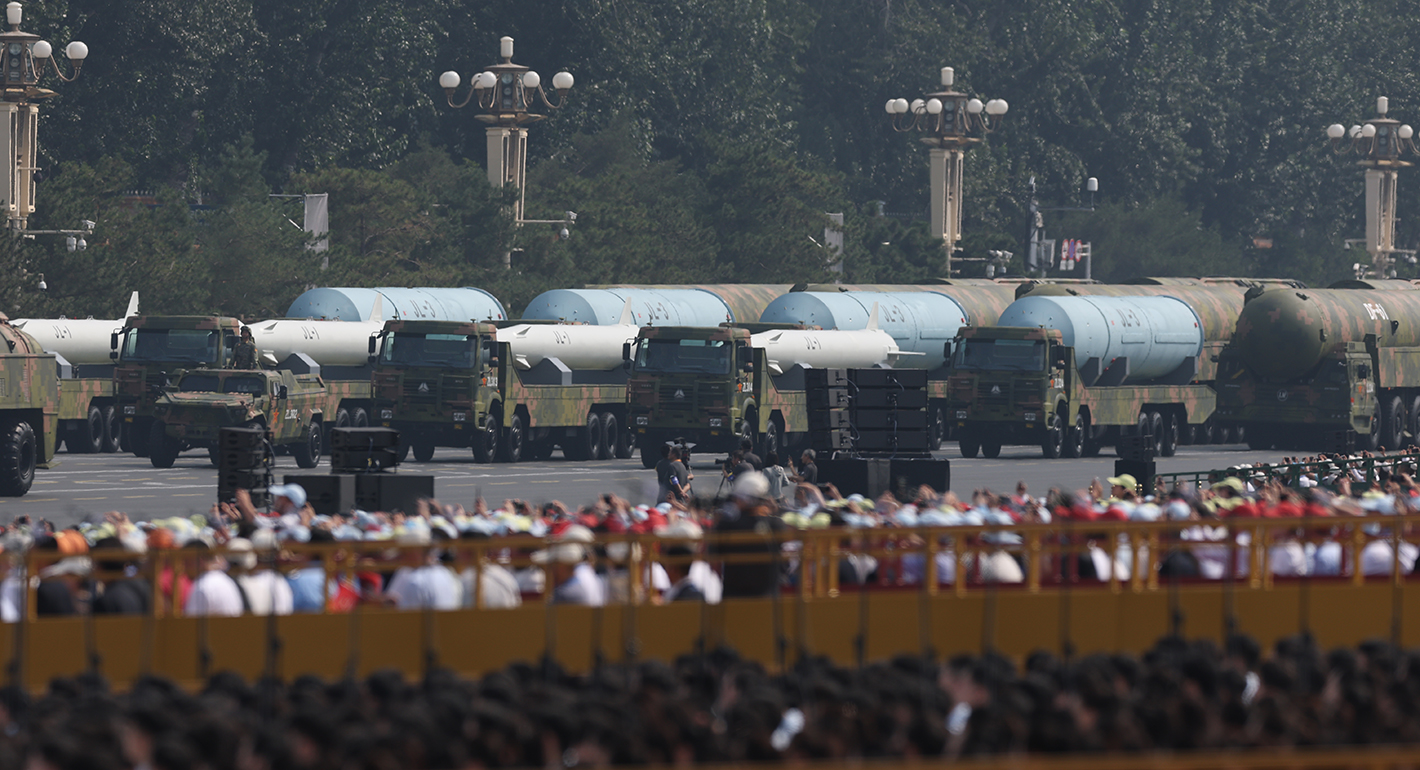
The nuclear relationship between China and the United States is increasingly shaped by widening perception gaps rather than deliberate strategic design.
Tong Zhao
But their "principal to principal" model will only be as effective as the political strength of each leader back home.
Damien Ma
U.S. unpredictability has allowed China to capitalize on its positioning as the “responsible great power”. Paradoxically, the more China wins the perception game, the more likely expectations will rise for Beijing to deliver not just words but to demonstrate with its deeds.

Chong Ja Ian
Hanoi and Beijing have long treated each other as distant cousins rather than comrades in arms. That might be changing as both sides draw closer to hedge against uncertainty and America’s erratic behavior.
Nguyễn Khắc Giang