

Commentary
Thomas de Waal
{
  "authors": [
    "Thomas de Waal"
  ],
  "type": "legacyinthemedia",
  "centerAffiliationAll": "dc",
  "centers": [
    "Carnegie Endowment for International Peace",
    "Carnegie Europe",
    "Carnegie Russia Eurasia Center"
  ],
  "collections": [],
  "englishNewsletterAll": "ctw",
  "nonEnglishNewsletterAll": "",
  "primaryCenter": "Carnegie Europe",
  "programAffiliation": "russia",
  "programs": [
    "Russia and Eurasia"
  ],
  "projects": [],
  "regions": [
    "Caucasus",
    "Russia",
    "Azerbaijan",
    "Armenia"
  ],
  "topics": [
    "Security",
    "Military",
    "Foreign Policy"
  ]
}
Source: Getty
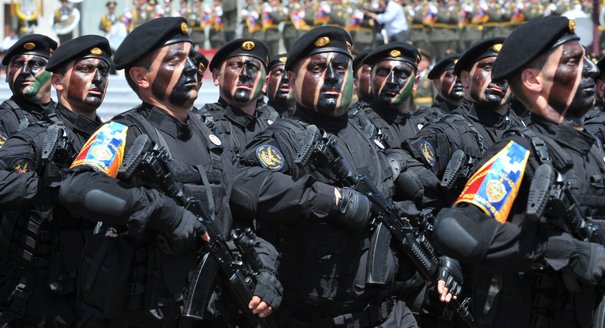
The shooting down of an Armenian helicopter on the ceasefire line of the Nagorno-Karabakh conflict zone is the worst incident of its kind in over 20 years.
Source: BBC
The shooting down of an Armenian helicopter on the ceasefire line - known as the Line of Contact that separates Armenian and Azerbaijani forces in the Nagorno-Karabakh conflict zone - is the worst incident of its kind in more than 20 years of the truce that ended the war of the early 1990s.
Three Armenians were killed, and the Azerbaijani officer who shot down the helicopter was given a medal for courage.
It is a very disturbing development that follows a serious upsurge of fighting in the summer in which more than 20 soldiers were killed on both sides.The Azerbaijanis blame the Armenians for sending two helicopters to fly over their positions. The Armenians say the helicopter was on a routine training mission and posed no danger.
A video taken from the Azerbaijani side shows a missile being fired and one of the two helicopters bursting into flames to shouts of excitement from the Azerbaijani soldiers.
There is no military logic to these attacks. A local commander can be responsible for small arms fire, but use of heavier weapons takes a decision from politicians higher up.
These attacks are all about showing off your strength.
The Azerbaijani side, the losing side in the conflict of 1991-94, has more of a reason to keep the ceasefire unstable so as to remind the world that the line cuts across the internationally recognised territory of Azerbaijan and that territories behind it lie under Armenian military control.
However, although the Azerbaijani side is probably responsible for a greater quantity of ceasefire violations, the Armenians also like to demonstrate their power.
This is what they did with a deadly three-pronged incursion into Azerbaijani positions on 31 July in which many Azerbaijanis died.
It is possible that this shooting down is a revenge attack for that operation.
Those with longer memories will recall that an Azerbaijani helicopter carrying officials and mediators was shot down by Armenians in November 1991 not far from where this latest incident happened, in one of the most controversial episodes of the war.
There is good reason to be worried.
These incidents are an illustration of the increased militarisation of the Nagorno-Karabakh ceasefire line over the last 20 years - the most militarised zone in Europe.
Helicopters, attack aircraft and drones fill the skies while there is heavy artillery behind the lines, where up to 20,000 soldiers sit in World War One-style trenches.
Azerbaijan, in particular, is pouring hundreds of millions of dollars of oil and gas revenues into buying heavy weapons.
Meanwhile, the international presence is just as it was in 1994: only six monitors from the Organization for Security and Co-operation in Europe (OSCE) observe the ceasefire along a line of 100 miles (160km), plus the increasingly tense international border between Armenia and Azerbaijan.
The two presidents, Ilham Aliev and Serzh Sarkisian, recently resumed face-to-face talks and have met three times since August, most recently in Paris two weeks ago.
That is good for the faltering negotiation process, but the mediators are pessimistic about any hopes of a breakthrough, especially given the background of the war in Ukraine that also divides Russia, one of the three negotiators, from France and the United States.
This violence is a reminder that the two armies are always one step away from another war and that only their own calculation of what is in their best interests holds them back from starting one.
There is every danger now of tit-for-tat retaliations, and the Armenians have already threatened a "painful" response to the downing of the helicopter.

Senior Fellow, Carnegie Europe
Thomas de Waal is a senior fellow at Carnegie Europe, specializing in Eastern Europe and the Caucasus.
Recent Work
Thomas de Waal
Thomas de Waal, Areg Kochinyan, Zaur Shiriyev
Carnegie does not take institutional positions on public policy issues; the views represented herein are those of the author(s) and do not necessarily reflect the views of Carnegie, its staff, or its trustees.

But their "principal to principal" model will only be as effective as the political strength of each leader back home.

Damien Ma

U.S. unpredictability has allowed China to capitalize on its positioning as the “responsible great power”. Paradoxically, the more China wins the perception game, the more likely expectations will rise for Beijing to deliver not just words but to demonstrate with its deeds.

Chong Ja Ian

Hanoi and Beijing have long treated each other as distant cousins rather than comrades in arms. That might be changing as both sides draw closer to hedge against uncertainty and America’s erratic behavior.

Nguyễn Khắc Giang

Across Asia, China is better positioned to withstand energy shocks from the fallout of the Iran war. Its abundant coal capacity can ensure stability in the near term. Yet at the same time, the country’s energy transition away from coal will make it even less vulnerable during the next shock.
Damien Ma

Malaysia’s chairmanship sought to fend off short-term challenges while laying the groundwork for minimizing ASEAN’s longer-term exposure to external stresses.

Elina Noor