

Article
Thomas de Waal
{
  "authors": [
    "Thomas de Waal"
  ],
  "type": "commentary",
  "centerAffiliationAll": "",
  "centers": [
    "Carnegie Endowment for International Peace",
    "Carnegie Europe",
    "Carnegie Russia Eurasia Center"
  ],
  "collections": [],
  "englishNewsletterAll": "",
  "nonEnglishNewsletterAll": "",
  "primaryCenter": "Carnegie Europe",
  "programAffiliation": "",
  "programs": [],
  "projects": [],
  "regions": [
    "Middle East",
    "Iran",
    "Caucasus",
    "Azerbaijan",
    "Armenia"
  ],
  "topics": [
    "Economy",
    "Trade",
    "Climate Change",
    "Foreign Policy"
  ]
}
Source: Getty
It will take Iran a long time to make up the ground it has lost in the South Caucasus since the end of the Soviet Union.
For the past 25 years, Iran has been a big but frustrated bystander in the South Caucasus, watching events to the north but playing little part in them. Now the framework deal struck on April 2 opens up the prospect of a new rapprochement between the West and Teheran, and Iran’s Caucasian neighbors are asking: Will that change?
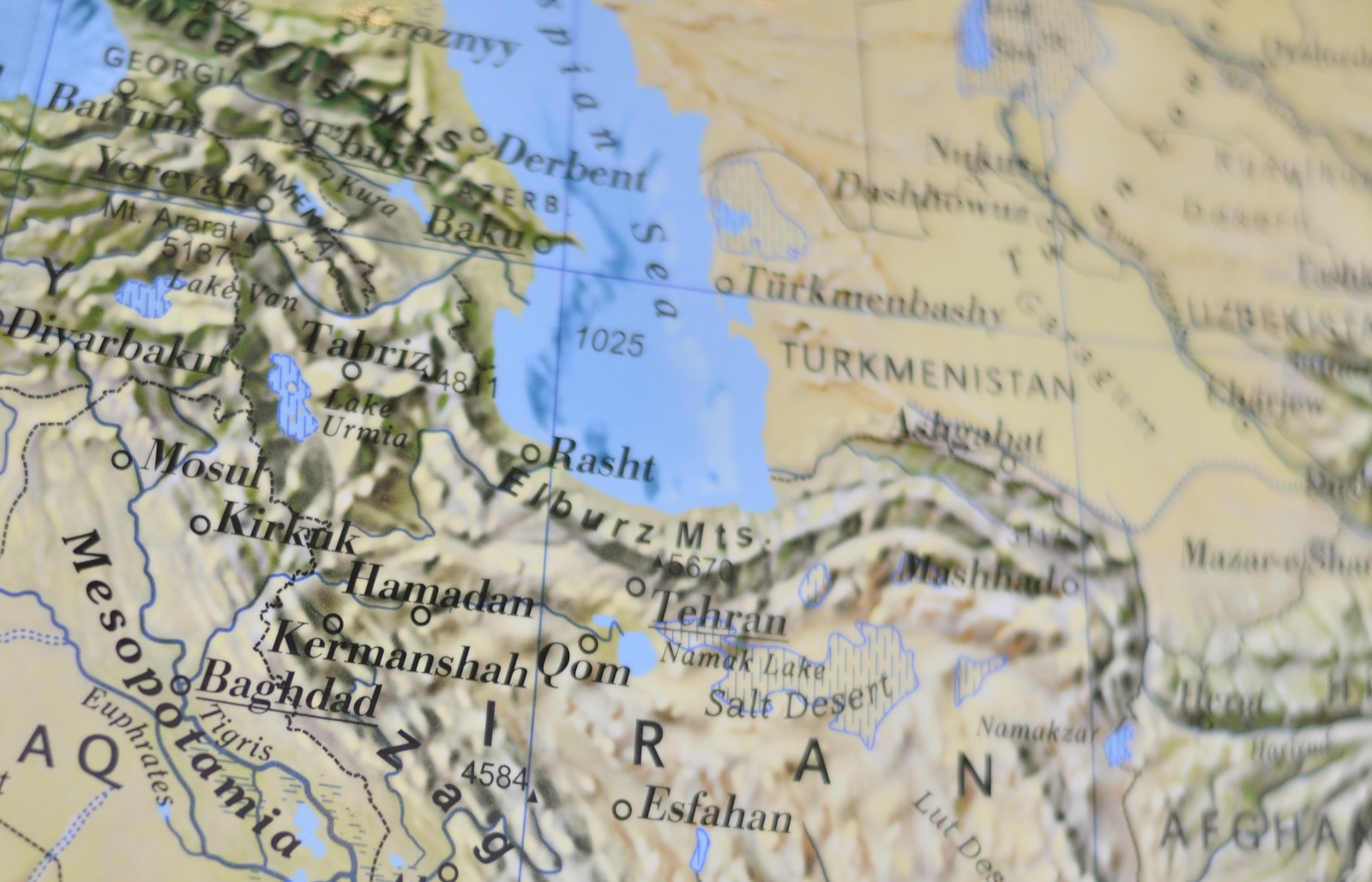
Iran has borders with both Armenia and Azerbaijan. It has, along with Russia and Turkey, the presumption (resented in the region itself) of a former imperial power that these lands are somehow still “ours”—even though its colonial rule ended in 1828.
Teheran’s one attempt to broker peace in the Nagorny Karabakh conflict ended in fiasco in May 1992, coinciding with the Armenian operation to capture the town of Shusha. Since then it has had no role in the mediation process between its two neighbors.
Later on, Iran missed out on Azerbaijan’s major oil and gas projects and saw the Baku-Tbilisi-Ceyhan pipeline built to the north.
For the highly ideological leadership of the Islamic Republic, the region has not been a place of core strategic interest, compared to, say, Iraq or Syria. This is a place where Iran is a rational foreign policy actor, dealing with all the governments of the region, despite their ideological differences.
Will that all change if sanctions are lifted and Iran stops being an international outcast? Not very fast.
Iran’s strongest relationship is with the weakest country in the region, Armenia. Last year, Iran’s ambassador to Armenia gave a press-conference full of extravagant claims. He said that a gas pipeline from Iran to Armenia could be extended to Georgia and that Iran would not accept third-country peacekeepers in the Karabakh conflict zone.
A subsequent lack of follow-up suggests that the ambassador’s speech was more bravado than policy. But it is reasonable to expect that a new Iranian thaw would strengthen economic ties between the two countries. That could include a green light for a 300-mile railway project linking Iran and southern Armenia that could give Armenia an economic boost.
There is strong mutual suspicion with Azerbaijan. To Azerbaijan, Iran represents an Islamic state, potential regional threat and a neighbor that might stir up its southern Shiite population. For the Iranian government, Azerbaijan is a suspicious secular state and friend of Israel that could mobilize the large Azeri population in northern Iran.
The best that can be said about the relationship is that, as both sides have the capacity to hurt the other, they will exercise mutual restraint.
The Financial Times reports that big Western oil and gas majors are getting excited about what will happen if Iran, which has the world’s fourth-largest oil reserves and second-largest reserves of gas, opens up again.
But, as the newspaper also points out, this could be a painfully slow process. The sanctions regime is complicated and the energy infrastructure is in poor shape. When it comes to gas, Iran is so inefficient that it is currently importing the stuff from Turkmenistan. The domestic market will consume most of the new output.
Iran’s biggest gas reserves are in the enormous offshore South Pars gas-field it shares with Qatar, so most new production will most logically go by ship as LNG to Asian markets. At a panel discussion in Washington DC in February, energy expert Edward Chow answered a question about the prospect of Iran supplying Europe with gas by saying, “Iranian pipeline gas to Europe is a fantasy. It makes absolutely no economic sense.”
None of this is to say that an Iranian opening will not have an influence on the Caucasus. The perception in the region of a resurgent Iran will be important in itself. But it will be a slow-motion process. Iran has lost a lot of ground in the last 25 years.

Senior Fellow, Carnegie Europe
Thomas de Waal is a senior fellow at Carnegie Europe, specializing in Eastern Europe and the Caucasus.
Recent Work
Thomas de Waal
Thomas de Waal
Carnegie does not take institutional positions on public policy issues; the views represented herein are those of the author(s) and do not necessarily reflect the views of Carnegie, its staff, or its trustees.

But their "principal to principal" model will only be as effective as the political strength of each leader back home.

Damien Ma

U.S. unpredictability has allowed China to capitalize on its positioning as the “responsible great power”. Paradoxically, the more China wins the perception game, the more likely expectations will rise for Beijing to deliver not just words but to demonstrate with its deeds.

Chong Ja Ian

Hanoi and Beijing have long treated each other as distant cousins rather than comrades in arms. That might be changing as both sides draw closer to hedge against uncertainty and America’s erratic behavior.

Nguyễn Khắc Giang

Across Asia, China is better positioned to withstand energy shocks from the fallout of the Iran war. Its abundant coal capacity can ensure stability in the near term. Yet at the same time, the country’s energy transition away from coal will make it even less vulnerable during the next shock.
Damien Ma

In the latest Five-Year Plan, the Chinese president cements the shift to an innovation-driven economy over a consumption-driven one.
Damien Ma