

Research
- +3
Nidhi Singh, Tejas Bharadwaj, Shruti Mittal, …
{
  "authors": [
    "Konark Bhandari"
  ],
  "type": "commentary",
  "centerAffiliationAll": "",
  "centers": [
    "Carnegie Endowment for International Peace",
    "Carnegie India"
  ],
  "collections": [],
  "englishNewsletterAll": "",
  "nonEnglishNewsletterAll": "",
  "primaryCenter": "Carnegie India",
  "programAffiliation": "",
  "programs": [],
  "projects": [
    "Technology and Society"
  ],
  "regions": [
    "South Asia",
    "India"
  ],
  "topics": [
    "Technology"
  ]
}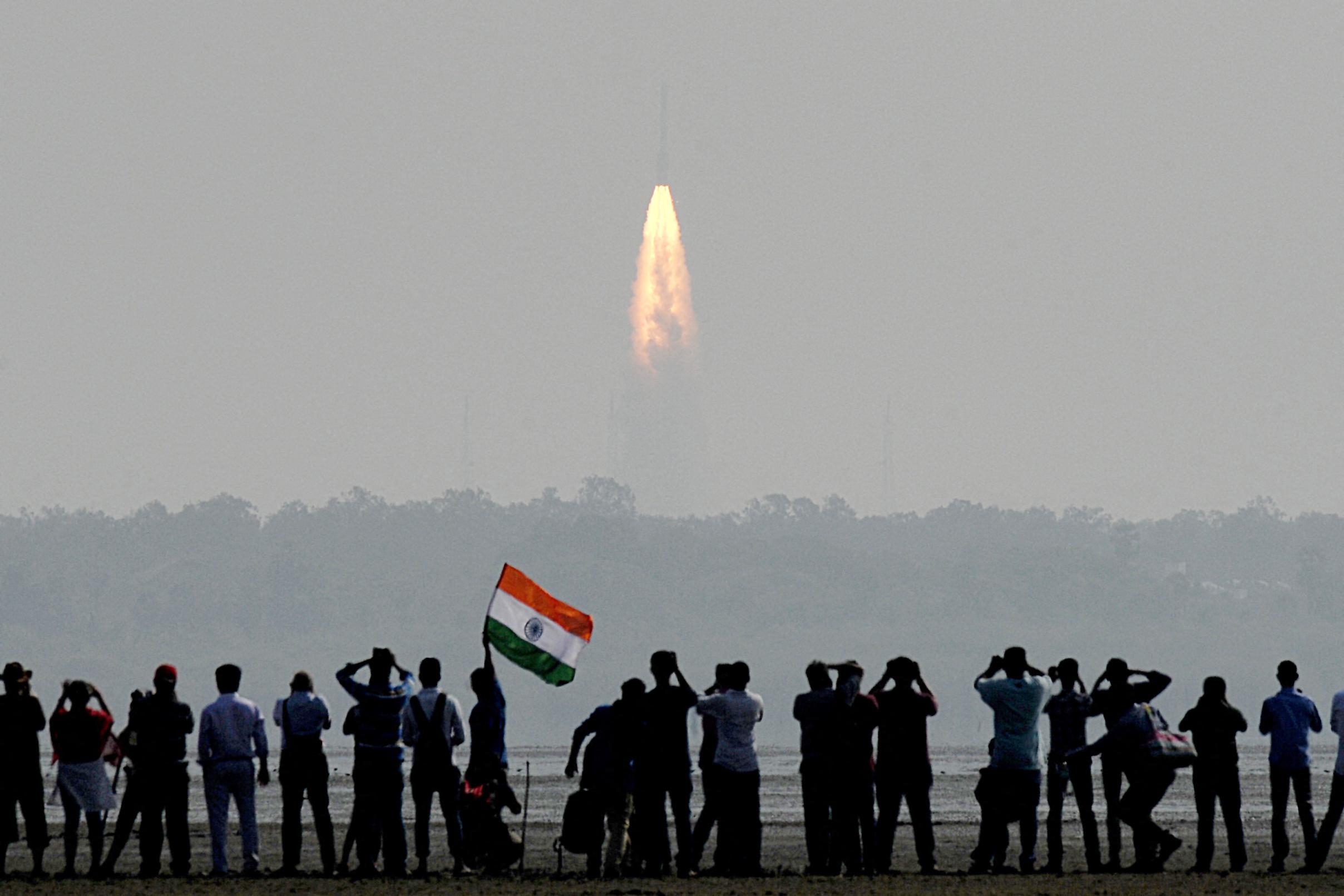
Source: Getty
India needs its domestic legal frameworks in place before it can compete in the Second Space Age and reap its benefits. The country should look at introducing or amending legal frameworks to provide certainty to domestic entrepreneurs and foreign investors about the scope of permissible space activities and how they will be treated under Indian law.
The term “sputnik moment” is popularly used to connote a moment in time when a nation realizes, usually belatedly, that its technological prowess has been surpassed by a rival nation. For the United States, this moment came when the erstwhile USSR launched the first-ever satellite Sputnik into outer space, ushering in the “first” Space Age.
The first Space Age was only a part of the larger geopolitical rivalry between the U.S. and the USSR. Accordingly, the battle for supremacy in outer space was led primarily by public actors such as governments, with private entities taking a backseat with respect to geopolitical calculations. While rapid strides were indeed made in space technology, an important question to ask to gauge the success of the first Space Age is not only what happened, but what should have happened, and did not.
Arguably, the missing component here was the failure to involve more commercial enterprises as equal players in spacefaring endeavors. Accordingly, what began with a bang ended with a whimper as the first Space Age languished in commercializing the space sector to the degree seen in other sectors like semiconductors, which had broken ground around the same time.
However, this is now changing with the flourishing of a second Space Age.
Various factors are at play here. A McKinsey & Co. report highlighted how, due to advances in software, off-the-shelf components, miniaturization, and re-usable rockets had lowered the costs of reaching space. Geopolitical factors also remain as germane as ever. For instance, nations are now realizing that space is indeed the final frontier, for both public and private actors, in a race for dominance.
Space is no longer the sole preserve of nations, since the role of private actors, which are now at par with nations, is particularly notable. The stewardship of interplanetary travel is increasingly being shepherded by commercial enterprises. Indeed, NASA has conceded as much. The last space shuttle launch was done in 2011, and since then, NASA has handed out repeated contracts to private companies like SpaceX, which most recently secured yet another contract to put U.S. astronauts on the moon under the Artemis program.
So, space is in vogue again. And the markets agree. At least in India, amid the present-day funding winter, space startups have garnered impressive amounts of funding and higher valuations.
Yet, it is time to place the focus back on Earth. It is the legal framework enacted by nations that determines the likelihood of any journey to space. In the case of India, this framework is inadequate and perhaps even nonexistent. An example of legal frameworks that have been seen as innovative is the contracting mechanism that is used by NASA called the Space Act Agreement, which essentially is a flexible and discretionary authority granted to NASA to enter into contracts that are not subject to the U.S. Federal Acquisitions Regulations, thereby granting NASA more contractual leeway. Another example is Luxembourg’s law that permits the mining and ownership of outer space resources—this has resulted in a flurry of space companies incorporating in Luxembourg.
The point of these examples is that similar to how pressing issues regarding space sustainability have highlighted the inadequacy of existing international frameworks to provide clarity on matters like space debris and burgeoning lower-Earth orbit (LEO) satellite constellations, the impressive but suboptimal number of space enterprises in India shows that the national legal framework too needs a reboot.
India should accordingly look at introducing or amending legal frameworks to provide certainty to domestic entrepreneurs and foreign investors about the scope of permissible space activities and how they will be treated under Indian law. Given that a lot of space economy is about leveraging competitive advantages in outer space to service demands emanating from Earth, India would do well to provide a roadmap on how the country’s space enterprises could commodify the servicing of such demands. This means that the space activities that are sought to be commodified are cyclical to the extent that they are undertaken as regular economic activities.
How does India go about ensuring that the journey is commodified? For one, Indian startups would need to secure more contracts. As stated earlier, the high valuation of space companies reflects the fact that an eagerness to provide funding is present among investors. But the question of the sustainability of revenue generation remains. Could these contracts come from the Indian Space Research Organisation (ISRO)? If they do, would this require procurement reform on the part of ISRO? If these orders came from overseas customers, would these startups compete with NewSpace India Limited (NSIL), the entity entrusted with commercializing ISRO’s in-house technology? All these are questions that do not have clear answers as of now. Having certainty, or at least clarity, on the way ahead would provide Indian startups with the financial resources necessary to undertake more ambitious missions.
For decades, India’s civil space sector churned out successful missions showcasing indigenous technology developed without any foreign transfer of knowledge and assistance. However, commercial space is a different terrain, one where partnerships are key. There is no reason why India cannot introduce legislation or policies that permit its domestic enterprises to partner with international space companies and co-develop new technologies.
If one reads Amrita Shah’s biography of Vikram Sarabhai, known as the “father of the Indian space program,” they would learn that he had an approach where he would treat every undertaking in space as a joint venture. He would routinely seek partnerships with central or state government agencies, funding institutions, universities, like-minded people, and so on. All this resulted in the conception of the Indian space program. Perhaps the time has come to deploy the same approach when it comes to commercial space.

Fellow, Technology and Society Program
Konark Bhandari is a fellow with Carnegie India.
Recent Work



Nidhi Singh, Tejas Bharadwaj, Shruti Mittal, …
Konark Bhandari
Carnegie does not take institutional positions on public policy issues; the views represented herein are those of the author(s) and do not necessarily reflect the views of Carnegie, its staff, or its trustees.

Across Asia, China is better positioned to withstand energy shocks from the fallout of the Iran war. Its abundant coal capacity can ensure stability in the near term. Yet at the same time, the country’s energy transition away from coal will make it even less vulnerable during the next shock.

Damien Ma

In the latest Five-Year Plan, the Chinese president cements the shift to an innovation-driven economy over a consumption-driven one.
Damien Ma

ASEAN needs to determine how to balance perpetuating the benefits of technology cooperation with China while mitigating the risks of getting caught in the crosshairs of U.S.-China gamesmanship.

Elina Noor
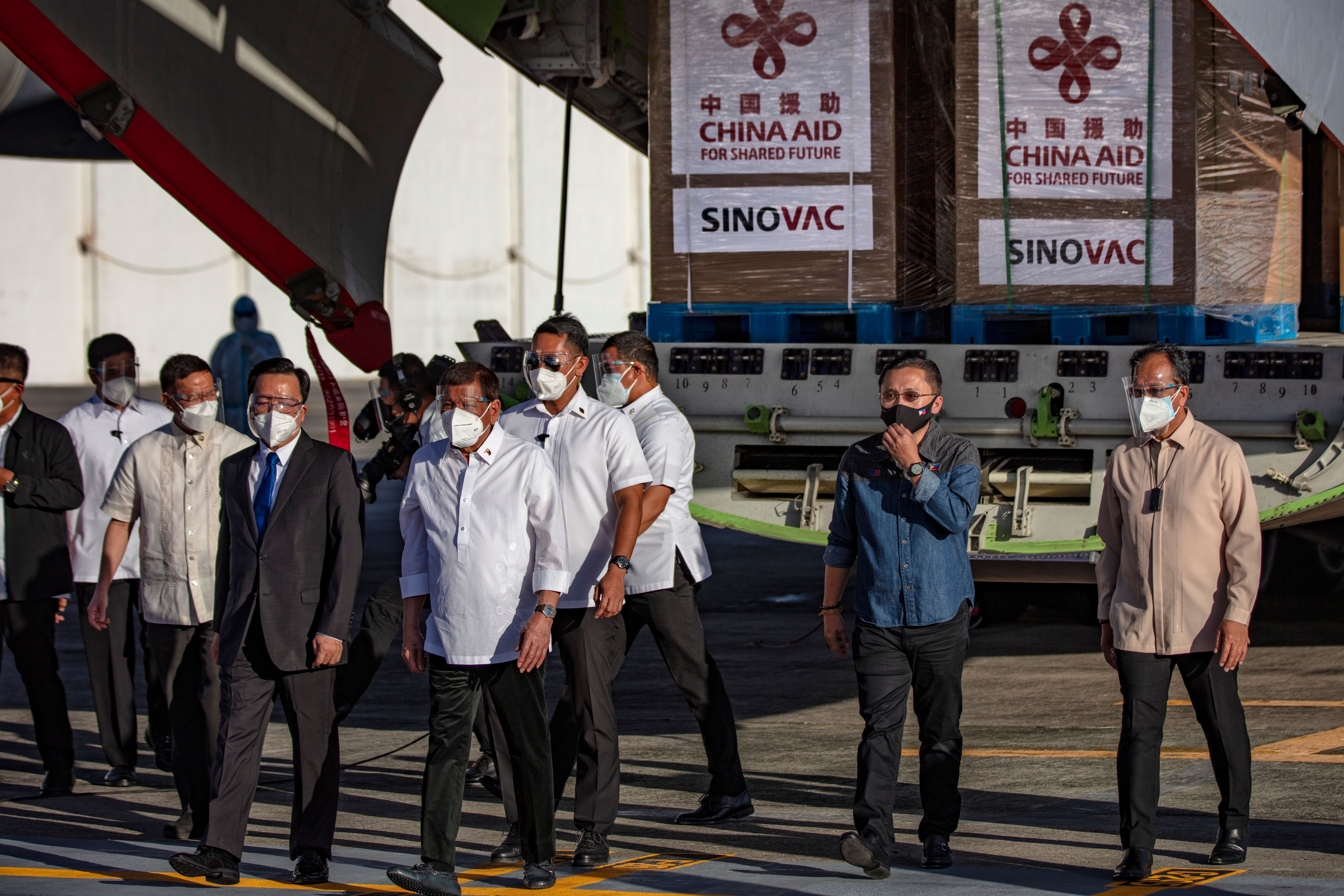
As tech competition moves into the biotech sector, China is increasingly shifting its focus to nearby regions to alleviate U.S.-induced supply chain pressures. As part of this transition, Southeast Asia has emerged as a favored destination.

Xue Gong
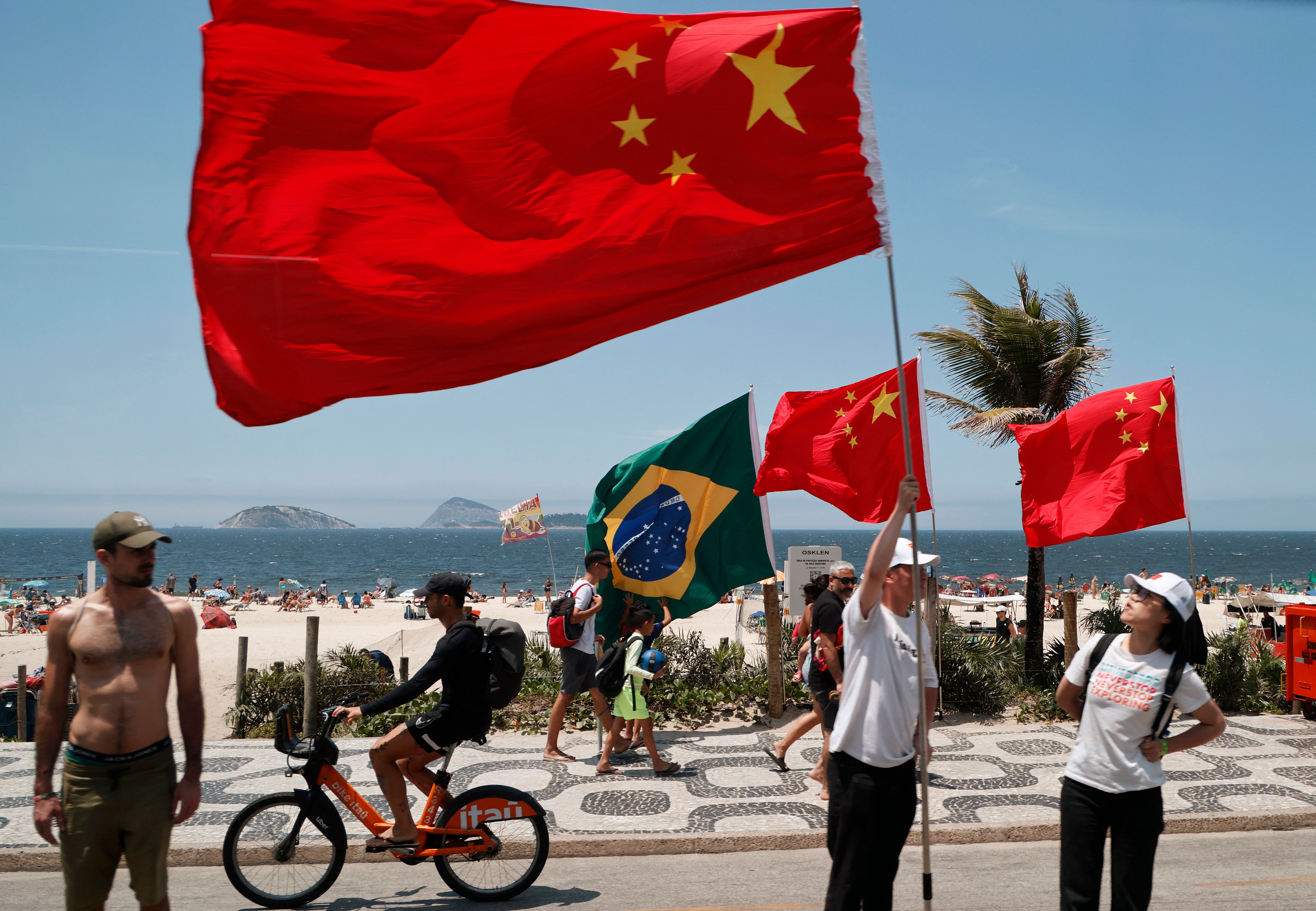
While China will remain a significant political and economic force in the Global South, its ambition to leverage the Global South as a counterbalance to the United States and the Global North is far from assured.
Xue Gong