

Commentary
Dmitri Trenin
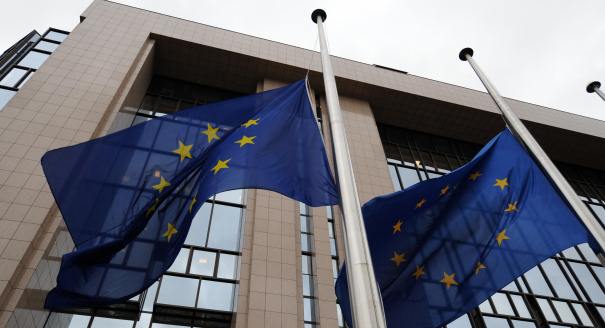
Source: Getty
The need for a strong relationship between Moscow and Brussels is clear, but Europe faces administrative and political barriers to a common policy on Russia and Russia remains unwilling to undertake the reforms that would make it more compatible with the EU.
Russia’s leadership has formulated a new goal for its foreign policy: to support the country’s technological modernization and the development of an innovative economy. The European Union, in turn, has proposed to Russia a “Partnership for Modernization”. On May 31 and June 1, the twenty-fifth EU–Russia summit was held in Rostov-on-Don. On the surface, it would appear that the EU and Russia are coming closer together, driven by shared interests, if not values.
Ten key points must be made. First, the European Union is suffering through its most serious crisis since the creation of the single currency. At risk is the fate not just of the euro, but of the European project as a whole. The European Union may well emerge from this crisis stronger than before. The opposite, however, is also true.
Second, the implementation of the Lisbon Treaty has yet to create a more unified Union. Neither the new EU president nor the foreign minister has enough political or even bureaucratic weight. Only the chairman of the European Commission seems sufficiently comfortable. The European diplomatic service is only beginning to take shape, but that task will be easier to accomplish than it will be to determine its relationship with national diplomatic services.
Third, the crisis essentially put an end to the Franco–German tandem that, for half a century, was the heart, brains, and engine of European integration. Berlin will evidently play an increasingly independent role within the EU and the decision-making process will become more complicated and, possibly, more conflicted. Russia, which has always worked with Europe on two levels—in Brussels and in the member capitals—will “woo” the latter all the more forcefully, which further supports the “nationalization” of European politics.
Fourth, technological modernization is a field for private companies, not governments. The same is true of investment. Neither Brussels nor the national capitals, by and large, will be of much use. Only Moscow can help Russia. The list of what the Russian government needs to do has long been clear: transparent rules for doing business; independent courts; and a radical reduction in corruption. Otherwise there will be no strategic investment, technology transfers will fail to modernize the economy, and innovators will be confined to high-tech reservations.
Fifth, the European Union is highly reluctant to make use of the most powerful instrument in its toolbox for the modernization of Russia: the gradual liberalization and eventual elimination of the visa regime. Travel to the EU—whether for commercial, scientific, tourism or personal purposes—instills in Russians not only more modern modes of behavior, but also modern values, including civic ones. Russian autocrats of the past understood this and thus sought to separate Russia from Western Europe with various kinds of “curtains.” Contemporary Europe, however, seeks predominantly to cut itself off from Russia with the “Schengen curtain.” This is a short-sighted policy—one that does not protect Europeans from criminals from the east but does irritate those who are, or could become, “Russian Europeans.”
Sixth, the cacophony of EU member state policies towards Russia is as harmful to Russia as the Kremlin’s “nationally-oriented” policy towards the EU is to Europe. Of course, the EU member states are obliged to show solidarity to one another in dealing with external players, including (but not limited to) Russia. But solidarity rests upon responsibility. Now, when there is finally progress towards historical reconciliation between Poland and Russia, the common task of the European Union should be to support the gradual improvement of relations between the nations of Central Europe and Russia. Otherwise, a consolidated European position vis-à-vis Russia will be reduced to the lowest common denominator, which will not only impede the development of relations, but will also create tension within the EU itself.
Seventh, having behaved with surprising dignity in recent relations with Warsaw, Russia must redouble its efforts to make the progress with Poland irreversible. Poland must become one of the five or six leading EU members to enjoy a privileged partnership with Russia. The Russians should not have a difficult time understanding what the Poles want from them: it is essentially the same thing that the Russians want from the United States: respect. In developing the relationship with Poland, Russia could lay the groundwork and take concrete steps for the improvement of relations with Lithuania and Latvia, and eventually with Estonia. It is time to stop tripping over the ‘Baltic threshold’.
Eighth, the Russian government must understand that technology and innovation—and even investment—is not a sufficient foundation for the level of partnership that is needed with the EU. Today’s Europe is first and foremost a collection of laws, rules, and norms that are equal for everyone. There remains a large gap between the EU and Russia. Despite all the talk about shared Christian roots, Russia will only become a modern European country when it institutes the rule of law. It is a long and difficult path that cannot be trodden only by hired lobbyists and staff propagandists. The talk today is of the investigation of high-profile murders and of police violence against opposition protestors; in the near future, it will be about the propriety of upcoming parliamentary and presidential elections.
Ninth, EU–Russia relations also involve the “New Eastern Europe”: Ukraine, Belarus, and Moldova. All three countries are neighbors of both Russia and the EU. Russians and Europeans clearly have differing interests in the region, but these interests do share some common ground: both sides are interested in the stable development of these countries and in the prevention and resolution of conflicts. Geopolitical competition in the twenty-first century would clearly seem an anachronism. The Caucasus are another factor, demanding constant attention, moderation and care. In principle, conflict resolution and stabilization in the Black Sea region is the shared responsibility of Moscow and Brussels.
Tenth and lastly, only a few days after the Rostov summit, Medvedev went to Germany to meet Chancellor Merkel. He spent more time talking with her than he did with his colleagues from Brussels, discussing not only bilateral affairs, but also the situation in the euro zone. At the end of their meeting, Merkel and Medvedev presented an initiative to create a EU–Russia security council of foreign ministers that would meet once every six weeks. Among the topics of discussion for such a council would be resolution of the Transnistrian conflict. The implementation of such a project and its success in conflict resolution would be a real breakthrough in Russia’s relationship with a united Europe. It is noteworthy, however, that the idea emerged not from EU–Russian talks, but from a deal between Moscow and Berlin.
Former Director, Carnegie Moscow Center
Trenin was director of the Carnegie Moscow Center from 2008 to early 2022.
Recent Work
Dmitri Trenin
Dmitri Trenin
Carnegie does not take institutional positions on public policy issues; the views represented herein are those of the author(s) and do not necessarily reflect the views of Carnegie, its staff, or its trustees.

But their "principal to principal" model will only be as effective as the political strength of each leader back home.

Damien Ma

U.S. unpredictability has allowed China to capitalize on its positioning as the “responsible great power”. Paradoxically, the more China wins the perception game, the more likely expectations will rise for Beijing to deliver not just words but to demonstrate with its deeds.

Chong Ja Ian

Hanoi and Beijing have long treated each other as distant cousins rather than comrades in arms. That might be changing as both sides draw closer to hedge against uncertainty and America’s erratic behavior.

Nguyễn Khắc Giang

Across Asia, China is better positioned to withstand energy shocks from the fallout of the Iran war. Its abundant coal capacity can ensure stability in the near term. Yet at the same time, the country’s energy transition away from coal will make it even less vulnerable during the next shock.
Damien Ma

Malaysia’s chairmanship sought to fend off short-term challenges while laying the groundwork for minimizing ASEAN’s longer-term exposure to external stresses.

Elina Noor