

Commentary
Dmitri Trenin
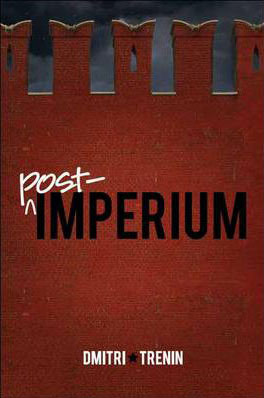
Moscow needs to drop the notion of creating an exclusive power center in the post-Soviet space. Like other former European empires, Russia has no choice but to reinvent itself as a global player and as part of a wider community.
Source: Washington
The war in Georgia. Tensions with Ukraine and other nearby countries. Moscow's bid to consolidate its "zone of privileged interests" over former Soviet republics. These volatile situations all raise questions about the nature of Russia’s relations with its neighbors and prospects for future regional stability.
In Post-Imperium: A Eurasian Story, also available in Russian, Dmitri Trenin argues that Moscow needs to drop the notion of creating an exclusive power center in the post-Soviet space. Like other former European empires, Russia has no choice but to reinvent itself as a global player and as part of a wider community.
Trenin’s vision for Russia is a changed, open Euro-Pacific country that is savvy in its use of soft power and fully reconciled with its former dependents. While acknowledging that this scenario may sound too optimistic, Trenin warns that the alternative is not a new version of the historic empire but ultimately the marginalization of Russia in international affairs.
"... as Mr Trenin convincingly argues, Russia is not a neo-imperialist state, but a post-imperialist one that lacks both vision and appeal, and the economic and human resources for any expansion."
—The Economist, December 3, 2011
Former Director, Carnegie Moscow Center
Trenin was director of the Carnegie Moscow Center from 2008 to early 2022.
Recent Work
Dmitri Trenin
Dmitri Trenin
Carnegie does not take institutional positions on public policy issues; the views represented herein are those of the author(s) and do not necessarily reflect the views of Carnegie, its staff, or its trustees.

But their "principal to principal" model will only be as effective as the political strength of each leader back home.

Damien Ma

U.S. unpredictability has allowed China to capitalize on its positioning as the “responsible great power”. Paradoxically, the more China wins the perception game, the more likely expectations will rise for Beijing to deliver not just words but to demonstrate with its deeds.

Chong Ja Ian

Hanoi and Beijing have long treated each other as distant cousins rather than comrades in arms. That might be changing as both sides draw closer to hedge against uncertainty and America’s erratic behavior.

Nguyễn Khắc Giang

Across Asia, China is better positioned to withstand energy shocks from the fallout of the Iran war. Its abundant coal capacity can ensure stability in the near term. Yet at the same time, the country’s energy transition away from coal will make it even less vulnerable during the next shock.
Damien Ma

Malaysia’s chairmanship sought to fend off short-term challenges while laying the groundwork for minimizing ASEAN’s longer-term exposure to external stresses.

Elina Noor