• Research
  • Strategic Europe
  • About
  • Experts
Carnegie Europe logoCarnegie lettermark logo
EUUkraine
  • Donate
{
  "authors": [
    "Pekka Sutela"
  ],
  "type": "other",
  "centerAffiliationAll": "",
  "centers": [
    "Carnegie Endowment for International Peace"
  ],
  "collections": [],
  "englishNewsletterAll": "",
  "nonEnglishNewsletterAll": "",
  "primaryCenter": "Carnegie Endowment for International Peace",
  "programAffiliation": "",
  "programs": [],
  "projects": [],
  "regions": [
    "Western Europe"
  ],
  "topics": [
    "Economy"
  ]
}
REQUIRED IMAGE

REQUIRED IMAGE

Other

Debt in Finland

Unless a major crisis erupts in Europe, Finland’s fiscal prudency and solid banks might well satisfy the markets.

Link Copied
By Pekka Sutela
Published on Dec 7, 2011
Is Finland worried that the crisis will affect its own debt ranking?
Pekka Sutela
Traditionally, Finland has been very conservative when it comes to debt. After both World War I and the Great Depression, the country took great pride in being the only debtor that repaid its debts to the United States—even with a heavy domestic cost. The wisdom of the policy can be questioned but it remains a basis of self-identification.

Today, Finland remains one of the few AAA rated countries in Europe. Most Finns find the recent increase in debt-to-GDP ratio to over 50 percent both shameful and dangerous. For several years, the difference between ten-year bond interest rates between Finland and Germany was negligible, sometimes even negative. And Finland was able to borrow at slightly better rates than Germany.

Read more

This fall, the interest rate margin between the countries has risen from about 0.2 to almost 0.6 percentage points. Over the long term, Finland is thus now seen as slightly more risky than Germany. The rise is not a major one and the risk premium still remains very small relative to what many European countries have. In the short run, it is not regarded as a particularly worrisome fact, rather as a symptom of what might happen. Also, due to cash in the treasury, as matters now stand, Finland has no need to enter bond markets for several months.

Two problems stand out. The current rainbow government, with six parties from right to left, is strong in the parliament but may lack internal cohesion when difficult decisions need to be made. Expenditure cuts are needed to send a signal to markets, and a convincing policy plan on the fiscal pressures of an aging population is still missing. But still, unless a major crisis erupts in Europe, Finland’s fiscal prudency and solid banks might well satisfy the markets.
Pekka Sutela
Former Nonresident Senior Associate, Russia and Eurasia Program
EconomyWestern Europe

Carnegie does not take institutional positions on public policy issues; the views represented herein are those of the author(s) and do not necessarily reflect the views of Carnegie, its staff, or its trustees.
More Work from Carnegie Europe

  • Commentary
    Strategic Europe
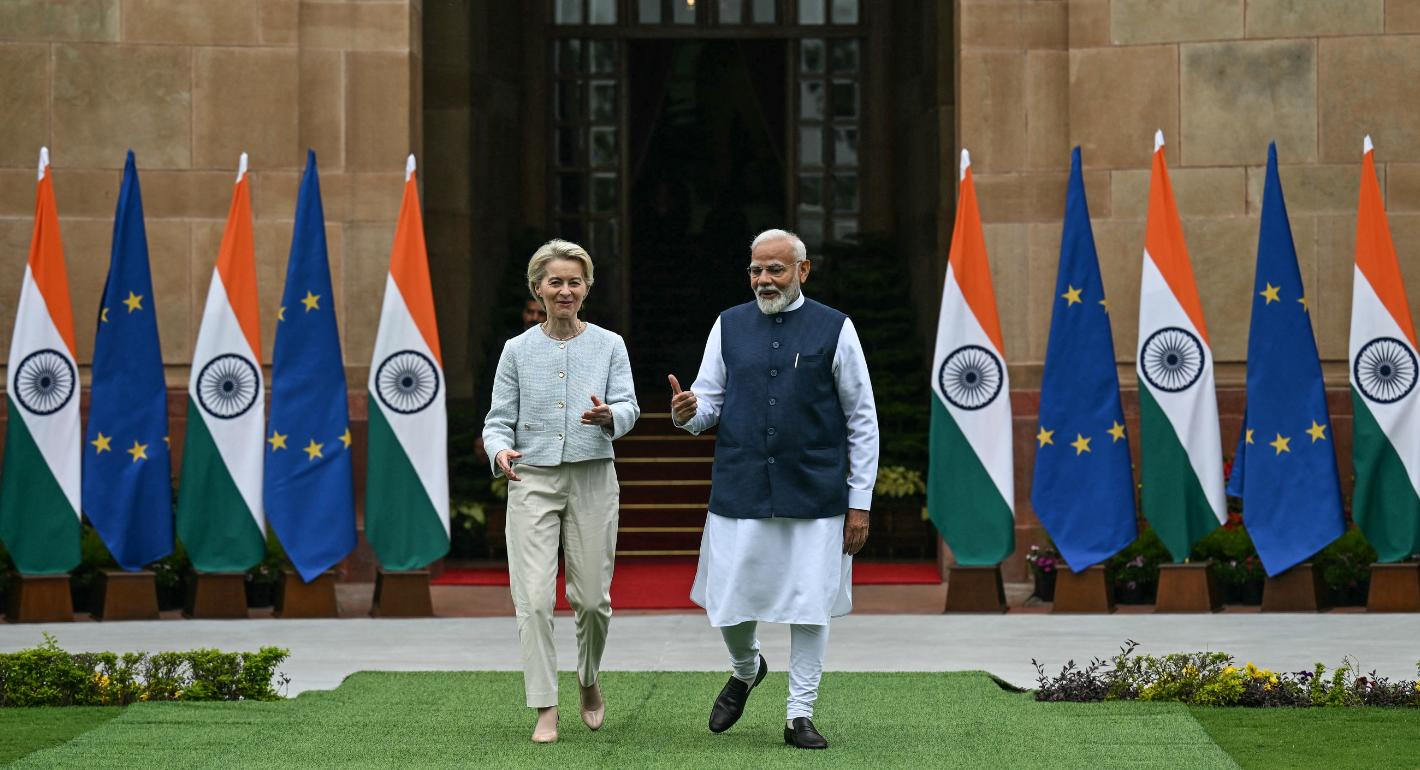
    The EU and India in Tandem

    As European leadership prepares for the sixteenth EU-India Summit, both sides must reckon with trade-offs in order to secure a mutually beneficial Free Trade Agreement.

      Dinakar Peri
  • Commentary
    Strategic Europe
    Taking the Pulse: Is the EU Too Weak to Be a Global Player?

    Beset by an increasingly hostile United States, internal divisions, and the threat of Russian aggression, the EU finds itself in a make-or-break moment. U.S. President Donald Trump calls it a decaying group of nations headed by weak leaders. Is Europe able to prove him wrong?

      Thomas de Waal
  • Commentary
    Strategic Europe
    Unpacking Europe’s Deterrence Dilemmas

    The debate on the future of European deterrence has intensified, as NATO allies seek to balance three key aims. Going forward, they will need to cooperate more deeply to craft a coherent strategy for confronting new threats.


      Sophia Besch, Jamie Kwong

  • Commentary
    Strategic Europe
    Taking the Pulse: Are Europe’s New Asylum Policies a Betrayal of its Values?

    Hard-line approaches to asylum policy are increasingly common, with crackdowns proposed even by parties that traditionally hold liberal views on migration. Does this shift represent a break with Europe’s fundamental values?

      Thomas de Waal

  • Commentary
    Perceptions of Europe Across the Generations: Rebuilding Trust in the Rule of Law

    As polarization increases across Western societies, the gap between Baby Boomers and Millennials could become a fault line. Rebuilding intergenerational trust is essential to restoring shared values in liberal democracies.


      Cyrine Drissi, Marc Pierini

Get more news and analysis from
Carnegie Europe
Carnegie Europe logo, white
Rue du Congrès, 151000 Brussels, Belgium
  • Research
  • Strategic Europe
  • About
  • Experts
  • Projects
  • Events
  • Contact
  • Careers
  • Privacy
  • For Media
Get more news and analysis from
Carnegie Europe
© 2026 Carnegie Endowment for International Peace. All rights reserved.