{
  "authors": [
    "Shlomo Weber",
    "Yuval Weber"
  ],
  "type": "legacyinthemedia",
  "centerAffiliationAll": "",
  "centers": [
    "Carnegie Endowment for International Peace",
    "Carnegie Russia Eurasia Center"
  ],
  "collections": [],
  "englishNewsletterAll": "",
  "nonEnglishNewsletterAll": "",
  "primaryCenter": "Carnegie Endowment for International Peace",
  "programAffiliation": "",
  "programs": [],
  "projects": [],
  "regions": [],
  "topics": []
}
In The Media
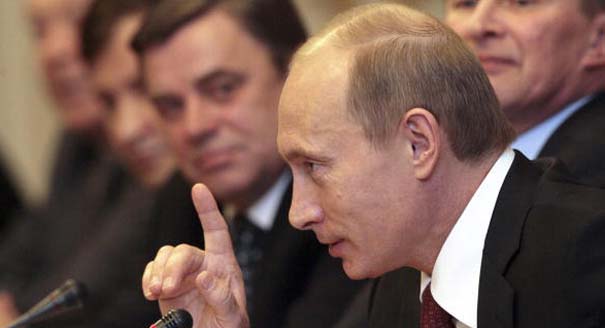
Why Only Putin 2.0 Has a Chance at Success
Vladimir Putin cannot survive a sustained, nonviolent protest movement unless he creates a regime change by changing himself and addressing corporate influence on politics.
Link Copied
By Shlomo Weber and Yuval Weber
Published on Feb 19, 2012
Source: Dallas Morning News
A joke is making the rounds in Moscow:
The chief of staff to Vladimir Putin delivers the March 4 presidential election results: “Boss, I have good news and bad news.”
Putin responds, “The good news first.”
“You won the election.”
“And what could be the bad news?”
“Nobody voted for you.”
As humorous as the joke may be, it also reveals that the first era of Putin’s rule, Putin 1.0, is over. Protests in Moscow and other Russian cities have gone from the largest mass gatherings since the U.S.S.R.’s end days to tripling in size over the course of six freezing weeks. The protesters’ demands for political transparency and plurality make quite clear that stability, the mantra of Putin 1.0, is insufficient for democracy.
The alleged falsification of election results is therefore only a symptom of the disease, not the malady itself.
This election holds immense significance for U.S. diplomatic efforts and international relations. As a veto-holder in the U.N. Security Council, Russia’s voice matters, which it demonstrated by supporting international efforts in Libya and by stringent opposition to action regarding Syria. International endeavors to defuse tension between Israel and Iran will not succeed without Russian support. Who leads Russia is a question not only for Russia, but also for the world.
In fact, it is not just the person who matters, but also the system itself. In recent days, Putin and others have defended the status quo, claiming the opposition will lead to regime change and foreign subjugation. What Putin should understand is that he can maintain power only by conducting regime change himself. He must become Vladimir Putin 2.0.
Putin 1.0 made incredible strides. When he came into office, the political elite had failed Russia completely by enriching itself and neglecting to crack down on violent “entrepreneurs.” Putin’s opening gambit was a simple deal to the oligarchic class: They stay out of politics, and the government ignores their financial dealings.
Putin 1.0 reduced political competition, centralized power and spread the wealth. While he stabilized Russia, once-robust institutional checks on presidential power were eliminated.
Then the financial crisis reduced the wealth to spread around, and the Arab Spring rendered anachronistic the notion that a leader could trade stability for the indefinite consent of the governed. As elsewhere, the Moscow protesters are asserting that they no longer will tolerate one man maintaining stability for the elite to enrich themselves. Putin’s dilemma is that democratizing the system risks the re-emergence of violent rivalries, while doing nothing challenges his authority from below.
The solutions must come from within, in the reforms outlined by the current president, Dmitry Medvedev: return to election of regional governors (who are now appointed by the president); simplify registration for candidates and parties; create an independent TV station; clean up state contracts.
So what should President Barack Obama and Secretary of State Hillary Rodham Clinton do when (and not if) Putin wins the presidential election? Attacking or lauding Putin is not a long-term strategy, so we suggest that U.S. policymakers congratulate the victory and call for Putin to accomplish the exact reforms proposed by his administration. The U.S. should hold Russian leaders to their word.
Policymakers also should strongly encourage greater transparency in the Russian corporate sector, as well as its decoupling from the state. Stronger economic relations with the West will encourage foreign investment and diversify Russia’s economy.
A pitch to the economic elite that it can gain greater wealth in free markets rather than by political manipulation would reduce pressure on Putin. Elites would be less fearful of the electorate (and more likely to benefit from IPOs) if they were to derive wealth from market competition. That would allow Putin to align with the protesters.
Putin 1.0 was responsible solely to the corporate and political elite. Putin will not survive a sustained, nonviolent protest movement. Unless he emerges as Putin 2.0 and addresses corporate influence on politics, he will find himself replaced by someone who can.
Shlomo Weber is an economics professor at SMU’s Dedman College and a visiting professor at New Economic School in Moscow. His son, Yuval Weber, a University of Texas doctoral candidate in government, is a Boren Fellow at the Carnegie Moscow Center. They may be contacted at sweber@smu.edu.
Carnegie does not take institutional positions on public policy issues; the views represented herein are those of the author(s) and do not necessarily reflect the views of Carnegie, its staff, or its trustees.
In return for a trade deal and the release of political prisoners, the United States has lifted sanctions on Belarus, breaking the previous Western policy consensus. Should Europeans follow suit, using their leverage to extract concessions from Lukashenko, or continue to isolate a key Kremlin ally?
Hungarian Prime Minister Viktor Orbán faces his most serious challenge yet in the April 2026 parliamentary elections. All of Europe should monitor the Fidesz campaign: It will use unprecedented methods of electoral manipulation to secure victory and maintain power.
As European leadership prepares for the sixteenth EU-India Summit, both sides must reckon with trade-offs in order to secure a mutually beneficial Free Trade Agreement.
The hyper-personalized new version of global sphere-of-influence politics that Donald Trump wants will fail, as it did for Russia. In the meantime, Europe must still deal with a disruptive former ally determined to break the rules.