

Commentary
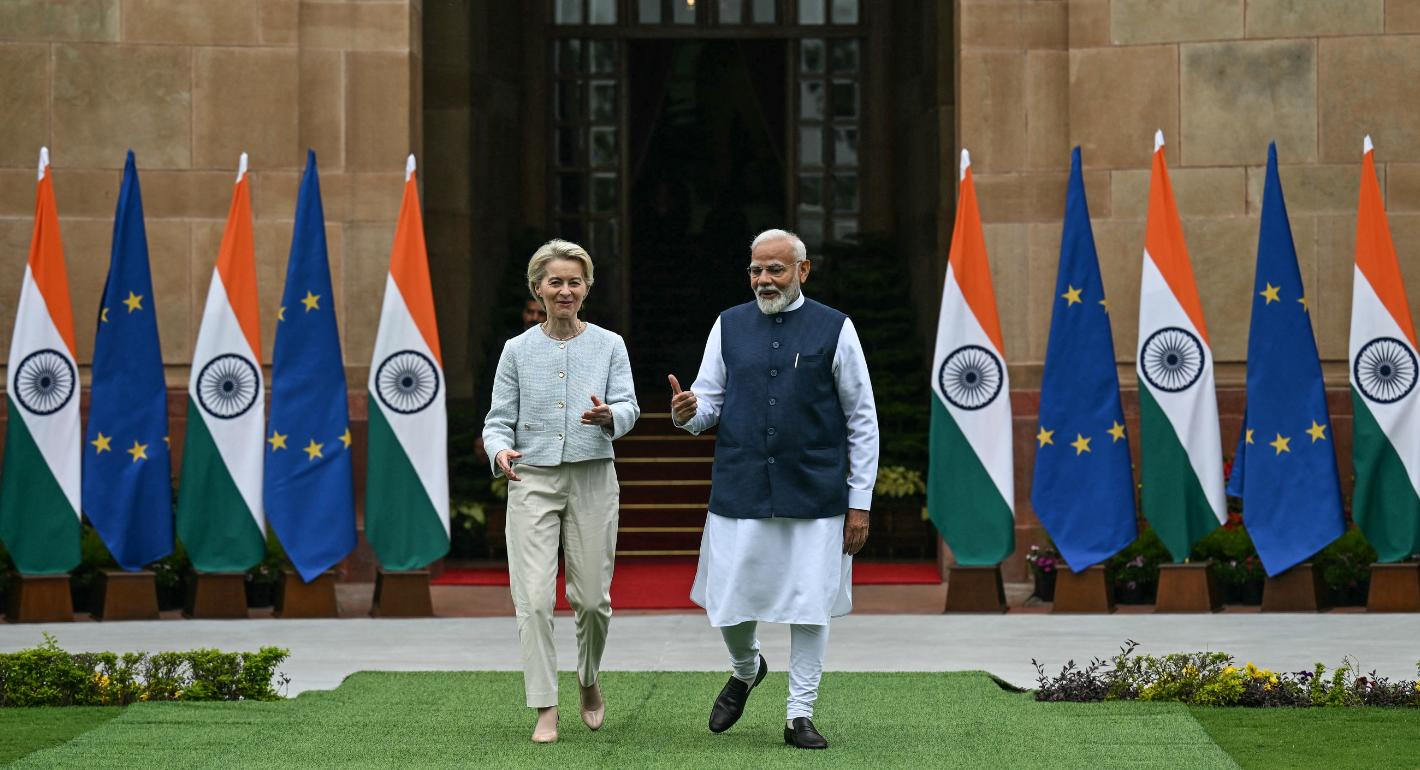
As European leadership prepares for the sixteenth EU-India Summit, both sides must reckon with trade-offs in order to secure a mutually beneficial Free Trade Agreement.
Dinakar Peri
{
  "authors": [
    "C. Raja Mohan"
  ],
  "type": "legacyinthemedia",
  "centerAffiliationAll": "",
  "centers": [
    "Carnegie Endowment for International Peace",
    "Carnegie China",
    "Carnegie India",
    "Malcolm H. Kerr Carnegie Middle East Center",
    "Carnegie Russia Eurasia Center"
  ],
  "collections": [
    "China’s Foreign Relations",
    "China and the Developing World"
  ],
  "englishNewsletterAll": "",
  "nonEnglishNewsletterAll": "",
  "primaryCenter": "Carnegie India",
  "programAffiliation": "",
  "programs": [
    "South Asia"
  ],
  "projects": [
    "Eurasia in Transition"
  ],
  "regions": [
    "Levant",
    "Middle East",
    "Syria",
    "South Asia",
    "India",
    "East Asia",
    "China",
    "Russia"
  ],
  "topics": [
    "Global Governance",
    "Foreign Policy"
  ]
}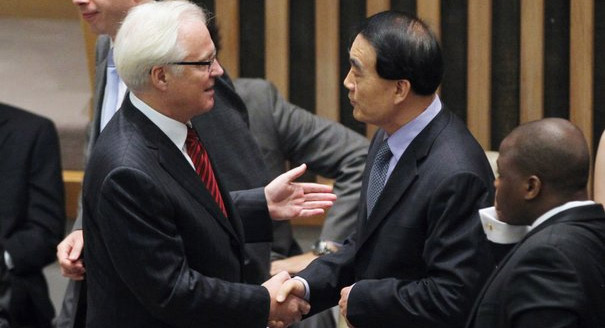
Beijing is dipping its diplomatic toes in the turbulent waters of the Middle East. But it is not clear if Delhi is ready to do the same.
Source: Indian Express
Although China is a permanent member of the UN Security Council, the second largest economy in the world and a rising power on the global stage, its approach to the current Syrian crisis has been nearly as passive as India's policy. Like New Delhi, Beijing too watched from the sidelines, as Russian President Vladimir Putin boldly challenged the Western narrative on bombing Assad, moved warships to the Mediterranean and signalled Moscow's readiness to play chicken.
Putin's strategy was not just about standing up against the United States, which many traditionalists in China and India continue to see as a virtue in itself. Putin's diplomatic brilliance was about understanding the complexity of America's domestic debate on Syria and showing U.S. President Barack Obama a way out. Having dramatically raised the stakes, Putin tempted Obama with a deal on the margins of the G-20 summit in St Petersburg.In Putin's trifecta, Obama could claim success in forcing chemical disarmament on Damascus. Syrian leader Bashar al-Assad could breathe easy by trading chemical weapons for regime survival. And Putin would put Russia back at the heart of Middle Eastern geopolitics, reclaiming its role as a global power. The deal is yet to be consummated, but Putin had reasons to celebrate with a cheeky op-ed in the New York Times.
China and India, meanwhile, were sticking to the familiar rhetoric on non-intervention and peaceful resolution of disputes. They endorsed the international taboo against chemical weapons use, but refused to support any forceful measures against Damascus. The focus of Beijing and Delhi was on "high principle", "due process" and "credible evidence" in response to the use of weapons of mass destruction; there was little appetite in either capital for wading into the Syrian crisis; nor was there any political will to take diplomatic risks in the volatile Middle East. If the rising powers of Asia showed that they are not ready to involve themselves in conflicts far from their borders, Russia, widely presumed to be a declining power, showed that, with Putin at the helm, Moscow cannot just be counted out of the Middle East.
China may be a political laggard in the Middle East, but it is making up on the commercial front. China is the second largest partner of the Arab world and is replacing the U.S. as the largest importer of oil. The first China-Arab Expo that kicked off at Yinchuan city in northwestern China this week is part of Beijing's effort to deepen economic ties with the Middle East. An upgraded version of the China-Arab Trade Forum, the Expo attracted delegations from 76 countries, regions and international organisations. The presence of two Arab monarchs — the king of Jordan, Abdullah II, and the king of Bahrain, Sheikh Hamad bin Isa Al-Khalifa — at the fair underlined the growing Arab political enthusiasm for China.
In drawing the Arab merchants and leaders to Yinchuan, the capital of the Ningxia Hui Autonomous Region, Beijing was showcasing one of the oldest Muslim communities in the world. The Hui people, the majority of whom are Muslim, have had significant historic links with the Middle East thanks to their location on the Silk Road that connected China to the Mediterranean.
Three years ago, China declared the Ningxia region as a special inland economic zone and its capital Yinchuan as a special bounded region as part of its "Go West" strategy to accelerate the development of its inner Asian regions.
While China's current focus in the Middle East is on economic diplomacy and consolidating energy partnerships with the region, Beijing has begun to debate the need for proactive engagement with the region's conflicts. Some in the Chinese strategic community are arguing that Beijing must go beyond the current posturing on non-intervention in the region's conflicts. They point to the huge Chinese economic stakes in the region and insist that Beijing can't remain a mute spectator when these interests are threatened.
In a sign that this new thinking is gaining traction, China has gingerly initiated engagement with some of the opposition groups in Syria fighting the Assad government. It is probably the first step towards a more active Chinese role in Syria. Beijing is dipping its diplomatic toes in the turbulent waters of the Middle East. But it is not clear if Delhi is ready to do the same.
This article was originally published in the Indian Express.
Carnegie does not take institutional positions on public policy issues; the views represented herein are those of the author(s) and do not necessarily reflect the views of Carnegie, its staff, or its trustees.
As European leadership prepares for the sixteenth EU-India Summit, both sides must reckon with trade-offs in order to secure a mutually beneficial Free Trade Agreement.
Dinakar Peri
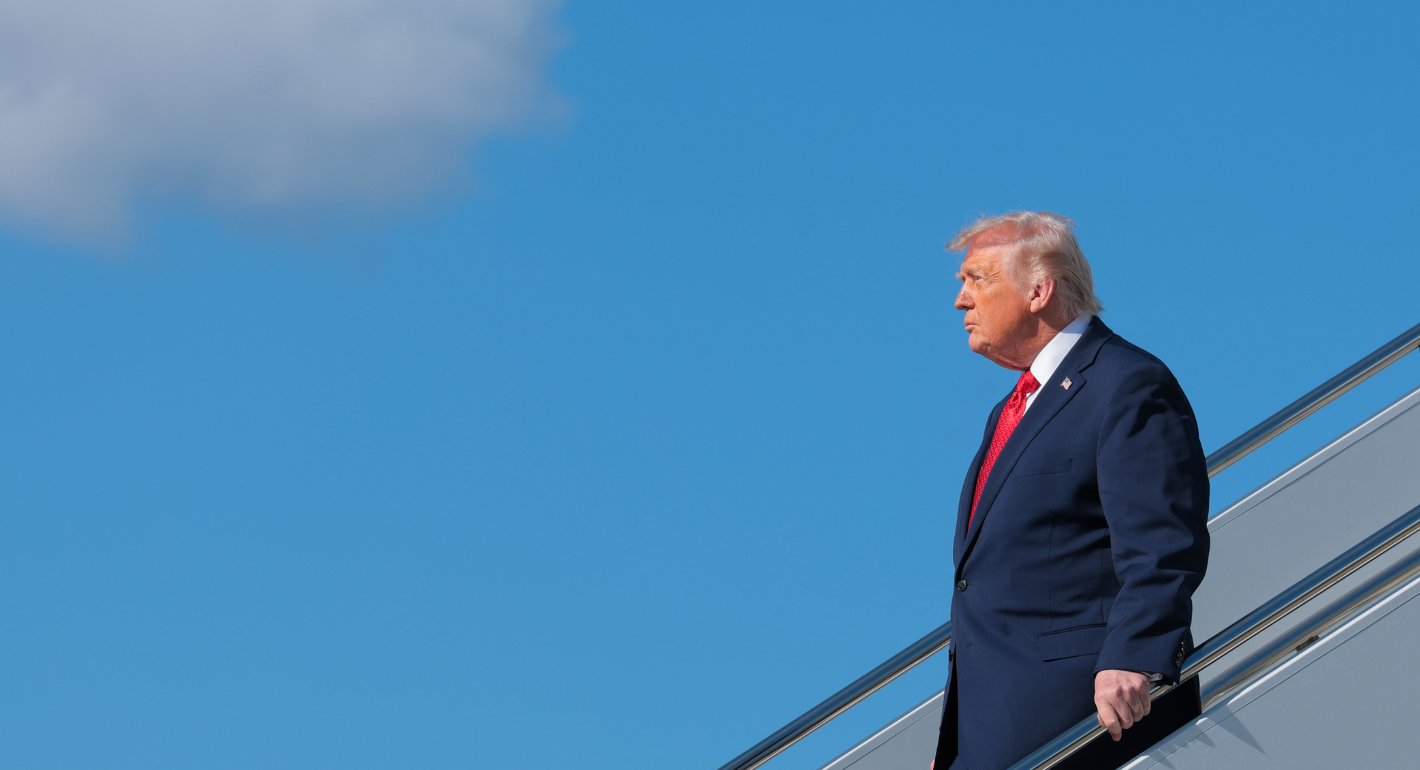
The hyper-personalized new version of global sphere-of-influence politics that Donald Trump wants will fail, as it did for Russia. In the meantime, Europe must still deal with a disruptive former ally determined to break the rules.
Thomas de Waal
2026 has started in crisis, as the actions of unpredictable leaders shape an increasingly volatile global environment. To shift from crisis response to strategic foresight, what under-the-radar issues should the EU prepare for in the coming year?
Thomas de Waal
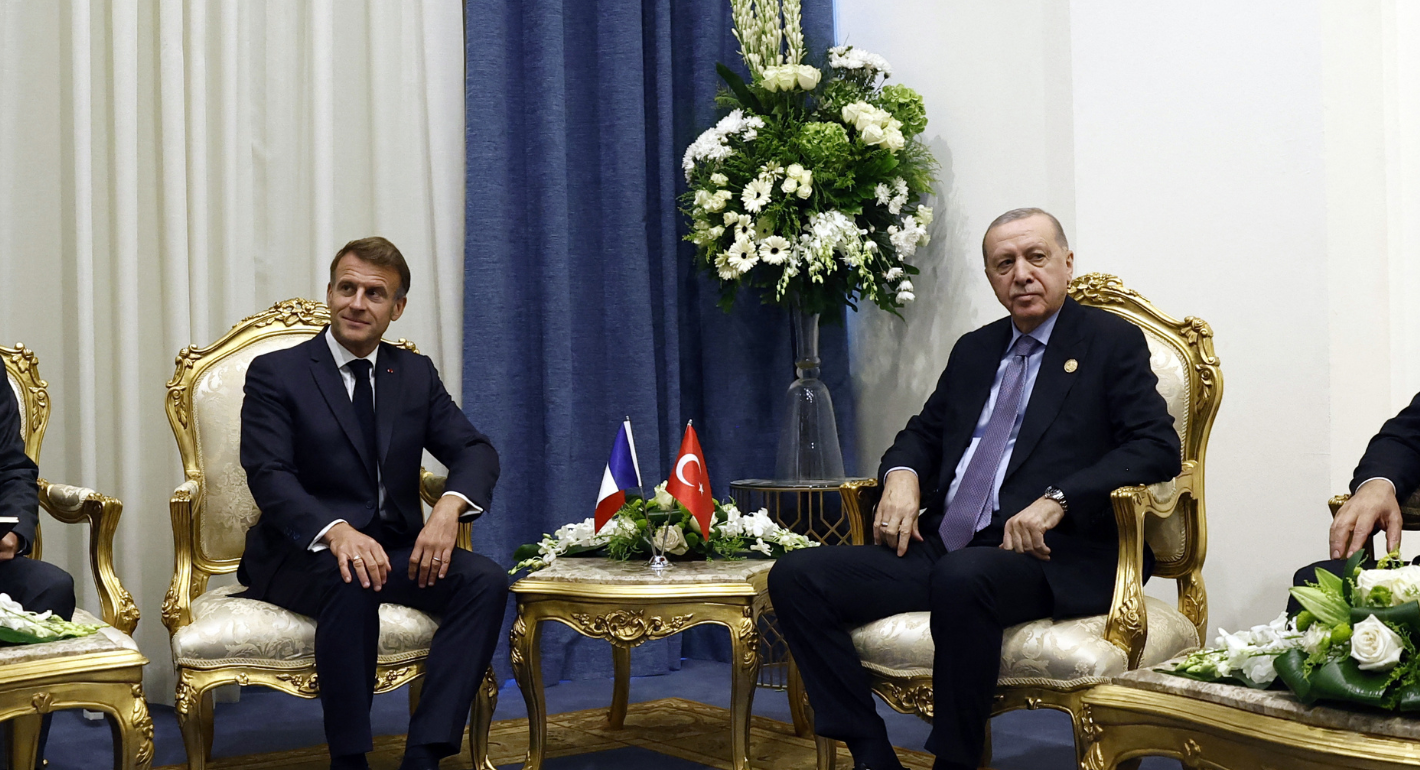
A renewal of relations between France and Turkey is vital to strengthen European strategic autonomy. To make this détente a reality, Paris and Ankara should move beyond personal friction and jointly engage with questions of Black Sea security.
Romain Le Quiniou
Europe is designing a new model of collective security that no longer relies on the United States. For this effort to succeed, solidarity between member states that have different threat perceptions is vital.
Erik Jones