

Commentary
As European leadership prepares for the sixteenth EU-India Summit, both sides must reckon with trade-offs in order to secure a mutually beneficial Free Trade Agreement.
Dinakar Peri
{
  "authors": [
    "C. Raja Mohan"
  ],
  "type": "legacyinthemedia",
  "centerAffiliationAll": "",
  "centers": [
    "Carnegie Endowment for International Peace",
    "Carnegie India"
  ],
  "collections": [],
  "englishNewsletterAll": "",
  "nonEnglishNewsletterAll": "",
  "primaryCenter": "Carnegie India",
  "programAffiliation": "",
  "programs": [],
  "projects": [],
  "regions": [
    "India",
    "Middle East",
    "Gulf",
    "Saudi Arabia"
  ],
  "topics": [
    "Foreign Policy",
    "Political Reform"
  ]
}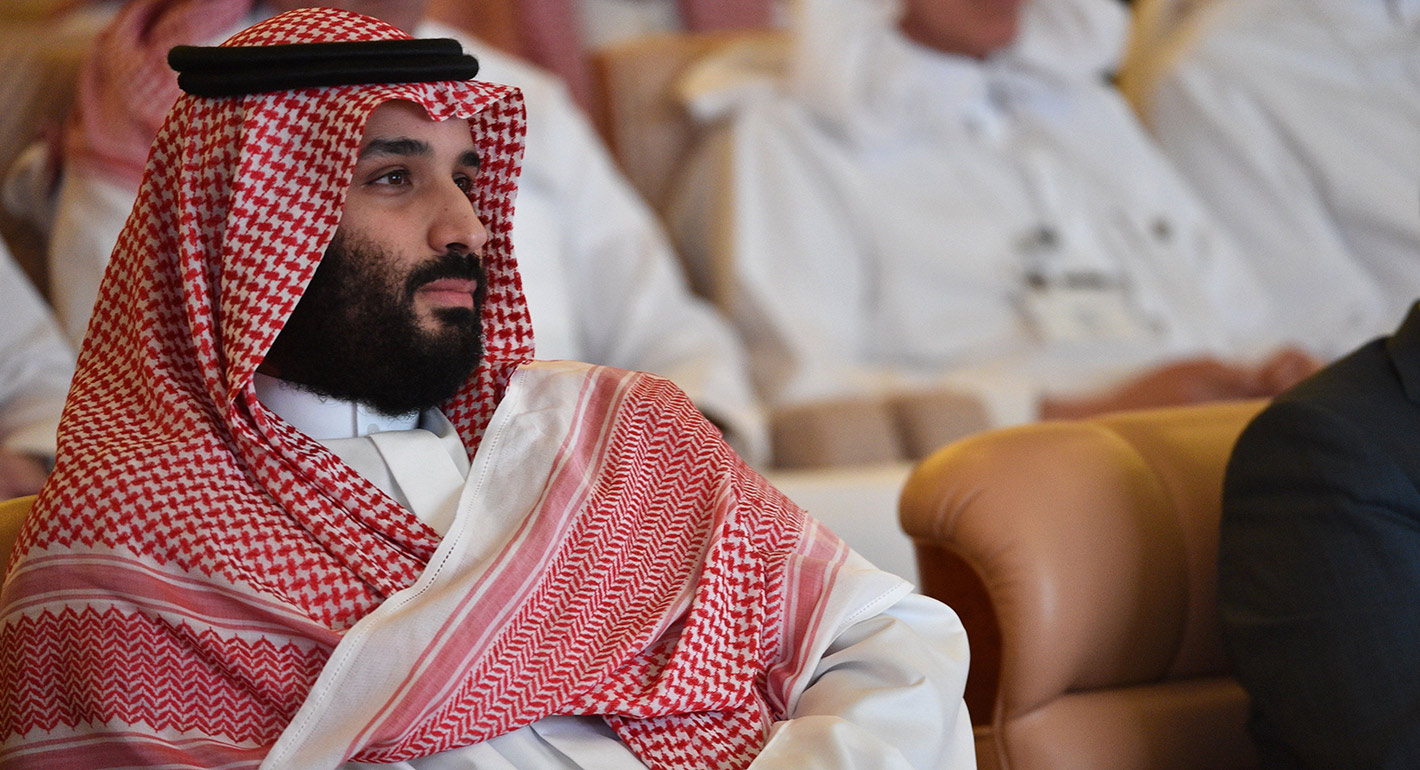
Saudi Crown Prince Mohammed bin Salman’s visit to India—as part of a larger tour of Asia, including Pakistan and China—should mark the consolidation of two important trends and help initiate a significant third.
Source: Indian Express
Saudi Crown Prince Mohammed bin Salman’s visit to India this week — as part of a larger tour of Asia including Pakistan and China — should mark the consolidation of two important trends and help initiate a significant third. The first relates to the trilateral dynamic with Pakistan and the second to the deepening of the bilateral relationship between Delhi and Riyadh.
The third is about extending support to Prince Salman’s agenda for “reversing 1979”, when tumultuous regional developments and the Saudi response to them began to alter the equation between religion and politics in the region, destabilise India’s neighbourhood and change South Asia’s inter-state relations for the worse.
But first to Pakistan. Partition injected a particular complexity to India’s engagement with the Arabian Peninsula. The Subcontinent’s historic relationship with the Gulf is deep and civilisational. In the colonial era, the British Raj in undivided India became both the provider of security and the facilitator of the region’s economic globalisation.
After Partition and Independence, Pakistan sought to mobilise political support from the Middle East in the name of shared religious identity. After Britain granted independence to the smaller Gulf kingdoms and withdrew most of its military forces from the east of Suez at the turn of the 1970s, Pakistan stepped in to pick up some of security slack in the region. (The US, of course, was the main force that filled the vacuum left by Britain.)
Although India was a preferred security partner for some Gulf countries, non-aligned India had little interest in continuing the strategic legacy of the Raj. At the political level, India’s emphasis was on solidarity with Arab nationalism and against neo-colonialism and Western imperialism. Given its preference for “secular republics” in the Middle East, an element of defensiveness inevitably crept up in India’s relations with the religiously conservative monarchies, especially Saudi Arabia.
Riyadh became the moving force behind the Organisation of Islamic Cooperation that was set up in 1969 to unite the region’s conservative regimes as a counter to Soviet-leaning Arab nationalists. The forum’s hostile rhetoric on the Kashmir question (at the instigation of Pakistan) congealed the perception in Delhi that Saudi Arabia and the conservative monarchies were “pro-Pakistan”. In reality, though, the Kashmir issue was never much of a priority for the Saudis.
Thanks to Delhi’s diplomatic tradition that privileges the “literal” over the “practical”, Delhi did little to develop an interest-based relationship with Riyadh. Yet, there were real problems that limited India’s possibilities in Saudi Arabia. These included growing divergence over regional issues such as Afghanistan, India’s embrace of the Soviet Union, the deep dependence of the Gulf kingdoms on the West, and Saudi support for radical Islam beyond its borders since the late 1970s.
The end of the Cold War, India’s economic reforms, and the growing economic interdependence — thanks to India’s ever growing oil imports and manpower exports — generated greater interest in the Gulf monarchies, including Saudi Arabia, for limiting the political differences with India and expanding bilateral economic partnerships.
As the gap in national economic capabilities between India and Pakistan began to widen since the 1990s in favour of Delhi, Saudi Arabia was happy to de-hyphenate its engagement in South Asia. That, in turn, allowed Delhi to stop viewing the Saudi kingdom through the political lens of Pakistan.
The concrete and public expression of the Saudi desire to de-hyphenate came during the visit of King Abdullah to India in 2006 — the first by a Saudi monarch in five decades. Prince Salman’s visit now is an opportunity for Delhi to construct a solid and comprehensive partnership on the foundation laid over the last decade.
On his part, Prime Minister Narendra Modi has brought a refreshing non-ideological approach to India’s engagement with the Middle East in general and the Gulf kingdoms in particular. On top of it, his personal rapport with the region’s leaders like Prince Salman and Sheikh Mohammed bin Zayed (MbZ), the effective ruler of the United Arab Emirates, has set a very dynamic tone to India’s relations to the Arab Gulf.
Beyond the traditional focus on strengthening cooperation in the hydrocarbon sector, there are many new possibilities from Prince Salman’s ambitious agenda for modernising the economy of the Saudi kingdom. Equally important has been the expansion of the bilateral agenda for cooperation to counter terrorism.
Saudi Arabia is also interested in bilateral defence cooperation and eager to develop bilateral strategic coordination on regional affairs. The possibilities seem to be limited only by the Indian bureaucracy’s capacity to deliver on the agreements signed at the political level.
That brings us to the third dimension of Prince Salman’s visit — about “reversing 1979”. Prince Salman has often proclaimed his commitment to reverse the hugely negative consequences of 1979. Four developments in 1979 — the seizure of Mecca’s Grand Mosque by militant Saudi Salafis, the overthrow of the Shah of Iran by Ayatollah Khomeini, the Shia revolt in eastern Saudi Arabia and the Soviet invasion of Afghanistan — shook the Saudi rulers to the core.
Faced with new internal and external threats, the House of Saud began to promote a more conservative Islam at home and support Sunni extremism abroad. This included support to the jihad in Afghanistan and the American and Pakistani war against the Soviet-backed regime in Kabul. Gen Zia-ul- Haq took advantage of the new regional dynamic push Pakistan towards Islamic conservatism.
In an interview to the Guardian in 2017, Prince Salman said Saudi Arabia had not been a “normal country” after 1979. He added that the policies that it pursued after 1979 are now a drag on a productive Saudi future. Prince Salman vowed to overcome the deviations of 1979 and return Saudi Arabia to “moderate Islam”. “We are simply reverting to what we followed — a moderate Islam open to the world and all religions,” he said.
Many observers, especially in the West, are sceptical of the potential for real change in Saudi Arabia. Delhi, in contrast, has every reason to strongly support Prince Salman. After all, India continues to suffer the consequences of 1979.
Far more important than the number of MoUs that India will sign with Saudi Arabia this week is Delhi’s visible and unstinted solidarity with Prince Salman’s reform agenda at home and his effort to promote religious and political moderation in the region.
This article was originally published by the Indian Express.
Carnegie does not take institutional positions on public policy issues; the views represented herein are those of the author(s) and do not necessarily reflect the views of Carnegie, its staff, or its trustees.
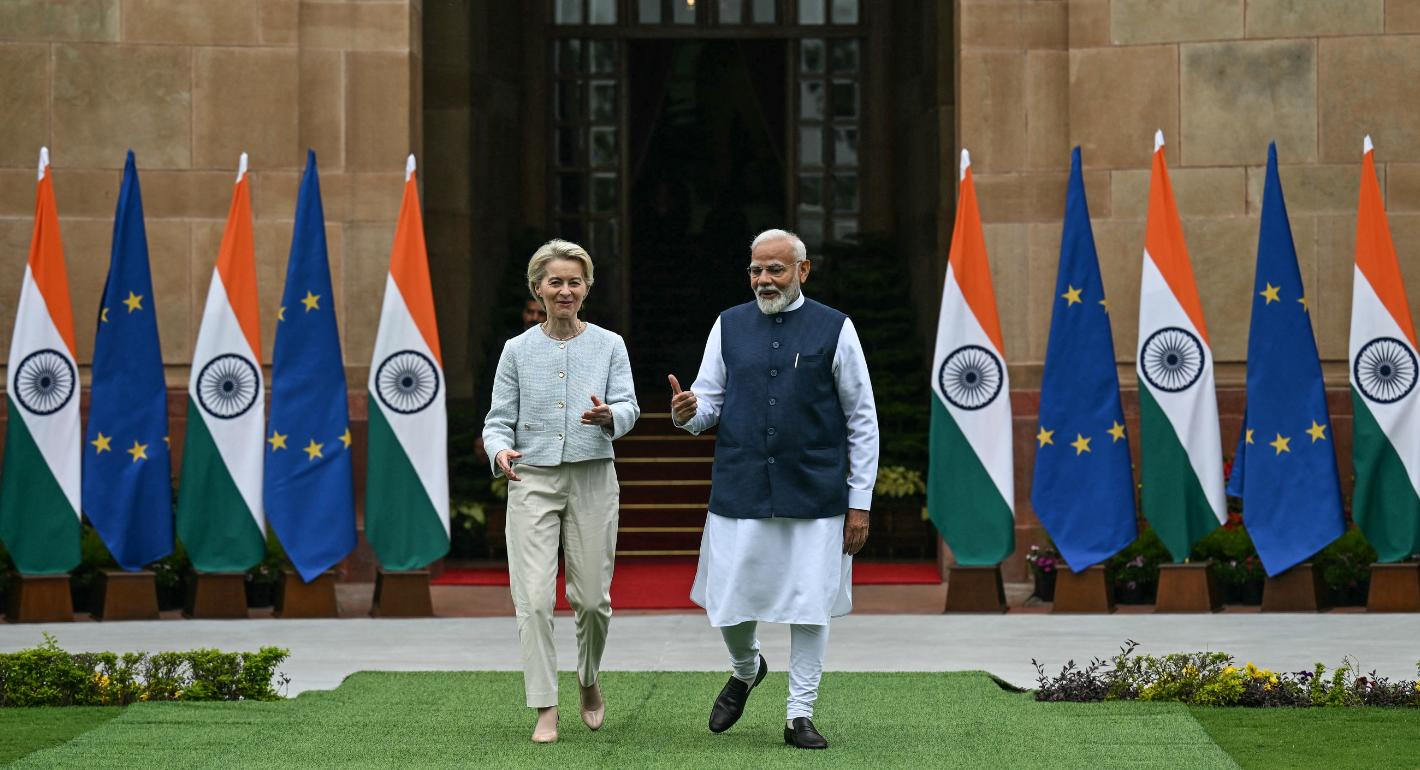
As European leadership prepares for the sixteenth EU-India Summit, both sides must reckon with trade-offs in order to secure a mutually beneficial Free Trade Agreement.

Dinakar Peri
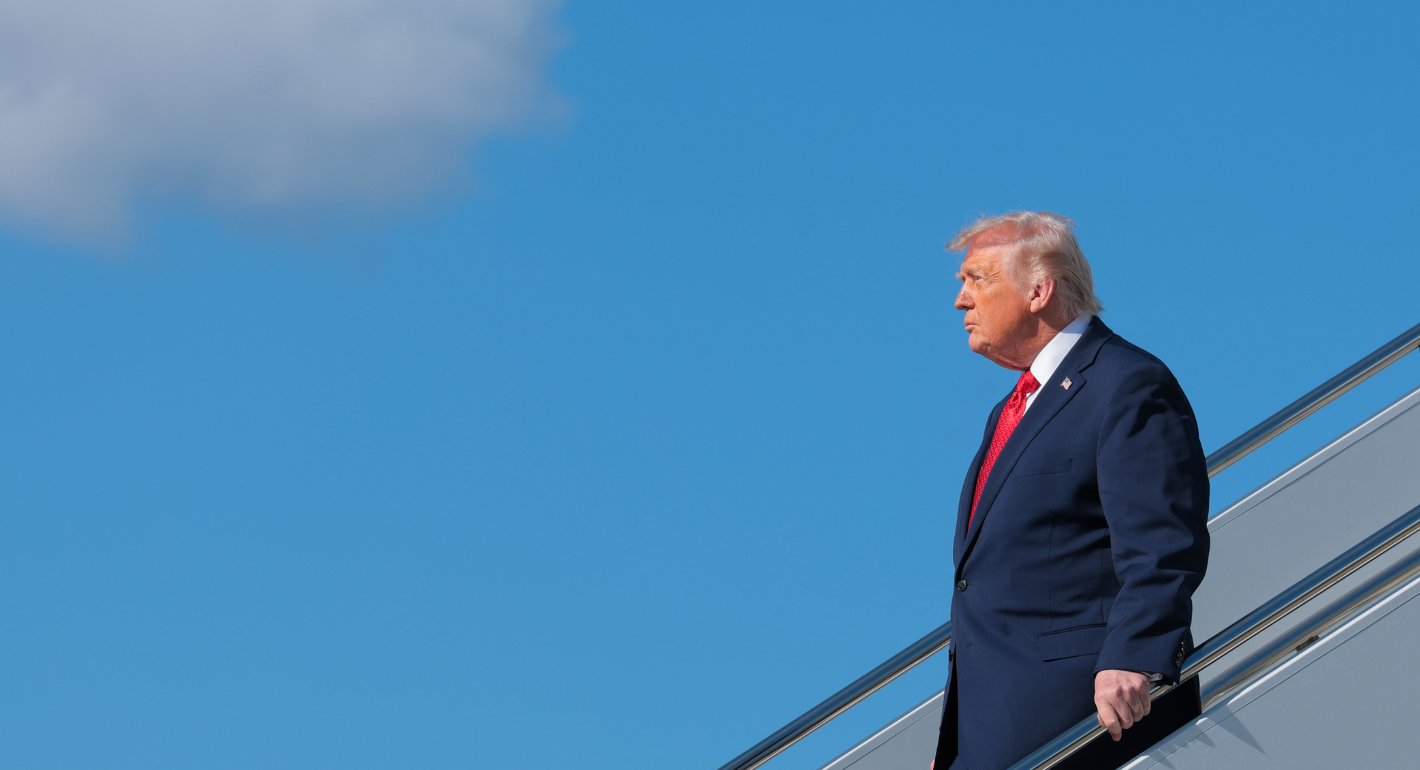
The hyper-personalized new version of global sphere-of-influence politics that Donald Trump wants will fail, as it did for Russia. In the meantime, Europe must still deal with a disruptive former ally determined to break the rules.
Thomas de Waal
2026 has started in crisis, as the actions of unpredictable leaders shape an increasingly volatile global environment. To shift from crisis response to strategic foresight, what under-the-radar issues should the EU prepare for in the coming year?
Thomas de Waal
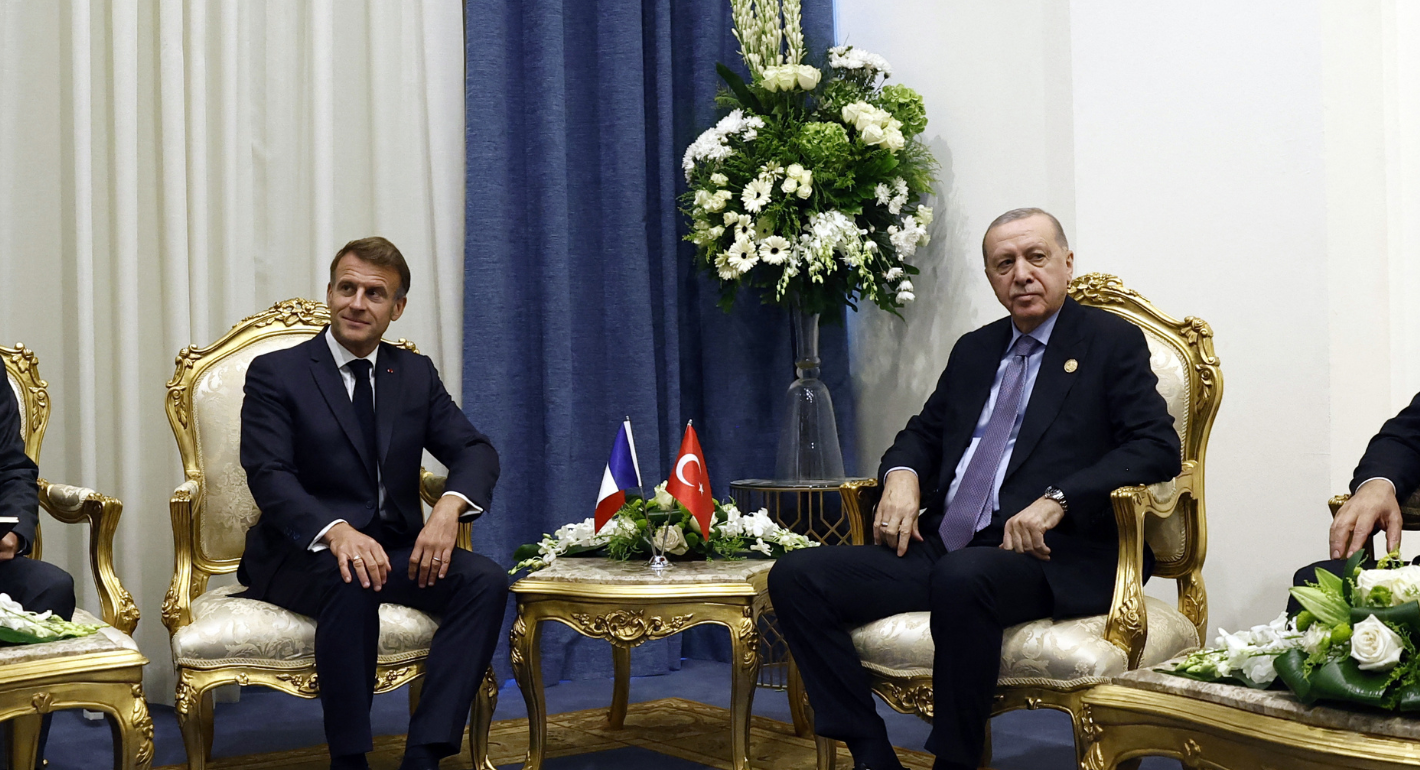
A renewal of relations between France and Turkey is vital to strengthen European strategic autonomy. To make this détente a reality, Paris and Ankara should move beyond personal friction and jointly engage with questions of Black Sea security.
Romain Le Quiniou
Europe is designing a new model of collective security that no longer relies on the United States. For this effort to succeed, solidarity between member states that have different threat perceptions is vital.

Erik Jones