In the offices of Russia’s Novaya Gazeta newspaper, whose chief editor Dmitry Muratov is the latest Nobel Peace Prize laureate, there is a wall of photographs of staff members who were killed for carrying out their professional duty. Someone who works with that reminder hanging over their head every day knows better than anyone else what that kind of journalism is worth.
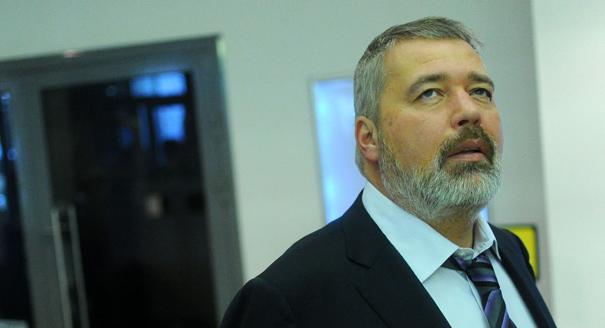
Muratov’s award is a prize for the entire sector of Russian journalism that has devoted the post-Soviet years to fighting for human rights, above all, defending the right to freedom of speech. It’s a prize for the newspaper that embodies that type of journalism, somehow managing to survive in an entirely hostile environment, while retaining a print edition on the largely paperless Russian media scene and growing its internet readership among all age groups. The prize is also recognition of the charisma of its editor-in-chief, a gray-bearded man inevitably wearing sneakers and a backpack: an appearance that drastically belies Muratov’s ability to inspire respect and fear in state officials, politicians, and oligarchs alike.
Muratov is the embodiment of journalism over three eras: late Soviet, post-Soviet, and the recent times of a harsh political regime. Throughout his career, he has unearthed the most unpalatable facts about those in power and those illicitly sustained by them. He has unceasingly extricated people from difficult situations, including when his own staff were detained at the entrance to their office. Sometimes it seems that the line between journalism and upholding rights is blurred for Muratov. This is a man who can sit down with a minister in epaulettes and win him around to his position, or sit across from President Vladimir Putin and ask him a question of substance: not the kind of staged question Putin is used to taking at his theatrical appearances, but something the president might not be expecting, because it contains new information and actually requires decisions to be made.
These qualities of Muratov and his newspaper have not gone unnoticed. The prize has gone to the editor of a newspaper that has always stood up to the authorities, fought for human rights, and which founded the genre of investigative journalism in Russia. He shares the prize with the Philippines’ Maria Ressa, another journalist from a country where freedom of speech has come under fire. Instead of the prize going to the jailed Russian opposition leader Alexei Navalny, who was also nominated, it has been awarded to someone who personifies freedom of speech: something that is crucial to prevent Navalny from remaining in an information vacuum, and therefore without public protection. That’s something that makes sense both in the West and at home in Russia.
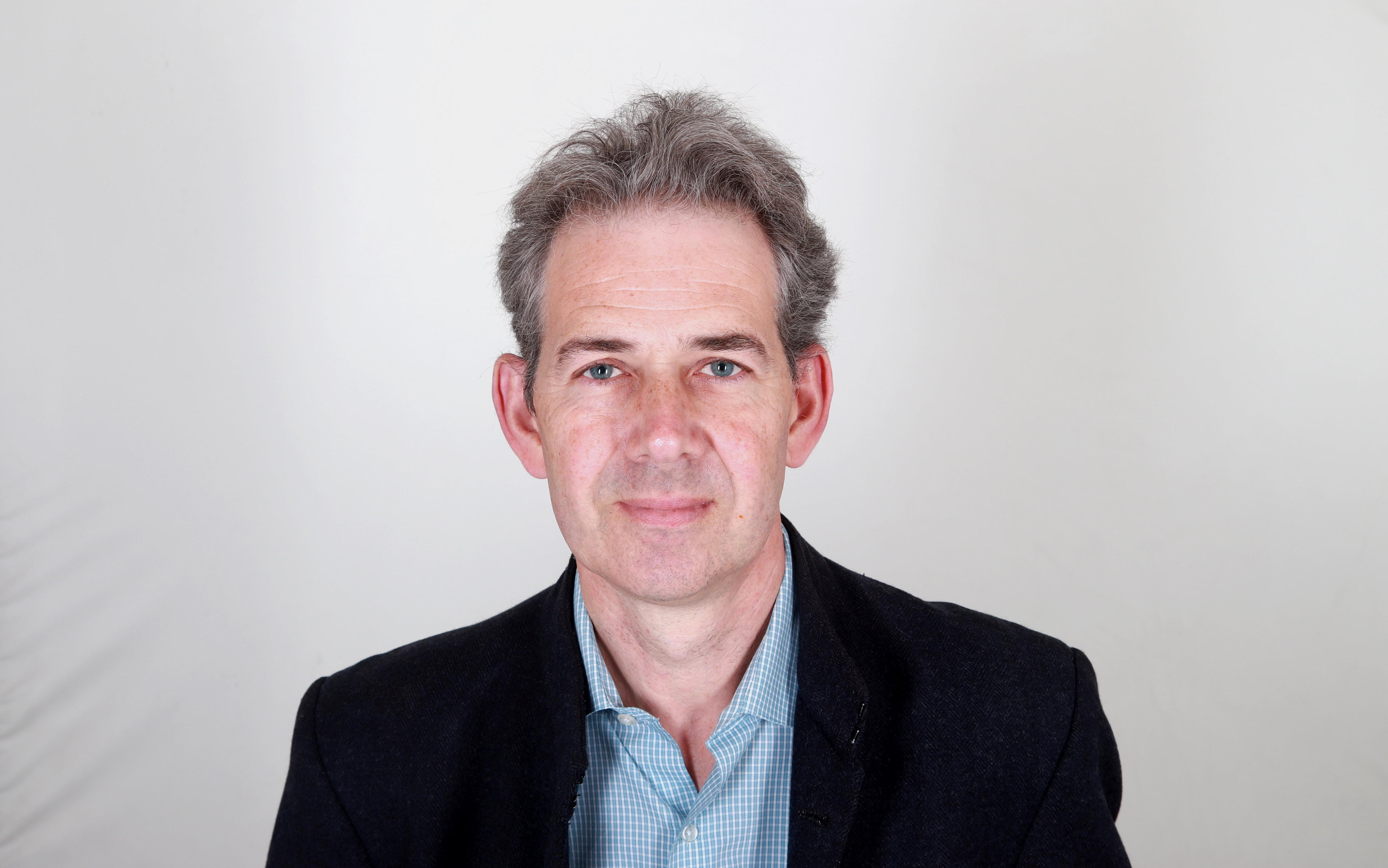
The question everyone is asking right now with regard to Novaya Gazeta is why such a bastion of opposition to the regime has not yet been declared a “foreign agent:” a legal label the government has made great use of in recent years to restrict the activities of many Russian NGOs, media outlets, and other thorns in the Kremlin’s side. This question is very difficult to explain in the cliched terms generally used to describe the state’s crushing of the Russian media. Having worked with the new Nobel laureate on a daily basis myself for many years, I have one explanation: Dmitry Muratov is a political heavyweight.
There are two people in the drastically restricted uncensored sector of the media that the authorities truly respect and therefore have so far left alone. One is Muratov, the other is Alexei Venediktov, chief editor of the opposition-leaning Ekho Moskvy (Echo of Moscow) radio station. There are very senior figures who are prepared to maintain a dialogue with both men, and to take their opinions into account. They are heavyweights because they have been there throughout the entire history of post-Soviet journalism, are uncompromising and unapologetic, and know how to talk to the authorities in a language that the latter cannot ignore. The role of Muratov and Venediktov in securing the release of the investigative journalist Ivan Golunov when he was arrested on trumped-up charges two years ago, for example, cannot be overestimated. There is no one else to whom the people who took the final decision to free Golunov—and then even prosecute the corrupt police officers who framed him—would have listened.
The decision by the Norwegian Nobel Committee comes at a time of new divisions among the Russian opposition movement. When Venediktov elicited fury in pro-democratic circles for his enthusiastic support for controversial online voting in Russia’s recent parliamentary elections, Muratov stood up for him, prompting a public conflict between Muratov and Leonid Volkov, who was running an opposition campaign on behalf of Navalny. In other words, it’s a falling out between two people who are working toward the same goal.
From Muratov’s point of view, it is suicidal to attack Venediktov and Ekho Moskvy: why help the regime destroy a rare remaining oasis of independence yet to be tarred with the “foreign agent” label? Nor would Novaya Gazeta ever refuse to cooperate with the authorities on principle: on the contrary, as a publication that regularly runs campaigns to help people with rare illnesses and other problems, the newspaper believes that sometimes it is necessary to work with the state to save human lives, and that is a position Muratov is prepared to fiercely defend, even if it leads to conflicts with those who disagree.
The Norwegian Nobel Committee is most likely unaware of the intricacies of these domestic squabbles among an opposition movement demoralized by a wave of repression and the mass application of restrictive legislation. But what matters is that the committee clearly sees that repression. It also sees that freedom of speech, for which people are losing their liberty and their lives, is in need of support right now in Russia.
The most famous face on Novaya Gazeta’s wall of murdered colleagues is that of Anna Politkovskaya, who has become a symbol of the state’s contempt for its duties to protect its people and uphold the right to freedom of speech. The day before the Nobel Prize was announced, Novaya Gazeta commemorated the fifteenth anniversary of Politkovskaya’s murder: she was shot dead in the entrance to her apartment building. The person who ordered her killing has never been identified, and the anniversary was a particularly despondent one this year, as it marked the expiration of the statute of limitations on investigating the crime. In some ways, the Nobel Peace Prize is not just for Muratov, but for Anna Politkovskaya too.