

Paper
Californians believe that AI will significantly impact their work, communities, and democracy. But this is offset by high levels of anxiety and uncertainty around specific impacts.
{
  "authors": [
    "Ian Klaus",
    "Mark Baldassare"
  ],
  "type": "commentary",
  "centerAffiliationAll": "",
  "centers": [
    "Carnegie Endowment for International Peace"
  ],
  "collections": [
    "Tech in Context",
    "Carnegie California Surveys"
  ],
  "englishNewsletterAll": "",
  "nonEnglishNewsletterAll": "",
  "primaryCenter": "Carnegie Endowment for International Peace",
  "programAffiliation": "",
  "programs": [
    "Carnegie California"
  ],
  "projects": [],
  "regions": [
    "United States"
  ],
  "topics": [
    "AI",
    "Subnational Affairs",
    "Technology"
  ]
}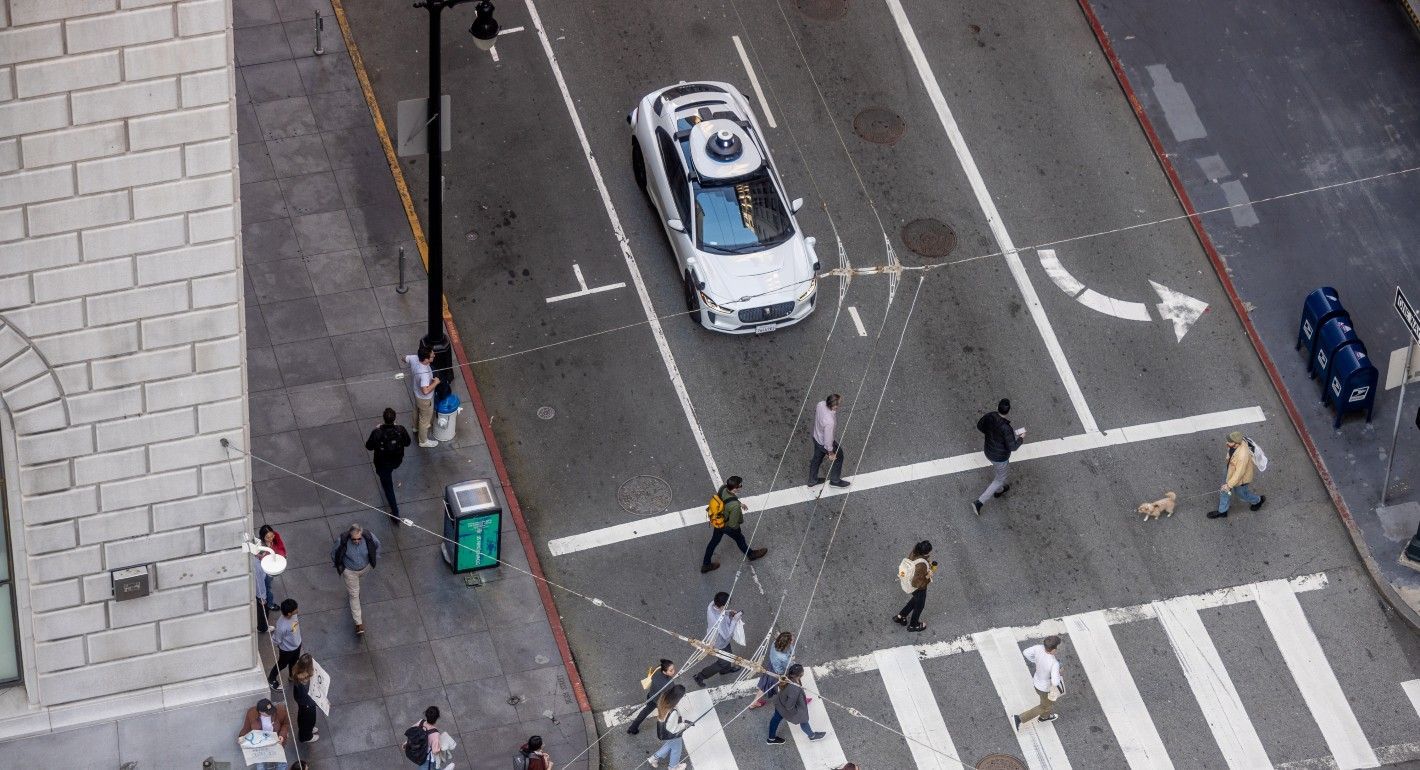
A Waymo car in San Francisco in 2024. (Photo by JasonDoiy/iStock)
On many policy issues, California’s urban centers are united. On AI, differences between the San Francisco Bay Area and the rest of state are notable.
As a brand, political football, and a one-party dominated state, California is often treated as a monolith. The reality, of course, is far different. The state is a pluralistic democracy with intense natural and socioeconomic differentiation. Geography and regional differentiations matter hugely. Nonetheless, on most policy issues—climate action, migration, even foreign policy—residents of Los Angeles, San Diego, San Jose, and San Francisco stand together, forming a heavily urban liberal block.
At first glance, this would hold for artificial intelligence as well. The state is home to a majority of the largest AI companies in the world, including Google, OpenAI, Meta, and Anthropic. It is also at the vanguard of AI scholarship and policymaking, including SB-1047, the California Report on Frontier AI Policy, and SB-53.
And indeed, as it comes to AI, there are positions of strong agreement across the state.
The recently released Carnegie California AI Survey found that overwhelming majorities of Californians believe that AI is important for the nation’s and state’s economic growth and competitiveness. Overwhelming majorities of employed residents report that AI is currently being used in their workplaces or industries and that having skills to understand and use AI will be important for workers to be successful. Large majorities of Californians are concerned about the risks that AI poses for privacy harms, spam and fraud, and spreading misinformation. Overwhelming majorities favor having the organizations that use AI help establish guidelines for its safe and responsible use, as well as state policies that protect workers from job displacement caused by AI and whistleblowers in tech companies using AI. Remarkably, the survey—which was conducted this summer—found that majorities across partisan groups hold these perceptions, attitudes, and policy preferences toward AI, even in these polarized times.

Californians believe that AI will significantly impact their work, communities, and democracy. But this is offset by high levels of anxiety and uncertainty around specific impacts.
But if one looks closer, there are notable differences between the San Francisco Bay Area and the rest of state, and even the major urban areas, including Los Angeles. In many ways, the Bay Area stands alone on AI.
Let’s take work. The San Francisco Bay Area is ahead of the curve on AI use in the Golden State. More than half of the area’s employed residents say that AI has changed their career path, shifted their career focus, or is causing them to consider how AI might impact future job prospects. Elsewhere in the state, majorities report that AI has not had any impacts on their careers or plans. Bay Area employed residents are more likely than Angelenos or all Californians to use AI daily at work, to report that AI has improved their work productivity, and to be very interested in receiving AI training.
The experience in the workplace seems to influence the more general perspectives on the economy and the future of work. Related to their higher exposure to AI, Bay Area residents are more likely to believe that AI is “very important” to the state’s economic growth, to think that AI use will increase at work, and to say that AI skills will be “extremely important” to work in the future. Notably, Bay Area residents are less likely to think that AI will lead to fewer jobs in the future, while Californians elsewhere hold a gloomier view.
It’s worth pausing for a second on these findings and the notable gaps between the Bay Area and Los Angeles, as well as the state more generally. The Bay Area economy has been re-energized by the surge of interest in AI, with attendant effects for San Francisco. San Jose has taken an active policy lead on AI issues, and Mayor Matt Mahan has deployed it aggressively in service delivery and transportation. Los Angeles and San Diego remain global leaders in deep technology and biotech, but the emergence of generative AI has also posed challenges for the entertainment sector. Chat GPT-3 was released in November 2022; in March 2023, members of the screenwriters guild—later joined by members of the screen actors union—went on strike, with the use of AI being one of the central issues in the labor negotiations.
Residents of the Bay Area not only hold notably different opinions on the future of work and the economy, but they have also experienced different versions of its impacts. Across most of the work-related findings, residents of Los Angeles and the Central Valley are more likely to share perspectives than those of Los Angeles and the Bay Area.
Bay Area exceptionalism as it comes to thinking about AI extends beyond the marketplace to include issues around government, policymaking, and education. Majorities in the Bay Area believe that it is important for government to use AI to improve the efficiency of its work. Forty percent of Bay Area residents hold the optimistic view that AI can facilitate productive policy outcomes. Bay Area residents are also more likely than others to support a state policy that promotes the advancement of AI literacy through instruction in California schools. However, there is consensus on the impacts of AI on democracy, elections, political polarization, civil dialogue, citizen engagement, and voter information.
Use has also encouraged a heightened sense of the risks that society is taking with this greater exposure to AI. Bay Area residents are more concerned about the AI risks of bias and discrimination, harmful content, hallucinations, and decreased work quality. There is broader consensus on risks involving privacy, deepfakes, fraud, and misinformation.
AI, as engineers and experts have noted, likes to surprise. Its near- and medium-term impacts on science, medicine, work, and even existential safety remain hotly debated. As it turns out, the major metropolitan regions of California are experiencing the nascent AI-present and see the AI future differently. Somebody will be surprised.
Carnegie does not take institutional positions on public policy issues; the views represented herein are those of the author(s) and do not necessarily reflect the views of Carnegie, its staff, or its trustees.
The hyper-personalized new version of global sphere-of-influence politics that Donald Trump wants will fail, as it did for Russia. In the meantime, Europe must still deal with a disruptive former ally determined to break the rules.
Thomas de Waal
Between Greenland and U.S. interference in Europe’s democracies, transatlantic relations risk rising to an unprecedented level of crisis. Amid continued arguments on how Brussels should react, tough times lie ahead for European leaders.

Marc Pierini
2026 has started in crisis, as the actions of unpredictable leaders shape an increasingly volatile global environment. To shift from crisis response to strategic foresight, what under-the-radar issues should the EU prepare for in the coming year?
Thomas de Waal
Europe is designing a new model of collective security that no longer relies on the United States. For this effort to succeed, solidarity between member states that have different threat perceptions is vital.
Erik Jones
In Donald Trump’s second term in office, the transatlantic relationship that helped define the postwar European project and global order appears broken. Is it time for Brussels to chart its own path?
Nathalie Tocci, Jan Techau