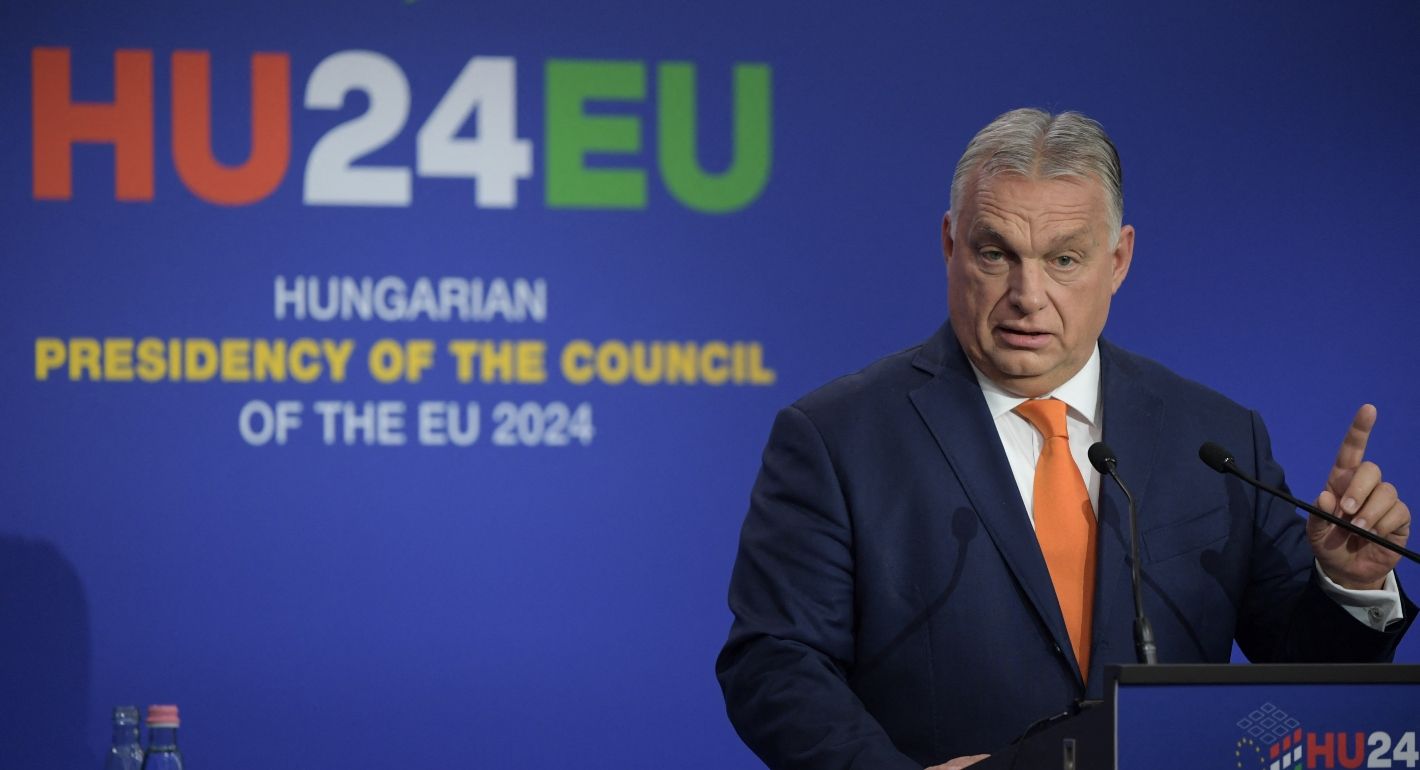
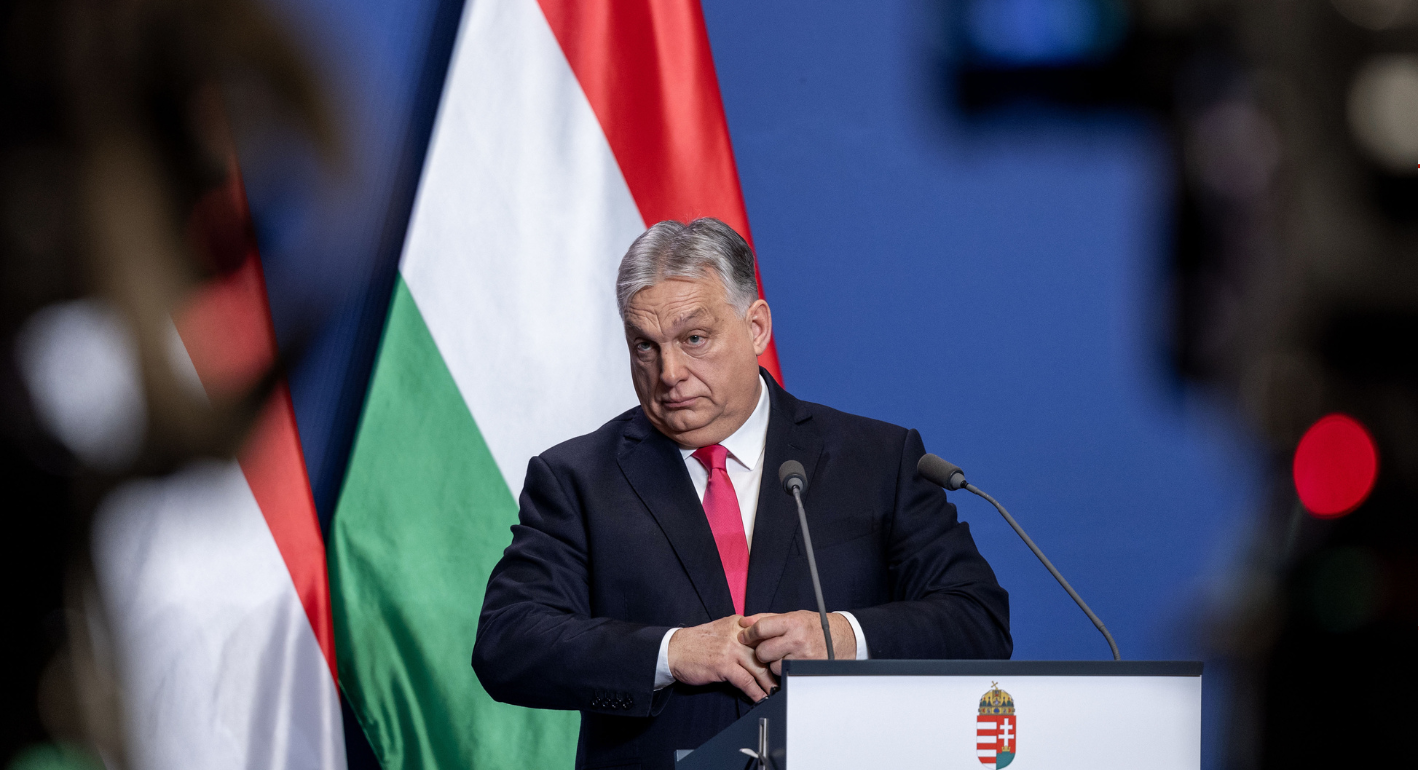
From the very outset of Russia’s invasion of Ukraine in February 2022, Hungarian Prime Minister Viktor Orbán has systematically disrupted European decisionmaking. His unpredictable positions on geopolitical issues and confrontative comments have become commonplace.
Orbán’s recent interview, given on the morning of the November 7 informal European Council meeting, may provide some insights into his true ambitions and future behavior. He declared that Hungary has successfully resisted judicial activism from Brussels because it is always prepared to revolt against interference in national actions. He called for rebellion against “the laws and court rulings that are currently in force.” This complaint relates to the European Court of Justice, which has imposed a €200 million ($213 million) fine and further daily penalties of €1 million ($1.1 million) on Hungary for its failure to comply with EU asylum rules.
Becoming a transformative actor on the international stage and shaping the future of the EU has always been Orbán’s political aim. This approach emerged back in 2010, with his pursuit of an “Opening to the East”—a policy aimed at economic diversification, including through increased business and friendlier political relations with Russia, Turkey, and China. Orbán’s ambition is to thrust Hungary, a small Eastern European country at the periphery of transatlantic cooperation, to the heart of European—even global—decisionmaking. This foreign policy agenda is an essential part of his nationalist, illiberal, populist regime.
In NATO, Orbán’s ambition is to boost business deals and make himself heard. Within the EU, he wants to shape the organization’s future, and get it to provide the maximum institutional and financial backup for Hungary’s economic progress while accepting his illiberal rule. For this, it is necessary to weaken the bloc’s ideological consensus and political competencies.
Since gaining constitutional power in 2010, he adopted a confrontational posture within the EU to push back against criticism of his country’s systemic democratic backsliding and growing autocratization. Until 2020, however, he played by the EU’s terms. The rebellion attitude, which openly undermines the bloc’s ability to act in unity, is new. It aims to both pressure the European Commission to release some of the frozen EU funds to the Hungarian government, and to demonstrate that no important decision can be made without Orbán.
For too long, EU leaders did not respond resolutely enough. Recently, however, they applied conditionality to Hungary’s post-COVID-19 recovery funds and tried to politically isolate Orbán. The Hungarian prime minister, therefore, badly needed Donald Trump to win the U.S. presidential election. By investing millions of dollars in U.S. lobbying firms and right-wing think tanks, Orbán’s people got in good standing with various Republican institutions that may shape the policymaking of the next U.S. administration.
Buoyed by Trump’s victory, Orbán could afford to act like a cooperative host of his fellow Europeans last week. In contrast to his combative attitude in previous meetings, at the European Political Community summit and the informal European Council that followed, Orbán appeared moderate and restrained. This is, of course, all smokescreens to maintain his access to funds—a game of dupes that the other EU leaders have indulged Orban in, as well, out of weakness and a belief that it is better to maintain even a superficial unity.
Behind closed doors, the harmony was less convincing. During a press conference Orbán called for an immediate ceasefire in Ukraine, while Ukrainian President Volodymyr Zelensky stressed that no one could expect Russian President Vladimir Putin to be generous and asserted that peace cannot be bought by weakness.
Zelensky’s comments were directed at both Orbán and Donald Trump. With the latter elected as the next U.S. president, continued support to Ukraine is uncertain. Trump may want peace in Europe to focus his attention on other geopolitical conflicts, at the price of Ukraine’s future and Europe’s security. In this highly sensitive situation, Orbán could become a key interlocutor. He has positioned himself as a “peace builder” since the beginning of the war and now wants to reap the rewards of his risky and controversial strategy.
A chance to play this role, however symbolic, is one of the advantages Orbán can get from a second Trump administration. But the U.S.-Hungary relationship is not without challenges, even with Trump’s return to the White House.
As a member of the single market, Hungary’s prime minister cannot play an individual game with the United States should a potential trade dispute emerge between Washington and Brussels. Also, there is no guarantee that the upcoming Republican administration will be entirely friendly with Orbán. The words of U.S. Senate Republican leader Mitch McConnell should caution against any guarantee of deepening collaborations: “When Chinese state enterprise has said jump, Hungarian officials have asked, how high?"
Orbán will continue the expensive lobbying to remain in Trump’s horizon. Should Trump’s transactional instincts prevail in his management of global conflicts, Orbán may gain from it. Nonetheless, while Orbán may be strong, Hungary is small, deeply integrated in the EU, and its people like being Europeans. The country’s progress and success is far more dependent on the success of the EU than anything else.
Moreover, Orbán is weakening. Despite being the largest political bloc in Hungary, his party is losing support. Orbán is no longer the most popular politician and he is not untouchable. Trump’s victory will not conceal the deepening problems in Hungary’s economy and society.
Meanwhile, Hungary’s European partners need to prepare for further challenges and think bravely, strategically, and creatively about how to manage a disruptor. Orbán, as he himself warned, has something up his sleeve to surprise his allies—and the stakes are high.
Zsuzsanna Szelényi is the founding director of the Democracy Institute Leadership Academy at the Central European University.