

Commentary
Yezid Sayigh
The interaction of national armed forces and private business sectors offers a useful lens for viewing the politics of numerous countries of the so-called Global South. A rising trend of military political activism—often accompanied by military commercial activity—underlines the importance of drivers and outcomes in these relationships.
The interaction of national armed forces and private business sectors offers a useful lens for viewing the politics of numerous countries of the so-called Global South. A rising trend of military political activism—often accompanied by military commercial activity—underlines the importance of drivers and outcomes in these relationships. Whether as a business actor or as a gatekeeper to wealth and power, the military’s role significantly shapes the political trajectories of these countries.
As this compilation—which looks at countries in Latin America, Africa, the Middle East and North Africa, and South and Southeast Asia—shows, power triangles comprising the armed forces, private sector, and state leaders are in many countries likely to block democratization or at least redirect it into highly controlled channels. This runs counter to conventional democracy theory, which assumes that greater degrees of private sector autonomy and influence will translate into the emergence of sociopolitical alliances backing democratization, and conversely that less private sector autonomy will undermine such prospects. The precise distribution of advantage within these power triangles varies, but in all cases their upshot is predominantly to maintain what Douglass C. North, John Joseph Wallis, Steven B. Webb, and Barry R. Weingast labeled “limited access orders,” in which the members of power triangles limit the access of other social forces to valuable resources (land, labor, and capital) and activities (trade and markets and public services).
These essays show that the patterns of military-business relations are shaped by multiple factors, one of which is the degree—and sources—of private business sector autonomy. For example, differing patterns of relations between the military on the one hand and crony or oligarchic business actors on the other, may serve as a useful proxy for anticipating political trajectories. The emergence of the military as a business actor in its own right—whether formally or informally—complicates matters. It may lead to head-on competition or confrontation with big business actors, who will seek a more level playing field in the economy, but may also encourage convergence with them in opposing labor rights and wider political and economic democratization (defined here as reversal of the limited access orders mentioned above).
The importance of these dynamics was graphically demonstrated in the historical cases of Brazil in the 1970s and Chile in the 1980s, where democratic transitions were negotiated between the military and the business sector (or its political representatives) once the latter felt that a continuation of military rule would constrain rather than enable its interests. A similar dynamic saw the Turkish military intervene in 1980 to end labor activism and left-right violence, then hand government back to civilians in 1983, who pursued an economically neoliberal and socially conservative agenda that the military did not in fact favor.
More recently, when the military returned to power in Myanmar in February 2021, a number of business actors opposed the military rulers despite having been their cronies until the democratic opening of 2010; the intervening decade had allowed them to emerge from under the military’s shadow to pursue a more independent and arguably oligarchic course for wealth formation, and they sought to protect their gains. In Egypt, the military-backed regime that emerged in the wake of the 2013 coup d’état maintained the marginalization of the business cronies of former president Hosni Mubarak, which had followed the 2011 uprising, but at the same time denied independent oligarchic business actors a role in setting economic policy, let alone the exercise of political influence. Angola’s military-backed ruling party broke with a legacy of state monopoly to spawn a privileged private banking sector, whereas its Algerian counterpart behaved contrarily, first toying with the idea by promoting a single crony banker and then bringing him down when he took autonomous political positions. The Algerian military moreover deployed an anti-corruption campaign in order to contain the pro-democracy movement that had forced the 2019 ouster of the incumbent president and then to reconfigure the ruling coalition in the aftermath, thereby reconstituting the military’s position as a gatekeeper to wealth and power. Mexico and El Salvador reveal that this gatekeeper role may transcend formal economies to informal and illicit ones, such as drug markets. In all cases, power or capital that is accumulated in one sphere—be it political, economic, or regulatory—can be reinvested in another, illustrating why military political activism often intertwines with economic ambitions and vice versa.
In these and other countries, private sector development has reflected the distortion of market economics by military-backed regimes or direct military intervention. The above examples display considerable divergence. The Latin American and Turkish cases reflected high levels of private sector development, whereas the Middle Eastern cases—along with the arc of western and central African countries that have witnessed military coups since 2020—reveal the effects of distorted private sector development and severely circumscribed autonomy. Countries such as Indonesia, Pakistan, and, possibly, Myanmar sit somewhere in between, with relatively developed private sectors and powerful business oligarchs, but also with historically interventionist militaries (in the political and economic spheres).
The revival (or intensification) of populist and nationalistic politics in the first set of countries accompanies an evolution in the patterns and dynamics of alliances between ruling elites, their militaries, and business sectors. In the second set (Middle Eastern and African countries), the legacy of successive phases of economic nationalization and erratic privatization (compounded by international sanctions in cases such as Iraq, Libya, and Sudan) has made rent-seeking a primary economic mode and generated crony capitalism that incapacitates the business class as a sociopolitical force. Whereas the military has often regarded the private sector as an ally in the ruling political order in Latin America and Türkiye, and even in Pakistan, in other countries the military sees the private sector as a potential political challenger (such as in Egypt). In these cases especially, the military has exploited the private sector’s weak corporate character and favorable government regulations to emerge as an expansionist and often predatory business actor.
How military-business relations evolve will vary from country to country, and sector to sector, but in all cases will affect economic direction and growth strategies, social trends, and political governance. These trends, moreover, appear set to continue, if not intensify, in the wake of the disruptions in global trade and investment generated by the coronavirus pandemic and the Ukraine war, as economic recession and financial contraction erode the political understandings and governing arrangements that previously underpinned military-business relations. This compilation of essays focuses on these relationships in sixteen countries across the Global South, in order both to gain analytical insights and to capture an emerging trend of considerable political significance for the prospects of democracy worldwide.

Senior Fellow, Malcolm H. Kerr Carnegie Middle East Center
Yezid Sayigh is a senior fellow at the Malcolm H. Kerr Carnegie Middle East Center in Beirut, where he leads the program on Civil-Military Relations in Arab States (CMRAS). His work focuses on the comparative political and economic roles of Arab armed forces, the impact of war on states and societies, the politics of postconflict reconstruction and security sector transformation in Arab transitions, and authoritarian resurgence.
Fellow, Malcolm H. Kerr Carnegie Middle East Center
Hamza Meddeb is a research fellow at the Malcolm H. Kerr Carnegie Middle East Center in Beirut, where he co-leads the Political Economy Program
The Northern Triangle of Central America (El Salvador, Guatemala, and Honduras) is in the midst of a deep democratic crisis. This crisis has different expressions and roots, but in all three countries, the stability of a compromise between the private sector and the armed forces that allowed for civilian control over the latter in the 1990s is being challenged. A major reason for this destabilization is the rise of organized crime, drug trafficking, and gang violence. These problems have created new opportunities for economic gain for military officers and have given them space to justify increased military involvement in public policy and security. What are emerging are democracies almost completely sidelined by burgeoning networks between the military, organized crime, and business elites. Such networks are creating variations on a damaging triangular dynamic in each country. The differences stem from the strength and cohesion of the country’s existing business elites, the historic relations between elites and the military, and the organized crime and illicit sources of revenue that have emerged.
In Guatemala, the 1996 peace accords helped establish democratic institutional control over the armed forces, but this control has waned because of the military’s new sources of licit and illicit income and the elites’ desire to insulate themselves from social protests to allow their economic projects to prosper. Repeated protests against disputed projects have led large firms to hire private security and retired military personnel to protect their interests. As a result, deeply entrenched corrupt networks are assuming a growing role in ruling the country. In Honduras, the military and a much weaker economic elite have become deeply involved in illicit activities, principally drug trafficking. In this case, democratic institutions are being replaced with extended family networks that straddle both the licit-illicit and civilian-military divides. In El Salvador, the 1992 peace accords helped demilitarize the economy, but the growing threat from gangs and the business shift from agro-industrial traditional groups to diversified service-based groups have changed the dynamic. Gang activity has been used as a justification for the remilitarization of citizens’ security, and emerging elite groups have begun to rely on the military’s involvement in governance to protect their interests.
Guatemalan politics have long been dominated by a small group of powerful families, rightly called an oligarchy. Originally, the families’ power came from their control over land and traditional agricultural sectors, including sugar and coffee. But in the twentieth century, oligarchic families diversified into industrial and service sectors that required more extensive state services than agricultural production did. Thus, the oligarchy supported state expansion, while also ensuring it served their interests. While these families’ dominance has persisted, new families have joined the oligarchy and it has transformed into a modern business elite with transnational ties.
Historically, the relationship between the oligarchy and the military was often characterized by conflictual mutual dependence. Upon the end of the civil war, the 1996 peace accords reset this relationship by firmly establishing civilian democratic control over the armed forces. However, this new dynamic was soon challenged. The first government that came to power after the accords—that of Álvaro Arzú—sought to maintain the oligarchy and to attract foreign investment to open new business opportunities. This approach generated new types of conflict over resources—particularly over extractive projects involving mining, hydropower, oil, and palm oil plantations—and the military was frequently deployed to control protests. In some cases, military posts were established close to the infrastructure of these projects. Several military officers had acquired land in the northern part of the country during the civil war, and they sometimes sold this land for extractive projects such as oil. Former military officers often in alliance with, or in service to, the oligarchy also formed unofficial intelligence units to surveil and intimidate opposing economic elites or social activists. This allowed for new forms of cooperation between the military and the private sector elite.
However, in some cases, the cooperation turned into competition, particularly related to vying for control over state institutions and political parties. By the end of the civil war, some groups of former and active military officers had accumulated enough money and territorial control to dispute oligarchic control over various state institutions. This control had three main sources: the military’s oversight of custom offices, which allowed corruption networks with links to smuggling to form; the involvement of former military officers in the creation of private security firms that flourished thanks to security sector reform at the end of the civil war; and former military officers’ provision of logistical support to drug cartels—including large Mexican ones, entering different parts of the country—in exchange for money. The latter has been pivotal for the transport of drugs from South to North America since the turn of the century.
Over time, this dynamic led to the formation of illegal networks involving former military officers that compete with the oligarchy for influence and control of all branches of the government. Today, the military’s objectives are to (1) secure access to public tenders to be able to profit from public projects, (2) maintain political influence in order to promote their interests and access new business opportunities, and (3) secure impunity for their involvement in crimes committed during the civil war.
The mechanisms used to achieve these objectives include the financing of election campaigns and the appointment of some military members to key government posts. While in the past financing came mainly from the economic elite, the UN International Commission Against Impunity in Guatemala (CICIG) documented in 2015 that the business elite provided only 25 percent of funding for the 2011 presidential campaign, while organized crime provided another 25 percent and groups who had enriched themselves through their role as providers of the state contributed 50 percent. This latter group included a high share of military officers.
Since the early 2000s, former military officers have also been running for elections. They have been elected as majors in rural municipalities and even as president, as was the case in 2012 with the election of former colonel Otto Pérez Molina. Influencing fiscal and economic policy has been the business elite’s main priority, whereas the passing of a general amnesty law, which would annul convictions for crimes that occurred during the civil war, has been the military elite’s highest priority.
Former military officers, or their relatives, have also participated in smearing campaigns to influence public opinion. Members of the business elite—while under investigation for their involvement in illegal financing of the previous election campaign in 2015—orchestrated a campaign to dismantle and expel the CICIG. Journalists have revealed how the business organization Comité Coordinador de Asociaciones Agrícolas, Comerciales, Industriales y Financieras (CACIF) paid close to $135,000 to two lobbyists in Washington to gain support for their cause against the CICIG. Meanwhile, in Guatemala, the Foundation Against Terrorism, composed of former military officers and allegedly financed by industrial actors and corrupt public servants, launched a disinformation campaign against the CICIG that successfully turned wide public support of the anti-corruption body into total rejection. The CICIG’s mandate was terminated in 2019, significantly strengthening the military-crime-business networks’ control over Guatemalan society
Historically, Honduras has had the weakest national elites and the most autonomous military in Central America, subject more to the United States than to domestic civilian control. While the military lost formal power in the 1990s as a result of the democratization process, the armed forces reemerged as an economic force through arms sales and investment in privatized state companies. This also led to the emergence of a new business elite. Previously, Honduras’ economic elite was largely limited to landowners (mainly cattle ranchers) from the inland, as the other large sources of income (mines and banana plantations) were foreign-owned. Banks, small industry, and services were in the hands of immigrant groups (Jews and Arabs), mostly based on the northern coast (San Pedro Sula) and excluded from political power in the capital, Tegucigalpa. In the 1990s, the market opening and privatization allowed new groups to accumulate wealth, sometimes in competition with the military but often in alliance with them. Thus, Honduras never saw the consolidation of democratic political institutions or a political elite independent of traditional landowners, the military, business groups, or even the United States.
A series of key events have allowed the military to return to politics and alter its relationship with the private sector. The first is the upsurge of drug cartels. Honduras has been a favored transit route for cocaine from Colombia to the United States since the 1980s, but its strategic importance increased with the United States’ crackdown on Caribbean routes in the 1990s. The second is the spillover of youth gangs (MS-13 and Barrio 18 from neighboring El Salvador) that have recruited among the urban poor. Between 1990 and 2003, murder rates increased from ten to fifty-seven per 100,000 people. This gave successive governments the pretext for remilitarizing public security and allowing the military to play a larger role in politics.
Manuel Zelaya, a traditional politician and businessman from a regional elite cattle-ranching family, won the 2005 presidential race with the slogan “citizens’ participation is security.” With that motto, he signaled an approach of less militarization and more participatory democracy and social distribution to confront the security crisis. However, seeking to implement social reforms, he met strong resistance from his fellow elites. As a consequence, he sought to ally with Venezuela. This had the effect of unifying the economic elite and the military in opposition to him. When he attempted to organize a referendum, seeking constitutional changes and potential reelection, the elite initiated his overturn, while the military executed a coup against him in June 2009. In the aftermath, the armed forces increased their role not only in combating crime but also in politics and public services in general. Meanwhile, private sector elites (including large landowners), drug cartels, politicians, and the military established alliances across Honduras—primarily for the use of territories for drug trafficking, the use of the financial system for money laundering, and the use of the public administration and judicial system for ensuring impunity. This all happened while murder rates climbed to eighty-two per 100,000 people in 2011. Although the subsequent governments, led by presidents Pepe Lobo (2009–2014) and Juan Orlando Hernández (2014–2022) and supported by the United States, instituted “iron fist” strategies against the gangs, these mainly served to legitimize the increasing role of the military in the government. A military-dominated National Council for Defense and Security was created in 2011.
The workings of these alliances have been revealed through the investigation and sentencing of key members of the Honduran elite. In 2015, business group owner and liberal party leader Jaime Rosenthal and his son and nephew were convicted for money laundering. More recently, the wife of Pepe Lobo has been convicted for corruption, and Juan Orlando Hernández and his brother were extradited to the United States for collaborating with drug cartels.
Court cases have also revealed the linkages between military officers and private business in illegal activities. Former and current military officers have used their training in intelligence and the use of arms to conduct illicit business activity. One of the highest-profile cases involved the murder of environmental activist Berta Cáceres. The main architect behind her killing was Roberto David Castillo, a former military officer who trained in the United States. After his military career, he rose through the ranks of the national electricity company, Empresa Nacional de Energía Eléctrica, before becoming the president of the private power company Desarrollos Energéticos (Desa). Cáceres was protesting against Desa and the building of a hydroelectric dam where a large Indigenous population lives. Both military and private businesses have also been found to be behind cases of extortion.
In what seemed a promising turnaround, Zelaya’s wife Xiomara Castro was elected president in 2022, pledging to restore the political project started by her husband. However, she soon announced new iron fist policies and let the military take control of prisons after a series of riots. Moreover, there are signs that her government may be continuing the alliances between private elites, drug traffickers, and the armed forces. Her former vice minister of defense and head of the armed forces, Colonel Elías Melgar Urbina, was recently linked to drug trafficking in a U.S. Justice Department filing. That Urbina’s former boss, the minister of defense, is Castro’s nephew illustrates that Honduran politics have also come to be dominated by extended family clans straddling the licit-illicit and civilian-military divides. Castro’s government includes thirty-five members of her family, with her nephew and her son among them. There are multiple accusations against Zelaya of links to drug cartels, but he has not been convicted.
Shortly after the 1992 peace accords in El Salvador, citizens’ security was remilitarized. This was in response to rapidly rising postwar violence and crime principally due to activities of the growing MS-13 and Barrio 18 youth gangs. Yet, for some years, economic power largely remained in the hands of a network of family-based business groups, many with transnational linkages. As was the case in Guatemala, the El Salvador oligarchy first gained its power through the agricultural industry, but during and shortly after the war, the oligarchy transformed itself into a network of business groups mostly focused on services, folding in new industrial and commercial groups and capturing the ever-increasing remittances from El Salvadorans in the United States.
Toward the end of the war, business elites formed the National Republican Alliance (ARENA) party, through which they controlled the government from 1998 to 2008. This period was characterized by what has been called “elite capture” of the state, but the period also saw the challenge of the old oligarchy by emerging groups. The oligarchic dominance was first challenged in 2004 with the election to the presidency of ARENA’s candidate Antonio Saca, the former head of the National Association of Private Enterprise, who was of Palestinian origin and not a member of an elite family. The biggest rupture, however, came with the election of Mauricio Funes in 2009. He owed his electoral victory to three alliances: with the influential general David Munguía Payés, with the former guerilla party Farabundo Martí National Liberation Front (FMLN), and with a set of businessmen principally of Arab origin. Payés was appointed minister of defense and tasked with leading further militarization of public security and negotiations with MS-13 and Barrio 18. The latter resulted in a steep drop in homicides in 2012, but it also led to a reorganization of the two main gangs and their involvement in licit businesses. (The provision of investment funds to the gangs had been a part of the negotiated deal with the government.) The election of Salvador Sánchez Cerén of the FMLN as president in 2014 posed a further challenge to the oligarchy and economic elite. He professed that his approach would be to use prevention rather than militarization to fight the gangs, but although military budgets did drop, new military battalions were established to fight crime.
After a ceasefire between the gangs broke down in 2015, murder rates climbed and the revelation of a series of high-level corruption cases made confidence in the political system plummet. At the same time, military personnel engaged in different forms of business. A series of cases revealed the systematic involvement of high-ranking military officers in the illegal arms trade. The burgeoning of private security companies to confront the security crisis also involved the military as both owners and personnel.
At that time, there were few indicators of any tight connections between the country’s business elites and the armed forces. However, things started to change with the election of Nayib Bukele as president in 2019. Bukele is a member of an Arab family that made a fortune in industry and commerce. He rose to power through his promises to break up the gangs and make El Salvador secure and his successes as the mayor of two central municipalities. However, having left FMLN, he entered the presidency without a party to back him in Congress. When Congress failed to approve his security budget, he brought a battalion of fifty heavily armed military personnel into Congress to force his plan through. In total, according to one estimate, by 2022, the armed forces’ expenses were almost 80 percent higher than when he took power.
In parallel, two developments raised the military’s position during Bukele’s reign. First, to secure territorial and political control, Bukele confronted the economic elite and owners of important companies. One of his most spectacular operations was arresting Catalino Miranda the owner of the largest bus company in the country. The company had become famous for not paying extortion money to gangs and instead hiring former military personnel to protect the business. Miranda was accused of unlawfully raising fares. As a result, 300 of the company’s buses were confiscated and handed over to the military. This was widely seen as a demonstration of power aimed at consolidating the alliance between Bukele and the military, while diminishing the military’s ties to competing businesses. Military engagement in the business sector increased as a result.
Second, Bukele sought to break the tie between small and medium-sized enterprises (SMEs) and the gangs. This may also have opened spaces for military engagement in the extortion business. In March 2022, gangs killed eighty-seven people in a single weekend, most likely because of a secret gang-truce breakdown. As a response, Bukele announced a state of emergency and 58,000 people were arrested over three months, leaving almost 2 percent of El Salvador’s population in prison. In early 2023, a giant new prison opened in the outskirts of San Salvador, with the capacity to host 40,000 prisoners under twenty-four-hour surveillance.
The rates of murder and extortion dropped steeply. However, thousands of innocents were arrested. Some reports also indicate that the military systematically arrested owners of micro-enterprises. This could be the start of a military takeover of the gangs’ extortion business. As the military was originally the enforcement arm of the “protection racket state” in El Salvador, the Bukele government’s actions may signal a return to that system—but this time, the military is selling protection not only to the elite but also to SMEs. Moreover, as Bukele seeks to perpetuate his own power, a new economic elite will most likely emerge, with close ties to Bukele and his family and with many members who have military backgrounds.
The relationship between the military, organized crime, and the business elite in Central America has gone through several transformations. Currently, active and retired military personnel use their arms training, territorial knowledge, and networks to engage in a variety of businesses. However, it is the illicit flows of money that have gained them the highest level of influence, particularly in Honduras and Guatemala. The operation of territorial gangs (MS-13, now divided in two, and Barrio 18) has justified the remilitarization of public security, and the increased importance of the drug economy and other illicit activities has created both cooperation and competition between business elites and the armed forces (as an institution and as individual current and former military officers). However, even with the military’s gain in economic power and influence, an evolution toward institutional military takeovers of governments is unlikely. Rather, in El Salvador, there may be periods of relatively stable business-military alliances in government, such as the one that is evolving under Bukele. And in Guatemala and Honduras, there may be times of destabilization due to competition between different networks of business, military, and criminal players—which are only periodically challenged by democratic actors. Regardless, each country will likely suffer a further weakening of the legal and democratic controls set out in democratic constitutions and peace accords.
Benedicte Bull
Benedicte Bull is a professor in the Centre for Development and the Environment at the University of Oslo.
Mariel Cristina Støen
Mariel Cristina Støen is a professor in the Centre for Development and the Environment at the University of Oslo.
Never in the past eighty years have the Mexican armed forces had more economic influence than they do now. While some see them as “national development stewards” and support their increased role in a potential “new development model for the world,” others worry about what their growing influence means for the future of the country’s democracy.
The strengthening of the military’s grip on Mexican politics, the economy, and society was made possible by the reframing of (economic) development as a task of national security during the ongoing local variant of the War on Drugs, which began in 2006. The military controls banks and the customs system, runs prisons and implements development projects, and is involved in forestry planning. Today, the Mexican army builds public works such as airports and train lines. In December 2023, the state will launch a new commercial airline that will be operated by the army.
Yet while many Mexicans welcome such developments—the army is the institution that Mexicans trust the most—a further militarization of politics and the economy could worsen the collusion and corruption that already exist in the military’s relationship with the public and private sectors and eventually lead to confrontation. For example, although the military has thus far successfully engaged businesses, the Mexican armed forces could become business competitors rather than partners, particularly in the area of construction and public infrastructure.
Increased militarization could also further reconfigure civil-military relations by shifting the power balance in favor of the military, which has been allowed to expand its missions well beyond defense and security. This expansion is detrimental to both the country’s democratization process and rule of law.
Mexico—unlike every other Latin American country with the exception of Costa Rica—has not experienced a military government in the past eighty years. After being ruled by the authoritarian and hegemonic Institutional Revolutionary Party since 1929, Mexico began a transition to democracy in the late 1980s. During this period, no military coups or schools of thought threatened this consolidation. As a result, Mexico was often considered a paradigm of balance between military and civilian power. Yet while the political and economic power of the Mexican armed forces remained limited, they continued to enjoy considerable autonomy, resources, and privileges—without much accountability or oversight.
In exchange for loyalty to the civilian regime and continued political moderation, some corruption among high-ranking officers was tolerated and even encouraged. It was not until the twenty-first century that the military began to expand its political influence and engage in big business or interfere in the industrial or agricultural sectors.
During the country’s “unfinished transition” to democracy, which did not include significant attempts at military reform, the established state networks that protected the country’s drug economy broke down. With the dismantling of the patronage structures that ensured criminal governance arrangements during the one-party regime, the dynamics of the illicit drug market became unstable as drug trafficking organizations disintegrated and eventually engaged in violent turf wars and a bloody fight for (state) protection.
The civilian institutions responsible for providing security also failed to solve the problem because of widespread institutional corruption. Corruption cases and the incompetence of these institutions began to be used as a pretext to generate support for the involvement of the armed forces in public security. The military’s role began to expand, and it became the main armed institution to quell the Zapatista insurgency in the 1990s and to lead the War on Drugs declared by then president Felipe Calderón after taking office in 2006.
The Mexican government responded to drug-related violence with massive force. Calderón’s government increased the military’s missions and strategically deployed the Mexican armed forces—or withheld them—depending on electoral motivations and political loyalties of state governments. His successor, Enrique Peña Nieto, then deepened the government’s reliance on the military; during his tenure from 2012 to 2018, the armed forces were hailed as “a solid pillar of stability, certainty and confidence for national development” that made an “invaluable contribution to the welfare and progress of the country.” The War on Drugs ultimately cemented the military’s position in Mexico’s field of power. In this way, the armed forces accumulated significant symbolic capital as defenders of the nation—despite the tens of thousands of Mexicans murdered and disappeared since 2006, in many cases by the Mexican state’s security forces.
Gradually, the narrative of the army as one of the most reliable institutions in Mexico began to be tied to the economy as well. In 2018, President Andrés Manuel López Obrador—commonly known as AMLO in Mexico—took office as president. His tenure so far, which will end in September 2024, represents an important landmark in the growth of both the scale and scope of the military’s role in the national economy.
The Mexican armed forces started to deliver civilian public goods and services in 2007, but it was not until AMLO began to deploy particularly the army, the institution he trusted most, in an effort to generate jobs and end corruption that they emerged as major economic actors in their own right. This is most evident in the military's involvement in major public works, an area of endemic corruption between public agencies and private contractors and thus one that best illustrates the evolving relationship between the military, private business actors, and the government.
Infrastructure projects are central to AMLO’s approach. His defense of the military’s involvement in this area has two dimensions: he believes that his infrastructure plan, in which the army plays a key role, “creates a lot of jobs,” and that the honesty and know-how of the military engineers in charge are supreme. It was through them, he claims, that his government was able “to make up for the decline in terms of public works construction.”
The president is essentially relying on the perception of military power as the engine of national progress and is trying to put an end to corruption, which, according to a report by the Organisation for Economic Co-operation and Development, is the biggest obstacle to investment and productivity. Though the 129th article of the Constitution states that “no military authority may, in time of peace, exercise functions other than those directly related to military affairs,” AMLO’s three biggest development projects are being built by the military. They are the new airport near Mexico City (completed in 2022); the tourist project known as “Tren Maya,” or Mayan Train; and the more than 2,500 branches of the new Banco del Bienestar, or Welfare Bank (with more than 13,000 branches planned). In addition, the army is overseeing construction of the Tulum International Airport, the hotel projects near the Tren Maya, the facilities of the Mexican Space Agency, and the headquarters of the National Guard; the modernization of the airports of Palenque and Chetumal; and the operation of customs agencies and dozens of civilian airports throughout the country.
In this context, and particularly as a result of AMLO’s endeavors, economic development has become an area of national security. As a Wilson Center study put it, AMLO asked the military “to assist in the population’s welfare and become a co-participant in the country’s economic development.” His approach has significantly expanded the military’s room for maneuver, while leaving the private sector to suffer relative losses in market share. It is particularly notable that the budget of the Mexican army has not been affected by austerity policies.
Expansion of the military’s role in public security and the economy is a trend that can be seen throughout Latin America. However, the process of increasing the military’s involvement has been less confrontational in Mexico than in other Latin American countries. This is because in Mexico, the military has successfully reached out to elite businesses, and collusion has emerged among the private sector, state agencies, and the armed forces. At present, the military does not directly compete with the private sector because, with some exceptions, it lacks the expertise and technology to replace it. An explanation for this is that the military outsources almost all its infrastructure and service procurement projects to small- and medium-sized companies. In other worlds, the reliance on external contractors and suppliers has been a driver for collaboration rather than competition.
There are four mechanisms that enable the military’s economic participation: (1) the excessive use of direct awards, (2) the unrestricted use of public trusts, (3) the violation of transparency requirements on the grounds that they would affect national security, and (4) the access to resources beyond the established normative framework.
The first mechanism is a general problem in the public sector but a particular problem in the military sector. Without competition, the military obtains government contracts and, with little oversight, awards them to companies. The second mechanism is revealing in its juxtaposition with the Mexican president’s austerity rhetoric. While a government executive order has reduced the number of trusts administered by civilian agencies by 50 percent, the number of trusts administered by the military has increased significantly. The third mechanism is particularly relevant, as the security pretext allows the military to keep what should be public information secret. Finally, in recent years, the transfer of resources to the armed forces has been accelerated by the misuse of the budgetary adjustment figure, which allows the continuous injection of resources to the army without legislative control.
These four mechanisms provide enormous opportunities for public-private collusion, as reported by nongovernmental organizations. In 2018, it was documented that the construction of a wall for an airport, which was never completed, was overpriced by 89 percent. Several claimed contractors simply did not exist.
In recent years, media outlets have documented cases in which millions of dollars have been paid to “phantom companies” for the construction of roads, museums, gymnasiums, courtrooms, and hospitals, as well as for the provision of services. One of the most serious cases involved the fake production of weapons between 2013 and 2016. This was a direct contract awarded by the government’s technical department responsible for arms production (the Secretariat of National Defense’s General Directorate of Military Industry) to a company that had neither infrastructure nor personnel and that had joined forces with other companies to sell its products at 143 percent of the original price.
The leaking of the Secretariat of National Defense’s documents in late 2022 by the international Guacamaya hacktivist group exposed at least a dozen cases of corruption. The Guacamaya leaks also revealed that the armed forces are spying on those they perceive as political opponents. They are also commercializing their counterinsurgency expertise. According to the leaked documents, there is at least one private security company run by active-duty military personnel that offers spyware to private clients.1 This could point to a whole new area of military expansion in both the military sphere and the wider civilian sphere.
Despite the official narrative that there will be “more jobs” and that the military is more “disciplined” than civilians, the evidence that military involvement in the economy encourages foreign investment is limited. If anything, the Mexican military’s economic participation relies on mechanisms that may enable corruption and collusion with the private sector, and that may reduce opportunities for economic competition. In other words, military involvement in the economy works toward compromising the country’s economic growth.
But it’s more than that. As the military gains economic power, it may assume economic or even political functions that were previously denied to it. Some observers even fear that new tasks could lead to a dilution of the military’s “discipline and order.” It is clear by now that the growing economic role of the military as a provider of goods and services may ultimately lead to a lasting change in civil-military relations, especially in the relationship between the armed forces and certain groups of the business elite.
Today’s collusion could turn into confrontation and competition. “If the army were a person,” Mexican economist Luis Miguel Gonzáles argued in 2023, “it would be the third richest businessman in Mexico, after Carlos Slim and Germán Larrea.” Gonzáles went on to say that there had been a slight decline in construction budgets and in the overall number of small- and medium-sized construction companies. Despite Mexico’s historically more cooperative approach in terms of business-military relations, established economic players may begin to feel threatened by these developments in the medium term. In March 2022, the president of the Mexican Chamber of the Construction Industry stated that he sees the army as the private construction sector’s main competitor and criticized the framing of the economy as a national security issue.
Given the links between the military and private sectors, the Mexican case is a stark reminder that the interests of illegal businesses cannot be ignored. The armed forces have always provided informal protection to those involved in illegal markets in Mexico, from smuggling to drug trafficking.
The implications for democracy are equally important. The concentration of resources in the hands of the armed forces is detrimental to the rule of law. It disrupts the constitutional order in many ways. Legislative oversight of the government’s budget has been replaced by mechanisms that allow resources to be transferred to the armed forces without checks and balances. The result is impunity and a lack of transparency. Nevertheless, the military is still not all-powerful. Although Mexico currently aligns with the rest of Latin America, where 40 percent of citizens support a military coup in cases of extreme corruption, there is potential for this percentage to increase in the future.
Overall, the economic involvement of the armed forces in Mexico hinders the democratization process by creating an authoritarian enclave. Like the militaries of other Latin American countries, the Mexican military has become highly politicized and has assumed the role of a powerful economic actor. The conclusion is clear: the growing economic autonomy of the armed forces is upsetting the balance of civil-military relations, which is fragile not only in Mexico but across the region that battles with militarism and militarization. In the medium term, this could give the armed forces more political power. The potential expansion of the country’s authoritarian enclaves represents a major risk to the liberal character of the Mexican state, which is already porous and under immense pressure.
The authors thank Arantxa Ibarrola García for her invaluable research assistance.
Markus Hochmüller
Markus Hochmüller is a visiting professor of political science at Freie Universität Berlin and a senior associate of the Global Security Programme at Pembroke College, University of Oxford.
Carlos A. Pérez Ricart
Carlos A. Pérez Ricart is a professor of international relations at the Center for Research and Teaching in Economics in Mexico City.
Military-business relations in Brazil have changed profoundly in recent decades, producing two major entangled transformations with important implications for the country’s democracy and economic growth. First, the military has replaced its strategic view of the state’s long-term interests—held during the years of military rule—with a more corporatist, if not personal, view that prioritizes short-term transactional exchanges. Second, the private sector has become more diverse and autonomous in the context of rising globalization.
Together, these transformations have produced significant social, political, and economic effects. On the one hand, they have put Brazil’s consolidation of democracy at risk, incited the deterioration of civil-military relations, and reduced the prestige of the Brazilian Armed Forces among society. On the other, they have strengthened liberal economic initiatives, which tend to increase the autonomy of private firms regarding the military and sustain greater levels of growth.
From 1964 to 1985, the military ruled Brazil. With the support of political and economic elites, it took a technocratic approach to the country’s development. Civil and military leaders promoted an anti-communist agenda and espoused the view that Brazil should become an autonomous global player by consolidating the industrial sector and taking advantage of the country’s potentially large internal market on the basis of an import-substitution economic model.
In this context, military officials served as both rulers and operators in their relations with businesses. As rulers, they helped produce long-term national development plans that included engaging businesses in strategic research and development efforts. Brazil’s Superior War College—created in 1949—established a synergistic security and development doctrine rooted in five key “expressions of power”: military, diplomatic, economic, scientific, and social. The doctrine was conceived as a kind of cultural cohesion informed by an understanding of Western liberal values that focused on national security. It thus prioritized combating communism over protecting basic human rights and promoting democracy.
As operators, military officials took charge of businesses in key sectors, like power generation (Eletrobrás and Nuclebrás), mining (Vale do Rio Doce), oil (Petrobras), aerospace (Embraer), and defense (Avibras, IMBEL, and CBC). They ran some of those firms themselves, filling middle- and high-rank positions alongside trusted technocrats. They also employed informers from the National Intelligence Service to make sure that the companies were operating in line with Brazil’s interests, as expressed in the military’s national development plans.
The military aimed at transforming Brazil into a great power. Therefore, they boosted the construction sector by creating demand and contracting loans for infrastructure: roads (such as the Trans-Amazonian Highway and the Rio-Niterói Bridge), railroads (such as the Carajás Railroad), and hydroelectric plants (such as the Itaipu Dam, operational in 1984, which remained the largest power plant in the world until the construction of the Three Gorges Dam in China in 2012). The government invested in Brazil and abroad—believing that, after all, a great power should be able to expand its interests and diversify its trade partners. Brazil’s geopolitical view considered South America an integrated market in the making. Moreover, the country had an active foreign policy aimed at Portuguese-speaking African countries and the Middle East.
The military was thus both directly and indirectly involved in managing the obscure networks that opened foreign markets up to large construction firms through the 1970s and 1980s. The most prominent of these firms, Odebrecht, OAS S.A., and Camargo Corrêa, later became important partners in financing political campaigns in Brazil for both left- and right-wing parties. However, during military rule, the relationship of the military with large firms, both national and foreign, was opaque to the point that important firms were held accountable for facilitating criminal activities conducted by police and military officers.
The centrally planned development model supported the Brazilian “economic miracle” (high growth rates from 1968 to 1973) and helped sustain the military’s rule as long as interest rates were kept low as a result of the recycling of petrodollars. In that context, the Brazilian government was able to take loans tied to Libor or Prime Rate plus its risk premium. From the early 1980s onward, however, the U.S. Federal Reserve raised its own rates, drawing out the liquidity of the international financial system. As a result, like other Latin American countries, Brazil could no longer roll its debt, engendering a crisis that led to what became known in the Brazilian economic literature as the “lost decade” of the 1980s. Inflationary policies and the inability to deal with social demands precipitated transitions to democracy in the region, including in Brazil.
In Brazil, the military negotiated with political and economic elites to secure a transition to democracy that assured amnesty for officers and preserved the military’s ability to independently manage its budget. The military was thus able to continue to participate in the post-authoritarian, democratic political system according to the new rules—which it helped create.
Military officials strengthened their lobbying capacity by (1) training officers to protect corporatist interests in Congress (with permanent professional representation and selective approaches to new elected lawmakers) and (2) selling their contributions to society through effective professional social communication networks that included their own radio and television channels, newspapers, and social media accounts. These promotional efforts were financed with public money2, which through the years helped rebuild the prestige of the armed forces among Brazilian society.
The military kept channels with businesses open, particularly in the above-mentioned fields and in consultancies. Officers who retired at young ages assumed significant positions in some companies, having profited from reputable engineering programs run by the Brazilian Navy with the University of São Paulo and Emgepron; the army’s Military Engineering Institute; and the air force’s Aeronautical Technology Institute—as well as from the widely held and promoted notion that the military fostered high-level ethical and educational skills among officers who attended its schools.
Active and former officers’ participation in Jair Bolsonaro’s government changed that. While in government, Bolsonaro tried to ride on the prestige of the armed forces and demanded absolute loyalty from their commanders to his political projects. As corporatist interests clashed with the president’s, he fired the minister of defense in March 2021, along with the commanders. From this event on, it became clear that the military was divided in relation to the president’s intentions: most officers understood that they could extract personal benefits from the government and opposed the idea of a new government from the Workers’ Party, but they also realized that allowing Bolsonaro a free hand would violate the law and ultimately create a political crisis. As a result, ambiguity prevailed, while the armed forces attempted to behave as if they were the final arbiter of the political process. Yet the entanglement of the military in Bolsonaro’s government (2019–2022) challenged the veracity of public perceptions of the military—though as of late 2023, most military leaders have not acknowledged the institutional cost of this association with Bolsonaro and his political entourage.
In sum, over the 1990s and early 2000s, the military completely abandoned its previous strategic view of Brazil’s development, which had produced poor socioeconomic results. It adopted a corporatist approach to rebuild its image among Brazilian society, while creating opportunities for particular actors (in the military and in business) to profit from ad hoc investment initiatives. Military-business relations have become less systematic and strategic and more focused on certain actors’ particular and immediate interests. And this shift has important implications for Brazil’s political and economic realms.
The relationship between the military and businesses in Brazil evolved in a context marked by complex social, political, and economic influences. The relationship’s positive evolution depended on the extent to which companies relied on the state’s resources and on a social consensus on the right size (large) and role (authoritarian) for the state. Such consensus prevailed for decades, but waned following the end of military rule in 1985.
Indeed, Brazilian society is now polarized with regard to the financing of public policies. Since the early 1990s, state tax revenues have increased from roughly 28 percent to 34 percent of Brazil’s gross domestic product (GDP). In the early 1960s, tax revenue accounted for less than 19 percent. In the past decade, many governments have tried to increase this number and failed, as have those that attempted to drastically reduce it. Meanwhile, through contested political negotiations, Brazilians have redistributed incentives among different economic sectors and social agents, particularly with social policies that lifted roughly 30 million people out of poverty in tandem with tax exemptions that heavily benefited the agricultural and the financial sectors.
The military has also used redistribution methods to deal with the relatively small size of the defense sector in Brazil. Since the early 1990s, the sector has accounted for something between 1.3 percent and 1.5 percent of the country’s GDP in real terms. In 1990, nearly 60 percent of the defense budget was allocated to personnel, and in 2023, this allocation was even higher, at about 85 percent (of which more than 60 percent was allocated to pensions and retirees) In short, as the defense budget reached a ceiling, the military shifted money from investments to personnel.
Under Bolsonaro’s government, over 6,150 active and retired military officers participated in both public agencies and state-owned corporations. During this period, the number of active and retired military officers who became candidates for electoral posts increased significantly as well. Briefly, the military returned to politics as a legitimate actor in a fragile democratic landscape. Its trajectory was facilitated by increased access to state resources, more visibility, and the prestige of the armed forces as respected institutions in Brazilian society.
Through this process, the military has become associated with nationalist politicians who share conservative, far-right worldviews and are interested in strengthening the state’s involvement in the economy. And the armed forces still deliver important services to a society in need, given the limited capacity of municipalities to provide basic public services such as access to water, vaccination, and logistical support in case of natural catastrophes. Over time, because the military could offer immediate responses to uncountable social demands, governments have involved the military in public policies other than defense on a regular basis to maintain their popularity.
Meanwhile, defense is far from being a priority for Brazilian society. Brazil has huge inequalities and significant social demands, but foreign relations with its neighbors have been historically good. Economic constraints severely impede the state’s ability to serve defense interests, as reducing hunger and improving access to basic services, like sanitation and education, are much higher priorities.
Yet for both strategic and corporatist reasons, Brazil perceives increasing the number of firms in the defense sector, particularly state-owned firms, as paramount for strengthening the country’s military muscle. If this sector evolves in size and complexity, it is reasonable to assume that Brazil will seek to stimulate the creation of private firms that can be trusted “for national security reasons.”
As in many countries, when it comes to contracting services in the defense sector, firms controlled by former military members are seen as preferable to those controlled by civilian entrepreneurs who have not benefited from the decades of trust-building processes regularly available to members of the armed forces. As a result, the Brazilian state’s efforts to strengthen the defense sector focus on assuring a pool of jobs for retired military officers, usually in their mid-fifties, as well as opportunities for their relatives. In exchange, they are happy to keep working as bureaucrats, adding salaries to their pensions. Instead of planning for future wars, the armed forces keep recruiting officers to fill the void left by those who have retired, incrementally adjusting their personnel and continuously increasing the number of retirees and pensioners who are expected to take the jobs created by defense investments in the private sector.
However, for fiscal reasons, it will be impossible to sustain this level of salaries, pensions, and benefits for officers in the long run while also maintaining sufficient economic growth and a democratic framework. Fiscal constraints and social needs will simply force the freezing, if not the reduction, of defense budgets, which ideally should shift money from personnel to investments (the opposite of what has happened over the past twelve years) if any meaningful defense apparatus is to be established.
The military tried to postpone the conundrum with a bet on Bolsonaro, who depended on it to run the government and used his special relationship with the armed forces and the military police as a threat against his political opponents. This was the wrong choice. Bolsonaro’s government was incompetent and had a biased view of the military-rule period, denying its misconduct and violations of human rights and asserting that the economy was managed appropriately.
Yet, with all its problems, the military regime at least viewed the country from a strategic perspective, whereas Bolsonaro’s government viewed it only tactically. Instead of aligning its corporatist interests with the long-term interests of the Brazilian state, under Bolsonaro the military embraced a rentist approach to serve short-term interests. As a result, it chose opportunistic officers to run public agencies and cement its relationship with a private sector that has now grown more resilient and autonomous than the military had expected.
The cost to the military will be higher than to the society as a whole. The Bolsonaro administration’s incompetence—particularly in the mining and environmental sectors and during the early years of the coronavirus pandemic (during which an active lieutenant general acted as health minister)—demonstrated the ineffective and ethically questionable managerial capacity of the Brazilian military, challenging the image built since 1990. In the years to come, probably for decades, the armed forces will have to invest additional effort to rebuild their good reputation among Brazilian society, including in relation to the private sector.
Two facts make this task more difficult. First, salaries have gone down (because of fiscal constraints) and the gap between soldiers and officers has expanded as a result of funds shifting from investment (now at about 6 percent) to personnel and pensions (now at about 85 percent, up from the estimated 78 percent). In 2022, 25 percent of Brazilians said they trusted the armed forces, down from 31 percent in 2018. Secondly, the military is polarized internally, in line with Brazilian society at this political moment. Intelligently, the commanders of the armed forces have used ambiguity to hide internal divergences and affirm the principles of hierarchy and discipline. The fact that the military accepted the results of the 2022 elections (despite Bolsonaro asking it not to); supported the campouts in front of barracks (including the army’s headquarters) for months and far-right organized groups, often involving retired military personnel and their families; and refrained from opposing the coup attempt by Bolsonaro supporters on January 8, 2023, all indicate the return of the military to politics with a disposition toward advancing its agenda not only in Congress, but also with political activism.
Together, over time, all of these economic, political, and social developments have incited the deterioration of civil-military relations, reduced the prestige of the armed forces among society, and put the consolidation of democratic institutions in Brazil at risk.
On the economic side, the strategic approach adopted during the military’s rule is no longer possible. The military no longer sets Brazil’s strategic thinking for a post-globalization world order. Many factors have narrowed the state’s agenda or purview, including the privatization of important firms (Embraer in 1994, Vale do Rio Doce in 1997, and Eletrobrás in 2022); the state’s limited capacity to direct investments to specific sectors (due to reaching the fiscal ceiling, as well as to greater vigilance toward public-private relations after the Odebrecht scandal); and the emergence of other political actors since Brazil’s first direct elections in the early 1980s—particularly from the agricultural and financial sectors on the economic side, and, on the socio-political side, from the neo-pentecostal and evangelical churches and the reactionary movements congregating former policemen and militias.3
Little by little, those changes are affecting traditional military values. Many active military personnel now disregard their own regulations in order to participate in or partner with firms. Many also run in electoral contests, expecting to escape from their military responsibilities after things go wrong—as did Bolsonaro after being expelled from the army.
If nothing is done to reestablish the military’s strategic sense of purpose, the number of military personnel involved in mismanagement and misdemeanors will likely increase in the years to come. And this outcome will present further challenges in reestablishing appropriate types and levels of discipline in the military’s relationship with the private sector.
Military-business relations in Brazil have changed profoundly since the 1960s, with important implications both for civil-military relations and for the consolidation of democratic institutions. Though less cohesive, the military remains focused on maintaining its autonomy and privileges. This explains its interest in keeping political influence and in building socio-political alliances to help advance personal rather than institutional interests. Such behavior, however, has reduced the prestige of the military among better-educated actors in Brazilian society and weakened democratic institutions and processes.
Meanwhile, the private sector continues to grow larger, more diverse, and more autonomous—and therefore less inclined to support long-term state projects that are not in line with its own views and interests. Some businesses, however, depend on the state, either for rent-seeking reasons or because the armed forces are their main clients. They tend to make deals with military officers on a personal basis, since the Brazilian Armed Forces no longer show a strategic view of the country’s interests in the long run.
Ultimately, these strategies will not serve the long-term interests of military institutions or private companies, and they will further hamper Brazilian society’s long-term effort to improve civil-military relations and consolidate its democracy. Changes in this direction are possible, however, if Brazil can develop a more accountable, transparent common agenda to help inform the design of public policies and frame military-business discussions. With such an agenda, relations between the state, military, and private sector may grow stronger and more democratic for the benefit of the whole society.
Antonio Jorge Ramalho da Rocha
Antonio Jorge Ramalho da Rocha is professor at the Instituto de Relações Internacionais (IREL), Universidade de Brasília.
Marcos Robledo
Marcos Robledo is professor at Facultad de Gobierno, Universidad de Chile.
In Pakistan, Bangladesh, and Sri Lanka, political leaders overseeing economic rent-seeking are willing to include the military as beneficiaries of the capture of national resources and public finances. The form and degree of the military’s political influence in turn determines its relationship with the private business sector. In Pakistan, the private sector is powerless to oppose large-scale corporatization by the armed forces, whereas in Bangladesh and Sri Lanka, private companies tend to tolerate the militaries’ business ventures, which do not take major chunks out of national resources or the public financial pie. Despite these and other variations, a triangular mutual accommodation between politicians, generals, and private businesses is the norm.
In each case, the scale and scope of military investments vary in direct proportion to the political power of the armed forces, which in turn determines whether their involvement in business activity tends to empower or hinder the domestic private sector. Regardless, private-sector unhappiness is muted; in fact, rather than lobby or push back, the private sector cooperates with the military or even partners in its business ventures. Economic sectors such as real estate and agriculture may witness a confluence of equally predatory military and civilian interests. Conversely, military businesses may operate in import substitution industries, rather than in areas that would bring them into direct competition with the private sector.
In South Asia, military penetration into the economy—both vertically and horizontally—is deepest in Pakistan. The access of the armed forces to national resources, tax breaks, and lack of public accountability places military-owned companies and business activities at a significant advantage compared to private entrepreneurs. Indeed, the military has even come to play a role in national economic planning.
What especially sets Pakistan apart from Bangladesh and Sri Lanka is that a complex military business sector operates in the dominant sectors of the Pakistani economy: agriculture, manufacturing, and services. The private sector’s share in major industries—such as heavy construction, freight transport, oil and gas, mining, and real estate—has shrunk as the military’s economic role has grown. The military’s ability to influence and obtain government contracts has been key to this decades-long shift. For example, foreign construction giants had to pull out of highway projects in the late 1990s (which virtually bankrupted them) as they could not compete for contracts against a military-run company.4
Public-sector entities have also lost market share. Pakistan Railways has suffered heavily since 1978, when freight transport was transferred to the National Logistics Corporation (NLC), which is regarded as the army’s logistical arm. The NLC became the biggest cargo transporter in the country, leaving private companies operating in the cargo sector dependent on it for subcontracts. Along with the military-owned Frontier Works Organization, the NLC additionally took over toll collection on all national highways, completely excluding both private and public-sector competitors. The military’s Special Communications Organization similarly dominates telecommunications in northern areas and in Pakistan’s Azad Jammu and Kashmir territories.
The NLC, the Frontier Works Organization, and the Special Communications Organization are just the tip of the iceberg. The three services of the armed forces—Pakistan’s army, navy, and air force—together operate over fifty major companies through their welfare organizations. These companies are involved in a range of activities, including cement, fertilizer, and cereal manufacturing; meat export; dairy farming; banking; education; private security; and real estate. They all benefit from the ability to secure government-funded contracts, lack of accountability, unequal access to public funds and national resources, and general absence of a level playing field that might otherwise enable the private sector to compete effectively. As economic journalist Khurram Hussain noted in an interview, private companies are placed at a particular disadvantage by the military’s preferential access to natural gas and other state-subsidized inputs of production.5
At the same time, Hussain and economist Asad Saeed, also interviewed by the author, argued that the private sector’s inability to compete with the military has influenced its investment choices. For example, major companies such as the Dawood Group and the Mansha Group, which are large enough to compete with military businesses, have in recent years added real estate to their portfolios instead of focusing on industrial projects. The stock exchange and real estate have emerged as the primary industries drawing private sector investment. Real estate—a sector that has remained relatively open despite the military’s involvement—has grown in part because of lenient taxation, but mainly because the military’s Defence Housing Authority (a major real estate developer in Pakistan) has in effect inspired private entrepreneurs to establish hotels and shopping malls. Seeing the military’s success in real estate, private developers have begun their own ventures.
An alternative explanation for the lack of private sector resistance to the military’s economic dominance is that civilian stakeholders, in both politics and business, increasingly partner with military companies so as to capture a share of their contracts and ensure rent flows.6 Because the armed forces are above accountability and shielded from government anti-corruption agencies, the military’s business partners and subcontractors know that they, too, can avoid accountability for poor construction. In 2007, for example, a bridge in Karachi, built by a military company in collaboration with the National Highway Authority, collapsed within three months of its construction, but civil society demands for an inquiry came to nothing.
In any case, Pakistan’s private sector has been a beneficiary of state largesse since the first military government took over in 1958. That government sought to encourage an entrepreneurial class that could establish industries and add to economic growth, as exemplified by the military’s Fauji Foundation, which set up businesses across various industries in both West Pakistan and East Pakistan before the latter became Bangladesh. But the role of military businesses was secondary; it was private entrepreneurs who benefited most from enhancing national exports, especially jute grown in what was then East Pakistan. Conversely, the wholesale nationalization of business and industry by then president Zulfikar Ali Bhutto in 1972 alienated both the big business elite and the small trader-merchants, who consequently applauded the army’s takeover and imposition of martial law in 1977. The denationalization of the economy initiated by military dictator general Muhammad Zia-ul-Haq further improved relations between the military and the private sector. For example, the family of Nawaz Sharif, who would become prime minister in 1990 with the help of the military’s intelligence agency, benefited from the restoration of their steel foundry in this period.
Military-business relations were further reinforced by the interweaving of politics. The Pakistan Army’s General Headquarters, popularly known as GHQ, exerted considerable influence on electoral prospects from the 1970s onward, investing in parties such as the Pakistan Muslim League Nawaz (PML-N), a center-right, conservative party. The PML-N had roots in business and industry and, along with the trader-merchant and business communities in general, shared the military’s social conservatism and nationalist ethos. This shared belief system did not prevent civil-military conflict over power, but it prompted political leaders to regard the military as a tolerable nuisance.
The GHQ’s later experiment with cricketer-turned-politician Imran Khan, who became prime minister in 2018, demonstrates politicians’ and military leaders’ tendency to mutual accommodation. The Khan government gave then chief of army staff, general Qamar Javed Bajwa, a seat on the National Development Council that it established in 2019 to promote economic revival. Khan’s successor as prime minister, Shehbaz Sharif, additionally appointed the army chief, now General Asim Munir, to the apex committee of the Special Investment Facilitation Council, which was formed in 2023 to encourage foreign investment and improve public finances. (Another officer was appointed to the new council’s implementation committee.)
Because the Special Investment Facilitation Council also oversees distribution of state finances and national resources, including the award of contracts to private sector bidders, the army chief’s appointment to the council grants the armed forces even wider influence. The military has moreover used its position on the council to procure thousands of acres of land for corporate farming and to bring billions of dollars of foreign investment into the country through its newly established FonGrow company. However, this bigger role for the military is bound to shape the future of Pakistan’s agricultural sector, especially for private growers.
The private sector is unable to push back because of its relative political weakness and its inherent dependence on state patronage. For instance, in the real estate sector, the privately owned company Bahria Town refrained from challenging the military competitively because Bahria Town was itself involved in a corrupt deal to purchase land from the government of Sindh Province at artificially cheap prices. The Supreme Court eventually fined the company 460 billion rupees in 2019, but although the military’s Defence Housing Authority had obtained land at even cheaper rates, it escaped any legal or financial repercussions.7
The Bangladesh military’s commercial ventures do not compare with Pakistan’s in terms of size and areas of activity. This is a reflection not of a lesser capacity to exploit, but of the relatively greater power of civilian government to contain military expansion into the economy. The fact that the Bangladeshi economy has remained competitive, moreover, means that the private sector has tended not to regard the military’s market involvement as a serious threat.
At the same time, the private sector has been constrained by its own performance shortcomings and by the increasingly authoritarian rule of Prime Minister Sheikh Hasina Wazed, who resumed office in 2009 with the support of the armed forces and police and then held it until the popular uprising that forced her to flee the country in August 2024. During that long period, what political scientist Rebecca L. Schiff calls a “concordance” emerged between the political class, business groups, and the military, allowing a somewhat unhappy coexistence between military business activity and the private sector. Thus the system of triangular coexistence appears in Bangladesh too, but with different dynamics and internal balances than in Pakistan.
The Bangladeshi military’s initial foray into commercial activity was spearheaded by its two welfare foundations: the military’s own Sena Kalyan Sangstha, established in 1972, and the Muktijoddha Kalyan Trust, established the same year by Bangladesh’s founding father Sheikh Mujibur Rahman for the benefit of veterans of his Mukti Bahini movement and irregulars who had fought for independence from Pakistan. His daughter and political heir, Hasina, supported the creation of another military welfare organization, the Bangladesh Army Welfare Trust, in 1998. The long years of martial law and military-presidential rule headed by generals Ziaur Rahman and Hussein Muhammad Ershad from 1975 to 1990 turned the military into a power player that had to be appeased by successive governments. This was especially the case after democracy was restored in 1991, and even more so following the formation of the first Awami League government under Hasina in 1998.
Since then, military investment has grown in manufacturing (of cement, garments and textiles, and confectionery), trade (both domestic and external), banking, hotels, retail, and recruitment for foreign labor markets. However, there has been little pushback from the private sector, arguably because military-owned business assets represented a minuscule share of South Asia’s second-largest economy. Even as recently as 2021, their value was estimated at a mere $500 million–$1 billion. Military companies may enjoy certain advantages, such as access to prime urban real estate and the right to retain income, but they have not sought to create monopolies or dominate any economic sector. For example, although the Bangladesh Army Welfare Trust is active in hotels and resorts, insurance, and fuel stations, it has avoided garment exports—a private-sector mainstay.
Of the three South Asian cases examined in this piece, military business activity in Sri Lanka has the least apparent impact on the economy in general, and on the private sector in particular. This is because the military’s commercial interests are primarily a legacy of the thirty-year-long conflict with the Tamil insurgency, and therefore lie almost exclusively in the country’s war-torn north and northeast. In this sense, military business activity is a vehicle for the extension of central government control into regions where private entrepreneurs do not venture as yet. Poor economic conditions in the rest of the country moreover inhibit military business investment in the face of an established private sector. The additional fact that the government was able to decree cutting defense spending by a third in 2023 after defaulting on a foreign loan confirms the primacy of political leaders within Sri Lanka’s version of the triangular relationship found in Pakistan and Bangladesh.
Military business activity is therefore constrained and yet politically significant nonetheless. On one hand, the military has been rewarded for its victory over the Tamil insurgents with what in effect is a commercial franchise in the north and northeast. This is particularly the case for tourism and agriculture, which are the country’s two main income earners, and for retail trade. Each of the main branches of the armed forces—the army, the navy, the air force, and the Civil Security Division—has its own independent commercial portfolio in these three economic sectors.
By focusing on the war-affected areas of the north and northeast, these branches of the armed forces avoid both competition from the private sector and friction with it. They also exploit their respective areas of expertise: the air force runs flights to the north, especially to the provincial capital Jaffna, while the navy conducts dolphin-watching tours. Additionally, as journalist Nirupama Subramanian noted, the military’s tourism business poses no challenge to the big private players in the tourism industry, as military-run resorts cater mainly to domestic rather than foreign tourists.8
On the other hand, the military competes with local businesses in war-affected areas of the north and northeast. As anthropologist Darini Rajasingham-Senanayake argues, this military business activity is not just the armed forces’ reward for defeating the Tamil insurgency, but also reflects an extension of the country’s Sinhala ethnic leadership. This is revealed by the military’s relationship with Mahinda Rajapaksa, who ruled initially as prime minister and then as president for two terms from 2005 to 2015, and his brother Gotabaya Rajapaksa, who initially served as defense minister and then assumed the presidency in 2019. The military’s franchise in the north and northeast cemented its political partnership with the Rajapaksa brothers, reinforcing their image as strong leaders and enabling them to attract foreign, especially Chinese, investment.
In Pakistan, Bangladesh, and Sri Lanka, the presence of military businesses and their ability to survive and thrive is a function of the position of each country’s national armed forces within the ruling political order and the state. Similarly, it is the structure of political power that prompts the private sector to tolerate the military’s involvement in markets, or even to cooperate with it. This is not purely coercive; the private sector benefits from state patronage and political connections, and therefore is too focused on negotiating its own share to oppose the military’s.
In each of these countries, conversely, authoritarian political leaders regard military business interests as an essential sweetener to keep their national armed forces on side. This in turn requires containing or silencing dissent from both the public and the private business sectors, in part by portraying military activities in all domains, including the economy, as imperative for national security and for upholding the state. And even when the military does crowd out private entrepreneurs directly—as in Pakistan’s heavy construction sector, for example—the latter still stand to win lucrative subcontracts from military-managed public projects.
In short, the participation of otherwise viable private sectors in economic rent-seeking goes far to explain why they tolerate inherently inefficient, nontransparent, and noncompetitive market participation by national militaries. Direct competition between a country’s military and the private sector is unlikely under these conditions, if not impossible.
Ayesha Siddiqa
Ayesha Siddiqa is a senior fellow in the Department of War Studies at King’s College, London, and author of Military Inc: Inside Pakistan’s Military Economy.
When the armed forces of Myanmar seized power from a democratically elected government in February 2021, they sought complete control over the economy and politics. Among other objectives, the armed forces aimed to reinstate the pre-2011 domination of select markets by privileged military businesses and the full resumption of predatory economic behaviors by military elites and crony business associates. Between 2011 and 2021, two successive civilian-led governments implemented economic reforms and policies to boost the country’s investment base, market development, and integration with the global economy. But despite these reforms, the military was able to retain much of its pre-2011 economic hold through control over some key government ministries, reserved seats in the national parliament, and licenses and quasi-monopolies it had secured for military-controlled businesses. Thus, it is important to understand that the military’s recent coup represents only a partial reversal in the country’s economic landscape given the historical embeddedness of the military in the economy.
Myanmar’s decade-long experiment with what can be described as a hybrid form of democracy allowed the military to retain its privileged economic status. This is partly a reflection of the enduring effects of the marketization process that unfolded under direct military rule from 1989 to 2011. The primary outcomes of marketization under military political domination included the emergence of military businesses and the uneven and distorted development of the private sector. Under military rule, crony businesses emerged—both large conglomerates and aspiring medium-sized businesses—via privileged access to contracts for government-funded infrastructure and construction projects and to import and banking licenses. These crony businesses established themselves on the back of personal and political connections to the military elite, but over the course of a decade of political and economic reforms (2011–2021), many began to break free and expand autonomously. Thus, alongside its broader goal of stabilizing the post-coup economy, the military regime government has focused on curtailing that autonomy and restoring its patron-client relationship with most crony conglomerates.
From the late 1980s onwards, military elites favored capitalist development and marketization in Myanmar—and believed that they should retain influence over economic policy and be primary beneficiaries of a more dynamic and internationally connected economy. This is why Myanmar’s transition from a state socialist economy to a market economy in the late 1980s became associated with the formation and growth of conglomerates central to the business interests of the military. Over the next decade, the military founded Myanma Economic Holdings Limited and the Myanmar Economic Corporation. The Ministry of Defence established the former conglomerate for the “welfare” of military personnel. Both conglomerates went on to benefit from tax concessions and became the preferred joint venture partners of many international investors because of their near monopoly over certain industries. In subsequent decades, these military-controlled businesses spread throughout most sectors of the economy: manufacturing (beer and food products), property, construction, hotels, mining and gemstones, banking, telecommunications, logistics, and transportation, among others.
In 2011, the military-backed Union Solidarity and Development Party (USDP) came to power. However, it did so after elections that did not include its main political opponent, the National League for Democracy (NLD). Nonetheless, under the leadership of then president Thein Sein, the USDP government began to implement a series of reforms widely interpreted as the first steps toward democratization. This turn in governance ensued in both the political and economic spheres, evidenced by the release of political prisoners, enhanced freedom of expression, and the introduction of reformist economic policies that aimed to boost Myanmar’s investment base, market development, and connection with the global economy. These reforms led to the resurgence of the NLD and its return to participation in electoral politics. The party secured a comprehensive victory in national elections in 2015.
In the context of post-2011 economic and institutional reforms, military business conglomerates made some unconvincing gestures toward regularizing their market participation by claiming to have transitioned to the status of public companies—claims long belied by military companies’ lack of business reporting to the Directorate of Investment and Company Administration and their failure to provide details on beneficial ownership. The reforms also led to a surge of foreign investment and international business participation in Myanmar. This meant that, for the first time, the military business conglomerates faced real competition from international market entrants in some sectors. For example, Norway’s Telenor and Qatar’s Ooredoo entered Myanmar in the telecommunications sector and established a strong market footprint in a rapidly expanding mobile phone sector. Nonetheless, it is also important to note that military-controlled businesses continued to dominate across a wide range of economic sectors and that, in the years preceding the reforms, the military had strengthened its economic power through land grabs, privatization processes, and the award of various economic concessions to military-associated businesses.
This trajectory of intertwined political domination and market participation by military businesses explains the uneven and distorted development of the private sector in Myanmar. The “private” sector began to grow—albeit from a state of virtual nonexistence—during a marketization process under military rule (1989–2011). This process saw the gradual development of local entrepreneurs and enterprises that sought opportunities for market participation, especially in urban areas in the sectors of trade and commerce, consumer goods, and manufacturing. At the time, it was widely understood that the expansion of a business required political connections to the military elite, which retained control over the most lucrative economic sectors; government-funded infrastructure and construction project awards; import and banking licenses; and many other economic concessions.
For this reason, the largest nonmilitary private sector businesses became crony companies—ones that had grown and prospered from personalist patronage relationships with the ruling generals and their families and sometimes from business ventures with military-owned companies. Like military-owned businesses, many private sector crony firms transformed into business conglomerates with diversified activities across various sectors, including consumer goods production, hotel construction and operation, and banking and finance.
After the start of economic reform in 2011, however, international investment surged and the private sector grew, creating new opportunities. There was rapid growth in micro and small- and medium-sized enterprises (SMEs), which eventually became the majority of registered private sector businesses. But these firms remained largely shut out of the most valuable sectors of the economy and were hampered by their limited access to capital and lack of ability to scale up their business activities. Despite government policymakers’ efforts to support the development of private sector SMEs, the crony conglomerates remained best placed to exploit the opportunities of liberalization.
Nonetheless, despite this optimal positioning, crony conglomerates recognized that to grow and internationalize in the context of democratization and liberalization, they had to achieve some degree of political realignment and legitimacy. Accordingly, they sought to enhance their public reputations by participating in corporate social responsibility and internal business governance reforms. And as they did so, some were able to attain a greater degree of autonomy from the military patronage system—creating the potential to transition from cronies to oligarchs and expand their wealth and influence. As the political space opened, some cronies made gestures of support for democratic and institutional reforms and the NLD. Their companies embraced corporate social responsibility initiatives in line with the nation-building vision of democracy to help build their legitimacy and benefit from increased foreign investment in Myanmar. Some crony businesses and entrepreneurs were eventually removed from U.S. government blacklists that had previously impeded their growth.
By 2021, after nearly a decade of quasi-democratic governance, Myanmar’s economy was both recovering from the impact of the coronavirus pandemic and reaching a crossroads in terms of private sector development. The military still retained a strong presence in various economic sectors and industries and remained a serious “obstacle to market contestability.” Yet it now faced international competitors and stronger nonmilitary private sector businesses—SMEs and the larger domestically owned business conglomerates—that could act with greater autonomy and independence. Moreover, the NLD regarded the military’s influence in the state bureaucracy and economy as a structural impediment to economic development. In the 2020 general election, the military-affiliated USDP was eviscerated, and the NLD secured a clear victory. This political triumph created an impetus for another round of economic and political reforms that the military viewed as a threat to its vested interests.
The looming threat of reforms spurred the military to stage the February 2021coup as a way to regain control over the state and politics. The coup allowed the military to revert to the coercive violence and repression that had underpinned its rule in the past and served to perpetuate its economic power by preventing any prospect of further economic reforms counter to military interests. For the larger domestic business conglomerates, especially those most closely associated with cronyism, the coup restored the patron-client relations that had built their wealth. But it also destroyed the relative autonomy they had enjoyed between 2011 and 2021. Notably, in the wake of the coup, the military regime moved quickly to intimidate and discipline some of the business cronies considered to be sympathetic to the NLD and democratic governance. The military interrogated or arrested several high-profile entrepreneurs, allegedly as a warning to both large- and medium-sized private sector enterprises to accept military control. Immediately following the coup, the military was thought to believe some cronies could be secretly supporting the popular movement to restore democracy. However, other observers thought most cronies were waiting to see which side was most likely to win the struggle, as illustrated by social media posts (now deleted) of cartoons showing cronies sitting on a fence with a bag of money in their lap. Over time, as resistance efforts have progressed from street-based protests to direct armed struggles, the heads of the major private sector business conglomerates have been required to demonstrate their personal loyalty to the regime and its senior military leaders.
Overall, the private sector has languished since the coup. As the World Bank assesses, the reinstatement of military control means that the allocation of economic resources “is likely to benefit some, but ultimately divert resources from their most efficient use.” Military businesses could grow and provide support for the stabilization of the rule of the military regime (now called the State Administration Council, or SAC), notwithstanding the impact of domestic consumer boycotts and international trade sanctions that target these businesses. Military control over the state and bureaucracy provides ample opportunities to monopolize or receive benefits from the most lucrative industries—demonstrated by the capacity of the regime leader, Senior General Min Aung Hlaing, to enrich himself, his family, and his closest business associates. In this economic landscape, larger domestic conglomerates may only grow through personal relations with the military, and pathways to international collaboration may be limited to neighboring countries aligned with the SAC regime (China in particular).
Yet the goal of restoring military control over politics and the economy was premised on the assumption that the military could establish the necessary degree of stability in both domains. And the events and actions following the coup have shown this to be a fallacy. Myanmar’s economy remains fundamentally unstable and volatile. Aside from the contraction of the economy and associated impacts on the private sector—including the crony conglomerates—cash and foreign currency shortages have led to a crisis of confidence in the integrity of the banking system. Inflation has spiked, and Myanmar’s currency (the kyat) has sharply depreciated. The cost of imports has also risen sharply, and enduring problems of food production, transport, and food insecurity threaten the welfare of citizens. The majority of businesses are suffering from loss of revenue, inflation, and unreliable power supplies. They also continue to face severe shortages of imports and raw materials and inconsistent economic policies imposed by the regime, including the forced conversion of foreign currency holdings. Further, a wide spectrum of international businesses have withdrawn from the country or suspended business operations.
In the political domain, the resistance movement has been taken over by ethnic militias and the Peoples Defence Force, affiliated with the National Unity Government in exile that contests the legitimacy of the military regime to govern in Myanmar and participate in the international political system. The growing capabilities and coordination of the armed resistance and political opposition mean that the military does not have “stable control” over large tracts of the country—which raises questions about a potential “existential” threat to the perpetuation of military rule. Regardless of whether a decisive defeat of the military is possible, these actions and developments demonstrate that the regime has been unable to stabilize or legitimate its rule.
The military’s renewed direct intervention in politics and markets reveals a dual attempt to restrict and fully control or repress participation and autonomization of other social actors in both politics and the economy. Since 2021, the armed forces have sought to rebuild the coercive control they held over the economy before 2011, whether through the domination of state institutions, their presence as a market actor, or, most fundamentally, their capacity to deploy violence. The 2021 coup set the stage for military businesses to revive and grow, along with those private conglomerates that have renewed their crony positioning. But the chaos and instability around the widening conflict and the decline of SMEs at home and their isolation internationally have impeded the military in reverting to a sustainable pre-2011 pattern of military-business relations. It is possible, therefore, that the military’s coercive control over politics and the economy may yet be dismantled—whether through the defeat of the regime from the outside or its collapse from within or some form of negotiated compromise with its opponents. Until one of these scenarios unfolds, however, the country will remain in turmoil.
Michael Gillan
Michael Gillan is an associate professor at the Business School of the University of Western Australia.
Htwe Htwe Thein
Htwe Htwe Thein is an associate professor at the School of Management at Curtin University in Australia.
Ethnic Chinese businesses are a ubiquitous facet of Southeast Asia’s political economy. More than three-quarters of the region’s billionaire wealth is controlled by huaren, or the “overseas Chinese.” Notably, many of these enterprises have had long-standing connections with the region’s politically powerful armed forces. A prominent example is the close ties between the Salim Group (and its founder Liem Sioe Liong) and then Indonesian president Suharto. When Suharto served as a military commander in Central Java, Liem, an immigrant from China’s Fujian province, served as a discreet source of funds for his political and personal use while Suharto provided Liem with market access and protection. Capitalizing on this relationship, Liem’s Salim Group secured preferential licenses and subsidies, making the company the world’s largest Chinese-owned family business group, accounting for an estimated 4 percent of Indonesia’s gross domestic product. In Thailand, military officers have been regularly represented on boards of Sino-Thai businesses. And in the Philippines, Filipino-Chinese businesses have visibly contributed to the armed forces’ welfare needs and have developed real estate at former military bases.
These convivial relationships in Southeast Asia are illustrative of Chinese business-military complexes (CBMCs). CBMCs are “limited access orders” (LAO): exclusive social coalitions in which enterprises and militaries share protection, rent-seeking opportunities, economic advantages, and political power. CBMCs emerged from a centuries-long history of Chinese traders operating in the region; overt attempts by host countries to assimilate these politically benign, nonthreatening “Chinese outsiders”; and the continued emphasis on maintaining family-led conglomerates while diversifying their social makeup and securing protection and access to business opportunities. Over time, the shared interests of powerful actors grew, and the CBMCs are now durable informal arrangements between the region’s ethnic Chinese businesses and its armed forces.
The CBMCs (in Indonesia, the Philippines, and Thailand) help shed light on how the minority ethnic Chinese built and developed ties to armed forces that dominated postcolonial Southeast Asia and why these ties remain important in domestic politics. More importantly, the durability of these CBMCs explains why democratization and civilian control over the armed forces remain challenging for these Southeast Asian countries. As this essay illustrates, the CBMCs provide opportunities and incentives for the militaries to evade civilian political control. The armed forces’ participation in these economic relationships gives rise to corporate interests beyond the security realm, offers sources of funding beyond the official state budgets, transforms the military into an independent economic actor, and intertwines personal pecuniary interests and the corporate interests of the officer corps with private business interests.
Southeast Asia’s armed forces have played a disproportionately dominant role in politics in the postwar period, including in nation-building activities and the exercising of political power. Although democratically elected governments have replaced some authoritarian regimes in recent decades, militaries remain central to the political landscape in several Southeast Asian countries. By cultivating relationships with these militaries (rather than other state institutions), Chinese businesses have secured the support of the armed forces and protection for their business interests.
The CBMC, a form of LAO, is restricted to ethnic Chinese businesses and the region’s armed forces. Building these relationships has not been difficult, as many Southeast Asian militaries have historically bankrolled themselves through a wide range of both formal and informal commercial activities. Unsurprisingly, these income streams are not recorded in the defense budget—the extracted rent primarily benefits the senior leadership and is allowed to trickle down asymmetrically to lower rungs of the armed forces. As rent from the LAO is distributed per the wishes of the top senior officers, military commanders become patrons to junior ranking officers. And, in turn, these well-compensated officers seek to protect their civilian patrons and the status quo, to prevent questions around the source of their financial rewards and to deter challengers to the LAO.
Also, as LAOs are not tied to specific persons or groups, they can endure even when changes occur in the civilian political sphere. Finally, because LAOs target the military elite and other senior officers rather than the armed forces writ large, the transaction costs for the ethnic Chinese enterprises are low and hence less onerous to sustain in the long term. Ultimately, the economic profits gained through the CBMC expand the armed forces’ institutional interests beyond the domain of national security, allowing them to influence the country’s political economy and accrue political power.
While ethnic Chinese businesses’ goals for participating in a CMBC—protection from anti-Chinese sentiment and expansion of rent-seeking—are consistent across Southeast Asian states, there is variation in how these businesses cultivate their relationships with the military to achieve these goals. Meanwhile, the militaries’ goals for participating in the CMBCs across countries reflect their own personal pecuniary and corporate interests.
The Indonesian armed forces’ record of raising funds for their operational needs through off-budget formal and informal economic activities is well documented. The CBMC in Indonesia is driven by a convergence of mutually beneficial interests, whereby businesses seek to expand their commercial opportunities and gain protection from anti-Chinese sentiment and the military desires to enhance rent-seeking and patronage. Over the past several decades, ethnic-Chinese businesses have even sought to nurture individual military officers as clients.
The military’s ties with ethnic Chinese businesses are long-standing, but they expanded significantly after Suharto came to power in the 1960s with the assistance of the military. The CBMC developed because of a policy that favored indigenous (pribumi) Indonesian businesses over “alien” enterprises; Chinese businesses had to find indigenous partners from the ruling elite to ensure political and bureaucratic influence to operate successfully. The specter of anti-Chinese violence—such as the incidents in the cities of Jakarta and Bandung in 1973 and 1974, Solo in 1980, and Medan in 1994—made ties to the armed forces even more important.
Political power was highly centralized under Suharto to “maintain a position of virtually unchallenged authority” and “for the purpose of generating the rents.” The CBMC during this period centered around this locus of power, where Suharto dispensed private sector monopolies to ethnic Chinese entrepreneurs who then distributed the accrued rents to Suharto’s inner circle, including senior military officers and his family.
Early in the Suharto era, the CBMC included economic partnerships with military contemporaries called “finance generals.” One such prominent general, Sudjono Humardani, facilitated joint ventures between leading Chinese businessmen and major Japanese investors. Another top finance general, Sofjar, who controlled several military charitable foundations, established Bank Windhu Kencana and Mandala Airlines using a capital injection from Liem. A third well-known general, Suryo Wiryohadiputro, served as president director of the government-owned Hotel Indonesia and was given permission to build the Mandarin Oriental Hotel in Jakarta, with Liem as the main shareholder. And a senior army officer, Ibnu Sutowo, obtained shares in PT Sarana Buana Handara, a logging company that partnered with businessman Bob Hasan (whose Chinese name was The Kiang Seng), and in PT Atlas, a paper-milling venture that also had Sutowo’s son Ponco, Hasan, and Japanese companies as stakeholders.
With privileged access to sectoral business opportunities and the growth generated by the Suharto regime's economic policies, Chinese businesses in Indonesia did well. And the CBMC, in turn, provided Suharto’s regime with a degree of control over the private sector, which, because it was Chinese dominated, did not pose a political threat to his regime and the military in the way an independent native business class could. The Indonesian state was able to leverage the ethnic Chinese business community’s dependence on the armed forces’ protection to gain assistance with its developmental and rent-seeking goals.
Following the end of the Suharto regime in the late 1990s, political power became more diffused, with more state officials acting as independent monopolists. Democratization included the establishment of a “regional autonomy” policy that diverted the central government’s political control to the local elites in districts and provinces. Although the military’s political role diminished with the collapse of authoritarian rule, the shadow of discrimination in Indonesia did not—notably, anti-Chinese violence in May 1998 helped usher in the end of Suharto’s regime. The Indonesian armed forces continued to be politically central as the only state institution with an administrative-political-security reach throughout the vast archipelago through its territorial command structure; retired officers became government officials and politicians, including, in particular, Susilo Bambang Yudhoyono, who became Indonesia’s president in 2004.
The ethnic Chinese conglomerates have continued to build on the relationships fostered during the Suharto era and to nurture ties with up-and-coming senior military officers. One prominent group is Artha Graha, owned by Tomy Winata (whose Chinese name is Oe Suat Hong). Winata developed business ties with the armed forces in the 1980s, when he helped construct military facilities in the provinces of Irian Jaya (now known as West Papua) and West Kalimantan. Winata also later rescued the army’s largest foundation, Yayasan Kartika Eka Paksi (YKEP), and its bank, Bank Propelat.
Winata said in an interview in 2004 that, in the post-Suharto period, generals were no longer adopting a businessman; instead, tycoons were choosing “someone whom they can groom for the next 10 years.” The military officers Winata groomed in this regard include assistant army chief T.B. Silalahi, who later became commissioner at Bank Artha Graha and its subsidiary PT Danayasa Arthatama; former vice army chief Kiki Syahnakri, who is now chairman of PT Bank Artha Graha; and Gatot Nurmantyo, former commander of the Indonesian armed forces.
The ethnic Chinese, although accounting for less than 5 percent of the population, are well represented in Forbes magazine’s yearly list of the wealthiest Filipino individuals. Filipino-Chinese-owned conglomerates are represented in almost every major industry, including banking and finance, manufacturing, real estate development, utilities, airlines, malls, and fast-food chains. Unlike in Indonesia, the ethnic Chinese in the Philippines are well assimilated: they are long domiciled, have experienced more intermarriage, and have adapted to local cultural norms. In the Philippines, the CBMC describes an arrangement in which Filipino-Chinese businesses seek political protection from a dominant and entrenched indigenous mestizo class and the armed forces are content to enmesh themselves in the political machinations of the elite.
The indigenous mestizo class (mainly Spanish-Filipino) has long relied on the Philippine state and their participation in electoral politics to protect them from foreign competition and to occasionally restrict domestic Chinese competition. Until the 1970s, the country’s large businesses belonged mostly to these landowning caciques. Only from the 1990s onward did the Philippines witness a significant growth of Chinese firms, as exemplified by the rise of tycoons like Henry Sy (SM Investments) and Lucio Tan (Philippine Airlines).
The Chinese businesses’ ties with cronies of former president Ferdinand Marcos were important to their economic rise. Under martial law, Marcos suppressed the political-economic influence of the mestizo oligarchs, whom he believed posed a threat to his centralization of power. Because rent-seeking under Marcos (like in Indonesia under Suharto) was highly centralized, the Chinese had numerous direct opportunities to develop ties with Marcos’ cronies and able to gain a more equal footing with the mestizos, many of whom had left the country with their wealth.
After the Marcos regime ended in 1986, the subsequent administrations of Corazon Aquino and Fidel Ramos undertook significant economic reforms, including business deregulation and the dismantling of monopolies, especially in the telecommunications, banking, utilities, and transportation sectors. Although the economic environment became more business-friendly, the mestizo class took a “wait and see” approach. The Filipino-Chinese businesses that stayed in the country during the Marcos era filled this vacuum.
However, these businesses still had to adapt to the political and economic instability that followed the end of the Marcos regime. Successive governments encountered several attempted coups d’état as politicians began to use the military as brokers to realize their domestic political objectives. While these putsches failed, the Armed Forces of the Philippines (AFP) gradually became more politically central.
Meanwhile, the ethnic Chinese business community began to experience less protection. In late 1993, a chill descended on the community when the Ramos administration targeted the Philippines’ six richest tycoons for investigation for tax evasion. There was also a spate of violent kidnappings and murders of members of Chinese business families, which the government seemed powerless to stop. The kidnappings, while not overtly ethnically motivated, appear to have been led by local military and police attempting to acquire alternate sources of income and by international Chinese criminal gangs.
It was within this changing context of the 1990s that Filipino-Chinese enterprises began building their connections to the military. For example, in the Marcos era, Philippine Airlines’ Tan, a Chinese-born Filipino businessman, rose economically because of his close ties with Marcos; Tan benefited from extensive tax, financing, and regulatory concessions. But in the post-Marcos era, he began to hire well-placed former military generals to be his top managers. Tan hired retired general and former customs commissioner Salvador Mison to head his tobacco company, Fortune Tobacco. He also brought on another retired general and former chief of the National Pollution Control Commission, Guillermo Pecache, to serve as president of one of his holding companies, Asia Brewery.
Other Filipino military personnel have been invited to serve on boards of Filipino-Chinese enterprises. A prominent appointment was that of Nelson Guevarra, former commodore in the Philippine Coast Guard Auxiliary, who is now chairman of the External Affairs Committee of the Federation of Filipino-Chinese Chambers of Commerce and Industry Incorporated (FFCCCII).
Filipino-Chinese conglomerates have been involved in the development of AFP real estate. Dennis Uy’s Global Gateway Development Corporation transformed a former military base into a commercial and business district called Clark Global City. In 2019, the AFP signed a memorandum of agreement with Uy’s Mislatel consortium to allow China Telecom to build communications facilities at AFP military camps and installations. Uy is a close associate of former president Rodrigo Duterte’s and was a major political donor to his 2016 presidential campaign.
Filipino-Chinese businesses have also donated directly to AFP causes. In 2017, Tan pledged 2 million pesos ($40,800 USD) to support troops fighting the Muslim insurgency in Marawi City and said Philippine Airlines was ready to airlift much-needed aid and medicine for soldiers and those displaced by the conflict. Active members of the AFP and Philippine National Police (PNP) were granted extra baggage allowance and discounts on Philippine Airlines domestic flights, while families of fallen soldiers were offered free tickets. SDS International Charities, comprising 1,600 Filipino-Chinese businessmen as of that year, donated undergarments to soldiers fighting in Marawi while Sy’s philanthropic arm SM Foundation presented a newly refurbished hospital to the AFP’s Western Command.
In 2020, amid the coronavirus pandemic, Eduardo Cojuangco Jr.’s San Miguel Corporation (SMC), which operates SMC Tollways, donated equipment and supplies to the PNP and to AFP personnel manning checkpoints at the expressways. George Ty’s Metrobank Foundation contributed personal protective equipment and groceries for personnel at the PNP and AFP front lines. Tan’s group of companies provided new dental equipment, meals, and beverages to AFP personnel tasked to enforce lockdowns. The FFCCCII donated medical supplies and sundries to the military front lines during the pandemic.
The key goal of the CBMC in Thailand is to preserve the modus vivendi between the military and Thai-Chinese businesses. Although the Chinese in Thailand are now well integrated into Thai society, this was not previously the case. While Thais regarded the Chinese as the most entrepreneurial ethnic group, indispensable to the country’s economy, they were viewed as threats to the absolute monarchical rule of the Chakri kings. King Vajiravudh or Rama VI (1910–1925) once labeled the Chinese “the Jews of the Orient” and considered them “exclusive and unneighborly.”
Moreover, before the 1932 coup that overthrew the absolute monarchy, a form of patrimonial, monarch-centered capitalism existed. The king controlled economic activity, and to control the Chinese, the monarch frightened them into a symbiotic patron-client relationship. Politically emasculated, Chinese “settlers” could be safely left to manage economic activities under state protection and, after becoming prosperous, could then dutifully pay economic rent to their native Thai patrons.
After the 1932 coup, however, the military’s political and economic clout expanded and created more economic opportunities for Chinese businesses. Military officials assumed ministerial and corporate roles, allowing them to steer public policy to benefit their companies and enrich themselves. But since the military and the politico-bureaucrats lacked the seed capital, experience, and entrepreneurial skills to run the economy, they willingly cooperated with Chinese businessmen. Thai military officers coveted the enormous salaries drawn from sitting on the boards of Chinese-owned corporations, which provided them with the necessary incomes to disburse lower down the military hierarchy.
Thai-Chinese traders, bankers, insurance company owners, major rice exporters, and others invited leading generals to sit on their company boards and hold stock in exchange for political protection; certain generals were also known to demand such positions. Fred Riggs observed that several board directorships were given to successful coup instigators, suggesting that private board positions were “prizes” for those who led or assisted in the coups. Until the 1970s, the relationship between the military and private businesses was highly evident, as exemplified by the wealth of putschist generals like Phin Choonhavan, Phao Sriyanond, Sarit Thanarat, Thanom Kittikachorn, and Prapas Charusathien.
For example, after gaining support from Phin and Phao—leaders of the “Soi Ratchakru” military clique that ruled Thailand from 1947 to 1957—the then head of the Ayudhya Group, Luan Buasuwan (whose Chinese name was Heng Mo Neng), was appointed in 1950 general manager of the Bank of Ayudhya, which the Phin Group had taken over after the 1947 coup. At the same time, Luan independently set up two affiliate firms, Ayudhya Insurance (1950) and Ayudhya Life Assurance (1952), of which Phao served as director. The Ayudhya Group also had a close relationship with the Taharn Co-operation Co. (Thahan Samakkhi), the business arm of the war veterans’ organization sponsored by Phin. In the 1950s, the Ayudhya Group expanded and rapidly became one of the largest military-associated conglomerates in Thailand. Similar examples of the close relationship between Thai-Chinese capital and military leaders in the 1950s and 1960s include Chartsiri Sophonpanich’s Bangkok Bank, Choti Lamsam’s Thai Farmers Bank, Techaphaibun’s Bangkok Metropolitan Bank, as well as the Bank of Asia and the First Bangkok City Bank, which relied strongly on political patronage from military leaders, field marshals Sarit and Praphas, and police director-general Prasert Ruchirawong.
From the 1980s to 1990s, as the Thai economy liberalized and diversified, many Thai-Chinese businesses moved away from overt state patronage and direct affiliation with leading military figures. Military rent-seeking was also less blatant and largely “out of the barracks” as senior military officers began to act as negotiators for businesses’ access to state concessions and mega-infrastructure projects. Companies with ties to the military, such as Italian-Thai Development, Sino-Thai Engineering and Construction, and Ch. Karnchang, were beneficiaries of the boom in state infrastructure projects in the 1990s.
After the 1997–1998 Asian financial crisis until the early 2000s, then prime minister Thaksin Shinawatra’s networks dominated Thailand’s political economy. However, following the 2014 coup, senior military officers and Thai-Chinese businesses found new ways to collaborate. When the coup’s leader, Prayuth Chan-ocha, became prime minister and established a grassroots-based development policy called the Pracharath Initiative, it was financially underwritten by twenty-four major Thai-Chinese conglomerates, including Thai Beverage, Charoen Pokphand, Bangkok Bank, and the Central Group. In return, senior military officers found their way to corporate boards and were given shares in return for acting as “fixers with authority.” The most prominent project under the Pracharath Initiative was Pracharath Rak Samakkee, a scheme aimed at establishing local enterprises in every province. Former interior minister General Anupong Paochinda and Thapana Sirivadhanabhakdi, the chief executive officer of Thai Beverage, administered Phuket’s Pracharath Rak Samakkee.
Although CBMCs in Southeast Asia have historical antecedents, the raisons d’etre of these LAOs remain germane in the present day. While the assimilation of some Chinese in indigenous Southeast Asian cultures has created tolerance of their dominant business activities to a certain extent, China’s ascendancy could pose a threat to this forbearance. The ethnic Chinese businesses’ outsized role in expediting expanded trade and investment links with the mainland since the 1990s could reinvigorate anti-Chinese resentment from indigenous populations when increased wealth is accompanied by conspicuous consumption, reigniting the perception that ethnic Chinese businesses have used corrupt practices and political influence to achieve their economic ascendancy.
However, China’s rise has also led to transformation of once close-knit family holdings to family-led conglomerates with extensive international business linkages throughout the region. Family successors and the affiliates of the biggest conglomerates are thus amply resourced to carry on the long-standing practice of cultivating the military, permitting Southeast Asia’s armed forces in turn the continued opportunity to exert influence in the economy and accrue political power.
In sum, the CBMCs continue to serve the interests of the region’s militaries and Chinese businesses and likely will do so for the foreseeable future. The persistence of these LAOs explains why democratization and civilian control over the armed forces remain challenges for Southeast Asian countries.
Terence Lee
Terence Lee is an associate professor in the Department of Political Science, Faculty of Arts and Social Sciences at the National University of Singapore.
Several decades of military dictatorship in Nigeria have significantly contributed to the emergence of mafia-like practices among the business community and the civilians in power under the Fourth Republic. From 1966 to 1999, the Nigerian Army occupied the state and governed Africa’s most populous country, with only brief parliamentary interludes during the Second (1979–1983) and Third (1992–1993) Republics. Over the years, the army has played a major role in the transformation of an agricultural power into a rentier economy. During the oil boom of the 1970s, for instance, it oversaw nationalization of the oil industry by creating a state-owned company, the Nigerian National Petroleum Corporation (NNPC). And this corporation has been at the heart of all the misappropriations of Nigeria’s governments since its establishment.
Despite the return of civilians to power in 1999, Nigerian generals have continued to play an important role in the development of the continent’s biggest economy. For its part, the “civilian” business community is highly diverse, with many small businesses participating in the informal economy. But even leading business tycoons have been hampered from forming an oligarchy that is neither subject to military interference nor reliant on public contracts. The rentier economy has heavily influenced interactions between military entities and big business under the aegis of a highly corrupt ruling class composed of senior holders of state office, whether civilian or military. Two concomitant phenomena have contributed to collaboration—as well as non-collaboration—between the army and the business community since 1999: the recycling of retired generals onto the boards of major private sector companies, and the emergence of “big men” who first made their fortunes under past military regimes, but who have demonstrated that they can deal with any government in power.
This pattern of business-military relations has impacted the democratic functioning of the Nigerian federation. Since 1999, the government and the nation’s elected representatives have refrained from interfering in army affairs, including in its business interests, so as to avoid provoking military putsches or mutinies by officers in response to their loss of political power. The military’s investment in the economic sphere, as well as the institutionalization of a system that clearly runs counter to Nigeria’s democratic control over its security and defense forces, has apparently been the government’s price to pay—a sort of political compensation for a modus vivendi that has enabled the Fourth Republic to break the record for the longest-enduring parliamentary regime in Nigeria’s history.
Power is undeniably the key element that has enabled the military to capture state resources and structure the business community. Benefiting from the opacity of defense secrecy, Nigerian generals have had many opportunities to embezzle oil revenues and even to export their predatory practices abroad. In the 1990s, for example, the Nigerian peacekeeping force deployed to Liberia by the Economic Community of West African States used the mandate to perpetrate organized plunder in the country. Today, the army is still accused of taking part in oil theft (called “bunkering”) in the Niger Delta; diverting humanitarian aid while fighting Boko Haram in the northeast; and covering up various trafficking of arms, drugs, and stolen livestock. The entire military seems to be involved, from generals to rank-and-file soldiers.9
Power has enabled the military to interact in myriad ways with the private sector. First, following nationalization of the oil industry in the 1970s, Nigerian generals appointed their friends to the boards of directors of state-owned companies, particularly the NNPC. In the same vein, the easy money of the oil boom enabled generals to multiply the number of overpriced contracts awarded to clients without competitive bidding. Likewise, they granted mining or import licenses on a discretionary basis, without any real competition.
Unlike in Egypt and Sudan, however, the Nigerian military has not succeeded in acquiring a hegemonic position in the industrial or commercial sectors.10 Structurally, the African giant’s rentier economy is very much in the hands of a state bureaucracy that has transcended the changing of various regimes in power since the country gained independence in 1960. Thus, the Nigerian military has never governed without civilians, and conversely, civilians have always been careful to leave military budgets and perks untouched. Indeed, available budget figures show that, in order to avoid coups d’état, parliamentary regimes in Nigeria have usually invested more in the defense sector than military regimes have done.11
For its part, the army has never formed a monolithic, homogeneous bloc. Quite on the contrary, it has always been divided by different factions, as shown by the frequency of coups d’état since 1966—most notably in 1985 when the liberal regime of Ibrahim Babangida overthrew the nationalist junta of then president and general Muhammadu Buhari and agreed to implement a structural adjustment program to renegotiate Nigeria’s debt with the International Monetary Fund. Consequently, interferences in the economy have resulted from individuals’ initiatives rather than a coherent plan by the military institution.
In addition to playing a major role in capital flight, some generals have invested the proceeds of their “extraction” in construction; oil; import-export trade; and, occasionally, transport, hotels, and agriculture. They have contributed little to diversification of the country’s gross national product and have remained relatively absent from startups in the digital economy. In short, their investments have never led to the creation of a true class alliance with the business community.
From this point of view, it should be noted that, since 1999, the army’s loss of economic influence has been the result not only of the return of civilians to power, but also of the downward trend in oil production and the privatization of the public sector, in contrast to nationalization in the 1970s. Indeed, Nigeria’s governance problems are structural in nature. Because those problems have persisted regardless of who is in power, it would be difficult to claim that the army is now corrupt because of the involvement of the current ruling class in shady deals. Nor, conversely, does the legacy of several decades of military dictatorship explain the racketeering of civil servants, from the central government down to local government in rural areas.
In 1999, the return of civilians to power undeniably marked a break with the past, enabling a new generation of businessmen to emerge while perpetuating the military’s interference in the economy. Many retired generals found positions on the boards of Nigerian firms or local branches of transnational corporations. Some of them had already set up companies during the military regimes, particularly in the oil sector. But these firms were usually run by frontmen, stooges, or close relatives, as shown by the activities of then general Theophilus Danjuma.
After coming to power with Olusegun Obasanjo, who became head of state in 1976, Danjuma left the army in 1979. In the 1980s, he benefited from government contracts and invested in shipping to Latin America. In 1995, he set up an oil company, Sapetro (South Atlantic Petroleum), which—thanks to its connections with the military dictatorship of then general Sani Abacha—obtained in 1998 exploration permits in a block where important offshore deposits were to be discovered. Danjuma, who also chaired the Nigerian subsidiary of Italy’s energy company ENI (Ente Nazionale Idrocarburi), had neither the funds nor the technical capacity to extract hydrocarbons. Playing the role of gatekeeper, he benefited from an extraordinary rente de situation to resell his rights to multinationals by setting up a joint venture with the French and Brazilian oil companies Total and Petrobras. But his political savvy was also a weakness, and Sapetro soon suffered a reversal of fortune when Danjuma fell out with Obasanjo after the latter was elected president in 1999.
While retired generals recycled their skills in the business sphere, active military personnel enriched themselves through lucrative arms contracts in the fight against terrorism. Because of the opacity of the defense sector, the sums involved (approximately $2 billion between 2014 and 2022) enabled senior officers and staff to embezzle a lot of money. Unlike under Abacha’s dictatorship, however, some of these funds were reinvested in Nigeria, notably in land in Abuja—thereby limiting capital flight abroad, at least until the economic and then monetary crisis of the coronavirus pandemic.
At the same time, the businessmen who had made their fortunes under military rule were able to consolidate their positions. They took care to finance the election campaigns of civilians or former generals such as Obasanjo and Buhari. This type of sponsorship, known as “godfatherism,” enabled them to obtain returns on investment in the form of overpriced contracts awarded in various sectors, from oil to public works.12 Over time, former cronies were thus able to throw off the shackles of their military mentors. Contractors of the Abacha dictatorship, for example, ran for election to in order to benefit from state resources, as in the cases of James Ibori and Ali Modu Sheriff, who were the governors of Delta State from 1999 to 2007 and Borno State from 2003 to 2011, respectively.
However, these former cronies of the military have not completely ousted the old merchant class, which already existed before Nigeria’s first coup d’état in 1966 and which also managed to prosper under military rule. Industrialist Aliko Dangote, considered to be the richest man in Africa, is a good representative of this class. He was initially able to develop his business thanks to private capital from his mother’s (Dantata) family, an opulent merchant family from the city of Kano who had made their fortune in the groundnut trade and then in road transport before independence. From 1977 onward, Dangote benefited from contracts with military governments, gradually diversifying into agribusiness, cement, petrochemicals, and the automotive industry. To preserve his independence, however, he sought to keep his distance from the ruling class. He avoided being too closely associated with any military regime and thus could continue to prosper when civilians returned to power in 1999.
Yet, from one election to the next, the constitutional framework of the Fourth Republic has also strengthened the position of political entrepreneurs, blurring the already fluid boundaries between the public and private sectors. During his two terms of office as president between 1999 and 2007, for example, the former general Obasanjo was simultaneously head of state, landowner, gentleman farmer, and patriarch of a family embroiled in various financial scandals. By contrast, the two main candidates in the 2023 presidential elections, Bola Tinubu and Atiku Abubakar, were wealthy businessmen who had benefited greatly from government largesse and had a reputation for corruption. Neither of them came from the ranks of the army, a first since the end of the military dictatorship. Nigerian-style parliamentarianism has thus produced all kinds of “success stories”: for example, military personnel investing in commerce, industry, or real estate and/or running in national or local elections; businessmen entering politics; or, conversely, politicians going into business.
Whether they came from the army or not, generations of Nigerian entrepreneurs have developed their activities within a system of institutionalized corruption and fraud, including under regimes that may have been civilian-led, but that were not democratic. The army, for its part, has continued to be characterized by great opacity, weak chains of command, endemic indiscipline, numerous human rights violations, and, ultimately, the impunity of soldiers and officers who have de facto escaped parliamentary control. Since the end of Abacha’s “kleptocracy” in 1998, the nation’s elected representatives have turned a blind eye to the shady business of the military in order to avoid putsches. From 2011, for instance, the embezzlement of funds earmarked for arms purchases and the war on Boko Haram was a price to be paid to appease officers longing for power. But this laissez-faire attitude only serves to highlight the weakness of civilian rule and the deficiencies of democratic control over defense forces. It also reflects structural problems of governance that plague all Nigerian institutions, not just the army and police.
The trajectory of Buhari, elected president twice in 2015 and 2019, bears witness to this phenomenon. A staunch nationalist and the initiator of a putsch that toppled the parliamentary regime of the Second Republic at the end of 1983, he had a reputation for integrity and in 1984, he mobilized the army in an infamous “war against indiscipline”—an intransigence that led to his being overthrown by less scrupulous generals in 1985. As a former officer, Buhari also seemed to be in a position to reform and professionalize the military when he was first elected in 2015. However, he failed on both counts.
Beyond reform of the military institution, the fight against corruption would have required a complete overhaul of Nigeria’s entire system of governance. Prosecuting corrupt politicians, for instance, meant lifting the immunity of elected officials and reducing parliamentary sovereignty. Moreover, it would have undermined the clientelist basis of civilian rule. In this respect, it is hard to see how presidents in office in Abuja could risk sawing off the branch on which they are sitting. In practice, therefore, the fight against corruption has served not to clean up public finances, but to satisfy the demands of the international community and, above all, to constrain opponents, both military and civilian.
Nigeria’s governance problems affect both the military and the business community. Whether the regimes in power are civilian or military, Nigerian entrepreneurs have to deal with constant uncertainty and institutionalized racketeering by the authorities, not to mention kidnappings and attacks by armed bandits.13 As a result, the ruling class hinders the emergence of oligarchs and dynasties of industrialists who could influence or even determine the government’s economic and monetary policy. Thus the major Nigerian business groups have never developed into cartels capable of resisting the federal government in Abuja, particularly during the presidency of Obasanjo between 1999 and 2007. Despite a few cross-shareholdings, their conglomerates are not yet in a position to lay the foundations for true state capitalism in line with the South Korean chaebol or Japanese keiretsu.
During the 2023 presidential elections, the two main candidates, Tinubu and Abubakar, were vague about the direction of their economic policy. Both men are very old, and neither of them specified how they would combat unemployment and poverty. They just promised economic growth and the revival of the oil sector. More generally, it is not clear whether the nation’s leaders are really interested in and committed to reforming a mafia-like political system, which, despite its uncertainties, mainly benefits the wealthy and the ruling class—even if this means hindering the country’s development and the profitability of local businesses. The problem is that incantations in favor of economic growth will not be enough to bring back foreign investors and rebuild a social contract with the country’s disillusioned youth, who constitute the main potential for a nation’s startup development. In the long term, Nigeria’s mafia-like system seems unsustainable, especially given that oil revenues are collapsing and the country’s debt continues to increase.
Marc-Antoine Pérouse de Montclos
Marc-Antoine Pérouse de Montclos is a senior researcher at the Institut de recherche pour le développement (IRD), Centre Population & Développement (CEPED), Paris.
Business groups funding freelance militias and state-sponsored paramilitary forces have been repurposing the political economy of Ethiopia since the war between the federal government and the northern region of Tigray in 2020–2022. Driven by personal financial interests, competition for control over natural resources (mainly fertile land, cash crops, and minerals), and extremist ethnic agendas, these actors were at least as important as the country’s official political and military leaderships in shaping the course of the war. The war intensified—but also transformed—trends in military-business relations that had emerged during the three decades following the Ethiopian People’s Revolutionary Democratic Front (EPRDF) coalition’s assumption of power in 1991. The rise and decline of Ethiopia’s developmental state, coupled with erratic privatization programs, had already made rent-seeking a primary economic mode and generated incipient crony capitalism by the start of the Tigray War. These trends continued, but turned in a unique direction. The national armed forces did not militarize the economy, as some might have expected; instead, restrictions on financial flows from the West and wartime sanctions propelled private actors to become entrepreneurs of violence and to invest in the war. This dynamic created a new form of what may be labeled “militia capitalism.”
Indeed, the national armed forces have at times even supported this trend. Ethiopia’s war economy and the involvement of private business actors in sponsoring militias are indicative of a broader, long-term trend in which business actors make visible entries into military politics, while stopping short of state capture. The trend is symptomatic of the deinstitutionalization accompanying Ethiopia’s evolution into a militia state and the rise of a certain kind of coercive capitalism. For their part, leaders of ethnicity-based political parties within the ruling EPRDF—who initially stayed in the shadows of individual businessmen following the death of former prime minister Meles Zenawi—have deepened their ties to business leaders and individuals and nonstate groups to conduct politics, manage policy spaces, and wage war. These ties have obscured the distinction between party politics and private business.
Ethiopia’s military-business relations evolved after 1991 in a context that gave rise to a fledgling private sector thanks to economic liberalization and a developmental-state discourse that encouraged both industrialization and an economic role for the military. The military-business relationship shifted once the administration of current Prime Minister Abiy Ahmed Ali came to office, particularly as the new administration gutted the developmental-state model and sought to sideline cronies of the previous government. The 2020–2022 war then shifted the dynamics once again, creating a complex bargaining structure between powerful businesspeople, regional ethnic political elites of the EPRDF now reassembled under a new designation (the Prosperity Party), military actors, and party officials in the capital city. Ethnic political parties forged closer ties with businesses that carry out illegal activities such as money laundering or, with the help of party and government officials, the forging of documents to secure bank loans. The Tigray War intensified and altered the post-1991, and especially post-Zenawi, trajectory of Ethiopia’s politics and political economy—shaping its military-business relations.
Ethiopia’s fledgling private sector has a short history, having emerged mostly with the relative liberalization of the economy after the EPRDF took power in 1991. Thanks to the new dynamism of a previously moribund economy, the private sector gained strength and visibility in the following decades. This was particularly evident between 2000 and 2018, when the country was dubbed one of the fastest-growing economies among countries with more than 10 million people. Under the hegemony of the developmental-state model during those years, the state reined in and guided the private sector to transition from rent-seeking to value creation—by directing it to align its investments with developmental-state goals and rewarding it for doing so. So successful was this strategy that Ethiopia was hailed a representative of what could be described as a new type of “developmental statehood” in Africa. The same principles guided Zenawi’s approach to industrialization and the economic role of the military. Zenawi created the Metals and Engineering Corporation (METEC), led by armed forces generals, as a major tool for industrialization, with the aim of transforming Ethiopia into a middle-income country by 2025. Nonetheless, the military did not attempt to become an autonomous economic actor or to establish a monopoly over the economy except in the few strategic areas assigned to it by the civilian political leadership.
Zenawi placed the blame for the miserable conditions of Africa’s economies squarely at the feet of the failed neoliberal paradigm—the international financial institutions that promoted the free-market doctrine and the predatory states that presided over the destruction of their economies. South Korea and Taiwan were Zenawi’s favorite examples of developmental states that had succeeded by subverting neoliberal dogma. Ethiopia’s emergent military-industrial complex, like the South Korean chaebols, became decidedly involved in the construction, steel, and chemical industries and in big transformative projects such as the Grand Ethiopian Renaissance Dam and sugar factories as seeds for Ethiopia’s grand experiment at domestic industrialization. However, all these efforts, including those of the business class, were placed within the range of Zenawi’s full control thanks to his administration’s distribution of all significant available rent for development.
Hailemariam Desalegn, Ethiopian prime minister from 2012 to 2018, continued down the same path, but his successor Abiy Ahmed seemed uninterested in directing all rents in service of the developmental state, or perhaps even desired to reverse course. Regardless, Abiy Ahmed’s apparent lack of understanding and appreciation for the developmental-state principles, failure to establish clear and recognizable alternatives in their place, and erratic privatization programs—compounded by restrictions on financial flows from the West and sanctions due to the Tigray War—resulted in rent-seeking becoming a primary economic mode once again and generated incipient crony capitalism. This partly precipitated the scrappy rise of private business actors and their influence on a chaotic political leadership hobbled by corruption. The potential transformation of the army into an autonomous economic and political player was not realized. Instead, a different and more profound transformation has been underway since 2018, particularly in recent years; powerful business groups have become involved in military-political activism, exploiting the weakness of the government and the army in the war and the fragility of the political order. Instead of militarization of the economy (by the national armed forces), private actors have become entrepreneurs of violence and investors in war.
Bereft of new economic and political philosophies, in the run-up to the war, Abiy Ahmed’s regime depended heavily on anti-Tigrayan rhetoric as the shortest path to power consolidation and later as a tool to wage a bloody war. After a massive campaign of ethnic vilification, Tigrayan METEC directors were arrested on corruption charges and replaced by non-Tigrayan ethnic cohorts in early 2019. The corporation was restructured, and the new political leadership under Abiy Ahmed used the process as an opportunity to purge cronies and change the networks of privilege to correspond to the new ethnic groups in power, the Oromo and Amhara. These groups took power in the name of Oromara—a slogan denoting an Oromo-Amhara alliance against Tigray—to garner political support and rebuild the ruling coalition and the distribution mechanisms of rent. Leaving its underperformance aside, METEC’s once-promising attempt—or Ethiopia’s grand experiment—at industrialization and modernization became history.
Ethiopia’s political leadership only briefly fell under the influence of the army, shortly after Zenawi died and Hailemariam assumed his office in 2012. And the smooth transfer of power to the new prime minister in 2018 demonstrates that this short-term influence was caused less by a politically ambitious military leadership than by a power vacuum or the absence of an assertive leader. Military obedience to civilian political leadership reflected the legacy of the Tigray People’s Liberation Front (TPLF), previously the dominant member of the EPRDF; instead of remaining a separate institutional bastion, the front’s army was ideologically aligned and was integrated into and served the party. The continued presence of TPLF generals in the army command reinforced this inclination. As a result, the army generally acquiesced in the post-2018 changing of the guard in the country’s national leadership.
In a fundamental sense, the war in Tigray represented a struggle over the survival of the federation. Nevertheless, both the causes of the war and its conduct were shaped directly or indirectly by private business interests and networks that had been on display a few years before Abiy Ahmed assumed power, and that were even more so after. Given that these business actors have exercised considerable autonomy in the vacuum created after the departure of Zenawi and during the massive wartime mobilization—and that they continue to manipulate the schism within the party—it seems that the influence of business-militia relations on the political economy of war (and, by extension, the nature of the state and politics) is strong.
With the outbreak of the war, particularly at the peak of the conflict in 2021, business leaders belonging to the ethno-nationalist Amhara youth militia Fano and Amhara paramilitary forces became key players. This occurred both with and without the support of the military, although most of the militia groups funded and supported by business leaders were allies of the army. Remarkably, private business actors have been investing in militias not against the will of the military but with its acquiescence. The earliest indication of this dynamic emerged when militias supported by business leaders encouraged ethnic mobilization and violence to control resource-rich areas in the Western Ethiopian Benishangul region, which is home to Ethiopia’s signature infrastructure project, the Grand Ethiopian Renaissance Dam. The leader of the Amhara Prosperity Party, then deputy prime minister Demeke Mekonnen, reinforced militia-ization by calling for the arming of the entire civilian population in the area.
However, this trend is mainly epitomized by the occupation of Western Tigray, where business-allied militias have come to control Ethiopia’s most lucrative sesame trade and where they have begun to reconstruct warehouses, factories, and edible-oil processing plants. Some of these business leaders, such as Worku Aytenew, who is occasionally seen clad in military uniforms of ethnic militia groups, have provided financial assistance both through public and private channels. The fact that Western Tigray has been a site of entrepreneurial violence, in which ethnic agendas are used for private wealth accumulation, moreover, suggests that unprecedented levels of brutality are not the result of political contests alone. Business and criminal networks frequently play a largely independent security role, and therefore seem ambivalent about legality or constitutionalism. Their involvement in the fighting has come at a high cost, contributing not only to the privatization and commercialization of violence but also to the continuation of armed conflicts.
Lastly, private business leverages its transregional linkages to reinforce and entrench the exclusionary and predatory political economy from which it benefits. Eritrea was at least partly involved in the Tigray War because it wished to use the area as a conduit for transborder smuggling—in which Ethiopian business and militia networks play an active part. Asmara sees its border with Ethiopia and Sudan—where the Sudanese Rapid Support Forces are similarly embedded in illicit international trade networks—as a passage through which it can attain military hegemony and seek economic interests. The occupation of Western Tigray enables increased interaction between Eritrean smuggling networks and these newly energized Amhara private business and militia actors.
The dynamics of alliances between ruling elites, their militaries, and business actors reflect patterns of territorial aggrandizement, coupled with business influence over regional ethnic parties. The national mobilization effort, which demanded unprecedented numbers of soldiers and extraordinary amounts of money, immediately raised difficult questions about the proper division of authority between the national government and regional states, the army, other security actors, and business leaders.
A key area where military-business relations form and evolve is war contracting. During the 2020–2022 war, military entities involved in corruption teamed up with business leaders, who had come to love in many respects their highly privileged and powerful positions in the war. Private sources indicate that the new business cronies, some of whom had been sentenced to prison terms for illicit activities during the previous decade, also benefited from nonmilitary contracts that provided them with special access to state resources and privileges. The military’s high demand for goods during the war, including drones, tended to push the government to depend on shoddy deals with those business cronies as the Abiy Ahmed administration sought to promote new business interests and sideline cronies of the previous government. Here again, the technical and financial demands associated with military contracting were shaped as much or more by ethnic, party, and government patronage as by competitive markets in the private sector.
Business leaders have been increasing their influence and control over politicians in the center—that is, at the heart of Ethiopia’s networks of center-periphery relations—and in the country’s peripheral regions. They have additionally increased their influence over ethnic political elites, who represent a major constituency that is indispensable to governing coalitions because systemic corruption and clientelism incentivize them to preserve the existing order. The relationships between business leaders, politicians, and political elites have generated different political arrangements. The country’s political and military leaderships must negotiate with ethnic political elites and their business backers. The regional governing parties led by ethnic elites are constrained by the presence of powerful businesses and rival paramilitaries, resulting in more complex three-way bargaining, with federal government leaders in the center. A contributing factor to this complexity is the dispersing of violence in the country, evidenced by new counterinsurgency operations in Amhara, war in Oromia, and talk of an impending conflict with Eritrea over access to the sea. These disparate sources and forms of violence serve to ensure that no single political group or security actor becomes a threat to the prime minister. Never-ending chaos and destruction as tools of governing are effectively making political opposition irrelevant and are contributing to rising militarization.
The engagement of various groups in warfare to pursue their business and ethnic agendas challenges the narrative that Ethiopia is dominated by state warfare and state-dominated political development. The emergence of non-state actors competing for a space in military politics suggests that, instead of experiencing increased centralization and militarization of politics and the economy, Ethiopia may be witnessing a dissolution of central state power and a rise of militias. Abiy Ahmed appears to have succeeded in gutting the state-centered developmental model that he inherited. So although his administration is still far from relinquishing its preeminent position in national politics and the Tigray War is officially over, the evidence suggests that wartime developments continue to influence postwar business and government efforts.
Developments over the past decade, in particular, show that the Ethiopian state’s monopoly on violence, its institutionalization and security governance, and the country’s prospects for organized and democratic politics are being significantly impacted by countervailing motivations, informal business networks, militias, and nonstate activities. Autonomization of the military has not occurred; in other words, the military has not acquired enough resources and power to be autonomous from other social or institutional actors. Instead, a type of militia or coercive capitalism has emerged, where war is a way to make money for both businesses and the military. The main casualty, however, is Ethiopia’s progressivism; the political discourse around pro-poor policies, development, and democracy that accompanied Ethiopia’s initial combination of economic liberalization and state developmentalism after 1991 has given way to a crude transactional politics dominated by entrepreneurial violence.
Medhane Tedesse
Medhane Tedesse is a visiting professor at the African Leadership Center and Kings College London and research fellow on geopolitics at the Institut des Mondes Africains (Institut de Recherche pour le Développement) Paris.
The Islamic Republic of Iran has an intricate power structure, shaped by formal and informal relations between its different entities. Historically, the government has exercised primary control over economic activities, but over the past two decades, two other power centers have consolidated their roles in the economy: the semi-state sector, including military-affiliated enterprises that are not under government control, and the private sector. Though a culture of ambiguity provides room for overlap in their ownership structures, these are now the three principal players in the economic sphere. Ongoing competition over rents distributed by the government has created fluid relationships between actors. As a result, the government’s economic dominance has weakened, and the balance of political power has shifted.
Iran’s military institutions, organized around three independent branches—the regular Army, the Islamic Revolutionary Guard Corps (IRGC), and the Law Enforcement Forces (LEF)—represent a complex interplay of different units, responsibilities, and accountabilities.14 The military establishment receives allocations from the state budget, but it is also permitted to engage in business activities.
The business sector is even more multifaceted. It includes public (government-owned) enterprises, semi-state entities (including religious, military, and revolutionary foundations),15 and private businesses. The latter are in turn divided between the traditional merchant class, which has close ties to the clergy, and the new industrialists affiliated with what can be described as the government technocracy.
The interplay of formal and informal relations between the above-mentioned sectors shows how consolidated the position of military entities is within Iran’s power structure. Former military, especially IRGC commanders, have carved out a special position in the political establishment, but their presence and influence in the business community is not as straightforward.16 Nevertheless, the frequency of military commanders becoming businesspersons has had a major impact on the country’s business culture and has transformed the balance of power between military, particularly IRGC, and nonmilitary centers of power.
There is a lot of tension between enterprises affiliated with the military and other entities, especially within the private sector. Various studies have indicated that private businesses feel restricted by the activities of these enterprises, even though they sometimes have to subcontract for or even partner with military enterprises in order to survive. The result is a fluid relationship involving competition and collaboration—and occasionally, corrupt practices.
The military’s growing role in the country’s economy represents not just a quantitative shift in terms of reducing the government’s role, but also a qualitative shift in the distribution of power. The government has lost the economic dominance it had gained through controlling the petroleum wealth and distributing rents among other centers of power in return for loyalty. And, in turn, the military establishment has gained considerable means to influence the interests of other players within the public, semi-state, and private sectors. The interaction between the various actors has led to competition, coalition, rents, patronage, and tension on diverse levels.
The role of the pre-1979 military in Iran was restricted to defense and security functions and its economic activities were therefore very limited. However, the post-revolutionary state-building around a Constitution designed to fragment power—helped by the Iran-Iraq war effort in the 1980s—propelled the military sector into a significant position in the economy.
Article 150 of the Constitution defines the IRGC as guardians of the “Revolution and its achievements”—not just in a military sense, but also in all other aspects. The IRGC Constitution itself, which became law in 1982, refers to aspects far beyond mere military and defense responsibilities. This wide range of areas has also been expanded to include economic and technological development, which has been the justification for the IRGC’s presence in economic sectors.
The 1980 invasion of Iran by then Iraqi president Saddam Hussein not only disrupted the state-building process, but also concentrated all means on the war effort, funding the development of the military sector, especially the IRGC. The war also caused significant damage to Iranian industry and infrastructure, and over the next decade, the postwar reconstruction process required use of the IRGC’s sizable manufacturing and engineering capacities. Consequently, in the years that followed, the military, particularly the IRGC, was able to expand its capability in the country’s infrastructure and industrial sectors. This process facilitated the emergence of companies such as Khatam al-Anbia—now the country’s largest subcontracting conglomerate and entrusted with massive construction projects, such as the nationwide gas pipeline grid.
In essence, the IRGC used its war-related capacities to become the country’s largest subcontractor for infrastructure and construction projects. Private sector subcontractors could not compete with the military’s financial, human, and political resources. The war did not singlehandedly make the IRGC Iran’s dominant economic player, as many claim it now is, but did enable the continuing ascendance of the military sector.
The IRGC’s expansion in the economic realm did not stop there. It went on to leverage the securitization of many economic activities to control important sectors, such as telecommunications. Even though the IRGC sold its shares in mainstream telecom companies in 2018 to mitigate sanctions risks for those companies, it still has a heavy footprint in a number of sectors, especially information and communication technology and media technology. In some cases, IRGC companies created front firms in neighboring countries to circumvent sanctions. The military has also used the securitization of commercial processes to contain sanctions. The IRGC took charge of trading, transportation, and financial activities that were previously carried out by public and private companies. This is when the lines between competition and cooperation blurred and such activities opened up opportunities for corruption, especially money laundering.
Despite being a key economic actor in the country, the Iranian government has never played a constructive role in creating a positive competitive environment in the market. In fact, its actions have undermined healthy economic development.
For example, to settle its dues to military institutions, the government has been transferring shares to the pension fund of the armed forces (known as SATA). This process is converting SATA and other semi-state pension funds into large conglomerates of companies that are completely unrelated to the military sector—effectively distorting the competitive environment.
Furthermore, in December 2022, the Iranian government announced that it will settle its debts to rail and road subcontracting companies through allocations of crude oil or petroleum products, essentially paving the way for entities such as Khatam al-Anbia to enter into areas that were previously the monopoly of government (for example, the trading of those same products). This has had the side effect of increasing the number of players in various shady and corrupt business practices.
One of the only times the government’s efforts contributed to a more competitive environment was when it instructed various military institutions to merge their affiliated banks into the country’s second-largest commercial bank, Bank Sepah, in order to open market space for genuinely private banks.17
Most government attempts have failed to provide the business community with more competitive space. For example, in 2013, the government asked the IRGC to limit its economic activities to projects with a value higher than $200 million so as to offer more opportunities to the private sector. However, in the absence of a comprehensive policy to promote the private sector, most opportunities will go to the semi-state sector because of its access to financial and human resources. In order to put these companies on equal competitive footing with private businesses, the government had to also end the exemption of semi-state and military companies from taxation. Notably, in 2020, regulations were amended to impose taxes on semi-state and military foundations. However, initial assessments show that the semi-state sector continues to enjoy preferential treatment by the authorities in line with the overall political culture of nurturing politician-affiliated networks.
The Iranian semi-state sector does not come under government control, and hence is distinct from the public sector; in fact, Iran is unique in that its semi-state sector is much larger than its public sector.18 Among the large number of entities considered “state-controlled” that are not under the government’s umbrella are, for example, religious, revolutionary, and military foundations controlled by agencies such as the Supreme Leader’s Office. The establishment, ownership, and operation of semi-state entities are so opaque that these entities are said to represent the country’s “shadow economy.” The opacity is rooted partly in the overall culture of ambiguity in Iran, but also in the entities’ ability to disguise some of their economic activities as charity or “revolutionary tasks” such as supporting the deprived social classes.
The public sector is straightforward. State enterprises are covered by the annual budget drafted and supervised by the government’s Plan and Budget Organization agency. As such, this segment of the economy is relatively transparent and scrutinized by various regulatory institutions, especially because in the process of privatization, many state-run enterprises have been listed on the Tehran Stock Exchange.
The picture becomes murky as soon as one takes a close look at the semi-state sector. Even though the largest foundations and conglomerates have an online presence, ownership facts and activities are usually intentionally vague. Opaque ownership relations allow such foundations to operate below the radar, evade taxes, and engage in illicit economic activities. This also provides a protected space for semi-state entities to build clientelistic networks by coopting private companies.
The activities of private enterprises are full of tension.19 Experts believe that depending on the economic sector, private companies may be forced by entities affiliated with the military and security sectors to cede some of their shares to more powerful stakeholders. The more sensitive the sector, the harder semi-state entities try to coopt the companies.
Relations between the private sector and the military present a multidimensional puzzle. The growing role of military entities in business activities has undermined competitiveness and the healthy development of Iran’s business community. The multiplicity of economic actors and the complexity of political, social, security, and economic agendas have led to a variety of relationship dynamics.
Over the past three decades, the pseudo-privatization process has effectively shifted the ownership of many formerly governmental entities to the semi-state sector. In addition, in some areas, such as telecommunications, military entities have forced their way into the industry supposedly because of security concerns. In other areas, such as petroleum, the technocratic body of the government has been hesitant to partner with military entities, but it has extended rents to the military establishment by using these entities as subcontractors to the detriment of other businesses.
Relationships between the government, the semi-state sector, and military enterprises are fluid. In general, there is a high degree of cooperation between the military and semi-state sectors, given that most semi-state entities are headed by former IRGC commanders. These connections provide a sense of trust and belonging and can lead to business and financial links, but in most cases, they also lead to a give-and-take mentality. Often, these commanders have one thing that is lacking in many other networks of influence in Iran: the trust of network members. This is a feature that helps semi-state entities forge alliances that may be missing in other partnerships.
This sense of affiliation has even led to the creation of institutions such as Bonyad Taavon, a “cooperative foundation” owned by IRGC commanders that is using the government’s privatization process to accumulate economic interests. In the meantime, this conglomerate owns companies that compete with private businesses across various sectors —not only in bidding for privatized entities, but also in carrying out activities in their respective markets.
Despite a high degree of cooperation, however, the semi-state sector and the military establishment compete regularly over interests distributed by the government (for example, over privatization or infrastructure projects). In many such cases, though, the two sides ultimately enter into some sort of partnership or joint venture. Thus, their cooperation leads to a weakening of the government’s role in the economy and also a squashing of private businesses that are too small to take on larger infrastructure projects.
The close cooperation between the military and semi-state entities has also compelled some former government officials to partner with private sector enterprises to create a viable alternative. This is best seen in the petroleum sector, where government technocrats privately confirm they have used the threat of sanctions to prevent closer relations between semi-state and military entities, which could harm the international operation of Iranian enterprises.
Undoubtedly, the growing economic power of the military has worked to the detriment of nonmilitary businesses. In some large industries—especially automotive, heavy machinery, and construction—private industrialists face tough competition from military-affiliated companies in bidding on government tenders. Because the general perception is that lucrative opportunities are mainly available to semi-state entities and the military, private enterprises are often left with no choice but to partner with their competitors. For some private companies, establishing project-related consortia may be the only way to secure projects.
Furthermore, external sanctions loom very large, and many industrialists want to avoid a closer relationship with the military. This results in private industrialists being sandwiched between the expectations of semi-state and military entities on the one side and external sanctions on the other. This is where corruption creeps in, as engaging in a corrupt transaction with government officials may be the only path to winning a tender without entering into an undesired partnership.
Adding to the complexity is the fact that military entities, especially the IRGC, sometimes use security-related accusations against the owners of lucrative businesses as leverage to acquire shares in those businesses. This has occurred recently in successful startups and knowledge-based companies. The options given to such businesses are to cede some shares to the military or security establishment or to face further charges limiting their operations. Some businesses have opted to move to other countries, but others are left behind to face a difficult choice.
In contrast to industrialists, traditional merchants—called bazaaris—have not been as negatively affected by the military’s growing role in the economy. Interestingly, the historically deep connection between the clergy and traditional merchants has created a layer of immunity against “bullying” by military-affiliated entities. In other words, political patronage works to the favor of traditional merchants.
The same concept of patronage is used when some businesses try to mitigate the bullying by partnering with government companies. This may not stop the military establishment from competing strongly with such partnerships, but it usually limits the scope of being forced into undesired consortia.
There is not one single model of relationship between military and business entities in Iran. The nature and structure of relations depend on a host of complex but interrelated factors that are heavily interdependent with the overall political landscape.
Iran is engaged in significant internal and external processes of change. Internally, the country has experienced massive social unrest and is involved in a prolonged process of succession to the Supreme Leader, Ayatollah Ali Khamenei. Signs are that the post-Khamenei political power structure will have to be reformed to regain some degree of legitimacy. Externally, the country is challenged by significant geopolitical shifts and is focused on its immediate neighborhood while aligning itself more with Eastern powers. At the same time, external sanctions continue to undermine the country’s socioeconomic development.
Because of ongoing internal and external security challenges, there is no doubt that the military footprint in the business sector will grow, shifting the balance of power even farther away from the government toward the semi-state sector, including the military establishment. And the resulting new balance of power between the government and semi-state entities will likely have a direct impact on the country’s economic and business realities. Both sectors will court established businesses to tip the balance of power in their own favor. If trends of the past decades continue, the government will be further disempowered and private enterprises will face increased limitations. Also, the government will focus on its preferred strategy to consolidate political and trade relations with regional and Eastern powers.
The complexities of the overall power structure and the ambiguous boundaries between various sectors mean that unexpected shifts could always happen, but for the time being, Iran’s business realities will be shaped by the ideological, security-focused, and nepotistic mindsets of a military establishment that will further accumulate power to dominate the country’s political and economic scenes. The establishment will tolerate the presence of successful private enterprises in selected sectors, but it will dominate all key industries in order to retain control in the name of regime security. Private enterprises will have to continue to navigate domestic limitations and external sanctions to survive.
Bijan Khajehpour
Bijan Khajehpour is a Vienna-based economist and strategy consultant specializing in the geopolitics of energy as well as the Iranian economy.
Relations between the Turkish military and the private sector have undergone a major reconfiguration since the Justice and Development Party (AKP) came to power in 2002. In bringing the decades-long political hegemony of the Turkish Armed Forces (TAF) to an end, the AKP also displaced the TAF as the regulator and protector of Turkish capitalism and as a private market actor in its own right. Consequently, the institutional collusion that had previously existed between the TAF and oligopolistic secular business elites has given way to a more complex set of relationships within the political economy between Islamic and secular business actors and the governing AKP. Despite initial hopes for the democratization of Turkish politics, however, the AKP’s assertion of unambiguous civilian control over the TAF has replaced a military authoritarian regime with a civilian-based personalistic one based on the powerful centralizing presidency of Recep Tayyip Erdoğan.
In particular, the AKP’s control over TAF economic resources (including private ones) from 2016 onward, coupled with increased defense spending and Erdoğan’s parallel push to boost the domestic defense industry, has been central to this political shift. It has helped the president deploy cronyism to enlarge his business constituency and underwrite AKP patronage, fueling the country’s authoritarian turn. The political redistribution of military capital has further reduced business autonomy and blurred traditional dichotomies between secular and religious businesspeople, crony and oligarchic capital, and pro–European Union (EU) and anti-Western business associations. So although the civilianization of power in Türkiye since 2002 has bucked the trend in other parts of the Global South—which have been marked by military political and commercial activism—it has also contributed to a reconfiguration of social alliances in favor not of democratization, but of authoritarianism.
Since the advent of AKP rule, relations between the TAF and the private sector have been transformed fundamentally—if not reversed—from where they stood in the period between the military putsch of 1960 and the financial crisis of 2001. Until 2001, the TAF had straddled the political economy, acting as protector and regulator of a capitalist model marked by relatively scarce capital and infant domestic industries while also becoming a business actor in its own right. This phase was characterized by “co-opetition”—a mix of cooperation and competition—between the TAF and the secular businesses elites, represented from 1971 by the Türk Sanayicileri ve İş İnsanları Derneği (TÜSIAD). Underpinning cooperation was a shared interest in maintaining an oligopolistic domestic market and in what both sides regarded as the westernization of Turkish political and social values.
During those four decades, the TAF’s tension between its positions of power and accumulation on one hand and its ambivalent relations with the secular business elites on the other is illustrated by the example of Ordu Yardımlaşma Kurumu (OYAK). Founded in 1961 during a military junta, OYAK has become a major Turkish private sector conglomerate and also serves as a military pension fund, financed partly by compulsory contributions from military personnel. Between its creation and 2001, OYAK acted as both a rival and a partner to TÜSIAD’s founding members; for example, despite ongoing competition between them, OYAK and private conglomerate Koç (along with their respective partners, French Renault and Italian Fiat) acted for about two decades as key oligopolistic players in Türkiye in the development of a domestic automotive industry. During the so-called infant industry stage of this sector, they benefited from state protections against competitive pressures, which ensured important capital accumulation to Koç, OYAK, and their European partners. Similarly, TÜSIAD members benefited from the TAF’s 1997 indirect intervention, known as the “postmodern coup,” which aimed at countering the rising challenge of Islamic political actors, including the business association Müstakil Sanayici ve İşadamları Derneği (MÜSIAD), formed in 1989.
Conversely, the gradual opening of Türkiye’s economy, accelerated by its entry into the EU Customs Union in 1995, enhanced the private sector’s autonomy from the TAF. The integration of TÜSIAD-affiliated companies into the EU market and into global supply chains enabled the Turkish private sector to gain capital maturity thanks to growing competitiveness and direct access to international financial markets. By 2002, TÜSIAD-affiliated businessmen had become major capitalists beyond the Turkish market and the most powerful agents of Europeanization in Türkiye. This meant greater autonomy from the Turkish state and, ultimately, the TAF. The TAF’s former secular business allies had come to see them as an obstacle to economic growth and globalization or even a threat to political stability, and they accordingly realigned around the AKP instead. This paved the way for a novel alliance between TÜSIAD, the newly founded and business-friendly Islamist AKP, and MÜSIAD in the wake of the acute financial crisis of 2001. Their alliance propelled the AKP to a landslide victory in the 2002 general elections, enabling it to form the first majority government in ten years and consequently to adopt political and economic reforms required by the International Monetary Fund and the EU, which contributed to the opening in 2005 of EU accession negotiations for Türkiye.
As a result, the AKP government was able to proceed with large-scale privatization programs that had been blocked since 1986 by strong domestic opposition, including from the TAF. Over the following decade, Islamic and secular business actors and the AKP government formed a new pro-EU alliance underpinned by mutual co-optation, privatization, and public procurement contracts. The transfer of public assets worth $31.5 billion over the next eight years particularly benefited TÜSIAD firms and their European business partners, who could now compete head-on with TAF affiliates. For example, Turkish-Dutch consortium Koç-Shell was able to outbid the OYAK conglomerate to purchase Tüpraş, Türkiye’s industry-leading oil refinery. Similarly, small and medium-sized enterprises affiliated with MÜSIAD (which had been excluded from public contracts following the 1997 TAF memorandum) or the newly created Türkiye İşadamları ve Sanayiciler Konfederasyonu (TUSKON) business confederation (whose members were affiliated with the Islamist Gülen movement, then a key government ally) became principal beneficiaries of public construction contracts awarded by government ministries and AKP-dominated municipalities in 2004–2011.20
Although the TAF lost their self-assigned guardianship of Turkish capitalism and politics after 2002, and their relations with the private sector evolved substantially, they remained an important and autonomous market actor. The TAF took advantage of Türkiye’s economic liberalization and the AKP’s initial laissez-faire approach toward military-affiliated businesses to maintain their comparative advantages and normalize their role as a market actor.
This was demonstrated by the trajectory of OYAK. Prior to 2002, the TAF used OYAK—officially a private conglomerate that operated exclusively in the civilian economy—to cement shared economic interests with secular business elites. After 2002, OYAK has continued to benefit from its special legal status and organic relationship with the TAF since then, exploiting EU and International Monetary Fund blind spots while simultaneously promoting its image as a private actor by integrating its subsidiary companies into TÜSIAD and borrowing from the global financial market. OYAK’s assets have grown significantly, from $10.7 billion in 2005 to $14.6 billion in 2022.
But OYAK’s case also reveals how the TAF continued to straddle public and private interests and to promote protectionist discourses while benefiting from globalization even under the AKP government. For example, although the TAF had opposed the privatization of “strategic” state companies such as Türk Telekom in 2001, citing national security, OYAK subsequently bid for two of them. In 2007, OYAK won control of steel manufacturer Erdemir, one of Türkiye’s largest and most profitable state-owned companies, following OYAK’s highly publicized campaign against foreign competitors. Conversely, the sale of OYAK’s Oyakbank to the Dutch ING Bank in the same year highlighted the TAF’s interest in commercial profit and Türkiye’s economic liberalization.
However, the global economic crisis of 2008 and the failed military coup of 2016 marked the end of the AKP’s laissez-faire approach to Turkish military capital. The coup attempt in particular gave Erdoğan, who had become president in 2014, the opportunity to engineer a shift in Türkiye from a parliamentary political system to a presidential one. In doing so, he made discretionary use of the legal instruments available to him to capture the state institutions tasked with economic governance and to purge perceived political opponents, especially among independent business entrepreneurs and within the TAF. As a result, rather than enhance financial accountability and deepen democratization, the assertion of civilian control over TAF capital, defense procurements, and the defense industry both expanded the scope of AKP patronage and reconfigured it.
Some major secular business elites were blocked, at least partially, from accessing public procurement contracts. Koç Holding—one of the country’s top three private sector conglomerates, owned by a family that helped found TÜSIAD and supported the 1980–1983 military junta—was a notable example. Shortly after the anti-government Gezi Park protests of June 2013, which the Koç family was perceived to have supported, the Undersecretariat for Defence Industries, Türkiye’s defense procurement agency, canceled two contracts with Koç Holding’s affiliates, RMK Marine and Otokar: one for the Milgem-S naval program and one for Altay battle tanks, worth a total of $6 billion. The fiscal authorities also raided the company’s headquarters.
The confiscation in the same year of the privately-owned Çukurova Holding’s defense company BMC under the guise of state debt collection was used as another technique to enable “capital transfer within the capitalist class”—from autonomous big capital to pro-AKP entrepreneurs. BMC was sold a year later to the only bidder, Ethem Sancak. A TÜSIAD businessman turned MÜSIAD member, Sancak was at the time a prominent member of the AKP and an owner of pro-AKP media outlets, as well as a close friend of Erdoğan. In the same year, Talip Öztürk—a distant relative of Erdoğan—invested $100 million in BMC, partnering with Sancak. The Qatari Armed Forces Industry Committee purchased roughly a 50 percent share of BMC later in 2014, reflecting the strategic alliance that had formed between Türkiye and Qatar in the wake of the 2010–2011 Arab Spring. The remaining shares were eventually sold to the Turkish company Tosyalı Holding in 2021 for $480 million, ensuring Sancak a net profit of over $290 million.
Similarly, the curtailment of the TAF’s autonomy with regard to defense procurement and industry was leveraged mainly to benefit politically connected entrepreneurs and the small and medium-sized subcontractors who form the traditional electoral base of the AKP, along with formerly autonomous business elites who had been co-opted politically. These forms of military capital had previously been the preserve of an oligopolistic TÜSIAD-TAF alliance with Western partners, but from 2013 became principal resources in the hands of the AKP government and Erdoğan. Following the change of regime, Erdoğan acquired full control over Türkiye’s defense procurement agency (renamed the Presidency of Defence Industries) along with its multibillion-dollar annual extra-budgetary fund and over the main private domestic producer of armaments, the TAF-affiliated Turkish Armed Forces Foundation (TSKGV). The latter, founded in 1987, “directly and indirectly monitors and supervises” fifteen defense companies, including global players such as Aselsan, Turkish Aerospace Industries, and Roketsan.
The proliferation and redirection of local defense procurement reinforced AKP patronage, making up partially for the financial difficulties in the Turkish construction sector that followed the global economic crisis of 2008. This civilian control over military capital moreover coincided, paradoxically, with an unprecedented increase in military expenditure, which rose from $9.6 billion in 2015 to $14.7 billion in 2023, with a planned jump to $40 billion in 2024.21 Redoubled government support for domestic defense production in parallel led to a twofold increase in Turkish defense industry turnover between 2016 and 2022. Ankara’s determination to achieve self-reliance in the defense industry, reinforced by the deterioration of Türkiye’s relations with both the EU and the United States after the failed coup of 2016, not only contributed to this increase but also facilitated the reallocation of state funds to the AKP’s business cronies while nurturing sovereigntist and anti-Western discourses.
MÜSIAD responded to these stimuli by forming its first defense sector board in 2017 and expanding its presence in defense industry clusters as well as its cooperation with industry leaders owned by TSKGV. The following year, the politically connected private company BMC won the Altay tank procurement contract that Koç had lost in 2013, at a much higher price tag of $11 billion. Also in 2018, Erdoğan awarded BMC by decree twenty-five years of exploitation rights to the First Main Maintenance Factory Directorate (a prominent Turkish military tank and pallet factory) at a price below market value.
Military shipbuilding experienced a similar shift. Turkish navy shipyards had long dominated this sector, along with German companies and some TÜSIAD affiliates, but politically connected entrepreneurs and major private shipowners now took advantage of the AKP’s strong push to develop indigenous military shipbuilding and Turkish naval power in order to win public defense contracts. Like Erdoğan, most major newcomers in military shipbuilding originated from the Black Sea region, such as the Kalkavan shipping dynasty, owners of Sedef Shipyard; the Koloğlu family, one of the top five beneficiaries of civil public procurement contracts under the AKP and proprietors of Sefine Shipyard; and the sons of Osman Pepe (a former AKP minister of forestry and water), who own Hat-San Shipyard. In 2013, Sedef Shipyard and its Spanish partner won the contract to build Türkiye’s first naval landing platform dock, which—along with a leaked recording of a conversation between Sedef’s owner, Metin Kalkavan, and Erdoğan about canceling Koç’s naval contract—prompted suspicions of bid rigging.
The ability of the privately owned Baykar company, ranked the seventy-sixth-biggest arms producer worldwide by the Stockholm International Peace Research Institute, to surmount the very high barriers to entry in the aviation industry further confirms the expansion of AKP patronage. Co-owned and codirected by Selçuk Bayraktar, Erdoğan’s son-in-law and potential political heir, the company produces the famous domestically made Bayraktar TB2 armed drones that have played a major part in promoting AKP prestige and influence both in Türkiye and abroad.
Rather than eliminating secular big capital in defense procurement and industry, the reconfiguration of patronage has generated complementary interests and growing interpenetration. TÜSIAD members may have lost domestic market share and public offers in the defense industry, but they have prospered overall, partly thanks to the exponential growth of Turkish arms exports, which reached $4.4 billion in 2022 as a result of the AKP’s proactive foreign policy toward non-Western countries and the new defense cooperation agreements it has concluded with them.
At the same time, the expansion of AKP patronage networks has driven growing encroachment on military capital. The appointment of an Erdoğan loyalist to head OYAK in May 2016 brought the private military conglomerate and pension fund’s vast financial resources and exceptional liquidity under presidential influence, as demonstrated by OYAK’s acquisition of the Turkish franchise Total Oil four years later. The company selling the franchise was owned by Yıldırım Demirören, a TÜSIAD member who is regarded as an important client of the president and who owns major pro-AKP media. Demirören is also a key player in the energy, mining, and real estate sectors. OYAK’s willingness to pay an over-value price of $450 million contributed to an important drop in its dividends that year, leading to growing debts and divisions among TAF officers. Opposition calls for a parliamentary inquiry were blocked by AKP lawmakers and their allies in the Nationalist Movement Party.
The subordination of the TAF to the authority of elected civilian leaders and its economic marginalization were necessary conditions for democratization, but not sufficient ones. On the contrary, in the absence of government accountability, redoubled efforts to localize Türkiye’s defense industry and political influence over the disposal of military capital and its discretionary distribution have enabled the extension of clientelist networks loyal to the president and the imposition of business penalties on private-sector competitors. That said, deepening of personalistic and mutually dependent relations between Erdoğan’s powerful centralizing presidency and willing business elites from both MÜSIAD and TÜSIAD has blurred and reconfigured conventional boundaries between public and private sectors, secular and pious entrepreneurs, crony and oligarchic capital, and pro-EU and anti-Western business associations. Consequently, the political and economic disempowerment of the TAF has gone hand in hand with the decreasing autonomy of big business as a whole, contributing to the country’s authoritarian turn.
Gabriela Anouck Côrte-Real
Gabriela Anouck Côrte-real is a research fellow at Noria Research.
Egypt’s military has been the principal pillar of the country’s political order since the Egyptian Armed Forces (EAF) overthrew the monarchy and established the modern republic in 1952–1953. But the military has rarely ruled in its own name or held dominion over the capital-holding business class. Instead, successive presidential administrations, albeit headed by EAF officers, have governed the country’s economy for seventy-one of the past seventy-two years. And these administrations have largely engineered policies that prioritize their political and economic needs over those of the private sector. However, in the past decade, military-business relations have not followed a similar steady evolutionary curve. Historically, the relationship has been mutually beneficial for the most part and often parasitical, even as the EAF has encroached on civilian commerce and developed its own economic enclave. But since the military coup d’état of 2013 and Abdel Fattah el-Sisi’s ascendance to the presidency, a profound reconfiguration of political power and modes of capital formation—alongside the dramatic expansion of the military economy—has pushed military-business relations to the forefront in often problematic ways.
The military has been spearheading the implementation of Sisi’s ambitious state-led investment strategy and, as a result, is being integrated into strategic management of the economy. The crisis in Egypt’s public finances and economy, triggered by the coronavirus pandemic and the first years of the Ukraine war, has only accelerated this transition. EAF generals who head economically active military agencies now sit on policy-setting bodies in several important sectors (such as Fourth Industrial Revolution technologies and industrial development); direct the government procurement of specified goods; manage social welfare programs; and influence how the government approaches foreign debt, foreign and domestic investment, and savings. EAF commanders routinely join the president in meetings related to the economy and the state’s strategic investments. This increased involvement has led to a military-business relationship that provides a stream of military-managed public procurement contracts to favored private sector actors, but it has also bound these actors more closely to the ruling order, further constraining the autonomy of the private sector as a whole and discouraging its investment in the economy.
However, it is the military’s efforts to retain permanent political preeminence, rather than its economic predation exclusively, that determine its relations with the private sector. So although the military-business relationship is deeply entrenched and mostly remunerative for both sides, it has never given rise to an overt class alliance—that is, a well-defined social coalition with shared interests. This may seem paradoxical. After all, the Sisi administration’s efforts to rebuild a state-led—though not necessarily state-owned—economy is generating a hybrid form of statism and neoliberalism that may be labeled “coercive capitalism.” The explanation lies in the autonomization of the military: independence from any well-defined social coalition and from other state institutions, and, following a critically important amendment in the revised constitution of 2019, even from the presidency. For their part, civilian Egyptian capitalists might not oppose coercive capitalism, but they play no part in designing or steering it.
And yet the severe financial and economic crisis of 2022 revealed that Egypt’s coercive capitalism is in jeopardy even as it takes shape. The EAF, which is on the cusp of assuming a hegemonic position in the national economy, may respond by capturing even more of the diminishing revenue streams and economic opportunities, at the risk of further weakening and alienating the private sector. Or it may, at long last, see the benefits of aligning unambiguously with leading private sector actors, thus ending their decades-long marginalization and transforming them from business cronies into oligarchs in their own right. Neither outcome, however, suggests the emergence of a sociopolitical coalition for democratization.
Egyptian military-business relations have been undergoing a transformational shift since 2013. For both sides, the relationship has become much deeper and more consequential, albeit in ways that distinctly disadvantage the private sector. During the preceding four decades, a renascent military economy and a reinvigorated private sector evolved along broadly separate trajectories. This is best explained by the emergence after 1974 of what political economist Amr Adly has labeled “cleft capitalism”: a rentier system characterized by poorly integrated markets and dominated by “state bureaucratic actors who made direct use of financial and physical capital . . . [and of] state authority in the economic sphere, though not always in a harmonious, coherent, or coordinated manner,” which, in turn, perpetuated “centralized, hierarchical, and authoritarian organizations and institutions that raised the cost of accessing finance and land for the majority of market actors.” In an increasingly segmented economy, to quote political scientist Robert Springborg, “small and medium enterprises struggle to survive and have virtually no hope of expanding by selling products and services to larger firms.”
Egyptian military-business relations may have been zero-sum in the wake of the sweeping nationalization of 1961, which, along with the earlier dispossession of large landowners in the 1950s, eliminated the capitalist class as a political force. But more advantageous military-business relations emerged after 1974, when then president Anwar Sadat launched limited trade liberalization (infitah) and partially rolled back land reform and the so-called socialist decrees of 1961. In parallel, he established some of the military’s most important economic agencies, revived the defense industry that had remained largely dormant since 1958, and laid the legal foundations for the EAF’s subsequent claim to formal guardianship over, and usufruct rights to, state land and infrastructure. Economic space for the private sector expanded dramatically following the partial privatization of state-owned enterprises in 1991. But once again, military economic activity also expanded in parallel, aided in part by the registration of some military companies as public sector enterprises. The metastasis of the “officers’ republic”—the thousands of senior EAF retirees awarded sinecures throughout central ministries and general economic authorities, local government, and newly commercialized state-owned companies—also greatly increased informal military-business interactions. This was most marked in private sector applications to use state land for residential and business uses, licensing of which was in the hands of the Ministry of Defense thanks to a series of presidential decrees issued between 1981 and 2001.
Egypt’s post-1991 economic transition appeared to pave the way toward state-mediated capitalism, as the dismantling of socialist economics produced a new symbiosis of state officials and crony capitalists.22 As it distanced itself from former president Hosni Mubarak’s era of crony businessmen, the Sisi administration could have allowed more independent oligarchs to influence the design of economic policy and investment strategy. But, instead, Sisi’s efforts to subordinate private capital to his state-led investment strategy intensified the exclusion of all but the most privileged economic actors from accessing capital and foreign currency, thereby deepening cleft capitalism. The legacy of the formative 1974–2010 period nonetheless continues to shape Egypt’s political economy, and hence its military-business relations, in three key respects.
First, both the private sector and the military—and the presidents who emerged from EAF ranks—have learned to look exclusively to the state to generate capital (including through borrowing) and redistribute it (including through the public procurement of goods and services). Since 1991 especially, both the military and the private sector have generally taken an extractive approach, benefiting from the state’s dominant market-setting role to capture contracts and other revenue streams and thus entrenching a political economy based overwhelmingly on rent-seeking. Since 2013, however, the balance of extraction has tilted decisively away from the private sector toward the military and has forced the private sector to rely increasingly on capital-intensive projects managed by the military to achieve its own share of extraction. The extractive approach helps explain the military’s appetite for managing massive capital-intensive projects, which have driven a 400 percent increase since 2014 in Egypt’s sovereign debt, which reached 95.5 percent of GDP in March 2023.
Second, and as a consequence of the above, economic reforms and modalities of the type commonly favored by Egypt’s Western partners—such as public-private partnerships—have typically been regarded as additional means of capturing rents rather than pathways to changing the political economy model. Military-business collusion, rather than competition or conflict, has been more the norm than the exception, even before the military takeover of 2013. This symbiotic legacy has particular significance in light of the government’s 2022 State Ownership Policy, which emphasizes promoting public-private partnerships ostensibly as a means of structural reform but in reality as a mode of capturing private capital to recapitalize state companies and assets and to finance projects. Collusion has, nonetheless, taken place under conditions that have had a chilling effect for the private sector. This is demonstrated by the contraction of the sector’s non-oil activities for eighty-six of one hundred months between January 2016 and April 2024; the private sector’s share of borrowing dropped in parallel, from 42 percent of GDP to 27 percent, between 2008 and 2020.
Third, the ambiguity of military-business relations has revealed the superficiality of the divide between the nominally public and private sectors, as political economist Sarah Smierciak has argued. This, too, is a legacy of the wholesale transfer of privately owned businesses (minus their disenfranchised family owners) into public ownership in 1961. The principal question whenever new economic policies were initiated in following decades, therefore, was not whether one or the other sector would be excluded from benefiting, but rather which was best positioned to derive the greatest benefits at any given point in time. Since 2013, the military has incontestably occupied the best position, and military-business relations have gone from being of secondary to primary importance in Egypt’s political economy. The private sector’s needs are subordinate to the needs of the ruling order, making the sector’s commercial opportunities more contingent than ever on accepting constraints on its access to capital and deepening its political powerlessness.
A foremost result of the transformational shift in military-business relations under Sisi has been the reordering of political “connectedness,” through which private businesses gain access to what economists Ishac Diwan, Philip Keefer, and Marc Schiffbauer call the “mechanisms of privilege”: trade protection, energy subsidies, access to state land, favorable regulatory enforcement, better access to finance, tax advantages, preferential access to government contracts, and easier licensing requirements. After centering on the beneficiaries of the limited trade liberalization that Sadat initiated in 1974 (the so-called infitah bourgeoisie) and then on bosses of the governing National Democratic Party and allied business cronies in the last decade of Mubarak’s rule, political connectedness now centers unequivocally on the military instead. So although the council of ministers officially remains the principal interface between the Egyptian state and the domestic private sector, in practice, the military is the primary mediator of Sisi’s relationship with the sector. This means the private sector is currently even more dependent on the president and his praetorians than it was during the thirty-year Mubarak era, as its market autonomy—and any incipient political ambitions—are more constrained than at any time since the launch of privatization in 1991.
Under Mubarak, patronage emanated from the presidency through leading representatives and parliamentarians of the governing National Democratic Party, who often doubled as crony businessmen. Starting in the early 2000s, patronage focused on crony businessmen and neoliberal advocates clustered around Mubarak’s son Gamal, who headed the party’s influential policies committee. Direct military patronage was limited. Politically connected civilian companies benefited whenever their interests and activities intersected with those of the military, but they were mostly unaffected by the military’s commercial activities, which remained relatively confined to a largely self-contained economic enclave until 2013. For its part, the military worried that a renewed privatization drive in 2004–2009 would undermine social order and political stability, and it perceived Gamal Mubarak and his business associates as potential political challengers rather than allies. Consequently, even as the military prevented the economic restoration and political rehabilitation of crony businessmen following Mubarak’s ouster in 2011, it also kept independent big businessmen with the potential to emerge as economic oligarchs—and thus as political partners, if not equals—at arm’s length.
The 2013 coup marked a radical departure, as it put the military on an expansionary economic trajectory that naturally reshaped and reoriented patronage networks in the economy and the state bureaucracy around the military. Indeed, the military has arguably become ubiquitous to a degree not seen since the emergence of what in 1962 political sociologist Anouar Abdel-Malek called Egypt’s “military society.” The short-lived interim government installed by the EAF in 2013 signaled the new trend by immediately awarding the military massive public works contracts worth over 7 billion Egyptian pounds ($1 billion at the time).23 This was a bid both to trigger economic recovery following the severe economic and financial crisis of the 2011–2013 interregnum and to demonstrate the new regime as “open for business” to domestic and foreign audiences.
Moreover, all of these initial contracts were awarded to the military on a no-bid, noncompetitive basis. The military was then granted complete discretion in selecting private subcontractors to implement the major projects it was managing on behalf of the government. Along with control over the licensing of state land use and other discretionary powers (such as the informal manipulation of nontariff barriers to trade and customs clearance), the ability to leverage the award of contracts was key to building military patronage. The scope and scale of this are evident from the fact that military agencies managed approximately one-quarter of all government-funded infrastructure and housing projects during 2013–2018, a share that has probably been maintained, if not exceeded, since then.
But the military’s use of its discretionary powers has also revealed shifting patterns in military-business relations. For several years after 2013, it conspicuously favored medium and small enterprises when awarding public works subcontracts. Broadly, the military apparently sought to elicit middle-class support for the Sisi administration. But a closer examination shows that many subcontractors selected had previously worked for the military and that some companies were fronts (lacking relevant skills and capacity) that were formed, possibly by EAF officers, to capture contracts that could then be sold on at a profit. Competition between military interest groups also affected the choice of subcontractors. Meanwhile, the military mostly kept big businessmen at arm’s length, turning to them only when it needed their advantages in capital, technical know-how, and access to international markets for larger construction and industrial projects.
In the past several years, however, the military has changed tack, as the sheer scale of civilian projects it manages has forced a change in approach to achieve greater efficiency. In 2019, if not earlier, the military began routinely partnering with some of Egypt’s largest private businesses in order to pass on overall project management—including tendering—and in this way, it has freed itself to diversify into new economic sectors and activities. Notably, these business partners have usually been major conglomerates that have retained relative autonomy inside Egypt by, in large part, maintaining a significant portion of their capital and markets outside the country. In contrast, big businesses lacking such international shielding have faced considerable difficulties and delays in receiving government approval for their larger investments and in bidding for military-managed contracts. But neither group of businesses enjoys political or economic influence; the military uses but does not empower them.
Much of what the Egyptian military does in the economic sphere, and aspires to in the social sphere, aligns with the preferences and ambitions of the business community and the upper middle class. This is evidenced by the military’s massive investment in (1) mega-projects such as an entirely new capital, gated glass-and-steel “smart” cities, Dubai-style artificial shorelines, and a high-speed train connecting these cities; and (2) sociocultural projects such as the Great Egyptian Museum, the gentrification of swathes of the Nile waterfront in Cairo, and the building of private schools and universities touting international education. But while this approach ultimately relies on financial buy-in from private capital holders, the EAF does not extend political power or economic command to them. To the contrary, it has steadily reinforced its autonomy from any well-defined social coalition. As if to mark this, the EAF has routinized what in effect is a shakedown of businesses large and small: the collection of supposedly voluntary monthly donations to the president’s pet Tahya Misr (Long Live Egypt) development fund, which is headed by military managers. This practice both disciplines businesspeople and constitutes a mode of informal taxation to compensate for the state’s chronic inability to increase the efficiency of tax collection.
As a result of this marginalization, the private sector’s share of investment as a percentage of GDP has been lower under the Sisi administration than during the socialist 1960s. Sisi’s gamble that the Egyptian private sector would submit to his form of coercive capitalism or that, at worst, the generation of income streams by the military would suffice to make up for the shortfall of private investment is patently on the point of complete failure. This poses a huge challenge for a post-2013 ruling order that needs to service and repay massive debts, provide public goods and services for a rapidly growing population amid deepening poverty, and, according to the World Bank, generate $230 billion in private investments to plug infrastructure needs and financing gaps by 2038.24 Although Sisi has redoubled efforts since 2018 to stimulate private sector investment, the premium he sets on maintaining state control and on retaining the loyalty of the EAF has so far led him to focus on attracting private investment to monetize state assets and companies, without ceding meaningful economic opportunity. The confirmation of $57 billion in new international funding for Egypt (from the United Arab Emirates, International Monetary Fund, and World Bank) in the first half of 2024 offered a reprieve, but only underlined the speculative nature of Egypt’s coercive capitalism and its inherent limitations.
To resolve the country’s chronic problems of low investment and productivity, poor domestic surplus and savings, and weak nonprimary exports, Sisi would have to end the marginalization of the business class as a sociopolitical force and enter into a novel and unfamiliar political partnership with it. His arbitrary exercise of power has made it hard to rebuild trust with these natural allies. He faces a harder challenge still with the “contentious oligarchy of senior officers who regard . . . themselves as coequals with rights to share control over the state’s assets,” to quote historian Carl F. Petry’s description of relations between mamluk sultans and their military commanders in an earlier era of Egypt’s history. But even if a new ruling coalition emerges, comprising state managers, the EAF, and the upper echelons of the private sector, it will not lead to “the unleashing or freeing of the market,” let alone democratization. Rather, any alliance formed within the framework of Egypt’s coercive capitalism would more likely result in “‘encasing’ or protecting markets from democratic control.”
The willingness of external allies in the Gulf and the West to provide financial assistance to Egypt at a level of $9 billion or more annually since 2014 has underpinned the survival of the Sisi administration and, consequently, the president’s partnership with the EAF. However, it is becoming increasingly apparent that, even with the huge new influx of capital starting in 2024, only an alliance with the business class will save the coercive capitalist model that Sisi and the EAF have engineered in the long term. Whether the private sector can be included in the partnership between the president and his military without sundering it is not apparent. What is certain, however, is that both outcomes foreclose any meaningful move toward genuine democratization.
Senior Fellow, Malcolm H. Kerr Carnegie Middle East Center
Yezid Sayigh is a senior fellow at the Malcolm H. Kerr Carnegie Middle East Center in Beirut, where he leads the program on Civil-Military Relations in Arab States (CMRAS). His work focuses on the comparative political and economic roles of Arab armed forces, the impact of war on states and societies, the politics of postconflict reconstruction and security sector transformation in Arab transitions, and authoritarian resurgence.
Recent Work
Yezid Sayigh
Yezid Sayigh
Carnegie India does not take institutional positions on public policy issues; the views represented herein are those of the author(s) and do not necessarily reflect the views of Carnegie, its staff, or its trustees.

This piece examines India’s response to U.S. sanctions and tariffs, specifically assessing the immediate market consequences, such as alterations in import costs, and the broader strategic implications for India’s energy security and foreign policy orientation.
Vrinda Sahai
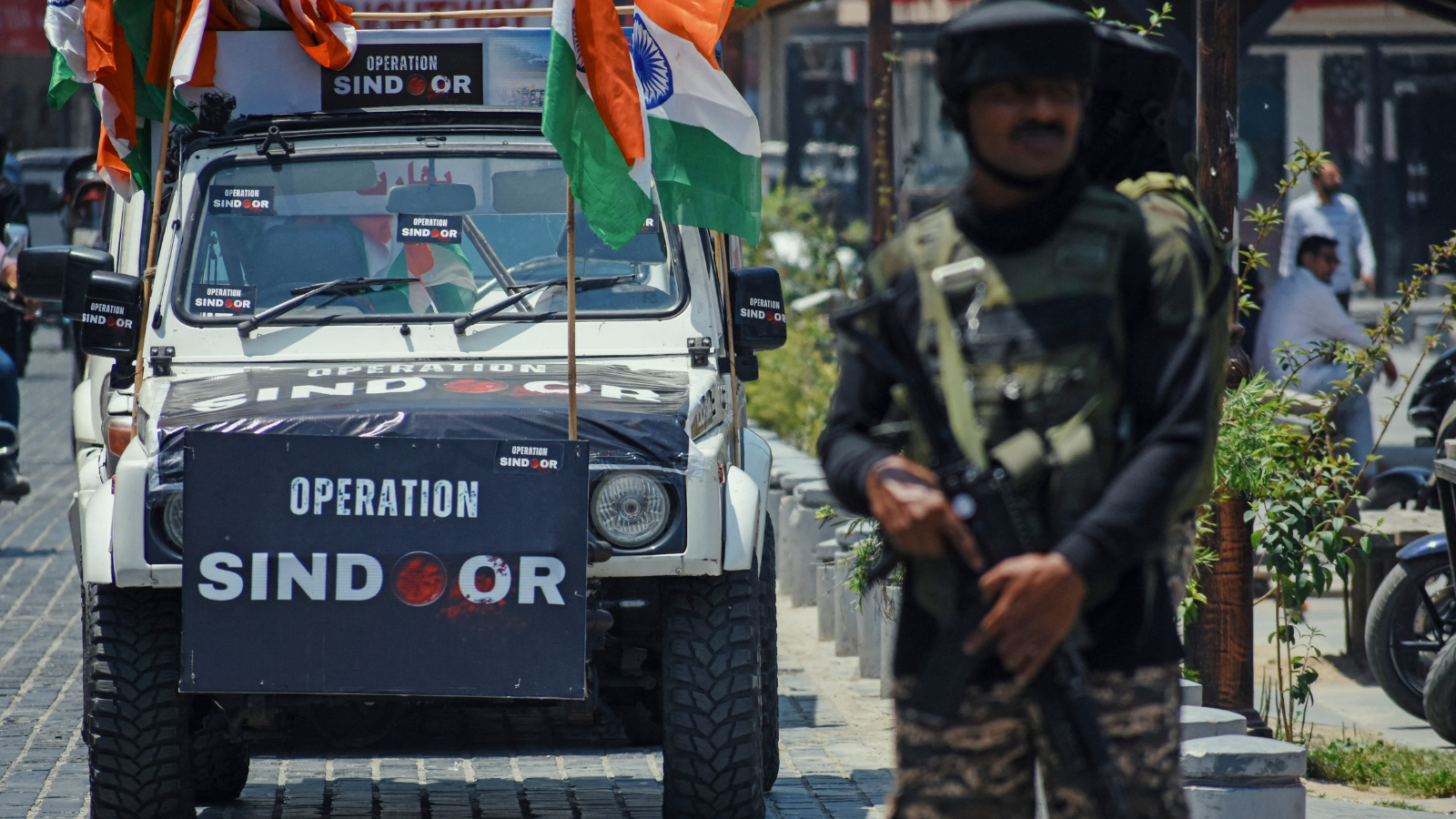
The India-Pakistan conflict that played out between May 6 and May 10, 2025, offers several military lessons. This article presents key takeaways from Operation Sindoor and breaks down how India’s preparations shaped the outcome and what more is needed to strengthen future readiness.

Dinakar Peri
This book offers a comprehensive analysis of India's evolving relationship with sovereignty in a complex global order. Moving beyond conventional narratives, it examines how the sovereignty principle shapes India's behavior across four critical domains—from traditional military power to contemporary data governance.

Rudra Chaudhuri, Nabarun Roy

This paper examines the evolution of India-China economic ties from 2005 to 2025. It explores the impact of global events, bilateral political ties, and domestic policies on distinct spheres of the economic relationship.

Santosh Pai
This article examines the scale and impact of Chinese IUU fishing operations globally and identifies the nature of the challenge posed by IUU fishing in the Indian Ocean Region (IOR). It also investigates why existing maritime law and international frameworks have struggled to address this growing threat.


Ajay Kumar, Charukeshi Bhatt